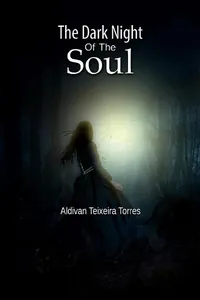
Dark Night of the Soul (Collector's Edition) (Laminated Hardback with Jacket)

 81
81

Dark Night of the Soul (Collector's Edition) (Laminated Hardback with Jacket)
St John of the Cross's "Dark Night of the Soul" remains a starkly honest portrayal of spiritual struggle. The power of this 16th-century text lies in its unvarnished description of divine absence, a concept often glossed over in more saccharine devotional literature. The author's unflinching gaze into the soul's desolation, particularly his articulation of the 'night of the spirit' as a profound, passive purification, is its greatest strength. A limitation for modern readers might be the dense theological framework, which can occasionally obscure the visceral experience of faith’s void. The passage describing the soul's journey through "a dark and secret night" without a guide, yet driven by a "burning love," encapsulates the book's paradoxical blend of suffering and longing. This edition's physical quality is commendable, enhancing the reader's engagement with the text. It offers a challenging but essential perspective on the spiritual path.
📝 Description
81
St. John of the Cross wrote 'Dark Night of the Soul' during his imprisonment in 1578.
Originally penned in the late 16th century, 'Dark Night of the Soul' by St. John of the Cross recounts the soul's difficult journey toward divine union. The text describes a phase of intense spiritual desolation, known as the 'dark night,' where individuals feel God's absence. This absence, however, is not a punishment but a necessary process of purification. This edition is for those undertaking deep spiritual inquiry, especially those experiencing doubt or spiritual dryness. It is also for seekers of mystical experiences and theologians examining faith and divine presence. The durable hardback binding suits repeated study, appealing to collectors and dedicated practitioners of contemplative prayer.
The author wrote this spiritual autobiography during Counter-Reformation Spain, a time of religious turmoil. He was a contemporary of Teresa of Ávila, and they worked together on Carmelite reforms. The work arose from his own experiences of being imprisoned and persecuted by religious authorities who opposed his reformist ideas. His mystical theology stood in contrast to the prevailing scholastic approaches to spirituality.
St. John of the Cross's 'Dark Night of the Soul' is a cornerstone of Christian mysticism, particularly within the Carmelite tradition. It details the soul's ascent through spiritual trials toward direct experience of God. The book describes the necessary purification of the senses and spirit, moving beyond spiritual consolations to achieve a unitive state. This tradition emphasizes the direct, unmediated encounter with the divine, often through rigorous self-discipline and surrender.
💡 Why Read This Book?
• Learn about the active and passive purification stages described by St John of the Cross, understanding how divine union requires both personal effort and surrender to God's transformative will. • Gain insight into the Carmelite spiritual tradition, specifically through the lens of St John of the Cross's personal suffering and theological development during the Counter-Reformation. • Explore the concept of the "dark night of the senses" and "dark night of the spirit," recognizing these challenging phases not as abandonment but as essential steps toward deeper contemplation.
⭐ Reader Reviews
Honest opinions from readers who have explored this book.
❓ Frequently Asked Questions
What is the original publication date of St John of the Cross's "Dark Night of the Soul"?
While the first English translation appeared in 1785, St John of the Cross originally penned "Dark Night of the Soul" in Spanish in the late 16th century, likely around 1578-1579.
What is the primary purpose of the "dark night" described in the book?
The "dark night" is presented as a necessary spiritual purification. It involves the soul's detachment from sensory consolations and spiritual attachments, ultimately preparing it for a more direct, unmediated union with God.
Who was St John of the Cross and what was his historical context?
St John of the Cross (Juan de la Cruz) was a 16th-century Spanish mystic and Carmelite friar. He was a key figure in the Counter-Reformation and faced imprisonment for his reformist activities, which deeply influenced his writings.
How does "Dark Night of the Soul" relate to Teresa of Ávila's works?
St John of the Cross was a spiritual collaborator and contemporary of Teresa of Ávila. Both worked on the Carmelite reform, and their writings often complement each other in describing the stages of prayer and mystical ascent.
What does the "burning flame of love" symbolize in the book?
The "burning flame of love" symbolizes the soul's intense desire for God, even amidst the darkness and desolation of the spiritual night. It represents an active, persistent yearning for divine union that transcends suffering.
Is "Dark Night of the Soul" suitable for beginners in spirituality?
While profound, the book's dense theological language and intense focus on spiritual desolation can be challenging for absolute beginners. It is most beneficial for those with some background in contemplative prayer or mystical theology.
🔮 Key Themes & Symbolism
The Dark Night as Purgation
The central theme is the 'dark night,' a spiritual state of desolation and detachment. St John of the Cross delineates two phases: the night of the senses, where attachments to worldly pleasures and spiritual consolations are purged, and the more profound night of the spirit, involving the stripping away of the intellect and memory. This process, though agonizing, is essential for preparing the soul for direct union with God, moving it beyond reliance on feelings or intellectual understanding towards pure faith and love.
Active vs. Passive Purification
The work meticulously explores the distinction between active and passive purification. Active purification involves the soul's deliberate efforts to overcome vice and attachment, guided by reason and faith. Passive purification, however, is God's direct work within the soul, occurring during the dark nights, where the soul must surrender and allow God to transform it, often against its own perceived comfort or understanding. This duality highlights the balance between human endeavor and divine grace.
Divine Union and Love
Despite the focus on darkness and suffering, the ultimate aim of the spiritual journey described is divine union. The 'burning flame of love' that guides the soul through the night symbolizes an intense, unquenchable desire for God. This union is not merely an intellectual acknowledgment but a profound, transformative merging of the soul with the Divine, achieved through complete surrender and selfless love, transcending the ego and its limitations.
The Role of Faith and Hope
During the dark nights, when sensory and spiritual consolations cease, faith and hope become the soul's primary anchors. St John of the Cross emphasizes that these theological virtues are strengthened precisely when they are exercised without tangible support. The soul learns to trust in God's unseen presence and promises, developing an unwavering commitment that is tested and refined by the crucible of spiritual dryness and apparent abandonment.
💬 Memorable Quotes
Direct passages from the work, attributed to the author.
“Upon a darkened night, With anxious love inflamed—O happy plight!— I went abroad, And all my house was stilled.”
— This opening evokes the solitude and internal focus required for the spiritual journey. The 'anxious love' suggests a profound, urgent longing for God that drives the soul outward, even as the external world becomes quiet and insignificant.
“What shall I do, that I may make my prayer more pleasing to Thee?”
— This question reflects the soul's sincere desire for devotional authenticity. It arises not from a need for external validation but from a deep inner impulse to align its spiritual practices perfectly with God's will.
“I am going to seek the love of my Beloved.”
— This statement embodies the core motivation of the spiritual seeker. It underscores that the entire arduous process of purification is undertaken with the singular purpose of finding and uniting with the Divine Beloved.
“This is the union of love: to put oneself completely at the disposal of the Beloved, offering oneself as a sacrifice.”
— This interpretation defines the culmination of the spiritual path. True union is achieved through total self-giving and surrender, viewing one's entire being as an offering to the Divine.
💡 Key Ideas
Editorial paraphrase of the work's core concepts — not direct quotes.
To guide me, my hair with a candle flame might burn.
This line captures the intense, almost self-destructive yearning for God that characterizes the dark night. The willingness to endure even physical harm signifies the soul's absolute commitment, where the desire for divine union overrides all self-preservation.
🌙 Esoteric Significance
Tradition
St John of the Cross belongs to the Christian mystical tradition, specifically within the lineage of Catholic contemplative prayer and Carmelite spirituality. While deeply rooted in orthodox Christianity, his work profoundly engages with esoteric concepts of spiritual transformation, divine union, and the purgation of the soul, aligning with broader perennialist themes found across various mystical paths. His emphasis on direct, unmediated experience of the Divine places him within the contemplative stream that seeks Gnosis, or direct knowledge of the Divine, through inner purification.
Symbolism
The primary symbol is the 'dark night,' representing states of spiritual desolation and purification. It symbolizes the soul's journey through ignorance (night of the senses) and the stripping of the ego's spiritual attachments (night of the spirit). Another key symbol is the 'burning flame of love,' representing the soul's intense desire for God, which serves as a guiding light and driving force even when divine presence seems absent. The 'secret dark' itself signifies the hidden, interior range of the soul where this transformation occurs.
Modern Relevance
Contemporary contemplative practices, mindfulness movements, and depth psychology often draw upon the principles articulated by St John of the Cross. Therapists and spiritual directors utilize his concepts to guide individuals through periods of existential doubt and spiritual crisis. Modern esotericists and mystics across various traditions find resonance in his description of the soul's arduous but ultimately rewarding path toward integration and divine union, seeing the 'dark night' as a universal psychological and spiritual archetype.
👥 Who Should Read This Book
• Seekers of advanced Christian mysticism: Individuals already engaged with contemplative prayer or interested in the deeper levels of Catholic spirituality will find this a foundational text for understanding mystical ascent. • Practitioners of spiritual discipline: Those undergoing periods of intense spiritual dryness, doubt, or perceived abandonment can find validation and guidance in St John's unflinching account. • Students of comparative mysticism: Readers interested in the universal aspects of spiritual purification and divine union across different religious traditions will find parallels in his work.
📜 Historical Context
St John of the Cross penned "Dark Night of the Soul" in Spanish during the latter half of the 16th century, a period marked by intense religious reform and counter-reformation efforts within the Catholic Church. He was a key figure alongside Teresa of Ávila in reforming the Carmelite Order, a movement that often met with significant opposition from established ecclesiastical authorities. This context of internal church conflict and personal persecution is crucial to understanding the work's raw intensity. The book emerged from his own experiences, including imprisonment in Toledo in 1577. Its mystical theology, emphasizing direct experience of God through purification, stood in contrast to the more scholastic and speculative approaches prevalent at the time. The work's profound influence grew steadily, impacting subsequent generations of mystics and theologians, though its direct engagement with contemporary philosophical schools like Scholasticism is implicit in its experiential focus.
📔 Journal Prompts
The soul's experience of the 'dark night of the senses' and its detachment from sensory consolations.
Reflecting on the 'burning flame of love' as a guide through spiritual desolation.
The passive purification of the spirit and the soul's surrender to divine action.
How the concept of active versus passive purification informs personal spiritual practice.
The ultimate goal of divine union as described by St John of the Cross.
🗂️ Glossary
Dark Night of the Senses
The initial stage of spiritual purification where the soul detaches from worldly pleasures and habitual spiritual consolations, learning to seek God for God's own sake.
Dark Night of the Spirit
A deeper, more intense phase of purification where the soul is stripped of spiritual knowledge, memory, and understanding, leading to profound desolation but preparing it for direct union.
Purgation
The process of cleansing the soul from imperfections, attachments, and vices, essential for spiritual growth and union with God.
Divine Union
The ultimate goal of the spiritual life, where the soul achieves a profound, transformative oneness with God, characterized by complete love and surrender.
Spiritual Desolation
A state of spiritual dryness, emptiness, and perceived absence of God's presence, often accompanied by doubt and difficulty in prayer.
Active Purification
The soul's conscious effort to overcome sin and attachment through ascetic practices and disciplined prayer, guided by reason and faith.
Passive Purification
A stage where God directly works within the soul, stripping away imperfections without the soul's direct effort, often experienced as suffering or darkness.
This book appears in 1 collection
🔮 Readers Also Liked
Browse all →









From the “Dark Night of the Soul” Collection
View all →






More Free Occult Philosophy Books
View all →