How to uncover your past lives

 72
72

How to uncover your past lives
Ted Andrews' "How to Uncover Your Past Lives" tackles a perennially fascinating subject with a direct, instructional tone. Its primary strength lies in its accessibility; Andrews avoids overly academic or esoteric jargon, making the complex idea of past-life recall feel manageable for the average reader. The exercises, particularly those focusing on guided imagery and dream analysis, are clearly laid out. However, the book's limitation is its occasional tendency towards generality. While it provides a framework, the depth of personal insight gained will heavily depend on the individual's own meditative capacity and willingness to engage with potentially challenging material. A particular concept that stands out is the idea of 'soul patterns' – recurring emotional or behavioral tendencies that Andrews suggests can be traced to previous incarnations, offering a novel lens through which to view personal struggles. The work serves as a competent primer for those eager to explore this avenue of self-inquiry.
📝 Description
72
Ted Andrews' 1992 book offers practical techniques for accessing past-life memories.
Published in 1992, Ted Andrews' "How to Uncover Your Past Lives" presents a direct approach to exploring reincarnation. The book focuses on practical exercises and methods designed to help individuals recall impressions or memories from previous lifetimes. Andrews moves beyond mere theory, instead detailing actionable steps for personal discovery. His aim is to help readers achieve a broader perspective on their soul's history and how past events might shape current life circumstances and challenges. The central idea is that understanding these prior existences can facilitate personal development and healing.
This guide is intended for those interested in the metaphysical dimensions of life and the nature of consciousness. It speaks to readers curious about reincarnation, karmic cycles, and the notion that personal experience extends beyond a single physical lifespan. Individuals seeking greater self-awareness, personal change, or ways to resolve recurring difficulties may find its methods beneficial. The book is accessible to newcomers to these subjects as well as those already familiar with esoteric ideas who want to expand their understanding.
Released in 1992, "How to Uncover Your Past Lives" entered a period where New Age thought was increasingly visible. Interest in concepts like reincarnation and karma, drawn from Eastern philosophies, was growing within Western spiritual circles. Andrews' work arrived alongside a trend toward popularizing regression therapy, but it distinguished itself by advocating a self-directed approach. The book fits within a broader late 20th-century resurgence of interest in spiritualism and occult studies, offering a guide for personal exploration of these themes.
💡 Why Read This Book?
• You will learn specific meditation and visualization techniques, as detailed in chapters like 'Opening Your Inner Eye,' to access potential past-life impressions, offering a practical method not found in purely theoretical texts. • You can gain an understanding of 'soul memory' as presented by Andrews, which posits that the soul retains experiences across lifetimes, providing a framework for interpreting recurring dreams or intuitions. • The book offers guidance on interpreting symbols and synchronicities that may arise during past-life exploration, helping you to connect these perceived memories to present-day life patterns and challenges.
⭐ Reader Reviews
Honest opinions from readers who have explored this book.
❓ Frequently Asked Questions
What are the main techniques Ted Andrews suggests for uncovering past lives?
Ted Andrews primarily advocates for guided meditation, visualization exercises, and dream analysis. The book provides step-by-step instructions for these practices, encouraging readers to focus their inner awareness to access impressions from previous existences.
Is "How to Uncover Your Past Lives" suitable for beginners in esoteric studies?
Yes, the book is written in an accessible style, making it suitable for beginners. Andrews explains concepts like reincarnation and soul memory in straightforward terms and offers practical exercises that don't require prior advanced knowledge.
When was "How to Uncover Your Past Lives" first published?
Ted Andrews' "How to Uncover Your Past Lives" was first published in 1992, placing it within the broader wave of New Age and esoteric literature popular in the late 20th century.
Does the book discuss reincarnation from a specific religious viewpoint?
While the concept of reincarnation is prominent in many Eastern religions, Andrews presents it within a broader esoteric and spiritual context, focusing on personal experience and soul evolution rather than adhering strictly to one religious doctrine.
Can reading this book help resolve current life issues?
Andrews suggests that understanding past-life influences can indeed shed light on recurring challenges, phobias, or relationship patterns in one's present life, potentially offering a path toward resolution and personal growth.
What is the concept of 'soul patterns' as described by Ted Andrews?
Soul patterns, according to Andrews, are recurring tendencies, behaviors, or emotional responses that may stem from experiences in previous lifetimes. Recognizing these patterns is presented as a key step in healing and evolution.
🔮 Key Themes & Symbolism
Accessing Soul Memory
The central theme is the concept of 'soul memory,' the idea that our souls retain experiences and knowledge from previous incarnations. Andrews provides practical methods, primarily meditation and visualization, to tap into this reservoir. He guides readers to recognize how these stored impressions might manifest in present-day life as intuition, recurring dreams, or unexplained emotional responses. The focus is on empowering the individual to become their own explorer of their soul's history, seeking understanding and healing through direct inner experience rather than external dogma.
Reincarnation as a Path to Growth
Andrews presents reincarnation not merely as a belief system but as a dynamic process integral to soul evolution. The book explores how understanding past lives can offer useful insights into present challenges, relationships, and life paths. By identifying recurring patterns or karmic lessons, readers are encouraged to approach their current existence with greater awareness and purpose. This perspective frames past-life exploration as a tool for personal development, facilitating healing and fostering a deeper connection to one's spiritual journey across lifetimes.
Meditation and Intuitive Perception
Central to Andrews' methodology are techniques of focused meditation and heightened intuition. He outlines specific exercises designed to quiet the conscious mind and open channels for subtler perceptions. These practices are presented as the keys to unlocking latent memories and understanding symbolic messages from the subconscious or soul. The book emphasizes developing personal psychic sensitivity and trusting one's inner guidance system to read through the field of past existences effectively.
Interpreting Past-Life Influences
Beyond merely recalling past events, the book stresses the importance of interpreting their relevance to the present. Andrews guides readers on how to analyze the information gained through meditative practices, looking for connections to current life circumstances, fears, talents, or relationship dynamics. This interpretive layer transforms past-life recall from a mere historical curiosity into a practical tool for self-awareness, emotional healing, and conscious life planning, allowing individuals to work with their perceived soul history.
💬 Memorable Quotes
Direct passages from the work, attributed to the author.
“The soul remembers all experiences.”
— This concise statement captures the core premise that our spiritual essence, the soul, acts as a repository for all lived experiences across countless lifetimes, influencing our present consciousness.
“Use meditation to open the door to your past.”
— This highlights the primary methodology of the book: employing meditative states as a key to unlock subconscious or soul-level memories of previous existences.
“Patterns repeat until understood.”
— This aphorism suggests that recurring life challenges or behaviors are often karmic lessons or soul patterns that must be consciously recognized and integrated before they cease to manifest.
“Your dreams can be a gateway to past lives.”
— This points to the significance of the dream state as a fertile ground for accessing past-life impressions, encouraging readers to pay close attention to their nocturnal visions.
“Intuition is the voice of the soul.”
— This equates heightened inner knowing and gut feelings with direct communication from the soul, suggesting that developing intuition is crucial for understanding one's deeper spiritual history.
🌙 Esoteric Significance
Tradition
This work fits within the broader Western Esoteric tradition, particularly its modern manifestations influenced by Theosophy and New Age thought. It draws upon the concept of reincarnation, a central tenet in Eastern religions like Hinduism and Buddhism, but frames it within an individualistic, experiential context common in Western occultism. Unlike more scholastic Hermetic or Kabbalistic texts, Andrews prioritizes practical application and personal gnosis over complex theoretical systems, making esoteric concepts accessible to a wider audience seeking self-discovery.
Symbolism
The book utilizes symbolism primarily through guided imagery and archetypal figures encountered during meditation. Common motifs include journeys through light or darkness, symbolic gateways, and encounters with spiritual guides or figures from perceived past eras. These symbols function as pointers, helping the reader interpret the impressions received. For instance, a recurring symbol of water might represent emotional depth or past-life connections to aquatic realms or transformative experiences, serving as a visual language for the subconscious.
Modern Relevance
Andrews' emphasis on practical, self-guided spiritual exploration continues to resonate. Contemporary practices in mindfulness, lucid dreaming, and energy healing often incorporate similar techniques of visualization and intuitive development. Thinkers and practitioners in fields like transpersonal psychology and consciousness studies, as well as modern esoteric authors focusing on soul evolution and karmic patterning, can find Andrews' foundational approach a useful starting point for their own explorations or teachings.
👥 Who Should Read This Book
• Individuals curious about reincarnation and the nature of the soul's journey will find a practical entry point into exploring these concepts beyond mere belief. • Seekers of personal growth and self-understanding looking to address recurring life patterns or unexplained emotional responses can utilize the book's techniques for insight. • Practitioners of meditation and mindfulness seeking to deepen their practice by applying it to explore deeper layers of consciousness and memory.
📜 Historical Context
Published in 1992, "How to Uncover Your Past Lives" emerged during a period of significant public interest in New Age spirituality and Eastern philosophies. Reincarnation, karma, and past-life regression were topics gaining wider acceptance, fueled by popular authors like Elisabeth Kübler-Ross and, more directly, Brian Weiss, whose work on past-life regression therapy achieved considerable mainstream success. Andrews' book offered a more self-directed approach within this milieu, focusing on individual meditative techniques rather than professional therapy. It engaged with the late 20th-century resurgence of esoteric thought, which drew heavily from Theosophy and Anthroposophy, while presenting these concepts in a highly accessible, practical format for a broad audience seeking personal spiritual growth.
📔 Journal Prompts
Reflect on the concept of 'soul memory' and its potential impact on your present self.
Describe a recurring dream or intuition you've experienced and consider its possible link to past-life influences.
Outline a meditation technique from the book that you found particularly resonant.
How might understanding 'patterns repeat until understood' change your approach to a current challenge?
Consider the 'voice of the soul' as intuition; how can you better discern and trust it?
🗂️ Glossary
Soul Memory
The concept that the soul retains all experiences, knowledge, and emotions from every lifetime it has lived, influencing the present consciousness.
Reincarnation
The philosophical or religious concept that the non-physical essence of a living being begins a new life in a different physical form or body after biological death.
Karmic Patterns
Recurring life situations, challenges, or relationships that are believed to stem from actions or experiences in past lives, serving as lessons for the soul.
Visualization
A mental technique used for creating vivid images or scenes in the mind, often employed in meditation to access subconscious information or past-life impressions.
Intuition
The ability to understand something immediately, without the need for conscious reasoning; presented in the book as a direct communication from the soul.
Soul Evolution
The process by which the soul progresses and learns through multiple lifetimes, gathering experience and wisdom over time.
Past-Life Regression
A therapeutic or self-exploratory technique used to access memories or impressions of alleged past lives, often through hypnosis or deep meditation.
🔮 Readers Also Liked
Browse all →








More by Ted Andrews
All books →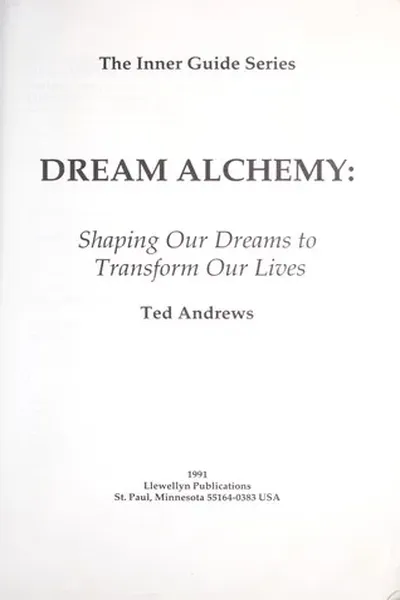




More Free Spiritual Development Books
View all →