The Secret Language of the Soul
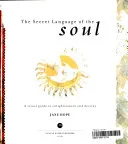
 84
84

The Secret Language of the Soul
Jane Hope's *The Secret Language of the Soul* is a commendable effort to map the abstract terrain of the soul across global traditions. Its primary strength lies in its encyclopedic scope, offering a visual and textual compendium that showcases the sheer diversity of human attempts to articulate this concept. The inclusion of specific examples, such as the Siberian shamanic trance or the carved spirit figures of Nigerian Tree Spirits, grounds the discussion in tangible cultural practices. However, the book's ambition sometimes leads to a breadth that can feel superficial. While it lists numerous traditions, deeper dives into the nuanced theological or philosophical underpinnings of each are limited by the sheer volume of material covered. A particularly compelling section explores the Buddhist concept of *anatman* (no-self) alongside more traditional views of a persistent soul, illustrating the work's willingness to confront paradoxes. Despite its occasional lack of depth, the book serves as an excellent introductory survey for those new to comparative spirituality.
📝 Description
84
Jane Hope's *The Secret Language of the Soul* cataloged soul concepts across cultures upon its 1999 release.
First published in 1999, Jane Hope's book examines how different cultures throughout history have conceived of the soul. It presents a vast array of spiritual and religious traditions, detailing the symbolic expressions and practical applications of soul concepts in societies as varied as Zen Buddhist monasteries and Siberian shamanic practices. The work also includes Nigerian Tree Spirit lore and Catholic theological frameworks. Hope's book serves as a directory, cataloging these diverse understandings of a central human mystery.
This volume appeals to those studying comparative religion, cross-cultural spirituality, and the symbolic languages humans use to describe intangible existence. Students of esotericism, anthropology, and mythology will find it useful for tracing the historical development of soul concepts. Readers interested in the connection between visual symbolism and spiritual beliefs will appreciate the extensive cataloguing of imagery and its meanings.
Published in 1999, *The Secret Language of the Soul* emerged during a period of increased interest in comparative spirituality and non-Western belief systems. The book reflects a scholarly trend away from viewing the soul as a singular concept, instead presenting it as culturally shaped. It sits within a broader discourse on world religions and shamanism, drawing parallels with the academic study of esoteric traditions that gained traction in the late 20th century.
💡 Why Read This Book?
• Understand the varied ways the soul is conceived globally, from Siberian shamanism's trance journeys to the theological doctrines of Catholicism, revealing shared human concerns through distinct cultural lenses. • Explore the symbolic visual language used across cultures to represent the soul, learning how figures carved into Nigerian Tree Spirits and Zen Buddhist mandalas convey spiritual ideas. • Gain a comparative perspective on the soul's role in cosmology and ritual, recognizing how practices from ancient traditions inform modern spiritual inquiries.
⭐ Reader Reviews
Honest opinions from readers who have explored this book.
❓ Frequently Asked Questions
What is the primary focus of Jane Hope's 'The Secret Language of the Soul'?
The book is a visual and textual directory exploring how various ancient and modern cultures worldwide have attempted to understand and represent the soul through myths, symbols, and rituals.
What kind of cultural traditions does the book cover?
It encompasses a wide range, including Zen Buddhism, Catholicism, Siberian shamanism, and Nigerian Tree Spirit lore, among many others.
When was 'The Secret Language of the Soul' first published?
The book was first published in 1999.
Is the book primarily text-based or image-heavy?
The description suggests it is a 'visual directory,' implying a significant integration of imagery alongside textual explanations of symbolic concepts.
What does the book aim to achieve regarding the concept of the soul?
It aims to demonstrate the universality of the human quest to understand the soul while highlighting the vast diversity of cultural interpretations and symbolic expressions.
Who is the author of 'The Secret Language of the Soul'?
The author is Jane Hope.
🔮 Key Themes & Symbolism
Cross-Cultural Soul Concepts
This theme examines the soul not as a singular entity, but as a concept interpreted through myriad cultural lenses. Hope illustrates how traditions as disparate as Siberian shamanism, with its focus on spirit journeys, and Zen Buddhism, with its exploration of emptiness, offer unique perspectives on consciousness and the self. The book details how these distinct understandings are encoded in language, ritual, and art, showcasing the universal human impulse to define that which animates life across vastly different worldviews.
Visual Language of the Spirit
A central tenet is that the soul's mysteries are often communicated through visual symbolism. The work highlights how cultures create tangible representations for the intangible. Examples include the carved spirit figures associated with Nigerian Tree Spirits, which serve as guardians and visual anchors for spiritual beliefs, and the complex mandalas found in Buddhist traditions, which serve as cosmic diagrams. This theme emphasizes the power of imagery in spiritual expression and comprehension.
The Soul in Esoteric Traditions
The book maps the soul's representation within various esoteric and indigenous frameworks. It moves beyond mainstream religious dogma to explore more direct, experiential approaches to the spirit world. This includes the trance states achieved by shamans, which are seen as a direct means of interacting with spiritual realms, and the animistic beliefs that imbue natural elements, like trees, with spiritual significance. It positions these traditions as vital components of humanity's spiritual heritage.
The Soul as Ultimate Unknown
Hope frames the soul as a fundamental, enduring mystery at the heart of human existence. The book posits that while cultures have developed elaborate systems to describe it, the soul remains an ultimate unknown, a frontier of consciousness. This perspective encourages readers to approach the subject with a sense of wonder and open inquiry, recognizing that the quest for understanding is as significant as any definitive answer. It underscores the persistent human fascination with life's deepest questions.
💬 Memorable Quotes
Direct passages from the work, attributed to the author.
“The soul is the ultimate human unknown.”
— This opening statement frames the book's central inquiry, positioning the soul as a profound mystery that has captivated humanity across all cultures and throughout history.
“A visual directory of the ways that cultures worldwide have attempted to answer its mysteries.”
— This highlights the book's methodology: using visual representations and cross-cultural examples to explore diverse philosophical and spiritual perspectives on the soul.
“From Zen Buddhism to Catholicism, and encompassing traditions as varied as the Siberian shaman.”
— This phrase illustrates the vast chronological and geographical scope of the work, demonstrating its commitment to showcasing a wide spectrum of spiritual beliefs and practices.
“The Siberian shaman, who travels in a trance to the spirit world.”
— This specific example points to the book's exploration of experiential spirituality and altered states of consciousness as pathways to understanding the soul and its associated realms.
“Nigerian Tree Spirits, whose lofty homes are guarded by spirit figures carved into the trees trunk.”
— This concrete detail showcases the book's focus on animistic beliefs and the tangible, symbolic ways that indigenous cultures manifest and interact with spiritual entities.
🌙 Esoteric Significance
Tradition
While not strictly adhering to a single lineage like Hermeticism or Gnosticism, *The Secret Language of the Soul* engages with a broad spectrum of esoteric thought by exploring experiential and symbolic approaches to the spiritual. It aligns with the Theosophical interest in comparative religion and the search for universal truths across diverse traditions. The work departs from strictly doctrinal approaches by emphasizing visual symbolism and indigenous cosmologies, offering a more holistic view of how humanity grapples with concepts of the soul beyond formal religious structures.
Symbolism
The book examines symbols representing the soul's journey and nature. For instance, the concept of the Siberian shaman's trance signifies a direct, often perilous, journey to spirit realms, symbolizing the soul's capacity for non-physical travel and interaction with unseen forces. Similarly, the carved spirit figures guarding Nigerian Tree Spirits represent a form of animistic belief, where nature is imbued with consciousness and protective entities are made manifest through art, symbolizing a deep connection between the physical and spiritual worlds.
Modern Relevance
Contemporary practitioners of comparative spirituality, transpersonal psychology, and cultural anthropology find value in Hope's work as a foundational survey. Thinkers exploring shamanic practices, consciousness studies, and the intersection of art and spirituality often reference such comprehensive explorations of global belief systems. The book's emphasis on visual representation also appeals to modern digital archiving of cultural symbols and the ongoing interest in indigenous knowledge systems within ecological and spiritual movements.
👥 Who Should Read This Book
• Students of comparative religion and mythology seeking a broad overview of how different cultures conceptualize the soul, moving beyond Western perspectives. • Visual artists and symbolic researchers interested in exploring the diverse iconography associated with spirituality and the human psyche across global traditions. • Spiritual seekers and practitioners curious about the myriad ways the soul has been understood and experienced, from ancient shamanism to contemplative Buddhism.
📜 Historical Context
Published in 1999, *The Secret Language of the Soul* emerged during a period of heightened global interest in comparative spirituality and esoteric studies. The late 20th century witnessed a growing academic and popular engagement with non-Western indigenous traditions, shamanism, and alternative belief systems, partly fueled by figures like anthropologist Mircea Eliade whose works on shamanic cosmology had been influential for decades. Hope's book contributed to this discourse by presenting a broad, visually-oriented survey of soul concepts, offering an alternative to purely theological or philosophical treatments. It arrived in a landscape increasingly receptive to ideas from traditions like Tibetan Buddhism and various forms of Neopaganism, which were gaining wider visibility. While not subject to major censorship or specific controversy, its reception occurred within a broader cultural moment that was cautiously opening to a more pluralistic understanding of spiritual expression, moving beyond the confines of Western religious paradigms.
📔 Journal Prompts
The soul as the ultimate human unknown: initial thoughts and personal associations.
Reflecting on the symbolic language used for the soul in Siberian shamanism versus Zen Buddhism.
Visual representations of the soul: how do carved figures and mandalas differ in conveying spiritual ideas?
The soul's connection to nature: exploring animistic beliefs like those associated with Nigerian Tree Spirits.
Comparing Catholic doctrines of the soul with shamanic journeys: identifying commonalities and divergences.
🗂️ Glossary
Soul
The intangible essence of a living being, often considered immortal, that animates the body and is associated with consciousness, identity, and spiritual existence across various cultures.
Shamanism
A spiritual practice characterized by a practitioner, the shaman, who acts as an intermediary between the visible world and the spirit world, often through altered states of consciousness.
Zen Buddhism
A school of Mahayana Buddhism emphasizing rigorous meditation (zazen) and intuitive understanding to achieve enlightenment, often exploring concepts of emptiness and non-self.
Catholicism
The largest branch of Christianity, centered on the authority of the Pope, with established doctrines regarding the soul, salvation, and the afterlife.
Animism
The belief that natural objects, phenomena, and the universe itself possess an independent spiritual or sentient aspect; spirits inhabit natural things.
Spirit Figures
Representations, often carved or otherwise depicted, believed to embody or invoke spiritual entities or guardians within a particular cultural or religious context.
Trance
A state of altered consciousness characterized by profound absorption, often induced by meditation, ritual, or other practices, enabling perceived communication with spiritual realms.