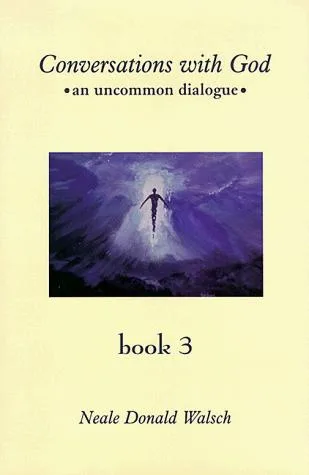
Conversations with God
 79
79

Conversations with God
Neale Donald Walsch's "Conversations with God" is less a literary work and more a spiritual transcript, claiming direct divine discourse. Its primary strength lies in its accessible, almost colloquial, presentation of complex metaphysical ideas. Walsch simplifies concepts like karma, divine love, and universal consciousness into digestible Q&A exchanges, making them approachable for a broad audience. However, this very accessibility can be a limitation, sometimes bordering on the simplistic or the preachy. The book’s assertion that "you create your own reality" is a recurring theme, presented with a certainty that might challenge those accustomed to more nuanced philosophical or theological discourse. A particularly memorable concept is the idea that "God does not punish; you punish yourself" through the consequences of your own actions. The work offers a comforting, if potentially undemanding, spiritual perspective.
📝 Description
79
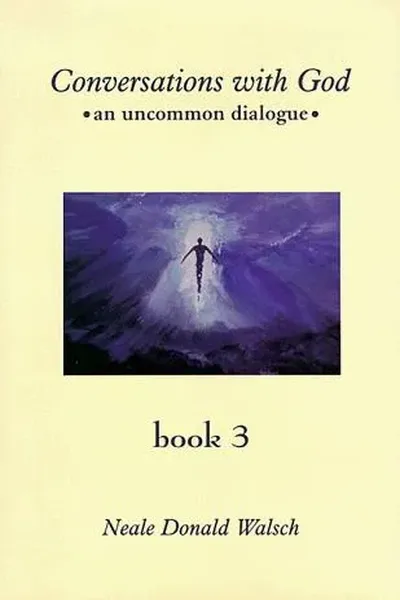
Neale Donald Walsch published "Conversations with God" in 1995, detailing a dialogue with the divine.
This book presents a series of questions posed by author Neale Donald Walsch to God, with accompanying answers. It tackles fundamental inquiries about existence, love, and purpose. The work is structured as a direct conversation, making complex spiritual ideas accessible. It speaks to individuals dissatisfied with established religious frameworks and those on a path of personal spiritual discovery. Readers interested in New Age thought, self improvement, and philosophical exploration may find resonance here.
The text addresses concepts like the interconnectedness of all things, asserting that "everything is God." It frames life as a journey of learning and development, with fear identified as the antithesis of love. Human experience, according to the book, is a product of individual awareness. The ultimate aim of existence is thus presented as experiencing, learning, and evolving.
Published in the mid-1990s, "Conversations with God" emerged during a period of significant interest in New Age spirituality and personal growth movements. It followed in a tradition of channeled or divinely inspired texts that offered direct spiritual guidance. Unlike more academic or ritualistic esoteric writings, Walsch's work employed a plain, conversational style. This accessibility, coupled with its claim of divine communication, connected with a broad audience seeking personal spiritual answers outside conventional religious structures.
💡 Why Read This Book?
• Understand the concept of "Oneness" as presented in the book, learning how Walsch suggests all existence stems from a singular divine source. • Explore the idea of personal responsibility for one's reality, a core tenet discussed throughout the 1995 publication. • Gain insight into Walsch's interpretation of divine love and its role in overcoming fear, a central theme elaborated in the conversational format.
⭐ Reader Reviews
Honest opinions from readers who have explored this book.
❓ Frequently Asked Questions
What is the core message of Neale Donald Walsch's "Conversations with God"?
The core message is that God is accessible to everyone through direct dialogue, emphasizing love, oneness, and the personal creation of reality. It encourages readers to question their beliefs and find spiritual truth within themselves.
When was "Conversations with God" first published?
The first book in the "Conversations with God" series was first published in 1995.
Is "Conversations with God" considered a religious text?
While it addresses spiritual and theological questions, it's generally not considered a traditional religious text. It's often categorized as New Age or spiritual self-help, presenting a personal dialogue with the divine.
What are some common criticisms of "Conversations with God"?
Criticisms often include its perceived simplistic explanations of complex theological concepts, its anthropomorphic portrayal of God, and its potential for encouraging solipsism by overemphasizing personal reality creation.
How does the book approach the concept of suffering?
The book suggests that suffering often arises from resistance to life's lessons and from fear, rather than from external punishment. It posits that the purpose of challenging experiences is for growth and learning.
What makes the conversational format unique?
The unique aspect is its direct Q&A structure, presenting spiritual inquiry and divine response in a relatable, everyday language. This format aims to demystify spiritual concepts and make them immediately applicable to the reader's life.
🔮 Key Themes & Symbolism
Oneness and Divinity
The work posits that everything is God and God is everything, a concept central to many pantheistic and panentheistic traditions. This idea challenges the notion of separation between humanity, the divine, and the universe. The book explores how recognizing this inherent oneness can lead to greater compassion and understanding, dissolving perceived boundaries and fostering a sense of universal interconnectedness. It suggests that life's ultimate lesson is to realize this fundamental unity in all experiences.
Creation of Reality
A significant theme is the assertion that individuals actively co-create their own realities through their thoughts, beliefs, and choices. This concept aligns with principles found in some New Thought and manifestation teachings. The book frames life as a chosen experience, where perceived challenges are opportunities for growth and learning. It emphasizes the power of consciousness in shaping one's world, suggesting that by changing one's inner state, one can alter external circumstances.
Love vs. Fear
The dichotomy between love and fear is presented as the fundamental choice individuals face. The book defines love as the ultimate reality and the driving force of the universe, while fear is depicted as an illusion stemming from a false sense of separation. It argues that embracing love leads to spiritual growth and fulfillment, whereas succumbing to fear perpetuates suffering and misunderstanding. This theme encourages a conscious shift towards love in all interactions and perceptions.
Purpose of Life
According to the dialogue, the purpose of life is not predetermined but rather an ongoing process of learning, experiencing, and evolving. The book suggests that God, in its infinite desire for experience, created life as a means to know itself through its creations. Therefore, each individual's journey is unique and valuable, contributing to the collective consciousness's expansion. Embracing life's lessons, both joyful and difficult, is presented as the path to fulfilling this purpose.
💬 Memorable Quotes
Direct passages from the work, attributed to the author.
“You are not a body with a spirit, you are a spirit with a body.”
— This statement reframes identity, positing that our essential nature is spiritual, with the physical body being a temporary vessel or a manifestation of that spirit. It encourages a focus on inner being over external form.
“The biggest void in the world is the one between what you know and what you do.”
— This highlights the gap between intellectual understanding and practical application of spiritual or life lessons. It points to the challenge of integrating knowledge into daily actions and behaviors.
“God does not punish; you punish yourself.”
— This reinterprets the concept of divine retribution, suggesting that negative consequences are natural outcomes of one's own choices and actions, rather than external judgment from a deity.
“Love is the answer, but who asks the question?”
— This aphorism implies that while love is universally recognized as the solution to many of life's problems, the true challenge lies in understanding the underlying issues or questions that necessitate love's application.
“Everything is God.”
— This is a core tenet of the book, suggesting a monistic or pantheistic view where the divine permeates all existence, blurring the lines between creator and creation.
🌙 Esoteric Significance
Tradition
While not strictly adhering to a single esoteric lineage, "Conversations with God" draws heavily from New Thought, pantheistic, and Gnostic-inspired concepts of immanent divinity and personal gnosis. It carries the Hermetic principle of "As above, so below" by suggesting a direct correspondence between the divine and the human experience. The work departs from some traditional esoteric structures by presenting its revelations through an unmediated, personal dialogue rather than through established texts or initiatory practices.
Symbolism
The book extensively uses the symbol of dialogue itself as a conduit for divine truth, positioning the conversational format as a primary means of spiritual access. Another key motif is the concept of "Oneness," symbolizing the dissolution of duality and separation, a recurring theme in mystical traditions aiming for non-dual consciousness. The recurring idea of "choice" also functions symbolically, representing the individual's agency and responsibility in navigating life's experiences and their spiritual journey.
Modern Relevance
The work's influence is evident in contemporary spiritual self-help, life coaching, and modern metaphysical teachings that emphasize personal empowerment and the creation of one's reality. Thinkers and practitioners in fields like positive psychology, mindfulness, and manifestation techniques often echo its core ideas about consciousness and intention. Its accessible format continues to inspire new generations of spiritual seekers looking for direct, personal answers to existential questions.
👥 Who Should Read This Book
• Individuals questioning established religious doctrines and seeking a more personal, direct spiritual connection. • Seekers interested in New Age philosophy and the concept of co-creating one's reality through thought and intention. • Readers exploring existential themes such as the meaning of life, love, and the nature of consciousness in an accessible Q&A format.
📜 Historical Context
Published in 1995, "Conversations with God" emerged during a period of significant growth in the New Age and self-help movements, which gained momentum throughout the late 20th century. This era saw a burgeoning interest in spirituality outside of traditional organized religions, fueled by accessible literature and a growing emphasis on personal empowerment and existential questioning. The book's straightforward, conversational style offered a direct alternative to more complex theological or philosophical texts. It arrived at a time when authors like Deepak Chopra were also popularizing spiritual concepts for a mass audience. While it did not engage directly with specific academic debates, its reception was notable, achieving widespread popularity and sparking considerable discussion, sometimes controversial, about its claims of divine revelation and its theological underpinnings, differentiating it from the more esoteric or academically-focused spiritual writings.
📔 Journal Prompts
Your personal understanding of "Oneness" and its implications for your daily life.
Reflections on the "creation of reality" and your role in it.
Examining the balance between "love" and "fear" in your recent experiences.
The perceived "purpose of life" as articulated through the book's dialogue.
Your own questions for the divine, inspired by Walsch's "Conversations with God."
🗂️ Glossary
Oneness
The concept that all existence is fundamentally interconnected and part of a single divine whole. It implies the absence of true separation between individuals, the universe, and the divine.
Co-creation
The idea that individuals actively participate with the divine or universal forces in shaping their life experiences and reality through their thoughts, beliefs, and actions.
Divine Dialogue
The method by which the book presents its content, characterized as a direct question-and-answer exchange between the author and God.
Fear
Presented as an illusion stemming from a false sense of separation and a lack of understanding of universal love. It is considered the opposite of love and a primary source of human suffering.
Love
Defined as the ultimate reality, the essence of God, and the fundamental force of the universe. It is associated with connection, understanding, and spiritual growth.
Consciousness
The fundamental essence of being, often equated with God or the divine. Individual consciousness is seen as a facet of this universal consciousness, capable of shaping reality.
Experience
Viewed as the primary vehicle for spiritual growth and for God's self-discovery. Life is presented as a series of chosen experiences designed for learning and evolution.
🔮 Readers Also Liked
Browse all →








More by Neale Donald Walsch
All books →




More Free Occult Philosophy Books
View all →





![Tales of Mystery and Imagination [29 stories]](/img/thumb/tales-of-mystery-and-imagination-29-stories-edgar-allan-poe-397462.webp)