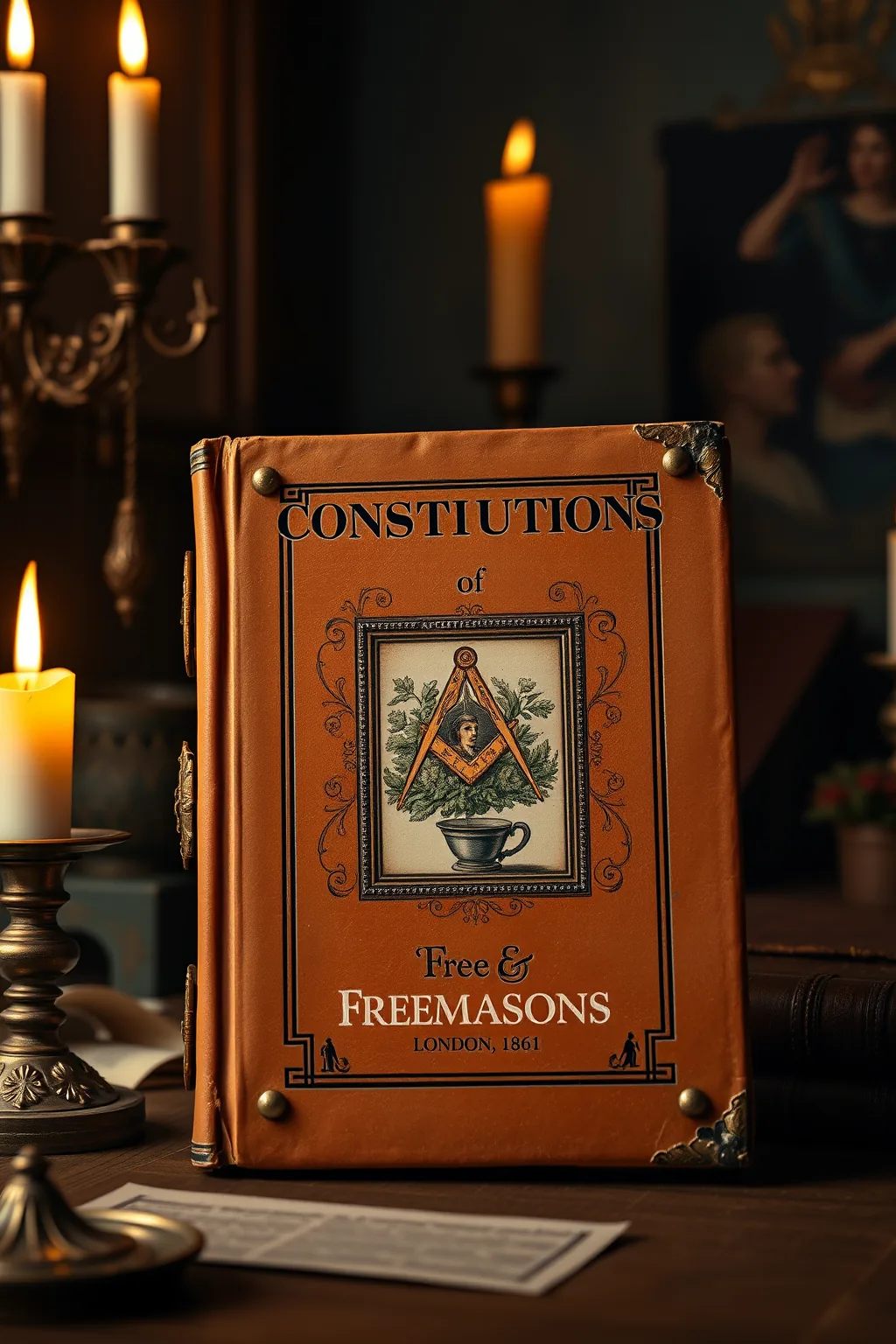
Constitutions Of Free & Accepted Freemasons London 1861
 80
80

Constitutions Of Free & Accepted Freemasons London 1861


Isolde Whitaker, Sacred Texts Editor, hails the 'Constitutions of Free & Accepted Freemasons London 1861' as an essential artifact for serious students of Western esotericism. This meticulously preserved edition offers unparalleled access to the foundational principles and symbolic language of Freemasonry, revealing its profound philosophical and spiritual dimensions. Whitaker emphasizes its strength in providing a clear, albeit veiled, exposition of Masonic jurisprudence and its inherent allegorical depth. The work is particularly valuable for its historical context, offering insights into the era's intellectual climate and the fraternity's role within it. This book is a vital read for Freemasons, occult historians, and anyone seeking to understand the esoteric underpinnings of one of the world's most enduring secret societies. Its clarity on core tenets, when approached with a discerning eye, makes it a foundational text for grasping Masonic wisdom.
📝 Description
80
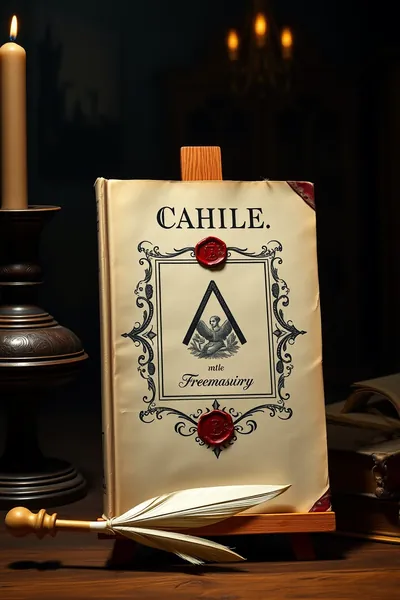
The 1861 London edition of the Constitutions of Free & Accepted Masons outlines the fraternity's foundational laws and allegorical teachings.
This 1861 London edition of the Constitutions of Free & Accepted Masons presents the core tenets and allegorical framework of Masonic practice. It details the ancient laws and symbolic language intended for the instruction of initiated members. The text functions as a guide for moral development and self-awareness, employing symbolism and traditional wisdom passed through Masonic lineages.
Preserved from the Victorian era, this volume encourages serious contemplation of Masonic philosophy. It is a valuable resource for individuals interested in Western esotericism, ritualistic traditions, and the search for hidden knowledge. The Constitutions articulate fundamental principles such as brotherhood, truth, and the pursuit of enlightenment. These are conveyed through a distinct system of ritualistic practice and esoteric philosophy, inviting readers to consider divine order, personal accountability, and the impact of collective endeavor.
The book's philosophical depth comes from its explanation of universal concepts. It frames these within the context of Masonic ritual and esoteric thought. Readers are encouraged to engage with ideas of cosmic structure and internal selfhood, informed by the principles of Freemasonry.
This work belongs to the tradition of Western Esotericism, specifically within the milieu of Masonic ritual and philosophy. It reflects the 19th-century development and codification of Masonic teachings, drawing on earlier traditions of hermeticism, Kabbalah, and Rosicrucianism. The Constitutions are not merely historical records but documents that transmit a specific worldview, emphasizing order, wisdom, and the search for divine light through structured symbolic systems.
💡 Why Read This Book?
Uncover the foundational allegories and philosophical underpinnings of Freemasonry. This 1861 edition offers a direct portal into the symbolic language and moral teachings that have guided initiates for centuries. It's essential for scholars of secret societies, practitioners seeking deeper ritualistic understanding, and seekers of ancient wisdom who wish to explore the architecture of brotherhood and self-improvement.
⭐ Reader Reviews
Honest opinions from readers who have explored this book.
❓ Frequently Asked Questions
What is the primary purpose of the Constitutions of Free & Accepted Freemasons?
The primary purpose is to codify the ancient laws, customs, and moral principles of Freemasonry, serving as a guide for members and outlining the philosophical and symbolic framework of the fraternity.
Is this book suitable for non-Masons?
Yes, it is highly valuable for those interested in the history, philosophy, and esoteric symbolism of Freemasonry, offering an academic and intellectual exploration of its tenets.
What historical period does this edition represent?
This edition is from 1861, reflecting the state of Masonic jurisprudence and philosophical interpretation during the Victorian era in London.
Does the book contain actual rituals?
While it outlines principles and allegorical teachings, it is primarily a constitutional and philosophical text rather than a direct manual of rituals. The rituals are often understood through interpretation of its symbolic content.
What is the esoteric significance of the 'Constitutions'?
Its esoteric significance lies in its symbolic representation of spiritual and moral development, the pursuit of divine light, and the construction of an inner temple through knowledge and virtuous living.
🔮 Key Themes & Symbolism
The Architecture of Self and Society
The 'Constitutions' present Freemasonry as a symbolic system for constructing not only organized society but also the inner temple of the individual soul. It uses architectural metaphors to illustrate the principles of moral rectitude, intellectual growth, and spiritual enlightenment. The text studies the idea that by understanding and adhering to these foundational laws, individuals can build a life of integrity, purpose, and virtue, mirroring the perfection of divine design. This theme underscores the transformative potential inherent in the fraternity's teachings, emphasizing self-mastery and contribution to the greater good through disciplined living and shared pursuit of truth.
Symbolic Language and Esoteric Illumination
Central to the 'Constitutions' is its collection of symbolic language, drawing from ancient traditions and operative masonry. These symbols are not mere decorations but vehicles of profound esoteric meaning, intended to guide the initiate towards higher understanding. The text elucidates how abstract concepts of morality, philosophy, and spirituality are encoded within tools, allegories, and ceremonies. This illumination is presented as a process, a gradual unveiling of hidden truths that require contemplation, study, and personal reflection. The book serves as a key to deciphering this symbolic lexicon, offering a path towards intellectual and spiritual awakening.
The Ancient Law and Brotherhood
The 'Constitutions' are deeply rooted in the concept of ancient law, representing the enduring principles that govern the natural order and human conduct. This framework emphasizes the establishment and maintenance of brotherhood, a sacred bond built upon trust, loyalty, and mutual support. The text outlines the responsibilities and privileges of membership, highlighting the importance of harmony, equality, and the common pursuit of wisdom and virtue. It posits that the strength of the fraternity lies in its adherence to these timeless laws, fostering a community dedicated to moral upliftment and the betterment of humankind.
💬 Memorable Quotes
Direct passages from the work, attributed to the author.
“The great principles of morality are the foundation of all societies.”
— Highlighting the universal nature of ethical tenets, this suggests that the 'Constitutions' are not merely rules for a select group but reflect fundamental truths applicable to all human endeavors and civil order.
“Wisdom, Strength, and Beauty are the pillars of a just and true lodge.”
— These symbolic pillars represent the essential qualities required for a harmonious and enlightened Masonic gathering, reflecting the balance needed for building sound character and a well-ordered community.
“Let the square guide your actions and the compass your desires.”
— This iconic Masonic maxim illustrates the practical application of symbolic tools, urging members to act with rectitude and justice, while tempering their ambitions with reason and restraint.
💡 Key Ideas
Editorial paraphrase of the work's core concepts — not direct quotes.
To be good and to do good is the whole of religion.
This quote captures the practical, ethical core of Masonic philosophy, emphasizing that true spiritual realization is found not in abstract dogma but in virtuous action and moral conduct in the world.
The pursuit of Light is the ultimate aim of the enlightened Mason.
This quote points to the esoteric quest for knowledge, spiritual truth, and inner illumination that lies at the heart of Masonic progression, symbolizing the journey from darkness to understanding.
🌙 Esoteric Significance
Tradition
This text is intrinsically linked to the Western Esoteric Tradition, specifically within the framework of Hermeticism, Alchemy, and Kabbalah, which have historically influenced Masonic symbolism and philosophy. It represents an attempt to synthesize ancient wisdom, moral philosophy, and spiritual aspiration into a structured fraternal system. The 'Constitutions' offer a symbolic map for the aspirant's journey, emphasizing the 'as above, so below' principle and the concept of man as a microcosm reflecting the macrocosm, striving for union with the divine through disciplined practice and inner transformation.
Symbolism
The 'Constitutions' are replete with symbolic language, drawing heavily from operative stonemasonry, geometry, and biblical narratives. Key symbols include the square (morality, rectitude), the compass (temperance, boundaries), the plumb line (uprightness), and the level (equality). These tools, when interpreted esoterically, represent the means by which individuals can construct a virtuous character and a harmonious spiritual life. The book's allegorical framework encourages a deeper understanding of universal principles, divine order, and the process of spiritual purification and enlightenment, moving beyond literal interpretations to grasp profound metaphysical truths.
Modern Relevance
Despite its 19th-century origins, the 'Constitutions' retain significant esoteric relevance today. They offer timeless principles for ethical living, personal growth, and community building that resonate with contemporary seekers of wisdom. The emphasis on symbolism and allegory provides a rich source for meditation and introspection, applicable to various spiritual paths. For those interested in the history of secret societies, ritual studies, or the philosophical underpinnings of Western mysticism, this text remains a foundational document. Its exploration of the individual's role in creating order and light in the world continues to inspire those seeking meaning and purpose in modern life.
👥 Who Should Read This Book
This volume is indispensable for Freemasons seeking a deeper understanding of their fraternity's historical and philosophical foundations. Scholars of comparative religion, secret societies, and Western esotericism will find it a crucial primary source for analyzing Masonic thought and its influences. Seekers of ancient wisdom and moral philosophy will appreciate the allegorical depth and ethical guidance offered. Practitioners of contemplative traditions may find inspiration in its symbolic language and emphasis on self-transformation through disciplined application of principles. It is for the dedicated individual ready to engage with complex ideas and uncover the veiled truths within structured knowledge.
📜 Historical Context
The 1861 London edition of the Constitutions of Free & Accepted Masons emerges from the heart of the Victorian era, a period characterized by profound industrial, social, and intellectual change. Freemasonry in Britain during this time was a well-established institution, deeply interwoven with the fabric of society, often attracting men of influence and intellect. This era saw a consolidation of Masonic practices and a renewed interest in its historical roots and philosophical underpinnings. The publication of such constitutions reflected a desire to codify and present the fraternity's principles in a clear, albeit symbolically rich, manner to both its members and a curious public. It was a time when grand lodges sought to articulate their authority and the enduring relevance of their ancient traditions amidst a rapidly modernizing world, making this text a crucial window into the self-perception and public face of Freemasonry in mid-19th century England.
📔 Journal Prompts
Reflect on the concept of 'building a temple' in your own life. What are the 'materials' and 'tools' you are using?
How can the symbols of the square and compass guide your daily decisions and desires?
Consider the meaning of 'brotherhood' beyond the ritualistic context. How can you foster stronger connections in your own communities?
What does 'pursuit of Light' mean to you personally? What steps can you take to move closer to this illumination?
Analyze a moral dilemma you have faced using the principles of rectitude and temperance as outlined in the 'Constitutions'.
🗂️ Glossary
Worshipful Master
The presiding officer of a Masonic lodge, symbolizing wisdom and leadership in guiding the brethren and overseeing the lodge's affairs according to ancient laws.
Apprentice
The first degree in Freemasonry, representing the initial stage of learning, characterized by the acquisition of fundamental knowledge and moral principles.
Fellow Craft
The second degree in Freemasonry, signifying a stage of intellectual and spiritual development, where deeper symbolic understanding and practical application are explored.
Master Mason
The highest (or third) degree in Craft Masonry, representing completion and mastery, often associated with the pursuit of ultimate truth and the completion of the inner temple.
Entered Apprentice Piece
An allegorical narrative or symbolic representation presented to a new Mason, designed to impart foundational moral and philosophical lessons through storytelling and imagery.
This book appears in 2 collections
🔮 Readers Also Liked
Browse all →






From the “Secret Societies” Collection
View all →




More Free Freemasonry & Secret Societies Books
View all →