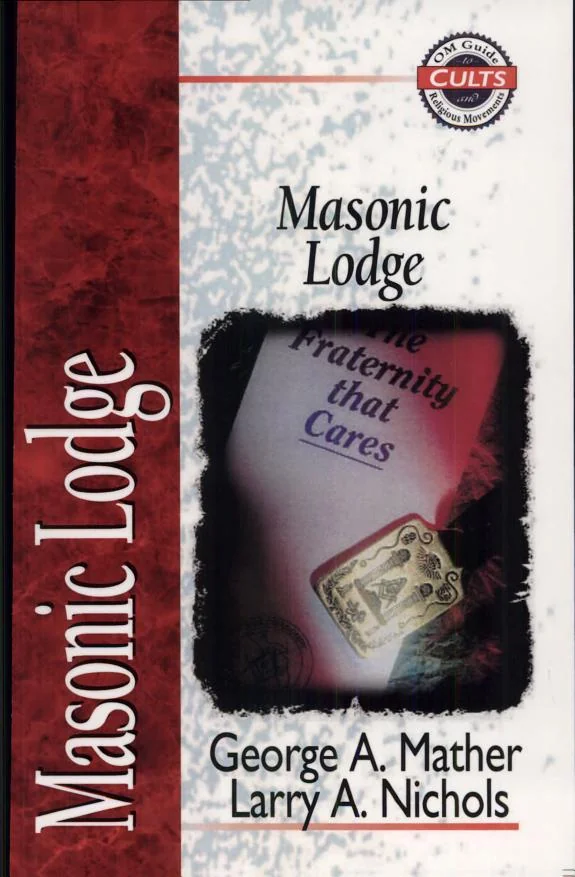
Masonic Lodge
 75
75

Masonic Lodge
George A. Mather and Larry A. Nichols's "Masonic Lodge" offers a commendable, if somewhat dry, exposition on a subject often shrouded in rumor. Its strength lies in its systematic breakdown of Masonic degrees and symbolism, particularly its clear explanation of the Junior and Senior Warden roles. The limitation, however, is a certain academic detachment that, while aiming for objectivity, sometimes misses the experiential dimension for those seeking deeper esoteric understanding. The detailed description of the tracing boards and their complex iconography provides a valuable reference point. Ultimately, this work serves as a solid, albeit uninspired, primer for the curious.
📝 Description
75
Published in 1995, this volume examines Freemasonry's structure, teachings, and history.
This book, originally published in 1995 by Zondervan, offers a detailed analysis of Freemasonry. The authors aim for a clear, objective look at the organization, moving beyond common speculation to analyze its structure, teachings, and historical presence. The text meticulously unpacks the hierarchical structure of Masonic lodges, detailing the progression through various degrees and the significance attributed to each. It examines the rituals and symbolism that form the core of Masonic practice, presenting them for understanding rather than critique. The authors provide a framework for comprehending how these elements function within the fraternity. The book situates Freemasonry's development within broader historical and philosophical movements. It discusses the evolution of Masonic lodges from their speculative roots, often linked to stonemason guilds, into the complex fraternal organization known today. The book acknowledges various interpretations and historical accounts surrounding its inception and spread. Central to the work is an examination of the ethical and philosophical principles espoused by Freemasonry. The authors highlight key symbols and allegories used in Masonic teachings, explaining their purported meanings and their role in shaping a member's understanding of moral and spiritual development.
This work approaches Freemasonry as a system of moral and spiritual instruction, rooted in allegory and symbolism. It acknowledges the fraternity's historical ties to operative guilds and its development into a speculative philosophical society. By dissecting the degrees, rituals, and core tenets, the book positions Masonic practice within a tradition of Western esotericism that uses symbolic language to convey moral and philosophical truths, aiming for personal development.
💡 Why Read This Book?
• Gain clarity on the distinct levels and progression within Freemasonry, understanding the purpose of each of the three Craft degrees as presented in the book. • Explore the allegorical meanings behind specific Masonic symbols, such as the Square and Compasses, as detailed in the text's examination of ritual. • Understand the historical milieu of Freemasonry's development, referencing its emergence during the Enlightenment and its connection to earlier guild structures.
⭐ Reader Reviews
Honest opinions from readers who have explored this book.
❓ Frequently Asked Questions
What is the primary purpose of the Zondervan Guide to Cults and Religious Movements series in relation to "Masonic Lodge"?
The series aims to provide discerning and detailed examinations of various groups, including those that might be perceived as cults or deviate from mainstream religious thought. "Masonic Lodge" fits this by offering an analytical perspective on Freemasonry's doctrines and practices.
When was "Masonic Lodge" by Mather and Nichols first published?
The book "Masonic Lodge" was first published in 1995 as part of the Zondervan Guide to Cults and Religious Movements series.
Does the book "Masonic Lodge" focus on the conspiracy theories surrounding Freemasonry?
While acknowledging the existence of speculation, the book's primary focus is on a detailed and discerning examination of Masonic structure, teachings, and historical context, rather than perpetuating conspiracy theories.
What are some of the key concepts explored within the "Masonic Lodge" book?
The book explores concepts such as Masonic degrees, rituals, symbolism (like the Square and Compasses), and the ethical/philosophical principles espoused within the fraternity.
Is "Masonic Lodge" considered a primary source for understanding Freemasonry?
It is an analytical secondary source that examines Masonic practices and beliefs, drawing upon primary materials and historical accounts. It provides an external, scholarly perspective on the fraternity.
Who are the authors of the "Masonic Lodge" volume?
The authors are George A. Mather and Larry A. Nichols. The book was first published in 1995.
🔮 Key Themes & Symbolism
Ritual and Degree Progression
The work meticulously dissects the tiered system of Masonic degrees, particularly the three Craft degrees. It explains how each level involves specific rituals and teachings designed to impart moral and philosophical lessons. The book details the symbolic journey members undertake, emphasizing the structured nature of Masonic initiation and advancement from Entered Apprentice to Master Mason.
Symbolic Language of Masonry
A significant portion of the book is dedicated to decoding the detailed symbolism embedded within Masonic practice. Concepts such as the Rough and Perfect Ashlars, the working tools, and the allegorical representations on tracing boards are explored. These symbols are presented not merely as decorative elements but as a sophisticated language intended to convey profound ethical and spiritual truths.
Historical and Philosophical Underpinnings
Mather and Nichols situate Freemasonry within its historical context, tracing its lineage from operative stonemason guilds to its emergence as a speculative fraternity during the Enlightenment. The work examines the philosophical currents, such as deism and rationalism, that influenced early Masonry and continue to shape its tenets and appeal to members seeking self-improvement and moral rectitude.
Organizational Structure and Governance
The book provides insight into the operational framework of Masonic lodges. It explains the roles of officers, the conduct of meetings, and the governance structures that maintain order and tradition within the fraternity. This aspect clarifies how a local lodge functions as a cohesive unit dedicated to its principles and rituals.
💬 Memorable Quotes
Direct passages from the work, attributed to the author.
“The volume discusses the mystery of the Masonic Lodge in a discerning, detailed way.”
— This statement from the original blurb highlights the book's approach: analytical and thorough, aiming to explain rather than sensationalize Freemasonry's often-speculated-about nature.
“It examines the rituals and symbolism that form the core of Masonic practice.”
— This points to the book's focus on the experiential and didactic elements of Freemasonry, detailing the ceremonies and symbolic language used to convey its teachings.
“The book situates its development within broader historical and philosophical movements.”
— This interpretation underscores the authors' effort to contextualize Freemasonry, linking its origins and evolution to the intellectual climate of the times, particularly the Enlightenment.
“The focus remains on presenting these concepts as understood within the Masonic framework.”
— This highlights the book's commitment to explaining Masonic tenets from an internal perspective, aiming for accurate representation of the fraternity's own understanding.
💡 Key Ideas
Editorial paraphrase of the work's core concepts — not direct quotes.
The work meticulously unpacks the hierarchical structure of Masonic lodges.
This paraphrased concept emphasizes the book's systematic exploration of the degrees and ranks within Freemasonry, presenting a clear organizational chart for the reader.
🌙 Esoteric Significance
Tradition
While not strictly adhering to a single esoteric lineage, "Masonic Lodge" engages with themes common in Western Esotericism, particularly Hermeticism and Rosicrucianism, due to Freemasonry's historical absorption and reinterpretation of these traditions. It fits within the academic study of esotericism by analyzing the symbolic and ritualistic systems that have influenced various occult and philosophical movements since the 17th century.
Symbolism
Key symbols explored include the Square and Compasses, representing morality and the bounds of conduct; the Rough and Perfect Ashlars, symbolizing man's unrefined state and his potential for self-improvement; and the Blazing Star, often linked to divine providence or the pursuit of truth. These are presented as tools for moral and spiritual edification within the Masonic framework.
Modern Relevance
Contemporary scholars of Western Esotericism and comparative religion continue to reference works like Mather and Nichols' for their foundational analysis of Masonic structures and symbolism. Thinkers exploring fraternal orders, ritual studies, and the history of secret societies often cite such texts as essential background for understanding the enduring appeal and symbolic language of Freemasonry in the modern world.
👥 Who Should Read This Book
• Students of comparative religion and secret societies seeking objective analyses of Freemasonry's structure and beliefs. • Individuals curious about the historical development and philosophical underpinnings of Western fraternal orders. • Researchers of ritual and symbolism interested in understanding the allegorical language employed within Masonic lodges.
📜 Historical Context
Published in 1995, "Masonic Lodge" emerged during a period of renewed popular interest in secret societies, fueled by media and a resurgence of esoteric studies. The intellectual climate was marked by academic critiques of Western esotericism, with scholars like Wouter J. Hanegraaff and Antoine Faivre actively mapping the field. This work can be seen as a contribution to the growing body of literature that sought to provide structured, often secularized, analyses of groups like Freemasonry, distinguishing them from more overtly religious or conspiratorial interpretations. Its inclusion in Zondervan's "Guide to Cults and Religious Movements" series placed it in dialogue, albeit indirectly, with evangelical Christian perspectives on alternative spiritualities, a significant reception context for such works in the United States.
📔 Journal Prompts
Masonic Lodge's depiction of the Rough and Perfect Ashlars.
The symbolic role of the Worshipful Master in lodge proceedings.
The historical context of Freemasonry's rise during the Enlightenment.
The allegorical significance of the tracing boards.
The ethical lessons derived from Masonic rituals.
🗂️ Glossary
Entered Apprentice
The first degree in the symbolic lodge of Freemasonry, representing the initial stage of learning and initiation into the fraternity's basic principles.
Fellow Craft
The second degree in Freemasonry, signifying a period of intellectual development and the acquisition of further knowledge and skills within the fraternity.
Master Mason
The highest degree in the symbolic lodge, representing completion and the attainment of full membership and understanding within the basic structure of Freemasonry.
Worshipful Master
The presiding officer of a Masonic lodge, elected to lead the meetings and oversee the administration of rituals and teachings.
Tracing Board
A symbolic representation, often depicted on a board or cloth, illustrating the teachings and allegories associated with a particular Masonic degree.
Ashlar
A stone accurately shaped and smoothed for building. In Masonry, the Rough Ashlar represents man in his natural state, and the Perfect Ashlar represents man improved by education and virtue.
Speculative Masonry
Freemasonry as it exists today, focusing on moral and philosophical instruction through allegory and symbolism, as distinct from operative masonry concerned with the physical construction of buildings.
This book appears in 1 collection
🔮 Readers Also Liked
Browse all →







From the “Freemasonry” Collection
View all →

More Free Freemasonry & Secret Societies Books
View all →