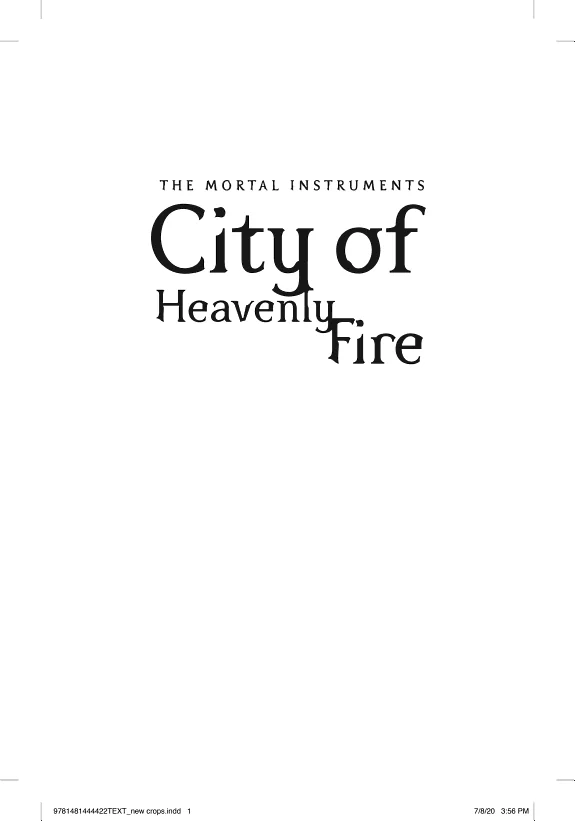
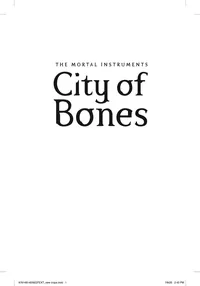
City of Heavenly Fire
 76
76

City of Heavenly Fire
Cassandra Clare’s City of Heavenly Fire concludes The Mortal Instruments series with a characteristic blend of high-octane action and emotional turmoil. The novel’s strength lies in its relentless pacing and the high stakes it establishes from the outset, forcing familiar characters into truly dire situations. Clare excels at crafting visceral combat sequences and moments of genuine peril, particularly when Clary and her companions venture into the demon realm. However, the sheer scope of the conflict occasionally leads to narrative sprawl, with certain plot threads feeling somewhat overextended. The exploration of Sebastian’s motivations, while central, sometimes leans on a melodramatic intensity that can overshadow subtler character arcs. Despite these minor quibbles, the book delivers a satisfying, if often brutal, conclusion to the saga, cementing its place within the urban fantasy landscape. It's a fittingly epic, if occasionally unwieldy, finale.
📝 Description
76
City of Heavenly Fire, published in 2015, concludes The Mortal Instruments saga.
This sixth installment in Cassandra Clare's The Mortal Instruments series brings Clary Fray and her allies face-to-face with their most dangerous enemy: Clary's brother, Sebastian Morgenstern. His destructive ambition threatens to overwhelm both the human and demon worlds. The narrative focuses on the Shadowhunters, a hidden order of demon hunters, as they fight to stop Sebastian's malevolent plans. This young adult urban fantasy novel is best suited for readers who have followed the series from its beginning, particularly those invested in the characters of Clary, Jace, and Simon. It will appeal to fans of dark fantasy, urban settings, and detailed world-building, especially those who enjoy high-stakes conflicts and explorations of dark family legacies within a supernatural context.
Published in 2015, City of Heavenly Fire fits into the young adult fantasy genre that gained prominence with series like Harry Potter and The Hunger Games. Clare's work draws on the supernatural romance and urban fantasy trends popular since the early 2000s. The Mortal Instruments series, which began in 2007, consistently examines themes of identity and belonging, using the struggle between light and shadow to reflect broader societal questions about power and morality.
💡 Why Read This Book?
• Gain insight into the Shadowhunter's struggle against demonic corruption, specifically through the descent of Sebastian Morgenstern, offering a concrete example of the battle between angelic heritage and infernal influence. • Experience the high-stakes confrontation in the demon realm, a pivotal location that tests the limits of the Nephilim and provides a unique setting for arcane warfare. • Understand the culmination of Clary Fray’s journey and her role in confronting ultimate evil, as depicted in the final chapters of The Mortal Instruments series, providing a definitive character arc resolution.
⭐ Reader Reviews
Honest opinions from readers who have explored this book.
❓ Frequently Asked Questions
What year was Cassandra Clare's City of Heavenly Fire first published?
City of Heavenly Fire, the sixth book in The Mortal Instruments series, was first published in September 2015 by Margaret K. McElderry Books.
Who is the main antagonist in City of Heavenly Fire?
The primary antagonist is Sebastian Morgenstern, who is revealed to be Clary Fray's brother and wields immense demonic power, threatening the entire Shadowhunter world.
What is the significance of the demon realm in City of Heavenly Fire?
The demon realm serves as a crucial setting for the climax, where Clary, Jace, and their allies must confront Sebastian in his own domain, testing their resilience against overwhelming evil.
Does City of Heavenly Fire conclude The Mortal Instruments series?
Yes, City of Heavenly Fire is the concluding novel of Cassandra Clare's original Mortal Instruments series, bringing the central conflicts and character arcs to a resolution.
What supernatural beings are central to the plot of City of Heavenly Fire?
The novel prominently features Shadowhunters, who are half-angelic warriors, and demons, particularly the powerful and corrupted Sebastian Morgenstern.
What esoteric concepts are explored in City of Heavenly Fire?
The book touches upon angelic heritage versus demonic corruption, the nature of power, and the struggle between light and shadow, framed within the Shadowhunter's unique cosmology.
🔮 Key Themes & Symbolism
Angelic vs. Demonic Lineage
The novel deeply explores the conflict between a character's inherent angelic heritage and the corrupting influence of demonic power. Sebastian Morgenstern embodies this struggle, twisted by Lilith's rituals and his own ambition. This theme questions whether one's destiny is predetermined by bloodline or shaped by choice, a central tenet in many esoteric traditions concerning the duality of human nature and the potential for both divine and infernal manifestation.
The Nature of Evil and Corruption
City of Heavenly Fire examines how evil can manifest not just externally but internally, corrupting individuals from within. Sebastian's descent into monstrousness, fueled by a desire for power and revenge, serves as a stark warning. The narrative explores the psychological and spiritual toll of embracing darkness, reflecting esoteric ideas about the soul's susceptibility to negative forces and the necessity of maintaining inner purity.
Sacrifice and Redemption
The characters repeatedly face situations demanding profound sacrifice for the greater good. Clary, Jace, and their allies are pushed to their limits, making difficult choices that involve personal loss to combat the overwhelming threat of Sebastian. This theme aligns with esoteric principles that often posit that spiritual growth or the overcoming of great darkness requires significant self-abnegation and a willingness to suffer for a higher purpose.
The Shadowhunter Cosmology
The book builds upon the established Shadowhunter universe, a system with its own hierarchies, magical practices, and lore. Their existence as Nephilim, beings with both human and angelic blood, places them in a unique position between worlds. This intricate cosmology, involving runes, angels, demons, and different planes of existence, mirrors the complex systems found in various occult traditions that map out spiritual realities and the interactions between them.
💬 Memorable Quotes
Direct passages from the work, attributed to the author.
“The fate of the world depended on them.”
— This statement captures the immense pressure and responsibility placed upon Clary and her friends. It highlights the critical juncture they face, where their actions will determine the survival of not just their world but potentially others, emphasizing themes of destiny and heroism.
“He was a monster, and she was going to stop him.”
— This internal resolve from Clary underscores her determination to confront the ultimate evil embodied by her brother, Sebastian. It signifies her acceptance of her role and her commitment to fighting against overwhelming darkness, regardless of personal cost.
“They had to journey to the demon realm.”
— This highlights a central plot point, signifying the desperate measures the protagonists must take. Venturing into enemy territory, the area of demons, represents a willingness to face the deepest fears and darkest forces to achieve victory.
“Sometimes the only way to win is to destroy yourself.”
— This reflects a theme of ultimate sacrifice or self-destruction as a potential means to defeat an insurmountable foe. It poses a profound question about the cost of victory and the boundaries of self-preservation when faced with absolute evil.
💡 Key Ideas
Editorial paraphrase of the work's core concepts — not direct quotes.
Love is not a victory march, it's a semaphore.
This quote suggests that love is not always grand and triumphant but often involves subtle signals and quiet communication, especially in times of conflict. It implies a deeper, more nuanced understanding of connection amidst chaos.
🌙 Esoteric Significance
Tradition
While not explicitly tied to a single esoteric lineage, City of Heavenly Fire draws heavily from Gnostic and Hermetic themes concerning the duality of creation, the presence of malevolent forces (demons), and the concept of a hidden spiritual reality (the Shadowhunter world). The Nephilim, as half-angelic beings, echo Gnostic ideas of divine sparks trapped within the material world. The struggle against demonic corruption and the search for hidden knowledge align with Hermetic principles of understanding the cosmos and one's place within it.
Symbolism
The most prominent symbols include the angelic rune, representing divine protection and power bestowed upon the Nephilim, a motif common in protective magic across various traditions. Demons, particularly Lilith and her corrupted progeny like Sebastian, symbolize primal chaos, destructive desire, and the fallen aspects of creation. The journey into the demon realm itself serves as a potent symbol for confronting the shadow self or the lower planes of existence, a core concept in many mystical paths.
Modern Relevance
Contemporary fantasy literature continues to explore themes of good versus evil, internal struggles with darkness, and the existence of hidden worlds, all of which City of Heavenly Fire exemplifies. Thinkers and practitioners interested in modern interpretations of angelic and demonic lore, the psychology of good and evil, and the exploration of complex mythologies within popular culture can find fertile ground in Clare's work. It contributes to a broader narrative landscape where the esoteric is made accessible and engaging for a mass audience.
👥 Who Should Read This Book
• Fans of the Mortal Instruments series seeking a definitive conclusion to Clary and Jace's saga, particularly those interested in the resolution of the conflict with Sebastian Morgenstern. • Readers of young adult urban fantasy who enjoy intricate world-building, high-stakes magical combat, and explorations of complex sibling relationships within a supernatural context. • Individuals interested in narratives that explore themes of demonic corruption, angelic heritage, and the moral ambiguities inherent in fighting overwhelming evil, offering a popular culture lens on these concepts.
📜 Historical Context
Published in 2015, City of Heavenly Fire arrived during the zenith of young adult urban fantasy, a genre that had exploded in popularity throughout the early 2000s, largely influenced by authors like Stephenie Meyer and Suzanne Collins. Cassandra Clare's Mortal Instruments series, which began in 2007, stood as a significant pillar of this movement, building its own intricate lore and devoted fanbase. The series engaged with themes of hidden worlds, supernatural beings, and romantic entanglements that resonated with a generation. While not directly engaging with overt occult traditions, the series' exploration of angelic heritage, demonic forces, and secret societies tapped into a broader cultural fascination with the esoteric and supernatural. Competitors like Richelle Mead's Vampire Academy series also explored similar dark fantasy themes. The reception for Clare's work was generally positive, with critics often praising her world-building and character dynamics, though some noted the series' increasing complexity and length.
📔 Journal Prompts
Clary's confrontation with Sebastian's demonic influence.
The significance of the Infernal Devices in the Shadowhunter world.
Jace's internal struggle with his angelic heritage.
The decision to journey into the demon realm.
Simon's transformation and role as a vampire.
🗂️ Glossary
Shadowhunters
Also known as Nephilim, these are a secret race of half-angelic warriors who protect the human world from demons. They possess unique abilities and are bound by the Law.
Demons
Creatures from other dimensions that seek to harm or possess humans. They are the primary enemies of the Shadowhunters.
Nephilim
The ancient and proper term for Shadowhunters, referring to their lineage descended from angels and humans.
Demon Realm
A parallel dimension inhabited by demons, from which they can cross into the human world. It is a dangerous and chaotic place.
Runes
Magical symbols tattooed onto Shadowhunters' skin, which grant them various abilities or protections when activated by angelic power.
Infernal Devices
Ancient artifacts of immense power, often associated with demons or dark magic, which play a central role in the plot.
This book appears in 1 collection
🔮 Readers Also Liked
Browse all →








From the “Demonology” Collection
View all →





More Free Occult Philosophy Books
View all →