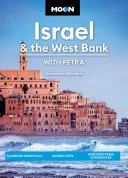
Moon Israel & the West Bank: With Petra
 82
82

Moon Israel & the West Bank: With Petra
Genevieve Belmaker’s Moon Israel & the West Bank: With Petra succeeds in presenting a functional, if somewhat conventional, travel guide to a deeply complex territory. The itineraries, particularly the suggested month-long exploration, offer a sensible structure for engaging with the region’s density. Belmaker’s strength lies in her straightforward presentation of practicalities, from transport to lodgings, which is invaluable for any traveler. However, the book occasionally falters in its attempt to capture the esoteric weight of the land. While it lists key holy sites like the Church of the Holy Sepulchre and the Western Wall, the deeper spiritual or mystical currents feel somewhat understated, presented more as historical facts than living traditions. A passage detailing the layers of history in Jerusalem's Old City serves as a good example; it is informative but lacks the interpretive depth one might expect from a guide published by an esoteric library. The inclusion of Petra is a welcome addition, broadening the scope significantly. Ultimately, Moon Israel & the West Bank: With Petra is a competent travel companion, best suited for those prioritizing logistical ease over profound spiritual exploration.
📝 Description
82
Genevieve Belmaker's 2009 guide, Moon Israel & the West Bank: With Petra, details itineraries for a region rich in history and spiritual weight.
This travel guide provides practical routes and information for visiting Israel, the West Bank, and Petra. It covers major cities like Jerusalem and Tel Aviv, as well as areas such as the West Bank and the Dead Sea. The book also includes the ancient Nabataean city of Petra, placing it in a wider regional context.
It is written for independent travelers, history buffs, pilgrims, and anyone wishing to grasp the complex cultural and religious environment of Israel and the West Bank. Those interested in the archaeology of Petra will also find it useful. The guide acknowledges the region's long history, from biblical times to current events, and mentions sites important to Judaism, Christianity, and Islam. Its aim is to give visitors a better understanding of the historical background they encounter.
The book focuses on the connections between sacred geography, historical memory, and cultural interaction. It views locations not just as tourist spots but as places of significant human experience where old narratives still influence the present. The inclusion of Petra broadens the regional scope beyond immediate political boundaries.
While presented as a travel guide, the focus on sacred geography and the intersection of multiple religious traditions suggests an esoteric undercurrent. The book treats sites as more than just historical markers, but as active loci where ancient spiritual forces and human experiences continue to resonate. By connecting the historical narratives of Judaism, Christianity, and Islam with the physical landscape, it encourages a deeper, more symbolic reading of place, characteristic of esoteric approaches to geography and pilgrimage.
💡 Why Read This Book?
• Gain practical, multi-week itineraries for navigating Israel and the West Bank, including specific suggestions like a week in Jerusalem and three days in Tel Aviv, allowing for a structured exploration of diverse historical layers. • Understand the geographical and historical connections between sites like the Church of the Holy Sepulchre and the broader ancient world, as exemplified by the inclusion of Petra. • Discover unique experiences beyond typical tourist paths, focusing on how ancient stories intersect with modern urban and cultural landscapes in the region.
⭐ Reader Reviews
Honest opinions from readers who have explored this book.
❓ Frequently Asked Questions
What are the key religious sites covered in Moon Israel & the West Bank: With Petra?
The guide highlights major holy sites for Judaism, Christianity, and Islam, including the Western Wall in Jerusalem, the Church of the Holy Sepulchre, and various significant locations within the West Bank.
Does the book offer advice for visiting Petra?
Yes, Moon Israel & the West Bank: With Petra includes excursions to Petra, the ancient Nabataean city, providing information for travelers interested in this historical and archaeological wonder.
What is the suggested duration for exploring the region according to the book?
The guide offers flexible itineraries, with options ranging from shorter stays like three days in Tel Aviv to a comprehensive month-long exploration of the entire region, including the West Bank and Dead Sea.
How does the book address the modern cities alongside ancient sites?
It integrates modern urban centers like Tel Aviv with historical exploration, presenting a balance between contemporary life and the enduring presence of ancient stories and sites across Israel and the West Bank.
Is Petra located within Israel or the West Bank?
No, Petra is located in modern-day Jordan, and the book includes it as a significant regional excursion, connecting it thematically and geographically to the broader historical landscape.
What type of traveler would find this guide most useful?
This guide is ideal for independent travelers, history buffs, pilgrims, and those seeking a structured yet flexible approach to understanding the multifaceted cultural and religious heritage of Israel, the West Bank, and nearby Petra.
🔮 Key Themes & Symbolism
Sacred Geography
The book emphasizes the concept of sacred geography, detailing how the land itself is imbued with spiritual significance across multiple traditions. It maps out locations central to biblical narratives, early Christianity, and Jewish history, presenting them as points of connection to ancient spiritual currents. Sites like the Western Wall and the Church of the Holy Sepulchre are explored not just for their historical architecture but for their ongoing role as focal points of faith and pilgrimage.
Layered Histories
A core theme is the presence of multiple, overlapping histories within the region. Belmaker illustrates how ancient stories and civilizations coexist with modern cities and political realities. The guide encourages readers to perceive these strata, understanding that contemporary experiences are deeply influenced by millennia of human events. This is evident in the juxtaposition of bustling Tel Aviv with the ancient ruins and holy sites.
Regional Interconnections
By including Petra, the book fosters an understanding of broader regional connections that transcend immediate political boundaries. It suggests that the historical and cultural narratives of Israel and the West Bank are part of a larger Middle Eastern story. Petra, the Nabataean capital, serves as a powerful example of ancient trade routes and cultural exchange that linked disparate peoples across this territory and beyond.
Cultural Encounters
The guide implicitly promotes thoughtful cultural encounters by providing context for the diverse populations and traditions inhabiting the area. It prepares travelers to engage respectfully with sites and communities, fostering an appreciation for the complex social fabric shaped by centuries of interaction and coexistence among different religious and ethnic groups.
💬 Memorable Quotes
Direct passages from the work, attributed to the author.
“Ancient stories meet modern cities in this deeply significant region where the past is always present.”
— This statement captures the book's central thesis: the region is a living archive where historical narratives actively shape contemporary life and urban landscapes.
“Visit the Church of the Holy Sepulchre or pay respects at the Western Wall, and stop at holy sites.”
— This highlights the book's practical approach to guiding visitors to key locations of religious importance for Christians and Jews, emphasizing direct experience.
“Flexible, strategic itineraries including a week in Jerusalem, three days in Tel Aviv, and a month exploring the region.”
— This points to the guide's utility in planning, offering adaptable frameworks for travelers with varying time commitments and interests in exploring the diverse locales.
“Excursions to the West Bank, the Dead Sea, and Petra.”
— This indicates the guide's scope, extending beyond standard tourist routes to include geographically and historically significant areas that offer unique perspectives on the region.
“The top sights and unique experiences.”
— This suggests the book aims to provide both essential landmark information and opportunities for memorable, less conventional discoveries for the engaged traveler.
🌙 Esoteric Significance
Tradition
While not overtly a work of esoteric doctrine, Moon Israel & the West Bank: With Petra touches upon traditions that hold deep esoteric significance, particularly within Abrahamic faiths and their mystical branches (Kabbalah, Christian mysticism, Sufism). The book frames sites like Jerusalem and Petra as nexus points where earthly geography intersects with spiritual currents, aligning with the Hermetic principle of correspondence ('As above, so below'). Its value lies in mapping these potent locations for contemporary seekers.
Symbolism
Key symbols emerge from the sites described. The Western Wall, representing the last remnant of the Second Temple, symbolizes enduring connection to the divine and historical memory for Judaism. The Church of the Holy Sepulchre embodies Christian concepts of sacrifice, resurrection, and pilgrimage. Petra, with its rock-cut architecture, symbolizes human ingenuity in harmonizing with nature and ancient trade networks, evoking themes of hidden knowledge and material manifestation.
Modern Relevance
Contemporary esoteric practitioners and comparative religion scholars can utilize this guide to contextualize their studies. Travelers interested in the energetic or spiritual range of the Holy Land can use Belmaker's practical framework to plan visits to sites often discussed in New Age spirituality or traditional mystical paths. The book provides a tangible anchor for exploring concepts of sacred sites and ley lines, bridging the gap between theoretical esoteric interest and physical exploration.
👥 Who Should Read This Book
• Independent travelers seeking a structured yet flexible guide to the complex historical and cultural range of Israel and the West Bank, wishing to visit key religious sites like the Western Wall and Church of the Holy Sepulchre. • History enthusiasts and armchair travelers interested in the intersection of ancient narratives and modern cities, who also appreciate the inclusion of significant regional destinations like Petra. • Pilgrims and spiritual seekers looking for practical information to plan journeys to locations of profound religious and historical importance, aiming to connect with the 'sacred geography' of the region.
📜 Historical Context
Published in 2023, Genevieve Belmaker's Moon Israel & the West Bank: With Petra enters a crowded field of travel literature on a region whose historical significance is immense and often contested. The work engages with a landscape shaped by millennia of human habitation, from ancient Canaanite settlements to Roman rule, Byzantine Christianity, Islamic caliphates, Ottoman governance, and the modern state of Israel and Palestinian territories. Its approach acknowledges the profound religious importance of sites like Jerusalem for Judaism, Christianity, and Islam, drawing on a legacy that has fascinated scholars and pilgrims for centuries. In the area of travel writing, Belmaker's guide operates within traditions established by earlier authors who sought to document these lands, such as those influenced by Victorian explorers or early 20th-century travelogues. While not explicitly engaging with competing schools of thought in esoteric studies, its practical focus on historical sites serves as a counterpoint to purely theological or mystical interpretations, grounding the experience in tangible exploration.
📔 Journal Prompts
Reflect on the concept of 'sacred geography' as presented in relation to sites like the Western Wall.
Consider the historical layering described in the context of Jerusalem's Old City.
Analyze the symbolic significance of Petra's rock-cut architecture in relation to ancient trade routes.
How do the 'ancient stories' mentioned in the blurb manifest in the descriptions of modern cities like Tel Aviv?
Evaluate the practical itinerary suggestions for balancing exploration of the West Bank with visits to major Israeli cities.
🗂️ Glossary
West Bank
A landlocked territory in the Middle East, west of the Jordan River, claimed by Palestinians and subject to Israeli occupation since 1967. It contains numerous significant historical and religious sites.
Petra
An ancient archaeological city in southern Jordan, famous for its rock-cut architecture and water conduit system. It was the capital of the Nabataean Kingdom and is a UNESCO World Heritage site.
Church of the Holy Sepulchre
A church in the Christian Quarter of the Old City of Jerusalem, believed by many Christians to be the site of Jesus' crucifixion and burial.
Western Wall
A remnant of the retaining wall of the Temple Mount complex in Jerusalem's Old City, considered the holiest accessible site for Jewish prayer.
Dead Sea
A salt lake bordering Jordan to the east and Israel and the West Bank to the west. It is known for its hypersalinity and mineral-rich mud.
Nabataean
An ancient Arab people who inhabited northern Arabia and the Southern Levant. They established the kingdom of Petra and were known for their trade and engineering skills.
Itinerary
A detailed plan or route of a journey, including the places to be visited and the times at which they are to be visited.