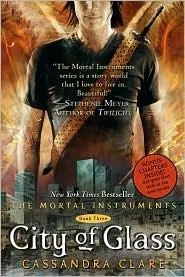
City of Glass
 76
76

City of Glass
Clare’s *City of Glass* attempts to solidify the lore of the Shadowhunter world, and largely succeeds through sheer narrative momentum. The central conflict surrounding the demon invasion and Clary’s burgeoning powers provides a strong backbone. However, the pacing occasionally falters, particularly in the middle sections where exposition threatens to overwhelm the plot. The exploration of the Seelie Court, while visually imaginative, feels somewhat underdeveloped compared to the more pressing existential threats. A standout element is the intricate familial revelations that reframe character motivations, particularly concerning Valentine's complex history. While the romance can sometimes feel predictable, the underlying themes of sacrifice and duty are compelling.
*City of Glass* is a solid entry that moves the overarching narrative forward, despite minor pacing issues.
📝 Description
76
Cassandra Clare's City of Glass, published in 2009, is the third book in The Mortal Instruments series.
This novel immerses readers in a hidden world of Shadowhunters and demons coexisting with New York City. The story follows Clary Fray as she learns about her family's past and the politics of this secret society. It is written for young adults and fans of urban fantasy who like detailed worlds and character stories. Readers who enjoy themes of identity, fitting in, and the fight between good and evil will find it appealing. The book also includes fast action and developing romantic subplots.
Released in 2009, City of Glass came out during a time of growth for young adult fantasy. Following popular series, authors started using more complex mythologies and darker subjects in this market. Clare's book blended modern settings with established mythological ideas, using demonology and angel lore.
Clare draws on established angel and demon lore, common in occult traditions, to build her Shadowhunter world. The Nephilim, as described in her work, are descendants of angels who protect the human world from demons. The narrative explores the consequences of disrupting the balance between these forces, referencing angelic runes and the significance of Idris, a hidden city central to Shadowhunter history and power.
💡 Why Read This Book?
• Gain insight into the intricacies of the Shadowhunter world, specifically the significance of Idris as their ancestral home, a concept explored through Clary's journey. • Experience the development of Clary Fray's unique abilities as a Shadowhunter, understanding how her powers are tied to the lore of the Nephilim. • Uncover the complex relationships and familial ties within the Shadowhunter community, particularly the impact of figures like Valentine Morgenstern on the unfolding events.
⭐ Reader Reviews
Honest opinions from readers who have explored this book.
❓ Frequently Asked Questions
What is the significance of Idris in City of Glass?
Idris is the hidden homeland of the Shadowhunters, a place central to their history and power. In *City of Glass*, it becomes a crucial location for understanding the conflict and Clary's own heritage.
Who are the main factions in City of Glass?
The primary factions are the Shadowhunters, dedicated to fighting demons, and the demonic forces led by Valentine Morgenstern. There are also other supernatural groups like vampires and warlocks who play supporting roles.
What are the Infernal Devices mentioned in relation to City of Glass?
The Infernal Devices are powerful magical artifacts created by the Nephilim, central to Shadowhunter history. While more prominent in a later series, their existence and lore are foundational to the world Clare established in *The Mortal Instruments*.
How does Clary Fray's heritage play a role in City of Glass?
Clary discovers she has extraordinary abilities tied to her lineage, making her central to the conflict. Her heritage is key to understanding the motivations of antagonists like Valentine.
When was City of Glass first published?
City of Glass was first published in 2009, as the third book in Cassandra Clare's *The Mortal Instruments* series.
What is the role of angels in the City of Glass narrative?
Angels are progenitors of the Shadowhunters, and their power is a core element of the lore. The conflict often revolves around the misuse or protection of angelic power and artifacts.
🔮 Key Themes & Symbolism
Nephilim Heritage and Identity
The novel deeply explores the concept of Nephilim heritage, focusing on Clary Fray's unexpected discovery of her Shadowhunter lineage. This identity crisis drives much of the plot, as she grapples with newfound powers and responsibilities. The book examines how one's bloodline dictates destiny, but also questions whether personal choice can override inherited traits. Characters confront their family histories, particularly the complex legacy of figures like Valentine Morgenstern, forcing them to define themselves beyond their origins.
The Shadow World's Political Landscape
Beyond the immediate demon-hunting action, *City of Glass* peels back the layers of the Shadowhunter society, revealing its intricate political structure and internal conflicts. The struggle for control of the Clave, the ancestral seat of power in Idris, becomes paramount. This theme highlights the tension between tradition and reform, and the dangers of unchecked ambition. The narrative questions the efficacy and morality of established power structures when faced with existential threats.
Angelic Power and Demonic Corruption
Central to the esoteric framework of *City of Glass* is the dichotomy between angelic and demonic forces. Shadowhunters draw their power from angels, a lineage that defines their purpose. The antagonist, Valentine, seeks to corrupt or control this power for his own ends, representing the ever-present threat of demonic influence. The book explores the nature of this power, its limitations, and the ethical considerations involved in wielding it, particularly through the use of runes and sacred artifacts.
The Nature of Sacrifice
The narrative consistently presents characters making significant sacrifices for the greater good or for those they love. From Jace's internal struggles to Clary's willingness to risk everything, the theme of sacrifice underscores the high stakes of the Shadowhunter world. It examines the personal cost of duty and the complex moral calculations involved when lives hang in the balance. This theme is particularly poignant as characters confront loss and the consequences of their actions.
💬 Memorable Quotes
Direct passages from the work, attributed to the author.
““It is not always easy to do the right thing, even when you know what it is.””
— This statement reflects the moral complexities faced by the characters, especially Clary and Jace, as they navigate dangerous situations and make difficult choices where personal desires clash with their duties as Shadowhunters.
““We are the world's greatest secret keepers.””
— This highlights the clandestine nature of the Shadowhunter society. Their existence and mission are hidden from the mundane world, emphasizing their role as guardians operating in secrecy.
““Love is a dangerous force.””
— This interpretation speaks to the powerful, often destabilizing, emotions that drive characters. Romantic entanglements and familial bonds create both strength and vulnerability within the Shadowhunter community.
““The blood of angels flows through our veins.””
— This phrase directly addresses the core of Shadowhunter identity, emphasizing their divine or semi-divine ancestry and the source of their unique powers and responsibilities.
““Some demons are born, others are made.””
— This concept suggests that evil or monstrousness isn't solely inherent but can be a product of circumstance, corruption, or choice, adding a layer of complexity to the antagonists.
🌙 Esoteric Significance
Tradition
While *City of Glass* is primarily marketed as young adult urban fantasy, its narrative draws heavily from Western esoteric traditions, particularly those involving angelic hierarchies and demonology, concepts found within Hermeticism and Kabbalah. The Shadowhunters function as Nephilim, beings of mixed angelic and human descent, tasked with combating demonic forces. The book interprets these ancient concepts through a modern lens, focusing on lineage, inherited power, and the eternal conflict between celestial and infernal entities.
Symbolism
Key symbols include the angelic runes, which function as magical sigils granting specific powers or protections to Shadowhunters. These are akin to talismans or divine marks found in grimoires. The city of Idris represents a lost or hidden sacred geography, the ancestral homeland of the Nephilim, echoing concepts of a spiritual realm or earthly paradise. The Mortal Instruments themselves, while more central to other books, represent potent artifacts of divine power.
Modern Relevance
Contemporary practitioners of modern witchcraft and urban fantasy enthusiasts often engage with the archetypes and mythologies presented in *City of Glass*. The concept of hidden worlds coexisting with our own, and individuals discovering latent supernatural abilities, speaks to themes found in various modern spiritual movements and magical practices. The series' popularization of angelic and demonic lore contributes to a broader cultural awareness of these esoteric concepts.
👥 Who Should Read This Book
• Young adult readers seeking intricate world-building and fast-paced supernatural action, particularly those fascinated by urban fantasy settings. • Fans of paranormal romance who appreciate developing relationships intertwined with high-stakes conflict and magical elements. • Aspiring writers or readers interested in contemporary interpretations of angelic, demonic, and occult lore within a fictional context.
📜 Historical Context
Published in 2009, *City of Glass* arrived as the young adult fantasy market was booming, fueled by the global success of J.K. Rowling's *Harry Potter* and Stephenie Meyer's *Twilight*. Cassandra Clare’s *The Mortal Instruments* series tapped into this demand for urban fantasy with a blend of demonology, angel lore, and contemporary settings. The year 2009 also saw the continued rise of authors like Suzanne Collins with *The Hunger Games*, signaling a trend toward more action-oriented and complex narratives for younger readers. While not directly engaging with esoteric traditions in an academic sense, the series drew upon established mythological frameworks popular in occult circles, such as angelic hierarchies and demonic classifications, making them accessible to a wider audience. Reception was generally strong, solidifying Clare's place among prominent YA fantasy authors of the era.
📔 Journal Prompts
The revelation of Clary's unique heritage and its implications for her identity.
Reflecting on the political machinations within the Clave and the pursuit of power.
The symbolic meaning of Idris as the Shadowhunter homeland.
Jace's internal conflict between his duty and his personal feelings.
The nature of sacrifice in the face of demonic threats.
🗂️ Glossary
Shadowhunter
A hybrid human-Nephilim warrior, descended from angels, tasked with protecting the human world from demons.
Nephilim
Offspring of angels and humans; the term used for the Shadowhunter race, signifying their divine ancestry.
Clave
The governing body of the Shadowhunters, responsible for laws, justice, and the overall order of their society.
Idris
The hidden, ancestral homeland of the Shadowhunters, a place of great magical significance and power.
Runes
Magical symbols tattooed onto Shadowhunters' skin, granting them various abilities and protections when activated.
Mundane
A term used by Shadowhunters to refer to ordinary human beings who are unaware of the supernatural world.
Valentine Morgenstern
A primary antagonist, a powerful and radical Shadowhunter seeking to reshape the world according to his vision.
🔮 Readers Also Liked
Browse all →








More by Cassandra Clare
All books →
More Free Occult Philosophy Books
View all →