I Ching. Consult the Oldest Oracle
 61
61

I Ching. Consult the Oldest Oracle



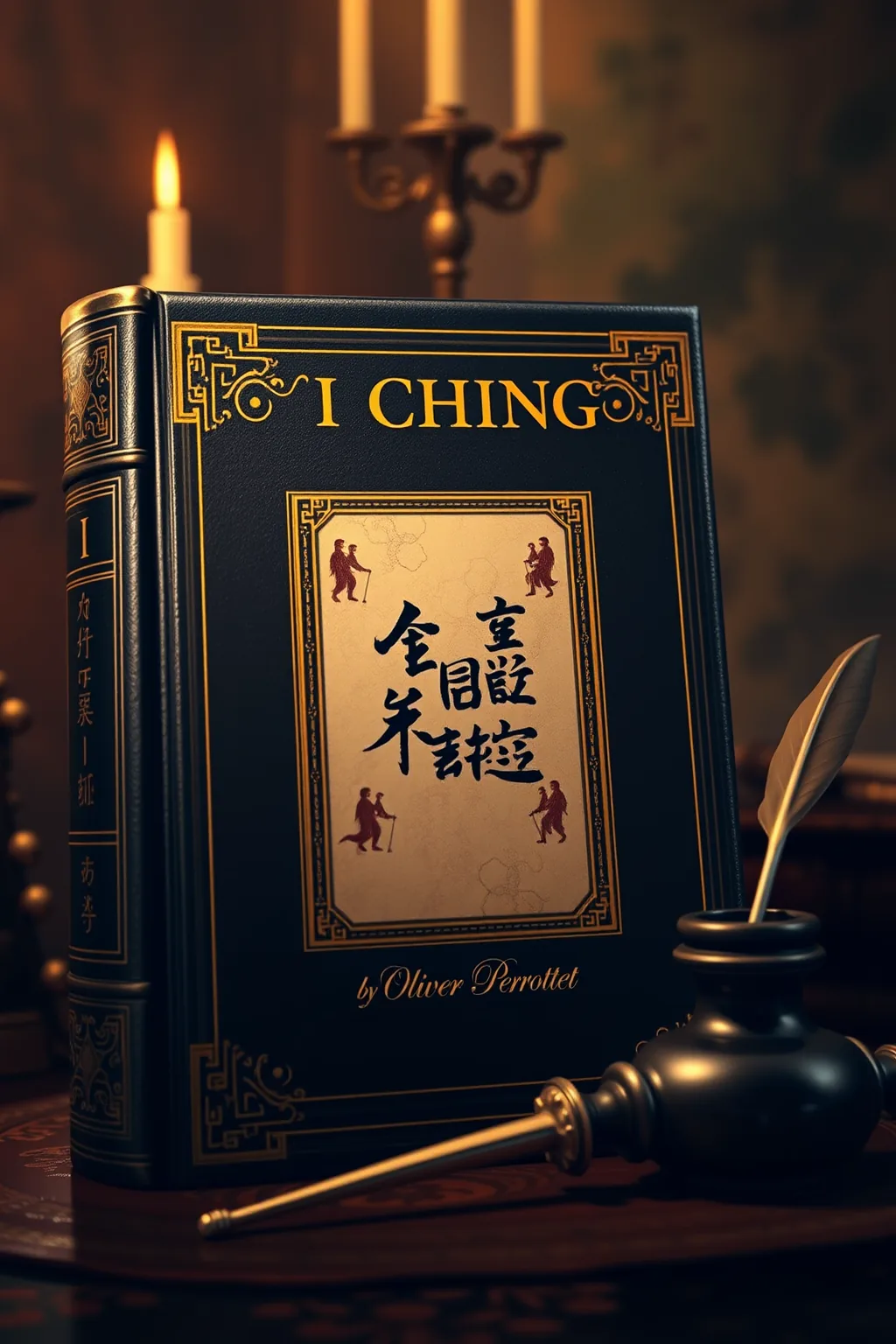
Sophia Crane (Associate Editor) — Oliver Perrottet's "I Ching: Consult the Oldest Oracle" is a luminous gateway into one of humanity's most enduring mystical systems. Perrottet's scholarship shines, offering a profound yet accessible exploration of the *Book of Changes*. He masterfully deciphers the complex symbolism of the hexagrams, revealing their deep philosophical and cosmological significance. This edition is an indispensable resource for serious students of divination and ancient wisdom traditions, providing clarity and depth that transcends mere interpretation. It empowers readers to engage with the oracle on a truly meaningful level, fostering personal growth and spiritual insight. A vital addition to any discerning esoteric library.
📝 Description
61
Oliver Perrottet's 2023 edition of the I Ching presents the ancient Chinese oracle.
This volume makes the *Book of Changes* accessible to contemporary readers. Perrottet focuses on the I Ching's 64 hexagrams, explaining their symbolic meanings and their use in divining the flow of events. The text details how the hexagrams represent shifts in cosmic forces and human situations. Perrottet argues the I Ching is more than a simple fortune-telling device; it is a system for understanding life's changes and aligning with natural principles.
The book aims to assist those seeking deeper self-awareness. It provides a structured approach for introspection, offering clarity on personal challenges. By examining the archetypal patterns within the hexagrams, readers can gain insight into the forces that shape their lives. This edition encourages a thoughtful engagement with the oracle's wisdom for guidance in uncertain times.
The I Ching, or *Book of Changes*, is one of the oldest Chinese classic texts. It functions as a manual for divination, a philosophical treatise, and a guide to living in harmony with the natural order. Its system of 64 hexagrams, built from yin and yang lines, is used to interpret the present and anticipate future developments. For centuries, it has been a central text in Chinese thought, influencing philosophy, politics, and personal practice.
💡 Why Read This Book?
Unravel the profound symbolism of the *Book of Changes* and access millennia of ancient wisdom. This book is ideal for seekers of deeper self-understanding, scholars of esoteric traditions, and practitioners looking to refine their divinatory skills. It offers a unique lens through which to view life's challenges and opportunities, promoting clarity, intuition, and alignment with universal principles.
⭐ Reader Reviews
Honest opinions from readers who have explored this book.
❓ Frequently Asked Questions
What is the I Ching?
The I Ching, or *Book of Changes*, is an ancient Chinese divination text and philosophical classic. It comprises 64 hexagrams, each formed by six stacked lines (broken or unbroken), representing fundamental archetypes and situations in human life and the cosmos.
How does one consult the I Ching?
Consultation traditionally involves a method of random generation, such as tossing yarrow stalks or coins, to arrive at a specific hexagram. This hexagram, along with its changing lines, is then interpreted using the text's commentaries and wisdom.
Is the I Ching only for divination?
While renowned as an oracle, the I Ching is also a profound philosophical and ethical text. It offers insights into the nature of change, human behavior, and the principles of cosmic harmony, making it a guide for living a balanced and enlightened life.
Who was Oliver Perrottet?
Oliver Perrottet was a scholar and author dedicated to exploring and translating ancient mystical and philosophical texts. His work aimed to make these profound traditions accessible to a modern audience, emphasizing their enduring relevance.
What makes this edition special?
This edition by Perrottet is celebrated for its clarity, scholarly depth, and evocative language, making the complex symbolism of the I Ching understandable while retaining its mystical essence. It serves as an excellent introduction and a valuable resource for experienced practitioners.
🔮 Key Themes & Symbolism
The Nature of Change and Transformation
Central to the I Ching is the understanding that all existence is in a perpetual state of flux. The hexagrams, with their dynamic interplay of Yin and Yang, illustrate the cyclical nature of change, from growth and prosperity to decline and renewal. Perrottet's exploration examines how recognizing and harmonizing with these cosmic shifts allows individuals to navigate life's transitions with wisdom and resilience, fostering personal evolution and spiritual growth. This theme encourages acceptance and adaptability, revealing that true strength lies not in resisting change, but in understanding and flowing with it.
Symbolism and Archetypal Wisdom
The I Ching's power lies in its rich, multi-layered symbolism. Each of the 64 hexagrams, composed of trigrams representing fundamental cosmic elements (Heaven, Earth, Water, Fire, etc.), acts as an archetypal image of universal situations and human experiences. Perrottet illuminates how these symbols offer useful insights into the underlying patterns of reality, providing a framework for understanding complex scenarios and one's place within them. Deciphering this symbolic language unlocks a deeper comprehension of the human psyche and the interconnectedness of all things.
The Oracle as a Guide to Self-Knowledge
Beyond mere fortune-telling, the I Ching serves as a mirror reflecting the querent's inner state and potential future trajectories. Perrottet emphasizes its role as a tool for introspection, prompting self-awareness and ethical consideration. By engaging with the oracle, individuals are encouraged to examine their motivations, clarify their intentions, and make choices aligned with cosmic harmony and personal integrity. This process cultivates wisdom, discernment, and a more profound connection to one's authentic self, fostering a life guided by inner truth.
💬 Memorable Quotes
Direct passages from the work, attributed to the author.
“In stillness, one finds clarity.”
— This aphorism highlights the importance of contemplative practice and inner quietude for gaining insight and understanding, a key principle for effective consultation of the oracle.
“The hexagrams are maps of the human condition.”
— This emphasizes the I Ching's profound ability to represent the diverse spectrum of human experiences, emotions, and challenges through its symbolic language.
“Seek harmony with the Tao.”
— This points to the ultimate goal of engaging with the I Ching: aligning one's life and actions with the natural order and flow of the universe.
“Even the smallest change can alter the course.”
— This illustrates the subtle yet significant power of individual actions and choices within the grand range of cosmic influence and destiny.
💡 Key Ideas
Editorial paraphrase of the work's core concepts — not direct quotes.
The wise man understands the changes and adapts.
This quote expresses the core message of the I Ching: true wisdom lies in recognizing the inevitable nature of change and developing the flexibility to respond effectively, rather than rigidly resisting.
🌙 Esoteric Significance
Tradition
The I Ching is a foundational text within the Taoist and Confucian philosophical traditions, but its esoteric significance extends into various Chinese mystical and divinatory practices, including Feng Shui, TCM, and various forms of folk religion and Daoist alchemy. It is viewed as a cosmic blueprint, revealing the underlying principles governing all phenomena, both spiritual and material. Its symbolic language is considered a direct expression of the Tao, the ultimate, ineffable reality, making it a potent tool for spiritual development and alignment.
Symbolism
The core symbolism revolves around Yin (passive, dark, feminine) and Yang (active, light, masculine) lines, which combine to form trigrams and hexagrams. These eighty-one fundamental symbols represent archetypal forces, natural phenomena, and human situations. For instance, Heaven (☰) symbolizes creative force, while Earth (☷) represents receptivity. Their combinations, such as the hexagram for 'The Creative' (☰☰) or 'The Receptive' (☷☷), offer useful insights into dynamics of power, relationships, and the unfolding of events. The changing lines within hexagrams further indicate transitional phases and potential outcomes.
Modern Relevance
In the modern era, the I Ching continues to be a vital source of wisdom for those seeking guidance, self-understanding, and a deeper connection to universal principles. Its emphasis on change, balance, and ethical action resonates powerfully in our rapidly evolving world. Esoterically, it serves as a sophisticated tool for psychological insight, spiritual growth, and intuitive development, offering a framework for navigating uncertainty and fostering a sense of cosmic interconnectedness. Its philosophical depth also continues to inspire thinkers and practitioners across diverse spiritual and secular paths.
👥 Who Should Read This Book
This volume is indispensable for anyone drawn to the profound mysteries of ancient wisdom. Beginners will find Oliver Perrottet's lucid prose an accessible entry point into the intricate world of the I Ching, offering clear explanations of its core concepts and divinatory methods. Scholars of Eastern philosophy and comparative religion will appreciate the depth of analysis and historical context provided. For spiritual seekers and practitioners of divination, it offers a powerful tool for self-discovery, ethical guidance, and enhanced intuition, enabling a more profound engagement with life's unfolding journey.
📜 Historical Context
The I Ching emerged from ancient Chinese shamanistic practices and philosophical inquiry, likely developing over several millennia. Its earliest known components date back to the Western Zhou Dynasty (c. 1046–771 BCE), with significant commentaries added during the Spring and Autumn period (771–476 BCE) and the Warring States period (475–221 BCE), notably by Confucius and his disciples. This era was characterized by profound intellectual ferment, with various schools of thought—including Confucianism, Taoism, and Mohism—seeking to understand the order of the cosmos and the principles of good governance and personal cultivation. The I Ching became a core part of Chinese intellectual life, influencing everything from statecraft and military strategy to medicine and art. Its enduring appeal lies in its ability to provide timeless wisdom applicable across diverse cultural and historical landscapes.
📔 Journal Prompts
Reflect on a recent situation where you resisted change. How might adopting the I Ching's perspective have altered your experience?
Choose a hexagram that appeals to you today. What core archetype or situation does it represent in your life?
Consider the balance of Yin and Yang in your daily life. Are there areas where you feel an imbalance, and how might you address it?
How can the principle of 'seeking harmony with the Tao' guide your decisions this week?
Imagine you are consulting the I Ching for a personal challenge. What is the core question you would ask, and what wisdom do you hope to receive?
🗂️ Glossary
Hexagram
A fundamental symbol in the I Ching, composed of six stacked lines (broken or unbroken). There are 64 unique hexagrams, each representing a universal archetype or situation.
Trigram
A component of a hexagram, consisting of three stacked lines. There are eight basic trigrams (e.g., Heaven, Earth, Water, Fire), each with its own symbolic meaning.
Yin
The passive, dark, feminine principle in Chinese philosophy, represented by a broken line (--) in the I Ching.
Yang
The active, light, masculine principle in Chinese philosophy, represented by an unbroken line (—) in the I Ching.
Tao
The fundamental, ineffable principle of the universe in Taoism, often translated as 'the Way.' It represents the natural order and flow of all existence.
This book appears in 1 collection
🔮 Readers Also Liked
Browse all →








More by Oliver Perrottet
All books →


From the “Divination” Collection
View all →








More Free Divination & Tarot Books
View all →