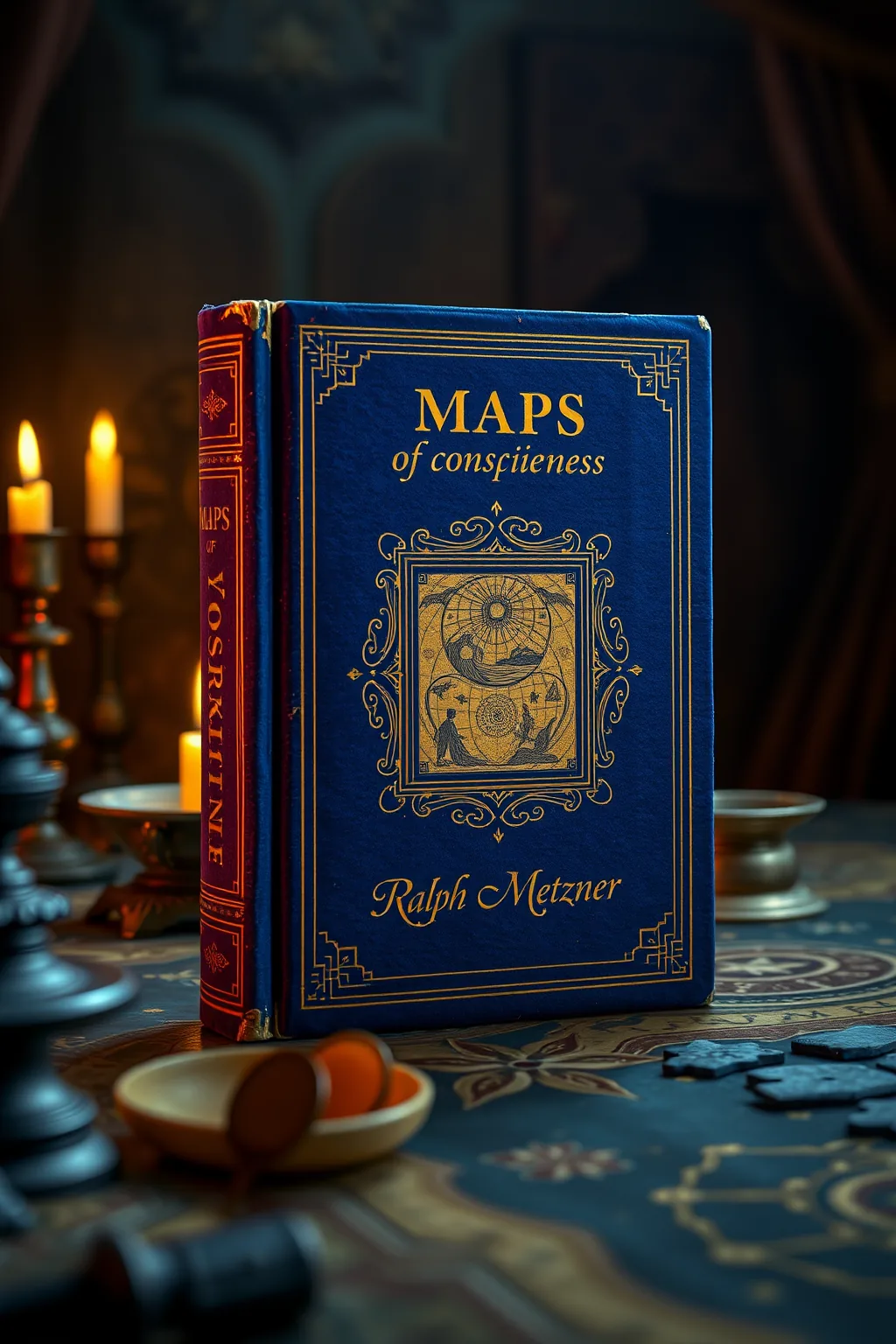
Maps of consciousness
 62
62

Maps of consciousness



Lorelei Sage, Contemplative Literature Editor: Ralph Metzner's 'Maps of Consciousness' is an indispensable guide for anyone seeking to chart the uncharted territories of the mind. With scholarly precision and a deep reverence for esoteric traditions, Metzner synthesizes a vast array of cross-cultural wisdom, from shamanic journeys to yogic states. He deftly illustrates how diverse contemplative practices offer distinct yet interconnected maps of inner reality, revealing universal patterns of consciousness. This work is particularly potent for those drawn to the intersection of psychology, spirituality, and ancient mysticism. Its strength lies in its comprehensive scope and its ability to provide a coherent framework for understanding the myriad expressions of human consciousness. A truly illuminating read for serious students of the inner life.
📝 Description
62
Ralph Metzner's 1996 book, 'Maps of Consciousness,' examines the structure of inner experience.
First published in 1996, 'Maps of Consciousness' by Ralph Metzner investigates the diverse ways humans have charted their internal worlds. Metzner draws connections between various traditions that seek to understand altered states of awareness and mystical encounters. He analyzes how different cultures and practices, from ancient shamanism to Eastern meditation and Western mysticism, use symbolic language to describe these phenomena.
The book aims to be understandable for those interested in exploring consciousness. It discusses the forces that influence our perception of reality and the potential for personal change through focused awareness. Metzner encourages readers to consider their own inner lives and the common symbols that appear across different cultures. The work suggests a framework for understanding consciousness itself and its potential for expansion.
This work fits within the broader esoteric tradition that explores consciousness beyond ordinary waking perception. It engages with perennial philosophy, the idea that certain spiritual truths are universal and have been recognized throughout history. Metzner's approach synthesizes insights from Western psychology and mysticism with Eastern contemplative disciplines and indigenous shamanic practices. This comparative method is common in esoteric studies, seeking common patterns and underlying structures in humanity's diverse quests for meaning and transcendence.
💡 Why Read This Book?
Dive into the profound depths of human awareness. 'Maps of Consciousness' offers a comprehensive framework for understanding diverse mystical and altered states, bridging ancient wisdom with modern inquiry. Ideal for spiritual seekers, contemplative practitioners, and scholars of consciousness studies who wish to decipher the symbolic language of the inner world and explore the transformative potential of expanded perception.
⭐ Reader Reviews
Honest opinions from readers who have explored this book.
❓ Frequently Asked Questions
What are the core 'maps' of consciousness presented in the book?
Metzner explores various 'maps,' including those derived from shamanic traditions, yogic practices, mystical states, and altered perceptions. These maps offer distinct perspectives on the structure and potential of human awareness.
Is this book suitable for beginners in esoteric studies?
Yes, while it delves deeply, Metzner's accessible prose makes it suitable for dedicated beginners eager to explore advanced concepts of consciousness.
How does this book relate to divination and tarot?
The book provides a foundational understanding of consciousness states that can inform the interpretation of symbolic systems like Tarot, revealing the archetypal patterns they represent.
What is the philosophical significance of mapping consciousness?
Mapping consciousness allows for a more systematic understanding of subjective experience, revealing universal patterns and the potential for spiritual growth and self-realization.
Can this book help in understanding altered states of consciousness?
Absolutely. Metzner meticulously details various altered states, their characteristics, and their significance across different spiritual and psychological traditions, offering a comprehensive overview.
🔮 Key Themes & Symbolism
The Cartography of Inner Worlds
Metzner posits consciousness not as a monolithic entity, but as a complex, multi-dimensional landscape that can be charted and understood through diverse practices and traditions. This theme explores the idea that various spiritual and psychological disciplines offer unique 'maps'—frameworks for reading through the inner realms. These maps, whether derived from shamanic journeys, yogic meditation, or visionary experiences, reveal underlying archetypal structures and potential pathways for transformation, allowing us to perceive the intricate interconnectedness of subjective experience and objective reality.
Symbolism as the Language of the Soul
At the heart of understanding consciousness lies its symbolic language. This theme examines how symbols, archetypes, and metaphors serve as the universal tongue of the psyche, bridging the conscious and unconscious, the personal and the transpersonal. Metzner illustrates how ancient traditions and mystical experiences are rich with symbolic meaning, acting as keys to unlock deeper levels of awareness. By deciphering these symbols, we gain access to hidden knowledge about our own nature and the underlying order of the cosmos, facilitating clear insights and personal evolution.
The Perennial Wisdom of Altered States
This theme examines the profound significance of altered states of consciousness across cultures and throughout history. Metzner highlights how these states—from ecstatic visions to deep meditative absorption—are not mere deviations from normal awareness, but rather portals to expanded understanding and spiritual insight. The book explores how various traditions have developed sophisticated methods for intentionally entering and integrating these states, revealing them as fundamental aspects of the human experience and crucial pathways towards self-discovery and the realization of higher potentials.
💬 Memorable Quotes
Direct passages from the work, attributed to the author.
“The map is not the territory.”
— This fundamental axiom reminds us that conceptual frameworks, however insightful, are representations, not the direct experience itself.
“Consciousness is a vast ocean, and we are but drops within it.”
— A poetic expression of interconnectedness and the immensity of collective awareness, suggesting individual existence is part of a greater whole.
“The journey inward is the greatest adventure.”
— Emphasizes the profound and transformative potential of exploring one's own psyche, highlighting its richness and mystery.
“Symbols are the language of the soul.”
— Points to the intuitive and archetypal communication that bypasses rational thought, connecting us to deeper truths and universal patterns.
“To know oneself is to know the universe.”
— Suggests an intrinsic link between self-understanding and cosmic awareness, implying that self-realization leads to universal insight.
🌙 Esoteric Significance
Tradition
This work draws heavily from the perennial philosophy, synthesizing insights from esoteric traditions worldwide, including shamanism, yoga, Buddhism, Hinduism, and Western mysticism. It positions these diverse paths not as separate doctrines, but as different cartographies of a singular, underlying spiritual reality, offering a unified vision of consciousness exploration.
Symbolism
The book emphasizes the critical role of symbolism as the 'language of the soul.' It explores how archetypes, mandalas, and visionary imagery within these traditions serve as powerful keys to unlock unconscious patterns, facilitate psychological integration, and communicate profound spiritual truths that transcend rational discourse.
Modern Relevance
In an age saturated with external stimuli, 'Maps of Consciousness' offers a vital roadmap for inner exploration. Its insights into altered states, symbolic understanding, and the interconnectedness of consciousness are more relevant than ever for navigating personal growth, mental well-being, and a deeper connection to the subtle dimensions of existence.
👥 Who Should Read This Book
This book is essential for the dedicated spiritual seeker aiming to understand the architecture of awareness. Scholars of psychology, comparative religion, and consciousness studies will find it an invaluable resource for its synthesis of diverse traditions. Practitioners of meditation, yoga, and other contemplative disciplines will gain deeper insights into the states they cultivate. Beginners interested in the esoteric will find a comprehensive, yet accessible, entry point into the profound study of the human mind and its potential.
📜 Historical Context
Published in the wake of the counterculture movement and the burgeoning interest in Eastern philosophies and altered states of consciousness, 'Maps of Consciousness' emerged during an important era of intellectual and spiritual exploration. The 1970s saw a significant cross-pollination of ideas between psychology, anthropology, and mysticism, with figures like Timothy Leary and Aldous Huxley paving the way for deeper investigations into the nature of mind. Metzner, himself a participant in these intellectual currents, synthesized a wealth of information from ancient traditions and contemporary research, providing a comprehensive framework that resonated with a generation seeking to expand their understanding of reality beyond conventional boundaries. The book reflects a profound shift towards valuing subjective experience and esoteric knowledge as legitimate avenues for human growth.
📔 Journal Prompts
What 'map' of consciousness resonates most with your current understanding of yourself and the world?
How have symbols played a role in your personal journey of self-discovery?
Reflect on a time you experienced an altered state of consciousness. What insights did it offer?
Consider the interconnectedness of all beings. How does this awareness influence your daily life?
What 'uncharted territory' within your own consciousness are you most curious to explore next?
🗂️ Glossary
Archetype
Universal, archaic patterns and images that derive from the collective unconscious and are the psychic counterpart of a motif or symbol.
Perennial Philosophy
The philosophical perspective that argues all major religious traditions share a common source of divine truth, often referred to as the 'spirit' or 'essence'.
Shamanism
A practice that involves a practitioner reaching altered states of consciousness in order to interact with the spirit world and heal others.
Mandala
A spiritual and ritual symbol in Hinduism and Buddhism, representing the universe; a cosmic diagram or geometric configuration.
Collective Unconscious
A term coined by Carl Jung, referring to a layer of the unconscious mind that is shared by all humans and contains archetypes and instincts.
This book appears in 4 collections
🔮 Readers Also Liked
Browse all →







More by Ralph Metzner
All books →




From the “Consciousness Expansion” Collection
View all →




More Free Divination & Tarot Books
View all →