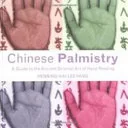
Chinese Palmistry
 72
72

Chinese Palmistry
Henning Hai Lee Yang’s *Chinese Palmistry* presents a remarkably thorough distillation of a complex system. The strength of this handbook lies in its sheer breadth of interpretations, offering over 200 specific readings tied to the palm's features. It successfully demystifies the Chinese approach, presenting it as a structured analytical method rather than a mystical art shrouded in vagueness. The illustrations, though perhaps simple, are functional and aid in identifying the eight mounts and five lines. However, the book’s practical, almost encyclopedic nature can sometimes feel less like an exploration and more like a reference manual. A deeper dive into the philosophical underpinnings or historical evolution of specific interpretations, beyond stating they are 'scientific,' would have added further depth. Nonetheless, for those seeking a detailed guide to the mechanics of Chinese palmistry, this work provides an exceptionally rich resource. It is a functional compendium for the dedicated student of chiromancy.
📝 Description
72
Henning Hai Lee Yang's 2003 handbook details over 200 Chinese palmistry readings.
This illustrated guide details Chinese palmistry, moving beyond simple fortune-telling. It presents over 200 readings based on the fundamental elements of the palm, breaking down chiromancy as developed in China. The book functions as an analytical tool for understanding character, health predispositions, and potential life paths.
The approach is systematic, focusing on the interplay of the five main lines and eight mounts. It is suitable for individuals curious about self-analysis and understanding others through ancient Chinese methods. Beginners will find a clear, illustrated introduction, while those with prior knowledge can deepen their understanding of specific Chinese principles and interpretations. Students of comparative divination practices will also find value here.
The practice of palmistry in China has a long history, predating Western chiromancy. Chinese palmistry developed independently, integrating concepts like Yin and Yang for a holistic view of destiny and character. This work distills that knowledge into an accessible format for modern readers, acknowledging the scientific approach the Chinese applied to interpreting the hand's topography.
Chinese palmistry is an ancient tradition that developed separately from its Western counterpart. It integrates concepts of chi (qi) and the balance of Yin and Yang to interpret the hand as a map of an individual's life, character, and health. Unlike some Western traditions that focus solely on predicting future events, Chinese chiromancy often emphasizes understanding one's inherent nature and potential, viewing the hand's features as reflections of internal states and cosmic influences.
💡 Why Read This Book?
• Learn to interpret the 'eight mounts' (e.g., Mount of Jupiter, Mount of Saturn) and their specific meanings in character analysis, a core element of traditional Chinese palmistry. • Understand the diagnostic approach to health and temperament as indicated by the 'five main lines' (Life, Head, Heart, Fate, Marriage), offering insights beyond typical Western palmistry. • Gain practical skills for analyzing a person's character, health, and future using the systematic, illustrated methods developed in China, as detailed in the book's extensive readings.
⭐ Reader Reviews
Honest opinions from readers who have explored this book.
❓ Frequently Asked Questions
What distinguishes Chinese palmistry from Western palmistry?
Chinese palmistry, as detailed in this book, emphasizes a systematic analysis of the five main lines and eight mounts, viewing the hand as a map of character and destiny. It often integrates concepts of Yin and Yang and aims for a scientific interpretation, contrasting with some more divinatory approaches in Western traditions.
How many distinct readings are provided in Chinese Palmistry?
The handbook offers more than 200 detailed readings, providing a comprehensive guide to interpreting the various combinations of the five main lines and eight mounts on the palm.
Is Chinese Palmistry by Henning Hai Lee Yang suitable for complete beginners?
Yes, the book is designed as a simple and practical illustrated handbook. It distills years of information, enabling individuals with no prior knowledge to use its methods for analysis.
What are the 'eight mounts' in Chinese palmistry?
The eight mounts are specific fleshy areas on the palm corresponding to planets (Jupiter, Saturn, Apollo, Mercury, Mars, Venus, Luna) and the upper/lower hand. Their prominence and characteristics offer insights into personality traits and potential life influences.
Can this book help understand health through palmistry?
Yes, the book explains how to analyze specific lines and mounts to uncover details about a person's health predispositions. It offers a diagnostic perspective rooted in traditional Chinese understanding.
When was the first edition of Chinese Palmistry published?
The first edition of Henning Hai Lee Yang's *Chinese Palmistry* was published in 2003, making it a relatively modern yet comprehensive compilation of ancient techniques.
🔮 Key Themes & Symbolism
The Five Lines as Life Determinants
This work emphasizes the profound significance of the five primary lines on the palm—Life, Head, Heart, Fate, and Marriage. Each line is not merely a mark but a narrative component, detailing aspects of vitality, intellect, emotional landscape, career trajectory, and relational patterns. The book provides meticulous interpretations for variations in depth, length, and clarity, allowing for a nuanced reading of an individual's inherent strengths, challenges, and potential future developments as mapped by these fundamental contours.
Interpreting the Eight Mounts
Beyond the lines, the book meticulously details the 'eight mounts'—areas on the palm named after celestial bodies like Jupiter, Saturn, and Venus. These mounts are presented as indicators of personality traits and innate potentials. A prominent Mount of Jupiter, for instance, suggests ambition and leadership, while a well-defined Mount of Mercury points to communication skills. The text guides the reader in assessing the development and characteristics of these mounts to gain a comprehensive understanding of an individual's character.
Palmistry as a Science of Analysis
Henning Hai Lee Yang positions Chinese palmistry as a scientific discipline, moving it beyond simple fortune-telling. The book's structured approach, with over 200 readings based on specific line and mount configurations, reflects this scientific methodology. It encourages observation and systematic interpretation, suggesting that the hand's features offer verifiable data about a person's character, health, and life trajectory. This perspective aligns with the historical Chinese pursuit of understanding natural laws and human disposition.
Holistic Health and Temperament Mapping
A crucial aspect explored is the correlation between palm features and physical well-being. The book details how the condition of the Life Line, for example, can indicate vitality, while other lines and mounts may suggest predispositions to certain health conditions or temperamental tendencies. This integrated approach views the hand as a microcosm reflecting the body's overall state, offering insights into maintaining balance and addressing potential health challenges.
💬 Memorable Quotes
Direct passages from the work, attributed to the author.
“The Chinese truly developed the technique of reading palms to analyze people, turning it into a science.”
— This statement highlights the book's core thesis: that Chinese chiromancy is a systematic, analytical practice focused on understanding human nature, rather than solely on predicting future events.
“This simple and practical illustrated handbook distills years of valuable information.”
— This emphasizes the book's accessibility and its function as a condensed, usable guide, making complex palmistry principles easy for the reader to grasp and apply.
“More than 200 extremely detailed readings, based on the five main lines and eight mounts.”
— This points to the extensive and specific nature of the interpretations offered, showcasing the depth of the analytical framework provided by the book.
“Each interpretation has its own explanation and illustration.”
— This highlights the pedagogical approach of the book, ensuring that each specific reading is clearly explained and visually supported for better comprehension.
“Use this powerful tool to uncover details about a person's character, health, and future.”
— This frames palmistry as a practical skill and analytical instrument, empowering the reader to gain deeper knowledge about themselves and others through its application.
🌙 Esoteric Significance
Tradition
This work draws heavily from the empirical and observational traditions within Chinese metaphysics, particularly chiromancy, which is understood as a branch of physiognomy. It aligns with the Taoist emphasis on understanding natural patterns (Tao) and the interconnectedness of macrocosm and microcosm. While not strictly Hermetic or Kabbalistic, it shares with these traditions a belief in symbolic correspondences and the idea that the human form contains encoded information about destiny and character, accessible through disciplined study.
Symbolism
The primary symbols are the 'five main lines' (Life, Head, Heart, Fate, Marriage) and the 'eight mounts' (named after planets). These are not merely physical features but symbolic representations of fundamental life forces and personality archetypes. The lines represent the flow and quality of energy and experience, while the mounts symbolize inherent potentials and influences, akin to astrological houses or planetary aspects. Their configurations create a symbolic language for interpreting an individual's unique energetic blueprint.
Modern Relevance
Contemporary practitioners of comparative divination, those exploring somatic psychology, and individuals interested in non-Western self-understanding frameworks find value in Yang's work. It serves as a foundational text for understanding a distinct tradition of physiognomy. Thinkers interested in how ancient cultures mapped human potential and the body's energetic system often reference such detailed compilations. It also provides a counterpoint to purely neurological or genetic determinism, offering a symbolic and holistic perspective on human nature.
👥 Who Should Read This Book
• Students of comparative divination systems seeking to understand the unique methodology and interpretations of Chinese palmistry. • Individuals interested in detailed self-analysis and personality assessment through ancient Chinese techniques, looking for a practical, illustrated guide. • Practitioners of esoteric arts who wish to broaden their toolkit by incorporating a systematic approach to reading the palm, distinct from Western chiromancy.
📜 Historical Context
The publication of *Chinese Palmistry* in 2003 arrived at a time when interest in comparative esoteric systems was growing, yet detailed, practical guides to specific Eastern traditions remained relatively scarce in mainstream Western publishing. While figures like Adolphe Desbarolles and William Gurner (Cheiro) had popularized Western palmistry in the late 19th and early 20th centuries, Chinese chiromancy, with its distinct philosophical underpinnings tied to Taoism and I Ching principles, often remained less accessible. Yang’s work addressed this gap, presenting a systematic, illustrated methodology that emphasized the analytical aspect of palm reading, aligning with a broader academic and popular interest in non-Western divination practices. It offered an alternative to the more psychologically focused or purely predictive Western schools of thought prevalent at the time.
📔 Journal Prompts
The relationship between the clarity of your Mount of Jupiter and your leadership aspirations.
How the length and depth of your Life Line might inform your approach to personal vitality.
Mapping the subtle nuances of your Head Line against your intellectual pursuits.
Reflecting on the meaning of the Marriage Line's appearance in relation to your significant relationships.
Considering the Fate Line's presence and breaks as indicators of life's vocational currents.
🗂️ Glossary
Eight Mounts
Specific fleshy areas on the palm named after planets (Jupiter, Saturn, Apollo, Mercury, Mars, Venus, Luna) and the upper/lower hand. Their prominence and development are interpreted as indicators of personality traits and potentials.
Five Main Lines
The primary lines on the palm: Life Line (vitality, health), Head Line (intellect, mindset), Heart Line (emotions, relationships), Fate Line (career, life path), and Marriage Line (relationships). Their characteristics provide detailed interpretations.
Mount of Jupiter
Located at the base of the index finger; its development indicates ambition, leadership qualities, self-esteem, and organizational abilities.
Mount of Saturn
Found at the base of the middle finger; relates to seriousness, discipline, wisdom, melancholy, and responsibility.
Mount of Apollo
Located below the ring finger; associated with creativity, artistic talent, success, and optimism.
Mount of Mercury
Beneath the little finger; governs communication skills, business acumen, intellect, and adaptability.
Mount of Venus
The fleshy area at the base of the thumb; relates to love, passion, sensuality, vitality, and artistic inclination.
This book appears in 1 collection
🔮 Readers Also Liked
Browse all →









From the “Palmistry” Collection
View all →








More Free Occult Philosophy Books
View all →