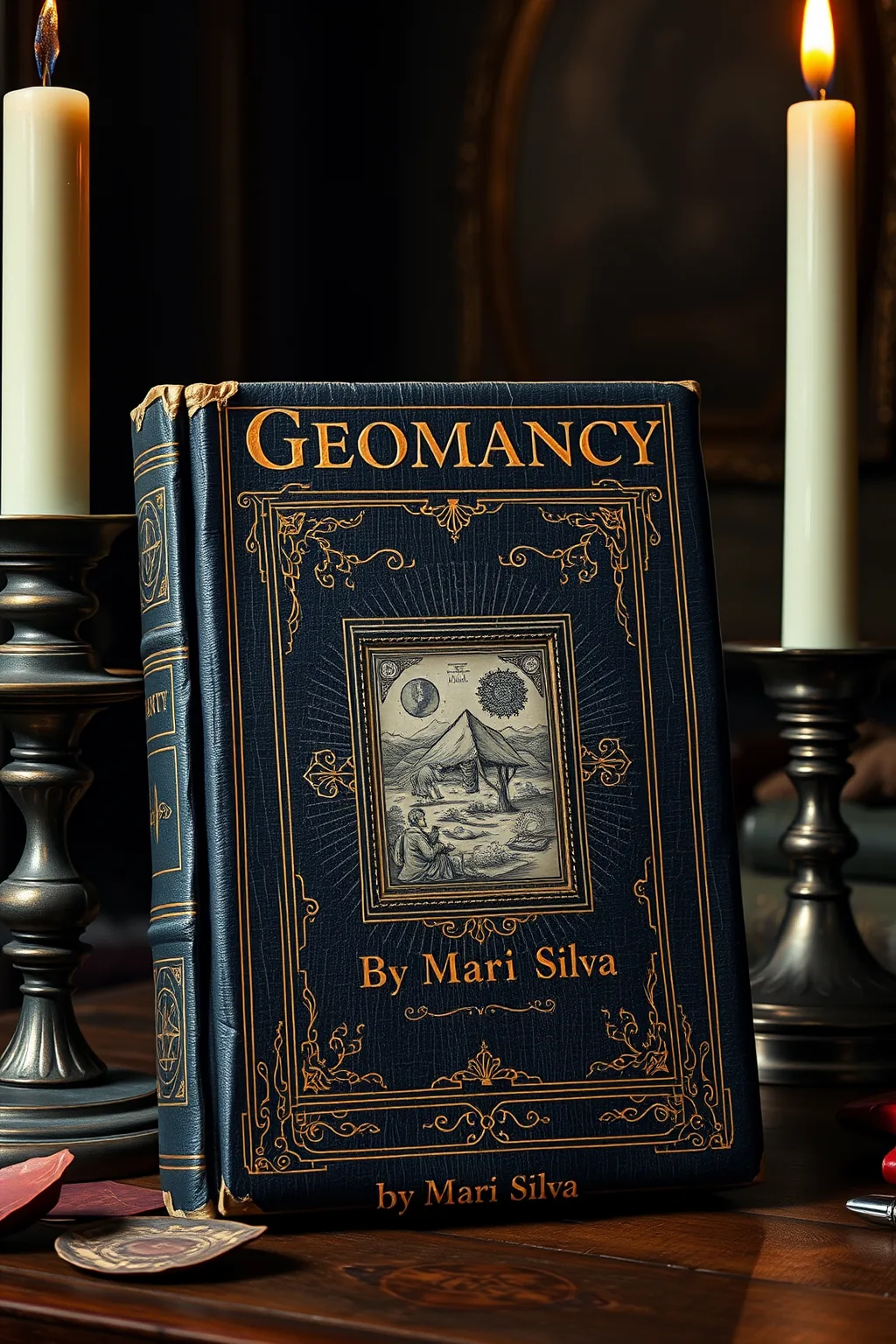
Geomancy
 71
71

Geomancy
Silva’s "Geomancy" offers a clear, albeit brief, entry into a rich divinatory art. The author effectively demystifies the process of casting figures, a core element that often appears daunting to newcomers. The book successfully breaks down the generation of the sixteen primary figures and their arrangement into the twelve houses. A particular strength is its accessible language, avoiding overly academic or arcane jargon. However, the work’s brevity is also its main limitation. While it introduces the mechanics, it offers less depth on the philosophical underpinnings or the historical evolution of geomancy beyond its basic transmission. The section on "Shields," which are crucial for understanding the defensive or assertive qualities of a reading, feels somewhat underdeveloped. Silva provides a functional introduction, but a reader seeking a comprehensive understanding of geomantic theory and practice might need to consult further resources. It serves as a competent primer, laying a necessary foundation for further study.
📝 Description
71
Mari Silva's Geomancy explains an ancient divination system using earth and water patterns.
This book details geomancy, a method of divination that interprets patterns formed by earth and water to understand present circumstances or gain insight into the future. The practice involves casting figures, which are sixteen possible combinations of four lines, each either whole or broken. These figures arise from a structured system of judgments and houses, intended to reveal cosmic will.
Silva's work appeals to those interested in historical divination methods and celestial communication, particularly how past societies sought foresight from natural phenomena. Readers drawn to earth-based spiritual practices, folk magic, and the history of esoteric arts will find value. The book serves as an introduction to the basic principles of geomancy for beginners.
Geomancy’s history spans centuries, with its principles spreading from the Islamic world to Europe, where it gained popularity during the Middle Ages and Renaissance. Unlike astrology, which relies on planetary positions, geomancy's terrestrial focus made it a more accessible form of seeking answers. Its methodical casting of figures established it as a structured system that influenced later occult traditions.
Geomancy, a form of divination rooted in interpreting terrestrial signs, holds a unique place within esoteric traditions. Unlike astrology that reads celestial bodies, geomancy observes patterns in the earth itself, often through casting lines or figures derived from random processes. Its historical spread, particularly from the Islamic world into medieval Europe, shows its adaptability and appeal as a practical method for seeking answers. The system’s inherent structure, with its sixteen figures and associated judgments, provided a framework for understanding perceived cosmic will through earthly means, influencing subsequent occult thought.
💡 Why Read This Book?
• Understand the foundational mechanics of geomancy, including the generation of the 16 figures through simple casting methods, allowing you to perform basic readings as detailed in the book's explanation of "Houses". • Grasp the historical lineage of geomancy, recognizing its transmission from the Islamic world to Europe, providing context for its place within medieval and Renaissance occultism. • Learn to interpret the symbolic language of the 16 "Mothers" or Figures, understanding their individual meanings and how they interact within the 12 Houses of a geomantic chart.
⭐ Reader Reviews
Honest opinions from readers who have explored this book.
❓ Frequently Asked Questions
What is the origin of the word 'Geomancy'?
The term 'Geomancy' is derived from the Greek words 'geo' (earth) and 'manteia' (divination), literally meaning 'earth divination'. This reflects its core practice of interpreting patterns found in the earth.
How is geomancy different from astrology?
While both are divinatory arts, astrology interprets celestial bodies (planets, stars), whereas geomancy interprets patterns derived from terrestrial means, traditionally earth or sand. The figures in geomancy are generated earth-based, not sky-based.
When was geomancy most popular?
Geomancy experienced significant popularity in the Islamic world and later in medieval and Renaissance Europe, serving as a widely practiced form of divination for centuries.
What are the basic components of a geomantic reading?
A geomantic reading involves casting four sets of points (dots or lines) to generate one of 16 figures, which are then arranged into 12 'Houses' representing different aspects of a question or situation.
Can geomancy be used for specific questions?
Yes, geomancy is highly adaptable and can be used to answer specific questions about various aspects of life, from personal relationships to financial matters, by interpreting the figures within the relevant Houses.
Is Mari Silva's book suitable for complete beginners?
Yes, Mari Silva's 'Geomancy' is designed as an introduction, aiming to make the practice accessible to beginners by explaining the fundamental concepts and methods clearly.
🔮 Key Themes & Symbolism
The Sixteen Figures
The heart of geomancy lies in its sixteen unique figures, each derived from a binary system of lines. These figures, such as 'Populus' or 'Fortuna Major', are not merely random patterns but possess distinct meanings, astrological correspondences, and influences. Silva's work details how these figures are generated through a process of casting, often using pebbles or dice, and how their appearance in a reading provides symbolic language for interpreting the will of the cosmos.
The Twelve Houses
Once the primary figures are generated, they are placed within the twelve 'Houses' of a geomantic chart. Each House corresponds to a specific area of life or a question being posed, from the self (House 1) to the end of the matter (House 12). The arrangement of figures within these Houses allows for a nuanced interpretation, mapping the energies and potential outcomes relevant to the querent's situation. Understanding the Houses is crucial for contextualizing the figures.
Earth-Based Divination
Silva highlights geomancy's unique position as an earth-based divinatory art. Unlike astrology's celestial focus, geomancy draws its predictive power from terrestrial patterns. This connection to the earth element imbues the practice with a grounded, tangible quality. The book explores how this relationship with the earth allows practitioners to seek guidance and understanding from the physical world around them.
Interpreting Cosmic Will
The ultimate aim of geomancy, as presented in the text, is to interpret the 'will of the cosmos'. By carefully analyzing the generated figures, their relationships, and their placement within the Houses, practitioners can gain insight into future events, hidden influences, and the underlying currents of destiny. This involves synthesizing multiple symbolic layers to provide a coherent response to a query.
💬 Memorable Quotes
Direct passages from the work, attributed to the author.
“Geomancy is an ancient form of divination that uses earth and water to interpret the will of the cosmos.”
— This foundational statement defines geomancy by its elements (earth, water) and its purpose (interpreting cosmic will), setting the stage for understanding its practice as a bridge between the terrestrial and the divine.
“The elements are used to create patterns t”
— This fragment points to the core methodology of geomancy: the transformation of elemental forces or principles into structured patterns that can be read for meaning and foresight.
“Have you ever wondered how people in the past used to communicate with the stars?”
— This rhetorical question invites the reader to consider historical methods of divination and celestial communication, framing geomancy as a key part of that ancient quest for knowledge and foresight.
“How did they know what was going to happen in the future?”
— This inquiry directly addresses the reader's potential curiosity about predictive arts and the methods employed by ancient cultures to gain glimpses into the future, positioning geomancy as a potential answer.
“What were their methods for divination?”
— This question focuses on the practical aspect of divination, prompting the reader to explore the techniques and systems used throughout history to seek answers and guidance, with geomancy being a primary example.
🌙 Esoteric Significance
Tradition
Geomancy fits within the broader lineage of Western Esotericism, drawing connections to Hermeticism, Kabbalah, and Renaissance occultism. While not strictly tied to one singular tradition, its symbolic language and divinatory methods were often integrated into existing magical and philosophical frameworks. Its systematic nature and reliance on figures with specific correspondences align with the ordered, symbolic approach characteristic of these traditions.
Symbolism
Key symbols include the sixteen primary "Figures," each with unique meanings and astrological associations (e.g., 'Acquisitio' for gain, 'Amissio' for loss). The "Houses" are also highly symbolic, representing archetypal areas of life and inquiry, from the self (House 1) to spiritual matters or endings (House 12). The interplay between these figures and houses creates a rich symbolic map for interpretation.
Modern Relevance
Contemporary practitioners of Western Esotericism, particularly those interested in divination and folk magic, continue to engage with geomancy. Modern occultists and witches often incorporate its methods into their practice, adapting its principles for personal growth, decision-making, and spiritual insight. Its accessibility makes it a popular choice for those exploring earth-based spirituality and historical divinatory arts.
👥 Who Should Read This Book
• Individuals new to divination seeking a structured, earth-based system: This book provides a clear introduction to the mechanics of geomancy, explaining how to cast and interpret its unique figures and houses. • Students of Western Esotericism interested in historical practices: Readers can gain insight into a divinatory art popular in medieval and Renaissance Europe, understanding its place alongside astrology and other occult systems. • Seekers of practical guidance through symbolic interpretation: Those looking for a method to gain clarity on specific life questions will find geomancy's house system and figure interpretations directly applicable.
📜 Historical Context
Geomancy, or 'earth divination,' boasts a history stretching back over a millennium, with its systematic development often attributed to the Arab world in the 8th or 9th century CE. It spread widely, becoming a popular divinatory tool across North Africa, the Middle East, and eventually into medieval and Renaissance Europe. By the 14th century, figures like Jean Gerson were writing about it, and by the 16th century, authors such as Agrippa included it in their comprehensive works on occult philosophy. It offered a contrast to astrological divination, relying on terrestrial casting rather than celestial observation. While highly regarded in esoteric circles, it coexisted with, and was sometimes viewed with skepticism alongside, other burgeoning intellectual currents like Renaissance humanism and the early stages of scientific inquiry, which increasingly favored empirical observation.
📔 Journal Prompts
The sixteen Figures of geomancy: Reflect on the core symbolic meanings of figures like 'Populus' and 'Puer'.
The twelve Houses: Consider how each House represents a different sphere of life and its potential influence on your current questions.
Earth divination: Explore the connection between terrestrial patterns and cosmic will as presented in the text.
The casting process: Document your experience with generating geomantic figures, noting any intuitive observations.
Interpreting the will of the cosmos: How can the structured patterns of geomancy offer clarity on personal challenges?
🗂️ Glossary
Geomancy
An ancient method of divination that interprets patterns formed by casting earth, sand, or pebbles, used to understand the will of the cosmos.
Figures
The sixteen primary patterns generated in geomancy, each consisting of four lines (either whole or broken), possessing unique names, meanings, and astrological associations.
Mothers
An alternative name for the sixteen primary geomantic figures, emphasizing their foundational role in generating a reading.
Houses
The twelve divisions of a geomantic chart, analogous to astrological houses, each representing a specific aspect of a question or area of life.
Shield
The figure occupying the seventh House in a geomantic chart, often interpreted as representing the opponent or the defensive aspect of the question.
Judgment
The process of interpreting the geomantic figures within their respective Houses and their relationships to derive an answer or insight.
Casting
The act of randomly generating the geomantic figures, typically by throwing objects like pebbles or drawing lines, to form the basis of a reading.