The psychic grid
 73
73

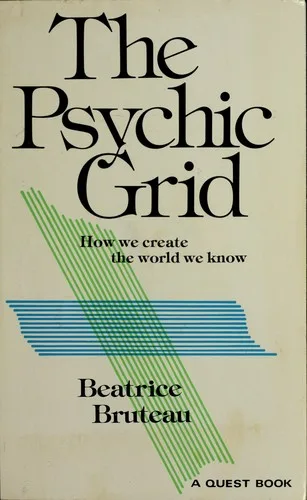
The psychic grid
Beatrice Bruteau's "The Psychic Grid" offers a rare, architectonic approach to the concept of a unified field of consciousness. Unlike many contemporaries who relied on anecdotal evidence or poetic metaphor, Bruteau constructs a logical edifice, detailing how a psychic matrix might actually function. Her concept of "centers of consciousness" as nodes within this grid is particularly compelling, providing a framework for understanding relational dynamics beyond the individual psyche. However, the book's density can be a significant hurdle; its highly abstract and philosophical language, while precise, often requires multiple readings to fully grasp. A passage detailing the energetic exchange between these centers, while intellectually stimulating, could benefit from more illustrative examples. Despite its challenging prose, "The Psychic Grid" remains a significant work for those seeking a structured metaphysical model of interconnectedness. It is a demanding but rewarding exploration of consciousness architecture.
📝 Description
73
Beatrice Bruteau published "The Psychic Grid" in 1979, proposing a structured model of consciousness.
Beatrice Bruteau's "The Psychic Grid" (1979) details a systematic model of consciousness and its energetic structure. Bruteau argues for an interconnected psychic field, constructing a conceptual framework through philosophical reasoning and engagement with esoteric traditions. The book offers a structured understanding of how individual awareness connects to a larger, unified field. This work is best suited for serious students of consciousness studies, metaphysics, and comparative spirituality who value rigorous conceptual frameworks. It will appeal to those who appreciate detailed arguments and dense philosophical inquiry, particularly those interested in the intersection of psychology, spirituality, and theoretical models of reality.
The book delves into the concept of the "psychic grid" as an energetic matrix linking all conscious beings. Bruteau examines the nature of energy, consciousness, and their relationship, proposing that this grid is fundamental to psychic experience. She discusses how individual consciousness participates in and shapes this field, influencing both personal reality and the collective consciousness. The text aims to provide a coherent, philosophically grounded perspective on these interconnected phenomena.
"The Psychic Grid" emerged in 1979, a time when consciousness research and esoteric thought were gaining traction. Bruteau's work stands in dialogue with figures like Carl Jung and the broader New Age movement, yet she offers a distinct, philosophically dense approach. Her focus on the energetic and structural aspects of a unified psychic field distinguishes it from more popular discourses. The book can be seen as a contribution to perennial philosophy, seeking universal truths about consciousness and its underlying structure within esoteric traditions.
💡 Why Read This Book?
• You will learn how to conceptualize consciousness not as isolated phenomena but as interconnected nodes within a structured "psychic grid," as detailed in Bruteau's theoretical framework. • You will gain an understanding of "centers of consciousness" and their role in energetic exchange, providing a unique lens through which to view interpersonal and universal dynamics, as explored in the book's core arguments. • You will feel equipped to analyze the structure of metaphysical reality beyond surface-level intuition, engaging with Bruteau's rigorous philosophical model developed since the book's 1979 publication.
⭐ Reader Reviews
Honest opinions from readers who have explored this book.
❓ Frequently Asked Questions
What is the central concept of Beatrice Bruteau's "The Psychic Grid"?
The central concept is the "psychic grid," a theoretical energetic matrix that Bruteau proposes connects all individual consciousnesses. This grid serves as a framework for understanding the structure of reality and the nature of unified awareness.
When was "The Psychic Grid" originally published?
"The Psychic Grid" was first published in 1979, positioning it within a period of significant exploration into consciousness studies and esoteric philosophy.
What kind of reader would benefit most from "The Psychic Grid"?
Serious students of metaphysics, consciousness studies, and comparative spirituality who appreciate rigorous philosophical argumentation and conceptual frameworks would benefit most.
Does the book offer practical exercises for developing psychic abilities?
No, "The Psychic Grid" is primarily a theoretical and philosophical work. It focuses on constructing a conceptual model of consciousness and its interconnectedness rather than providing practical exercises.
How does "The Psychic Grid" relate to other esoteric traditions?
The work engages with concepts that echo in various esoteric traditions, such as unity consciousness and energetic fields, but Bruteau presents a unique, systematic philosophical model.
Is Beatrice Bruteau's work accessible to beginners in metaphysics?
While foundational, the book's dense philosophical nature and abstract concepts make it more suitable for those with some prior exposure to metaphysical or philosophical inquiry.
🔮 Key Themes & Symbolism
The Psychic Grid Framework
The core of Bruteau's work is the exposition of the "psychic grid." This is not merely an idea but a structured energetic architecture she posits underlies all existence. It’s conceived as a matrix, a kind of cosmic nervous system, through which consciousness operates and interrelates. This grid is presented as the fundamental reality, from which individual minds emerge and to which they are eternally connected. Bruteau details its properties, suggesting it possesses a form of intelligence and organization, influencing the perceived separation between self and other.
Centers of Consciousness
Within the psychic grid, Bruteau identifies "centers of consciousness." These are not physical locations but points of energetic focus or nodes within the larger field. Each individual, and potentially each entity, can be understood as such a center. The dynamics between these centers – the flow and exchange of psychic energy – are crucial to understanding experience. This concept provides a mechanism for how awareness interacts, influences, and is influenced by other centers, forming the basis of relationships and collective phenomena.
Unity Consciousness and Integration
A significant theme is the nature of "unity consciousness." Bruteau suggests that our ordinary state of separate individuality is a limited perspective within the vastness of the psychic grid. The potential for expanding consciousness, for integrating with the larger field, is a central implication of her model. This integration is not about loss of self but about recognizing the self's inherent connection to the totality, leading to a profound understanding of interconnectedness and the illusory nature of absolute separation.
Energetic Exchange Dynamics
The book elaborates on the processes of "energetic exchange" that occur constantly within and between centers of consciousness. This exchange is the mechanism by which information, influence, and awareness are transmitted across the psychic grid. Bruteau explores how these exchanges shape individual experience, collective consciousness, and the very fabric of perceived reality. Understanding these dynamics is key to grasping how the grid operates and how individual centers contribute to its overall functioning.
💬 Memorable Quotes
Direct passages from the work, attributed to the author.
“The psychic grid is the fundamental reality; all else is a manifestation within it.”
— This statement emphasizes Bruteau's view of the psychic grid as the ultimate substrate of existence, suggesting that individual consciousness and the material world are secondary to this underlying energetic structure.
“Each center of consciousness is a point of perception and interaction within the larger field.”
— This highlights the role of individual awareness as a functional component of the psychic grid, responsible for both experiencing and influencing the energetic exchanges that occur.
“Separation is an illusion born of limited perspective within the unified field.”
— This interpretation points to the idea that our sense of being distinct, isolated individuals is a perceptual limitation rather than an ontological fact, given our true nature as part of a connected whole.
“Energetic exchange is the constant dialogue of consciousness across the grid.”
— This metaphor illustrates the dynamic nature of the psychic grid, portraying the interactions between consciousness centers as a continuous communication or flow of energy.
“Integration with the grid leads to expanded awareness beyond the confines of the ego.”
— This suggests that a primary spiritual or developmental goal is to transcend the limited self (ego) by recognizing and merging with the broader consciousness of the psychic grid.
🌙 Esoteric Significance
Tradition
Bruteau's work can be situated within the broader lineage of idealistic metaphysics and consciousness philosophies that have roots in Neoplatonism and Vedanta, while also resonating with modern esoteric concepts of energetic fields popularized by Theosophy and later New Age thought. She synthesizes these traditions into a unique, systematic framework, departing from mystical pronouncements by offering a structured, almost scientific, model for understanding consciousness's energetic architecture.
Symbolism
While "The Psychic Grid" is highly conceptual, the central "grid" itself functions as a powerful symbol of interconnectedness and underlying order. The "centers of consciousness" can be seen as symbolic representations of individual souls or points of awareness, analogous to stars in a cosmic network. The concept of "energetic exchange" symbolizes the flow of life force or prana, crucial for maintaining the dynamic equilibrium of the entire structure, akin to the vital breath of a living cosmos.
Modern Relevance
Bruteau's exploration of a unified field of consciousness and interconnected energetic centers finds resonance today in fields like quantum field theory interpretations, network theory applied to consciousness, and various forms of energy healing and consciousness work. Contemporary thinkers exploring panpsychism or integrated information theory may find Bruteau's foundational concepts prescient, offering a metaphysical precursor to some modern scientific and philosophical inquiries into consciousness.
👥 Who Should Read This Book
• Students of comparative metaphysics seeking structured models of reality: You will gain a robust philosophical framework for understanding consciousness as an interconnected energetic system, moving beyond fragmented theories. • Dedicated practitioners of meditation and contemplative practices: You will find conceptual grounding for experiences of unity and interconnectedness, offering a theoretical map for the subtle realms explored in deep practice. • Researchers in consciousness studies and transpersonal psychology: You will encounter a unique 1979 perspective on the architecture of awareness, providing historical context and a distinct theoretical model for analyzing psychic phenomena.
📜 Historical Context
Beatrice Bruteau's "The Psychic Grid," released in 1979, emerged during a fertile period for consciousness exploration, influenced by the psychedelic era's impact and the ongoing development of transpersonal psychology. Figures like Stanislav Grof were mapping altered states, while earlier thinkers like Carl Jung had already laid groundwork for collective unconscious concepts. Bruteau's work distinguished itself by offering a more systematic, philosophical architecture for these ideas, moving beyond purely psychological or experiential accounts. It can be seen as a response to, or parallel development with, the burgeoning interest in unified field theories that permeated spiritual and scientific thought. While not directly engaging with a specific contemporary author in public debate, Bruteau’s structured approach to consciousness fields placed her work in dialogue with the broader intellectual currents of the time, offering a coherent metaphysical model where others might offer fragmented insights.
📔 Journal Prompts
The structure of the psychic grid: How does visualizing this energetic matrix alter your perception of reality?
Centers of consciousness: Reflect on your own perceived center and its energetic connections to others.
Energetic exchange: Describe an instance where you felt a significant energetic transfer, conscious or unconscious.
Unity consciousness: How might recognizing yourself as part of the grid redefine personal identity?
The nature of separation: Explore the feeling of isolation and how it might contrast with the grid concept.
🗂️ Glossary
Psychic Grid
Beatrice Bruteau's term for a hypothesized energetic matrix or field that underlies and connects all forms of consciousness.
Centers of Consciousness
Nodes or focal points within the psychic grid, representing individual points of awareness or being that interact within the larger field.
Energetic Exchange
The transmission and reception of psychic energy or information between centers of consciousness within the psychic grid.
Unity Consciousness
A state of awareness characterized by the recognition of interconnectedness and the dissolution of the perceived boundaries between self and the totality.
Integration
The process by which an individual center of consciousness expands its awareness to encompass or merge with the larger psychic grid.
Metaphysical Architecture
The underlying structure and principles governing reality, particularly as conceptualized in philosophical or esoteric systems.
Ego
In this context, the limited sense of self or individual identity, often perceived as separate from the greater whole.
🔮 Readers Also Liked
Browse all →








More Free Theosophy & Anthroposophy Books
View all →