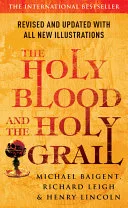
The Holy Blood And The Holy Grail
 79
79

The Holy Blood And The Holy Grail
The sheer audacity of the central thesis in The Holy Blood and the Holy Grail—that the Grail is a living bloodline stemming from Jesus and Mary Magdalene—is what initially draws one in. Lincoln, Baigent, and Leigh present their case with a lawyerly accumulation of circumstantial evidence, connecting the Priory of Sion, the Knights Templar, and the Merovingian kings. Their research into obscure French history and Gnostic traditions is extensive, though at times the leaps in logic feel more like hopeful assertions than solid deductions. A particularly striking section details the alleged symbolism within the architecture of Rennes-le-Château. While the book’s conclusions remain controversial, its impact on popular culture and subsequent Grail literature is undeniable. It forces a re-examination of accepted historical narratives, even if its own proposed narrative requires considerable faith from the reader. The work remains a significant, albeit debated, contribution to esoteric historical inquiry.
📝 Description
79
In 1982, Lincoln, Baigent, and Leigh proposed the Holy Grail was a bloodline, not a cup.
The Holy Blood and the Holy Grail investigates the enduring myth of the Holy Grail, suggesting it represents a bloodline descended from Jesus Christ and Mary Magdalene. The authors trace this alleged lineage through historical documents, secret societies like the Priory of Sion, and the history of figures such as the Knights Templar and the Cathars. Their inquiry began with coded parchments found in the Pyrenees in the 1970s. This discovery led to an extensive investigation into a purported secret society and its alleged custodianship of a sacred secret. The book connects these findings to royal houses in France and Scotland, challenging mainstream historical and religious narratives. It argues for the Grail as a dynastic secret and explores Gnostic interpretations of Mary Magdalene and the suppression of a sacred feminine tradition.
This book engages with esoteric traditions by positing a hidden lineage and a suppressed sacred feminine aspect within Christianity, particularly through Gnostic interpretations. It connects these ideas to historical secret societies, specifically the Priory of Sion, and their alleged role in preserving dynastic secrets. The work examines how these hidden histories might intersect with established religious and royal narratives, suggesting a continuous, clandestine stream of knowledge and lineage through figures like the Knights Templar and the Merovingians.
💡 Why Read This Book?
• Learn about the alleged historical connections between the Priory of Sion and the Knights Templar, as detailed in the book's extensive research into medieval European history. • Understand the authors' interpretation of Mary Magdalene's role in early Christianity, drawing parallels with Gnostic texts and the concept of a suppressed sacred feminine. • Explore the theories surrounding the Merovingian dynasty and their purported connection to a hidden bloodline, offering a radical alternative to traditional Grail legends.
⭐ Reader Reviews
Honest opinions from readers who have explored this book.
❓ Frequently Asked Questions
What is the central claim of The Holy Blood and the Holy Grail?
The book's core assertion is that the Holy Grail represents a bloodline, specifically the descendants of Jesus Christ and Mary Magdalene, whose existence has been secretly guarded throughout history by organizations like the Priory of Sion.
Who were the Cathars mentioned in the book?
The Cathars were a dualist religious movement in medieval Europe, particularly prominent in Southern France. The book suggests they may have been aware of or involved in protecting the secret bloodline.
What is the significance of Rennes-le-Château in the book?
Rennes-le-Château is a small village in the French Pyrenees where a local priest, Bérenger Saunière, supposedly discovered hidden treasures that funded extensive renovations. The book explores theories linking these discoveries to the Grail secret.
How does the book connect Jesus and Mary Magdalene?
It proposes that Jesus and Mary Magdalene were married and had children, and that she fled to Gaul (France) after the crucifixion, establishing a lineage that continued through prominent European royal families, including the Merovingians.
What is the Priory of Sion?
The book presents the Priory of Sion as an ancient secret society dedicated to protecting the secret of the Jesus bloodline. Its alleged historical existence and activities form a major part of the authors' investigation.
When was The Holy Blood and the Holy Grail first published?
The book was first published on April 30, 2013, although its foundational research and initial publications by the authors date back earlier.
🔮 Key Themes & Symbolism
The Bloodline of Jesus
This theme posits a radical reinterpretation of Christian history, suggesting that Jesus and Mary Magdalene produced offspring, creating a sacred bloodline. The book meticulously follows the alleged path of this lineage through centuries, linking it to influential European families and secret societies, arguing that its preservation was paramount to a hidden historical agenda.
The Priory of Sion
The work centers heavily on the purported existence and activities of the Priory of Sion, an ancient and secretive order. The authors present this society as the guardian of the Jesus bloodline secret, detailing its alleged operations, membership, and influence on historical events, from the Crusades to the French monarchy.
Gnostic Interpretations
The book draws significantly from Gnostic traditions, particularly regarding the role of Mary Magdalene. It explores alternative interpretations of her relationship with Jesus, framing her not merely as a disciple but as a spiritual equal or consort, and suggests Gnostic beliefs about a hidden, feminine divine principle were suppressed by orthodox Christianity.
Knights Templar and Cathars
The Knights Templar and the Cathars are presented as key historical players potentially involved in safeguarding or revealing aspects of the Grail secret. The authors investigate the Templars' wealth and influence, their possible connection to French royalty, and the Cathars' dualistic beliefs as evidence of an alternative spiritual current that threatened established religious and political powers.
💬 Memorable Quotes
Direct passages from the work, attributed to the author.
“The legend of the Grail is not simply a story of a lost relic, but of a lost lineage.”
— This interpretation captures the book's central argument: that the 'Grail' is not an object but a dynastic secret, a bloodline that has been hidden and protected through the ages.
“Mary Magdalene was not a prostitute, but the wife of Jesus.”
— This provocative statement challenges orthodox Christian doctrine, aligning with Gnostic interpretations that elevate Mary Magdalene to a position of spiritual equality or partnership with Jesus.
“The Merovingians were custodians of a sacred secret.”
— This suggests that the early Frankish kings, the Merovingian dynasty, played a central role in preserving the alleged bloodline of Jesus, linking their legitimacy to this hidden spiritual heritage.
“The Priory of Sion's purpose was to protect the bloodline of Jesus.”
— This highlights the function attributed to the secret society, portraying it as the centuries-long guardian of a secret that could fundamentally alter the understanding of Christianity and European history.
“Rennes-le-Château held the key to a forgotten history.”
— This refers to the small French village and the mysterious wealth of its priest, Bérenger Saunière, which the authors believe was linked to tangible evidence of the Grail secret.
🌙 Esoteric Significance
Tradition
This work engages with Hermetic, Gnostic, and Cathar traditions, reinterpreting Christian narratives through a lens of veiled lineage and suppressed feminine spirituality. It departs from traditional esotericism by focusing on a tangible, genealogical secret rather than solely on spiritual or alchemical transformation, positing a literal, dynastic continuity that underpins much of Western history.
Symbolism
The primary symbol is the 'Grail' itself, reinterpreted not as a cup but as a bloodline, representing both the physical descendants of Jesus and Mary Magdalene and the continuation of a sacred feminine principle. The Fleur-de-lis, a symbol associated with the French monarchy and the supposed Priory of Sion, is explored as representing this lineage and its hidden royal and divine authority.
Modern Relevance
Contemporary discussions on Gnosticism, alternative Christologies, and the historical Jesus frequently reference the theories presented in this book. It informs speculative historical fiction and documentaries exploring secret societies and hidden Christian narratives. Thinkers interested in matriarchal traditions and the suppression of the sacred feminine often cite its arguments regarding Mary Magdalene's role.
👥 Who Should Read This Book
• Students of alternative Christian history and Gnosticism seeking to explore theories about Jesus's marital status and the role of Mary Magdalene. • Enthusiasts of historical mysteries and conspiracy theories interested in the alleged connections between the Priory of Sion, the Knights Templar, and European royalty. • Researchers of medieval French history and Catharism who wish to examine how these elements are integrated into a grand, overarching secret history narrative.
📜 Historical Context
Published in the wake of growing interest in alternative histories and secret societies, *The Holy Blood and the Holy Grail* emerged in 1982, resonating with a public fascinated by the Knights Templar and Gnostic Gospels. The book tapped into a zeitgeist already stirred by works like *The Da Vinci Code*, though it predates Dan Brown's novel. Its core arguments built upon earlier, more obscure texts and theories concerning the Merovingian dynasty and the Priory of Sion, a supposed ancient order. The authors' detailed research into French history and esoteric traditions offered a seemingly concrete foundation for speculative claims. While mainstream historians largely dismissed its conclusions, the book sparked considerable debate and inspired countless subsequent investigations into the Grail legend and hidden Christian lineages, influencing both popular culture and fringe historical discourse.
📔 Journal Prompts
The alleged Merovingian connection to a sacred bloodline requires deep historical scrutiny.
Consider the symbolic meaning of the Fleur-de-lis in relation to the book's central thesis.
Bérenger Saunière's discoveries at Rennes-le-Château are central to the narrative.
How does the Gnostic portrayal of Mary Magdalene challenge orthodox interpretations?
Reflect on the continuity of secret societies like the Priory of Sion throughout history.
🗂️ Glossary
Grail Bloodline
The central concept of the book, proposing that the Holy Grail refers not to an object but to the lineage of descendants allegedly fathered by Jesus Christ and Mary Magdalene.
Priory of Sion
A purported secret society presented in the book as the ancient guardian of the Grail bloodline, with a history allegedly stretching back centuries and involving significant historical figures.
Merovingian Dynasty
The first royal house of the Franks, ruling Gaul from the 5th to the 8th century. The book suggests they were descendants of Jesus and Mary Magdalene and custodians of the sacred secret.
Cathars
A medieval dualist religious movement, particularly strong in Southern France. The book speculates they may have been aware of or involved in protecting the Grail secret.
Gnosticism
A diverse set of religious beliefs and systems that originated in the first centuries CE. The book draws on Gnostic texts and interpretations, particularly concerning Mary Magdalene and a hidden spiritual wisdom.
Rennes-le-Château
A village in the French Pyrenees, the site of alleged treasure discoveries by its 19th-century priest, Bérenger Saunière, which the authors link to the Grail mystery.
Knights Templar
A medieval Catholic military order. The book explores their potential role as protectors or inheritors of the Grail secret, linking them to French royalty and esoteric knowledge.