Change

 82
82

Change
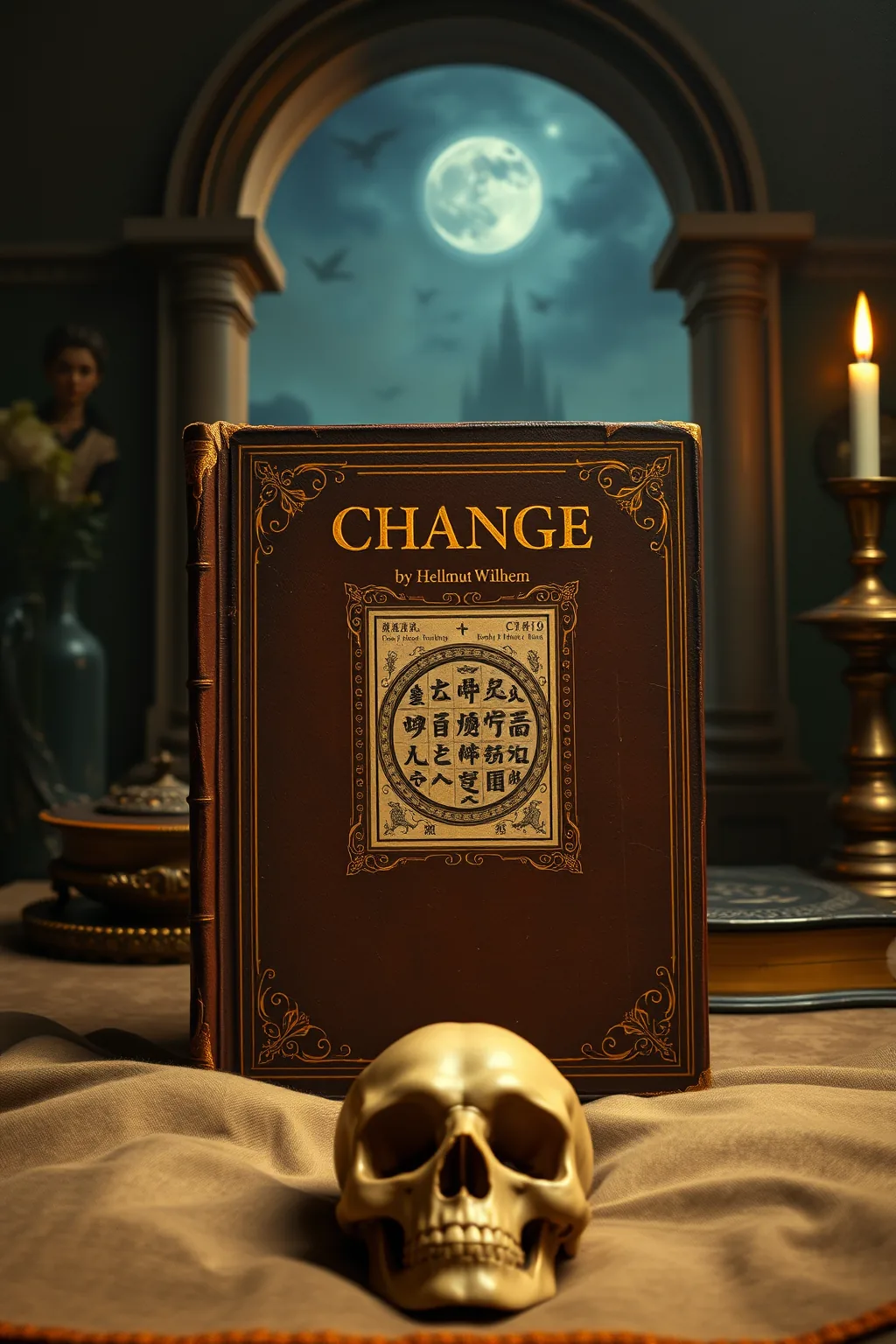
Hellmut Wilhelm’s "Change" offers a rigorous, scholarly approach to the I Ching, a welcome departure from more mystical or purely divinatory interpretations. Wilhelm, a scholar of Chinese culture, grounds his analysis in historical and philosophical context, making the complex system of the I Ching accessible without sacrificing its depth. His exposition of the hexagrams, particularly his detailed breakdown of their sequential logic and philosophical underpinnings, forms the book's strongest asset. However, the dense prose and academic tone, while a strength for some, might prove a barrier for readers seeking a more intuitive or immediately practical guide to using the oracle. A passage discussing the hexagram 52, "Ken" (Keeping Still), exemplifies this; Wilhelm meticulously unpacks its implications for inner contemplation, demonstrating the book's analytical power but demanding close attention.
"Change" is a valuable, if demanding, scholarly resource for understanding the I Ching's philosophical architecture.
📝 Description
82
Hellmut Wilhelm's "Change" was published in 1960, offering a scholarly look at the I Ching.
Published in 1960, Hellmut Wilhelm's "Change" examines the I Ching, the ancient Chinese oracle and philosophical text. This is not a basic translation, but rather an analytical look at the hexagrams and their underlying philosophy. Wilhelm breaks down the principles and practical use of this complex system of divination and wisdom. The book is for serious students of Eastern philosophy, comparative religion, and divination. Readers who want to understand the I Ching beyond simple fortune-telling will find value. Those familiar with Western philosophy may also appreciate Wilhelm's cross-cultural approach.
Wilhelm's work places the I Ching within a mid-20th century Western interest in Eastern systems. Thinkers like Carl Jung were exploring archetypes and synchronicity, providing a framework for understanding the I Ching psychologically and symbolically. Wilhelm's book adds to this conversation, introducing Chinese thought to a Western academic and esoteric audience.
Hellmut Wilhelm's "Change" enters the mid-20th century discussion surrounding the I Ching, a text steeped in Chinese cosmology and divination. Its publication coincided with a growing Western engagement with Eastern philosophical traditions, influenced by figures like Carl Jung who saw universal archetypes at play. Wilhelm's analysis moves beyond mere translation, seeking to illuminate the I Ching's philosophical underpinnings and its function as a guide for understanding the dynamics of change in both the natural world and human life.
💡 Why Read This Book?
• Gain a structured understanding of the I Ching's sixty-four hexagrams, beyond simple fortune-telling, by examining their philosophical evolution as detailed in Wilhelm's analysis of their construction. • Appreciate the I Ching as a model for understanding cosmic and human affairs, as Wilhelm elucidates its principles, rooted in the interplay of yin and yang. • Explore the mid-20th century Western reception of Eastern philosophy, specifically how scholars like Wilhelm engaged with texts like the I Ching in 1960, alongside contemporaries exploring symbolic systems.
⭐ Reader Reviews
Honest opinions from readers who have explored this book.
❓ Frequently Asked Questions
What is the primary focus of Hellmut Wilhelm's 'Change'?
The book's primary focus is a scholarly examination of the I Ching, the ancient Chinese oracle. It explores the philosophical underpinnings of its sixty-four hexagrams and their application as a system of wisdom and divination.
When was Hellmut Wilhelm's 'Change' first published?
Hellmut Wilhelm's 'Change' was first published in 1960, placing it within a period of growing Western academic and esoteric interest in Eastern philosophical traditions.
Is 'Change' a translation of the I Ching?
No, 'Change' is not a direct translation. It is an analytical exploration and interpretation of the I Ching, aiming to explain its principles and structure rather than providing a literal rendering of the text.
Who would benefit most from reading 'Change'?
Students of Eastern philosophy, comparative religion, and divination practices, particularly those interested in a deep, analytical understanding of the I Ching's structure and meaning, would benefit most.
What is the relationship between 'Change' and Western thought?
The book engages with Western intellectual currents of its time, such as the psychological and symbolic interpretations of texts explored by figures like Carl Jung, offering a bridge for Western readers to understand Chinese philosophy.
Does 'Change' offer practical advice for using the I Ching?
While rooted in practical application, Wilhelm's approach is primarily analytical and philosophical. It provides the foundational understanding necessary for practical use rather than a step-by-step guide.
🔮 Key Themes & Symbolism
Hexagrammatic Structure
Wilhelm dissects the sixty-four hexagrams of the I Ching, not merely as isolated symbols but as interconnected elements within a dynamic system. He emphasizes how the combination of yin and yang trigrams creates each hexagram and how these structures represent fundamental states of being and change in the cosmos. This analytical approach reveals the I Ching as a sophisticated philosophical model, moving beyond simple predictive divination to offer insights into natural processes and human behavior.
The Philosophy of Change
Fundamentally, Wilhelm's work explores the fundamental Chinese concept of 'change' (Yi). He presents the I Ching as a codified representation of this perpetual flux. The book examines how the text illustrates the cyclical nature of existence, the interplay of opposing forces (yin and yang), and the importance of understanding these dynamics for harmonious living. This perspective situates the I Ching as a profound philosophical text for understanding the universe's inherent transformations.
I Ching as a Philosophical Oracle
Wilhelm frames the I Ching as more than a mere fortune-telling tool; he presents it as a complex oracle imbued with philosophical wisdom. The book elucidates how consulting the oracle, through the casting of lots and interpretation of hexagrams, serves as a method for gaining clarity on situations by aligning oneself with the principles of natural change. This interpretation highlights the I Ching's role in promoting self-awareness and ethical conduct through contemplation of its symbolic language.
Comparative Esotericism
Published in 1960, 'Change' participates in a mid-century Western intellectual movement fascinated by Eastern philosophies. Wilhelm's scholarly approach, while rooted in Chinese studies, appeals to Western esoteric interests, particularly those influenced by Carl Jung's exploration of archetypes and synchronicity. The book bridges Eastern and Western thought, offering a framework for understanding Chinese wisdom through a lens that acknowledges universal symbolic patterns.
💬 Memorable Quotes
Direct passages from the work, attributed to the author.
“Each hexagram represents a situation.”
— This highlights the I Ching's function as a symbolic map of human experience. Wilhelm uses this to illustrate how the oracle's structures correspond to different life circumstances, offering guidance based on their inherent dynamics.
“Change is the only constant.”
— This core tenet, central to Chinese philosophy and the I Ching, is explored by Wilhelm as the fundamental principle that the oracle helps us to navigate and understand in our lives and the wider cosmos.
“The wisdom lies in the transition between states.”
— Wilhelm emphasizes that the oracle's value is not just in identifying a current state (hexagram), but in understanding the process of movement and transformation from one state to another, which is where true insight is found.
💡 Key Ideas
Editorial paraphrase of the work's core concepts — not direct quotes.
The I Ching is a book which helps us to understand the world.
This paraphrased concept highlights Wilhelm's view of the I Ching not as a static text, but as a dynamic tool for comprehending the underlying principles of existence and the constant flux of reality.
Yin and Yang are the fundamental forces.
This paraphrased concept underlines Wilhelm's explanation of the I Ching's construction. The interplay and balance of these two primal forces form the basis of all hexagrams and, by extension, all phenomena.
🌙 Esoteric Significance
Tradition
Wilhelm's work fits within the broad stream of Western esoteric interest in Chinese wisdom traditions, particularly those seeking philosophical depth rather than solely magical application. While not strictly Hermetic or Kabbalistic, it aligns with intellectual currents that see universal symbolic languages in diverse cultures. The I Ching, in this context, is viewed as a profound system of cosmology and psychology, offering a framework for understanding natural law and human destiny akin to how Western esotericists might study the Tree of Life or Tarot.
Symbolism
Central to the symbolism is the interplay of Yin (broken line, feminine, passive) and Yang (unbroken line, masculine, active). These two forces combine to form the eight trigrams, which in turn combine to form the sixty-four hexagrams. Each hexagram is a symbolic representation of a specific situation, process, or archetypal state, such as 'The Creative' (Qian) or 'The Receptive' (Kun), offering a symbolic language to interpret the dynamics of existence.
Modern Relevance
Contemporary thinkers and practitioners in fields ranging from comparative philosophy to modern systems of divination continue to draw upon rigorous analyses like Wilhelm's. His work provides a foundational understanding for those exploring the I Ching's philosophical depth, influencing approaches that emphasize the oracle's use as a tool for self-reflection and ethical guidance, rather than mere prediction. It serves as a scholarly touchstone for modern interpreters seeking to understand the I Ching's enduring relevance.
👥 Who Should Read This Book
["• Academic students of Chinese philosophy and religion: gain a scholarly perspective on the I Ching's historical and philosophical context, moving beyond popular interpretations.", '• Esoteric practitioners seeking foundational knowledge: understand the symbolic and philosophical architecture of the I Ching, crucial for any serious engagement with its divinatory or wisdom aspects.', '• Comparative religion scholars: explore how a key text of Chinese thought was interpreted and presented to a Western audience in the mid-20th century.']
📜 Historical Context
Hellmut Wilhelm's "Change" emerged in 1960, a period marked by increasing Western engagement with Eastern philosophies, partly fueled by figures like Carl Jung who explored the symbolic and psychological dimensions of texts like the I Ching. Wilhelm, an established scholar of Chinese culture, provided a more academic counterpoint to purely mystical interpretations gaining traction. This era saw a broader intellectual current seeking universal truths across diverse traditions, with scholars and esotericists alike investigating systems like Yoga, Zen Buddhism, and the I Ching. While Wilhelm's work was received as a significant scholarly contribution to understanding Chinese thought, it stood alongside more popular, sometimes less rigorous, introductions to Eastern wisdom that proliferated during the post-war years. The academic reception focused on its thoroughness in explaining the philosophical underpinnings, distinguishing it from purely divinatory manuals.
📔 Journal Prompts
The dynamic interplay of yin and yang within a specific hexagram.
The concept of 'change' as depicted in the sequential logic of hexagram transformations.
How the I Ching's philosophical structure, as presented by Wilhelm, models cosmic and human affairs.
The symbolic representation of 'The Creative' (Qian) and 'The Receptive' (Kun) in your own life.
The oracle's role in understanding transitional states, beyond static situations.
🗂️ Glossary
I Ching
An ancient Chinese divination text and philosophical classic, literally translating to 'Book of Changes.' It consists of 64 hexagrams, each formed by combining two trigrams, used for divination and as a source of wisdom.
Hexagram
A figure composed of six stacked horizontal lines, each line being either solid (Yang) or broken (Yin). There are 64 unique hexagrams in the I Ching, representing fundamental states and processes.
Trigram
A figure composed of three stacked horizontal lines, each line being either solid (Yang) or broken (Yin). There are eight basic trigrams (e.g., Heaven, Earth, Fire, Water) which form the building blocks of the hexagrams.
Yin
In Chinese philosophy, one of the two fundamental, opposing yet complementary forces. It is often associated with the passive, dark, feminine, and receptive aspects of reality.
Yang
In Chinese philosophy, the counterpart to Yin. It is often associated with the active, light, masculine, and creative aspects of reality.
Yi
The Chinese word for 'change,' which is the central concept of the I Ching. It refers to the continuous process of transformation and flux inherent in the universe.
Divination
The practice of seeking knowledge of the future or the unknown by supernatural means. In the context of the I Ching, it involves casting lots to generate a hexagram for guidance.
🔮 Readers Also Liked
Browse all →








More by Hellmut Wilhelm
All books →



More Free Occult Philosophy Books
View all →