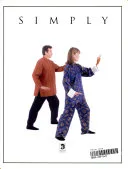
Simply Tai Chi
 73
73

Simply Tai Chi
Graham Bryant’s Simply Tai Chi offers a refreshingly direct approach to a practice often shrouded in mystique. Its primary strength lies in its clarity; Bryant avoids overly philosophical jargon, focusing instead on actionable instruction. The inclusion of a 40-minute demonstration DVD is a significant asset, bridging the gap between static images and dynamic movement. A limitation, however, is that the sheer simplicity, while beneficial for novices, may leave more experienced practitioners wanting deeper exploration of the martial applications or nuanced energy work. The section detailing the "Eight Energies" (Peng, Lu, Ji, An, Cai, Lie, Zhou, Kao) provides a concrete example of the book's methodical breakdown, illustrating each principle with clear diagrams. Ultimately, Simply Tai Chi serves its purpose as an accessible gateway to a complex discipline.
📝 Description
73
Graham Bryant's Simply Tai Chi, published in 2003, breaks down the practice for beginners.
This illustrated guide introduces Tai Chi Chuan, making its movements accessible through clear steps. It aims to present the practice as a practical method for physical and mental well-being, demystifying its principles for newcomers. The book is suitable for those entirely new to Tai Chi, offering a straightforward approach to fundamental postures and sequences. It also serves as a structured reference for individuals with some prior exposure to the discipline. The inclusion of a DVD aids visual learners who benefit from seeing movements demonstrated.
Bryant details specific forms, such as the Yang-style short form, to ensure the practice is concrete and repeatable. The core concepts include slow, deliberate movement, the cultivation of internal energy (Qi), and the development of balance and coordination. The text emphasizes the connection between breath and motion, alongside the importance of a relaxed yet focused state of mind. Its goal is to provide a solid foundation for understanding and beginning Tai Chi.
Tai Chi Chuan originated in China centuries ago, emerging from martial arts and Taoist health practices. Its spread to the West accelerated in the 20th century, leading to diverse styles. Bryant's work appeared as global interest in mind-body exercises and holistic health approaches was rising. The book connects physical form with internal energetic cultivation, a hallmark of Taoist practices aimed at harmonizing the body, mind, and spirit.
💡 Why Read This Book?
• Learn the foundational movements of Tai Chi Chuan, including specific postures like the "Ward Off" (Peng) and "Roll Back" (Lu), presented with clear illustrations and a supplementary DVD for visual learners. • Understand the core principles of slow, flowing motion and breath synchronization, directly applicable to improving balance and reducing physical tension, as outlined in the "Eight Energies" section. • Gain an introductory perspective on the historical development of Tai Chi, placing Bryant's 2003 publication within the context of the practice's growing Western popularity.
⭐ Reader Reviews
Honest opinions from readers who have explored this book.
❓ Frequently Asked Questions
What is the main focus of Simply Tai Chi by Graham Bryant?
Simply Tai Chi by Graham Bryant is an illustrated guide focused on introducing the fundamental movements and principles of the exercise method known as Tai Chi Chuan to beginners.
Does Simply Tai Chi include a demonstration of the movements?
Yes, the book includes a 40-minute demonstration DVD, which is a key feature for users who learn best through visual instruction of the Tai Chi forms.
Who would benefit most from reading Simply Tai Chi?
Individuals new to Tai Chi, those seeking a clear, step-by-step guide, and visual learners who benefit from watching demonstrations alongside reading instructions will find this book most beneficial.
When was Simply Tai Chi first published?
Simply Tai Chi by Graham Bryant was first published in 2003, coinciding with a period of increasing interest in mind-body wellness practices.
What are some key concepts covered in the book?
The book covers key concepts such as slow, deliberate movement, the cultivation of Qi (internal energy), balance, coordination, and the connection between breath and motion.
Is Simply Tai Chi suitable for advanced Tai Chi practitioners?
While excellent for beginners, advanced practitioners might find Simply Tai Chi offers a foundational overview rather than in-depth exploration of advanced martial applications or intricate energy work.
🔮 Key Themes & Symbolism
Accessible Movement Instruction
Bryant's approach explains Tai Chi, presenting it as a learnable physical discipline. The book breaks down complex forms into manageable steps, aided by clear illustrations and the accompanying 40-minute DVD. This focus on practical application makes the esoteric practice of Tai Chi approachable for those unfamiliar with martial arts or traditional Chinese medicine concepts. The emphasis is on correct posture and fluid transitions, enabling practitioners to build a solid foundation.
Mind-Body Integration
The text highlights the interconnectedness of physical movement, breath, and mental focus inherent in Tai Chi. It explains how the slow, deliberate actions encourage a meditative state, fostering calmness and reducing stress. This integration is presented not just as a physical exercise but as a method for cultivating inner peace and mental clarity. The concept of 'Qi' (vital energy) is introduced as something to be guided and balanced through mindful practice.
Foundations of Tai Chi Forms
Simply Tai Chi meticulously details fundamental Tai Chi postures and sequences, often referencing the Yang-style short form. Concepts like the "Eight Energies" (e.g., Peng, Lu, Ji, An) are explained, providing specific terminology for practitioners to grasp. The book serves as a structured reference, allowing individuals to study and practice the movements independently, ensuring a consistent understanding of the form's progression and structure.
Health and Well-being Benefits
Beyond the physical act of movement, the book underscores Tai Chi's benefits for overall health. It touches upon improved balance, increased flexibility, and enhanced coordination. The practice is framed as a gentle yet effective way to promote longevity and well-being, aligning with Taoist principles of harmony and natural flow. This aspect positions Tai Chi as a holistic practice for maintaining vitality.
💬 Memorable Quotes
Direct passages from the work, attributed to the author.
“Slow, deliberate movements”
— This phrase expresses the core methodology of Tai Chi as presented by Bryant, emphasizing precision and mindful execution over speed or force.
“Cultivating internal energy (Qi)”
— Bryant introduces the concept of Qi, vital energy in traditional Chinese thought, suggesting that Tai Chi practice aims to harmonize and strengthen this internal force.
“Balance and coordination”
— This highlights the practical physical benefits of Tai Chi, focusing on improved stability and the seamless integration of body movements.
“Connection between breath and motion”
— This points to the integrated nature of Tai Chi, where conscious breathing is synchronized with physical action to enhance flow and mindfulness.
“Relaxed yet focused state of mind”
— Bryant describes the mental aspect of Tai Chi, advocating for a calm yet alert awareness during practice.
🌙 Esoteric Significance
Tradition
Simply Tai Chi engages with the Taoist tradition, a core part of esoteric philosophy and practice in China. While not strictly a religious text, it draws upon Taoist principles of natural flow (Wu Wei), balance, and the cultivation of vital energy (Qi). The practice of Tai Chi Chuan itself is often seen as a bridge between martial arts, health cultivation, and spiritual development within Taoism, offering a path to harmony with the Tao.
Symbolism
Key symbols implicitly present include the Yin-Yang, representing the dynamic balance of opposing forces inherent in Tai Chi's movements (softness and hardness, yielding and asserting). The concept of Qi itself functions symbolically, representing life force and energetic flow. The sequence of movements can be seen as a microcosm of cosmic cycles and the harmonious interplay of natural energies, guiding the practitioner towards internal equilibrium.
Modern Relevance
In contemporary wellness circles, Bryant's work remains relevant as an entry point to mind-body practices. It connects to modern therapeutic exercises aimed at improving balance, reducing fall risk in the elderly, and managing stress. Schools focusing on integrated health, martial arts with a philosophical bent, and even some forms of somatic therapy can find traces of its principles in contemporary approaches to embodied practice and energy awareness.
👥 Who Should Read This Book
• Individuals new to martial arts or meditative movement seeking a clear, non-intimidating introduction to Tai Chi Chuan, benefiting from the step-by-step guide and DVD. • Health-conscious readers interested in gentle exercises for improving balance, flexibility, and stress reduction, who appreciate a practical approach to ancient practices. • Students of comparative philosophy or traditional Chinese medicine looking for a tangible, practice-based example of Taoist principles like Qi cultivation and the concept of flow.
📜 Historical Context
Published in 2003, Graham Bryant's Simply Tai Chi entered a Western landscape increasingly receptive to Eastern contemplative practices. The late 20th and early 21st centuries saw a surge in popularity for mind-body disciplines like Yoga, Qigong, and Tai Chi, driven by a growing interest in holistic health and stress reduction. Bryant’s work arrived as a practical guide amidst a burgeoning academic and popular literature on these subjects. While figures like Benjamin Lo were already established in teaching Tai Chi internationally, Bryant's book aimed at a more foundational, accessible entry point. The era was characterized by a broader cultural curiosity towards Taoism and traditional Chinese medicine, making works that clearly explained these practices highly relevant. There was no significant reported censorship or controversy surrounding the book's publication, reflecting its straightforward instructional nature rather than challenging established norms.
📔 Journal Prompts
The concept of 'Eight Energies' in Tai Chi.
Bryant's emphasis on the connection between breath and motion.
The principles of balance and coordination as applied to daily life.
The goal of achieving a 'relaxed yet focused state of mind' during practice.
How the slow, deliberate movements might influence one's perception of time.
🗂️ Glossary
Tai Chi Chuan
An ancient Chinese martial art practiced for both its defense training and its health benefits. It is characterized by slow, flowing, continuous movements.
Qi (Chi)
A fundamental concept in traditional Chinese culture, referring to the vital life force or energy believed to flow through all living things.
Peng
One of the 'Eight Energies' in Tai Chi, often translated as 'ward off' or 'rebounding energy'. It represents an upward, expanding force.
Lu
Another of the 'Eight Energies', typically translated as 'roll back' or 'pull'. It signifies a yielding, drawing-in movement.
Form
A specific sequence of choreographed movements in Tai Chi, practiced continuously. Bryant's book likely details a simplified or standard form.
Yang Style
One of the major styles of Tai Chi Chuan, known for its large, expansive movements and emphasis on posture and balance. Bryant's work references this style.
Taoism
A philosophical and religious tradition originating in China, emphasizing living in harmony with the Tao (the Way), often through principles of nature, balance, and non-action (Wu Wei).