Ceremonial Magic and Sorcery
 61
61

Ceremonial Magic and Sorcery

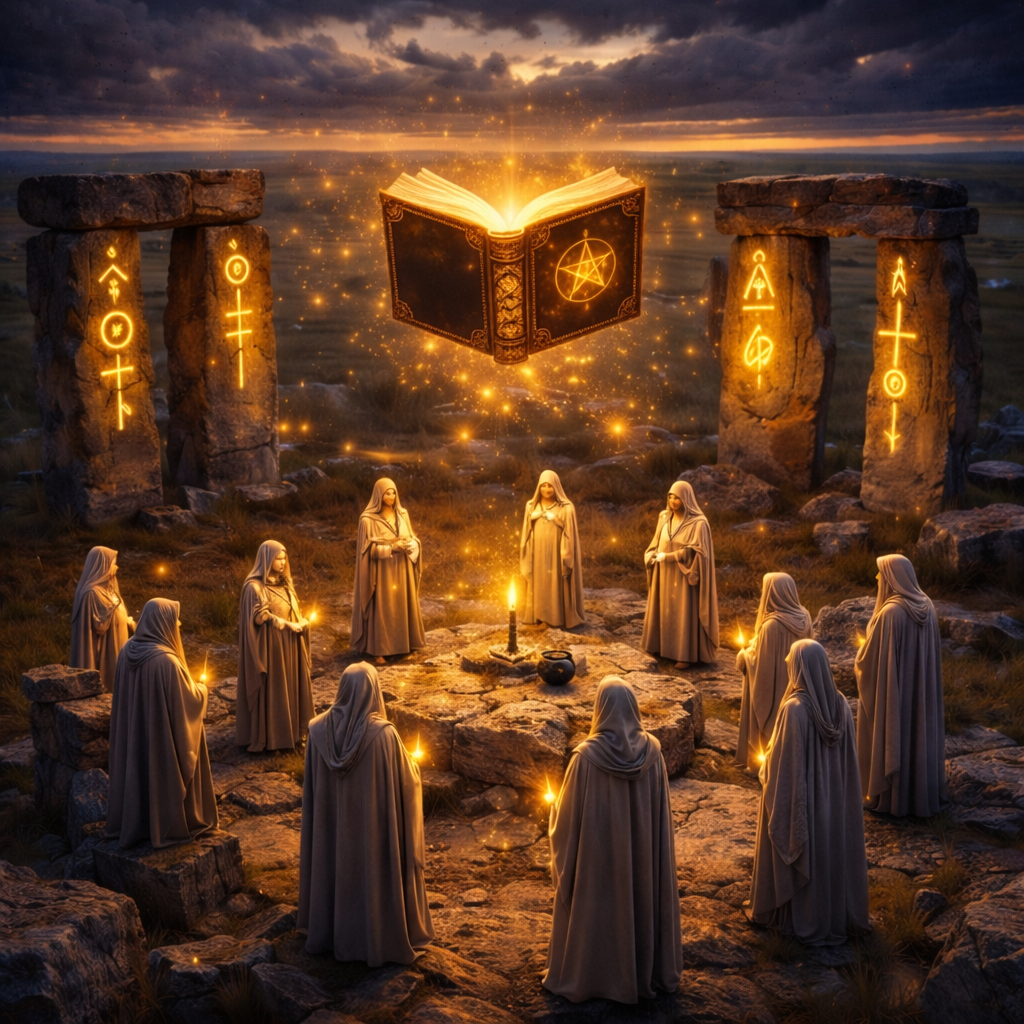

Lorelei Sage (Contemplative Literature Editor) — Manly P. Hall's 'Ceremonial Magic and Sorcery' is an essential compendium for anyone seeking to pierce the veil of the mundane. Hall masterfully deciphers the arcane symbols and intricate methodologies of ritual magic, presenting them with unparalleled clarity and depth. His exploration of the psychological and spiritual ramifications of these practices offers profound insights into the human quest for higher consciousness. This work is particularly valuable for its illumination of the underlying philosophical principles that unify diverse magical traditions. It is an indispensable resource for practitioners, scholars, and serious seekers of hidden wisdom.
📝 Description
61
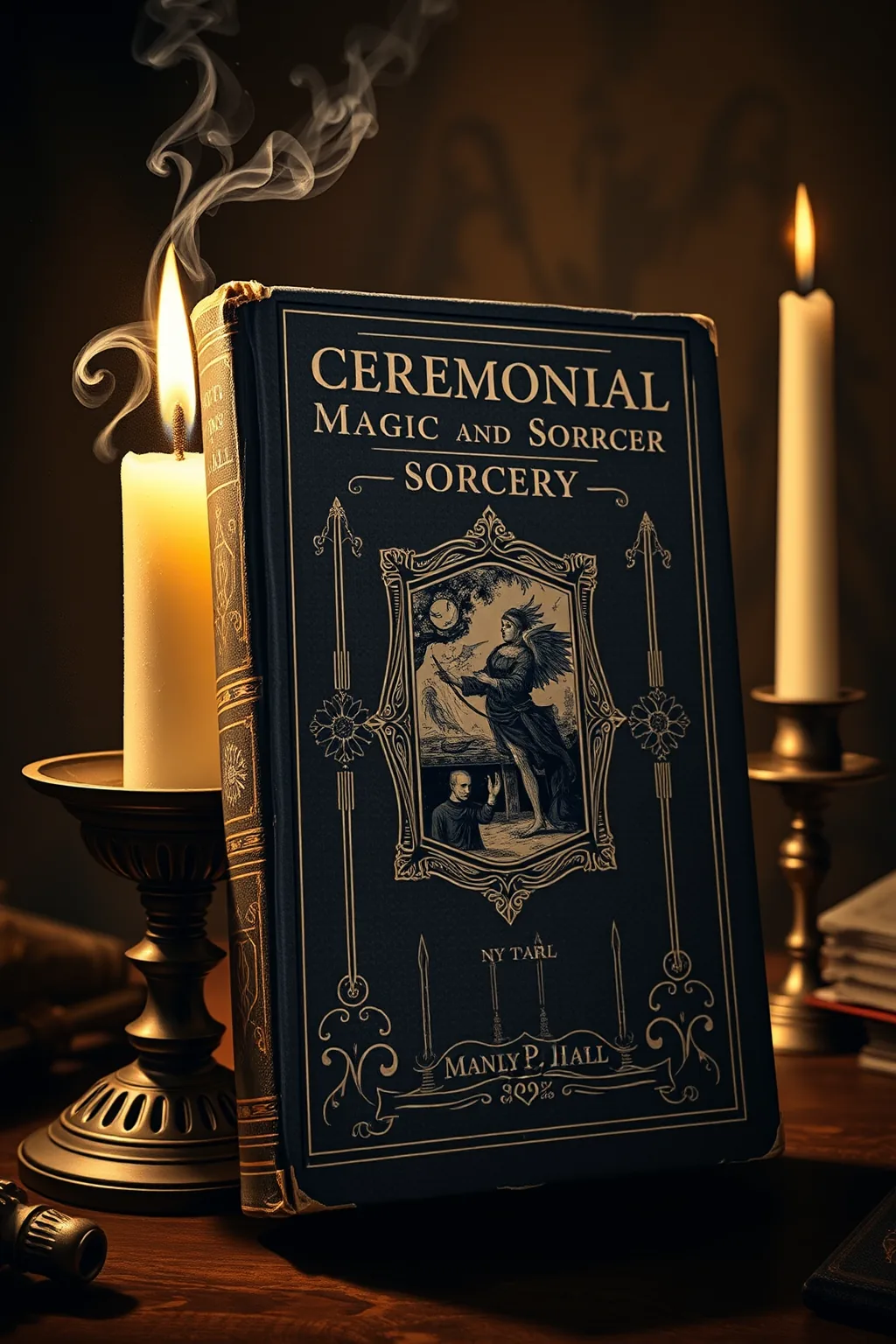
Manly P. Hall published 'Ceremonial Magic and Sorcery' to detail occult ritual and its energies.
This book examines the practices of ceremonial magic and the forces they engage. Hall, an occult philosopher, traces the roots of these rituals through Hermeticism, Kabbalah, and natural elements. The text describes the symbolic language and psychological aspects involved in these practices, aiming to show how they connect the human mind to unseen forces.
It is not simply a history but an examination of the psyche's ability to interface with these dimensions. Hall directs the book toward those seriously studying esoteric subjects, aiming to illuminate the hidden workings of the universe and an individual's position within it. Understanding these concepts can lead to greater self-awareness and spiritual insight.
Published in the early 20th century, 'Ceremonial Magic and Sorcery' fits within the broader revival of occult and esoteric studies. It draws on traditions like Western esotericism, Hermetic philosophy, and Kabbalistic thought, which were popular among authors like Eliphas Levi and Aleister Crowley. Hall's work aims to systematize and explain these ancient practices for a modern audience, connecting them to psychological principles and universal laws.
💡 Why Read This Book?
Embark on a profound journey into the heart of arcane knowledge. 'Ceremonial Magic and Sorcery' offers a meticulously researched exposition of ancient magical systems, revealing their philosophical underpinnings and practical applications. Ideal for seekers of spiritual wisdom, occult scholars, and practitioners looking to deepen their understanding of ritual and its transformative potential. Unlock the secrets of symbolic language and the manipulation of subtle energies.
⭐ Reader Reviews
Honest opinions from readers who have explored this book.
❓ Frequently Asked Questions
What is ceremonial magic?
Ceremonial magic refers to elaborate rituals involving specific incantations, gestures, symbols, and tools, often performed to invoke spiritual entities or manipulate cosmic forces for specific purposes.
Who was Manly P. Hall?
Manly P. Hall (1901-1990) was a prolific author, mystic, and lecturer known for his extensive writings on esotericism, occultism, mythology, and comparative religion.
Is this book suitable for beginners?
While comprehensive, the book delves into complex subjects. Beginners may find it most beneficial when approached with a dedicated spirit of study and perhaps alongside introductory texts.
What is the connection between magic and psychology?
Hall emphasizes that ceremonial magic often acts as a powerful tool for psychological transformation, enabling practitioners to understand and harness their own inner potential and subconscious forces.
Does the book provide practical spells?
The book focuses more on the theory, philosophy, and historical context of ceremonial magic rather than providing a grimoire of specific spells for immediate use.
🔮 Key Themes & Symbolism
The Power of Symbolism and Ritual
This theme looks at the profound significance of symbols, gestures, and sacred objects within ceremonial magic. Hall illustrates how these elements act as conduits, bridging the material and spiritual realms, and how their precise arrangement and invocation can shape reality. The intricate dance of ritual is presented not as mere superstition, but as a sophisticated language designed to communicate with and influence the subtle energies of the cosmos.
The Psychology of the Magician
Hall posits that ceremonial magic is as much an internal journey as an external one. This theme explores the mental discipline, focused will, and imaginative capacity required of the practitioner. It examines how engaging in ritual can unlock latent psychological potentials, facilitate self-transformation, and provide useful insights into the workings of the human mind and its connection to universal consciousness.
Hermetic Principles and Universal Laws
The work is deeply rooted in Hermetic philosophy, emphasizing the ancient maxim 'As Above, So Below.' This theme elucidates the fundamental laws governing the universe, such as correspondence, vibration, and polarity, and how they are mirrored and manipulated within ceremonial practices. Understanding these principles is presented as key to comprehending the efficacy and underlying logic of magical operations.
💬 Memorable Quotes
Direct passages from the work, attributed to the author.
“The true magician is not one who commands spirits, but one who commands himself.”
— This highlights the internal focus of true magic, emphasizing self-mastery and psychological discipline over external manipulation.
“Ritual is the art of the dramatic expression of divine truths.”
— This suggests that rituals are not arbitrary actions, but carefully crafted performances that embody and reveal fundamental spiritual realities.
“Ignorance is the prison of the soul.”
— This underscores the liberating power of knowledge and understanding, particularly in the context of esoteric wisdom.
“The ceremony is the key to the unconscious.”
— This points to the power of ritual to access and activate the deeper, often hidden, aspects of the human psyche.
💡 Key Ideas
Editorial paraphrase of the work's core concepts — not direct quotes.
The universe is a living organism, and man is its conscious part.
This quote speaks to the interconnectedness of all things and man's potential for awareness and influence within the cosmic whole.
🌙 Esoteric Significance
Tradition
This work is deeply embedded within the Western Esoteric Tradition, drawing heavily from Hermeticism, Kabbalah, Neoplatonism, and Rosicrucianism. Hall synthesizes these diverse streams, presenting ceremonial magic not as isolated dogma but as a coherent system rooted in universal principles of correspondence and spiritual evolution. He emphasizes its role in the Great Work of self-transformation and the attainment of higher consciousness.
Symbolism
The book meticulously deciphers the rich symbolic language of ceremonial magic. From the geometric precision of the magic circle to the elemental associations of colors and incense, each element is imbued with profound meaning. Hall reveals how these symbols act as keys, unlocking specific energies and states of consciousness, enabling the magician to interact with the subtle forces of the cosmos and the archetypal realms.
Modern Relevance
In an age often characterized by materialism and disconnection, Hall's work offers a pathway back to understanding the unseen dimensions of reality. Its emphasis on psychological integration, symbolic literacy, and the power of focused intent remains profoundly relevant for contemporary seekers. The principles of ceremonial magic, stripped of dogma, provide potent tools for personal growth, ethical development, and the conscious cultivation of one's inner life.
👥 Who Should Read This Book
This book is a treasure for the earnest seeker of hidden knowledge, the dedicated student of comparative religion and mythology, and the practitioner of esoteric arts. Beginners will find a foundational, albeit challenging, introduction to the philosophy and structure of magical systems. Scholars will appreciate Hall's comprehensive synthesis and historical context. Practitioners will discover deeper layers of meaning and intention behind their rituals, enhancing their practice. Those interested in the psychological aspects of spirituality and the potential for human consciousness will also find useful insights.
📜 Historical Context
Manly P. Hall penned 'Ceremonial Magic and Sorcery' during a period of significant resurgence in occult and esoteric interest in the early to mid-20th century. This era saw a widespread fascination with ancient wisdom traditions, comparative mythology, and the practical application of mystical principles, often influenced by the Theosophical Society and the Hermetic Order of the Golden Dawn. Hall’s work emerged as a comprehensive synthesis of these diverse streams, aiming to provide a structured and philosophical understanding of magical practices that had often been shrouded in secrecy or sensationalism. His writings contributed to legitimizing these studies for a broader intellectual audience, bridging the gap between academic inquiry and spiritual seeking.
📔 Journal Prompts
Reflect on a personal ritual or routine: how does its structure and intention mirror ceremonial magic?
Consider a powerful symbol in your life. What hidden meanings or energies does it evoke?
How can the principle of 'As Above, So Below' be applied to understanding your personal challenges?
Explore the concept of 'self-command' as presented by Hall. In what areas of your life could this be strengthened?
What aspects of the 'psychology of the magician' resonate most with your own inner journey?
🗂️ Glossary
Hermeticism
A philosophical and religious tradition based primarily upon writings attributed to Hermes Trismegistus, stressing esoteric knowledge and spiritual enlightenment through understanding universal laws.
Kabbalah
A system of Jewish mysticism that explores the nature of God and the universe through the interpretation of scripture and mystical symbolism, often involving the Tree of Life.
The Great Work
In alchemy and esoteric traditions, the process of spiritual transformation and purification aimed at achieving enlightenment, perfection, or the Philosopher's Stone.
Invocation
The act of calling upon a divine or spiritual entity, often through prayer or ritual, to be present or to act in a specific way.
Symbolic Language
A system of communication that uses symbols, images, and archetypes to convey deeper meanings, often beyond literal interpretation, common in mystical and religious traditions.
This book appears in 3 collections
🔮 Readers Also Liked
Browse all →









More by Manly Hall
All books →


From the “Ritual Magic” Collection
View all →






More Free Magic & Ritual Books
View all →