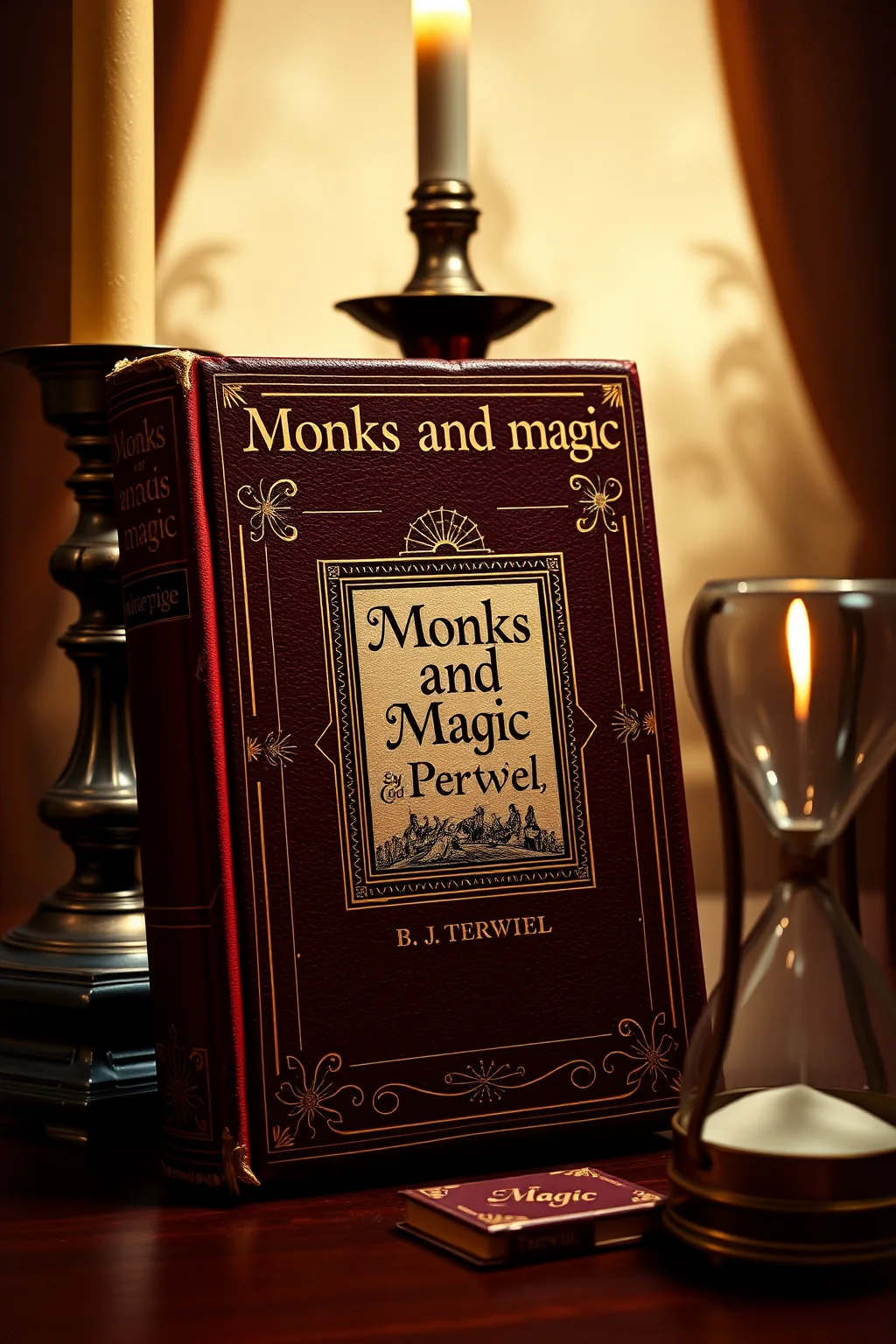
Monks and magic
 62
62

Monks and magic


Review by Cassian Rothmann (Senior Critic, Ancient Wisdom) — In 'Monks and Magic,' B. J. Terwiel offers a compelling and meticulously researched exploration of the esoteric dimensions of Buddhist monasticism. This is not a superficial glance at folklore, but a deep dive into the practical application of magical beliefs within the sacred confines of the monastery. Terwiel's scholarly rigor is evident, yet he conveys the subject with a captivating clarity that will engage both academics and serious practitioners. He illuminates the intricate connections between ritual efficacy, the cultivation of spiritual power, and the pursuit of liberation. The book serves as an invaluable resource for understanding a less-explored facet of Buddhist tradition, providing crucial context for the enduring power of magical thinking in spiritual development. Essential reading for anyone interested in the hidden architecture of religious practice.
📝 Description
62
B. J. Terwiel's 'Monks and Magic' examines the integration of esoteric practices within Buddhist monasticism.
Published in 1975, B. J. Terwiel's 'Monks and Magic' investigates the relationship between Buddhist monastic life and esoteric traditions. The book details how rituals, spells, and amulets were not separate from the pursuit of enlightenment but often integral to it. Terwiel presents monastic routine as a context where arcane knowledge and supernatural beliefs were cultivated. He analyzes the symbolic language found in incantations and charms, showing their place within a broader spiritual framework.
The research uncovers how these practices functioned within the daily lives of monks, demonstrating their significance beyond mere superstition. The text aims to illuminate the connection between faith, the mystical, and their impact on both cultural development and individual lives. It offers a view of how the desire for hidden knowledge and spiritual depth has persisted throughout history and across different societies.
This work is situated within the study of Southeast Asian esoteric traditions, particularly as they intersect with Theravada Buddhism. It moves beyond a simple description of magical practices to examine their functional role within a structured monastic environment. The book contributes to understanding how popular beliefs and supernatural concepts coexisted with, and were incorporated into, formal religious institutions, challenging a strict separation between the sacred and the magical in the context of Buddhist practice.
💡 Why Read This Book?
Uncover the hidden spiritual technology within Buddhist monasticism. 'Monks and Magic' reveals the practical application of ritual and esoteric arts as pathways to enlightenment, offering a unique perspective for scholars, practitioners, and seekers of ancient wisdom. Understand the profound symbiosis of faith and the supernatural in shaping spiritual destinies.
⭐ Reader Reviews
Honest opinions from readers who have explored this book.
❓ Frequently Asked Questions
What is the primary focus of 'Monks and Magic'?
The book meticulously examines the often-overlooked integration of magical beliefs, rituals, and practices within the daily life and spiritual pursuits of Buddhist monks, exploring their role in the pursuit of enlightenment and worldly efficacy.
Is this book suitable for beginners in Buddhist studies?
While academically rigorous, Terwiel's accessible prose makes 'Monks and Magic' a valuable read for determined beginners interested in the esoteric dimensions of Buddhism, provided they approach it with an open and inquisitive mind.
What kind of magic is discussed in the book?
The book delves into various forms of ritualistic magic, including the use of spells, amulets, protective charms, and incantations, all framed within the specific cultural and religious context of Buddhist monasticism.
Does the book suggest magic is a path to Nirvana?
Terwiel explores how magic was perceived and utilized by monks as a tool to overcome obstacles, cultivate spiritual discipline, and achieve certain worldly or spiritual aims, but it's presented within the broader framework of Buddhist doctrine.
What is the historical period covered by the research?
The research primarily draws upon historical sources and ethnographic data relating to traditional Buddhist societies, offering insights into practices that were prevalent over extended historical periods before significant modernization.
🔮 Key Themes & Symbolism
The Esoteric Field of Monasticism
This theme explores the concealed world of ritualistic practices and arcane knowledge cultivated within Buddhist monasteries. It reveals how seemingly mundane monastic life served as a fertile ground for the development and application of magical arts, viewed not as separate from spiritual pursuits but as an integral component. The exploration focuses on the symbolic language, the efficacy of spells, and the spiritual power attributed to amulets and incantations, demonstrating their profound significance in the monks' quest for both worldly well-being and ultimate liberation. It challenges conventional perceptions of Buddhist practice, highlighting a rich, often-hidden, layer of esoteric engagement.
Ritual as Spiritual Technology
Terwiel positions ritual within Buddhist monasticism as a sophisticated form of spiritual technology, designed to manipulate subtle energies and influence both the practitioner's inner state and external circumstances. This theme examines the practical application of magic, from protective charms warding off malevolent forces to incantations aimed at fostering concentration or achieving specific goals. It illuminates how these practices were not mere superstition but were meticulously developed systems, imbued with philosophical underpinnings and aimed at facilitating spiritual progress, overcoming obstacles on the path to enlightenment, and maintaining cosmic order.
The Symbolism of the Sacred and the Supernatural
This theme unpacks the rich symbolic universe that underpins the magical practices of Buddhist monks. It explores the deep meanings embedded in amulets, talismans, gestures, and spoken words, revealing how these elements served as conduits for spiritual power and as visual representations of Buddhist cosmology. Terwiel illustrates how the supernatural was not an alien force but a perceived dimension of reality that could be understood, navigated, and influenced through disciplined ritual. The analysis highlights the profound connection between the visible and invisible realms, and how monks utilized symbolic language to bridge the gap, fostering a holistic approach to spiritual development.
💬 Memorable Quotes
Direct passages from the work, attributed to the author.
“Amulets were not mere trinkets, but repositories of potent spiritual energy.”
— This highlights the functional and deeply symbolic nature of magical objects within monastic traditions, emphasizing their role as active instruments of spiritual power and protection.
“Incantations were the spoken keys to unlocking hidden forces.”
— This suggests that the power of ritualistic speech was paramount, framing incantations as vital tools for invoking and directing spiritual energies for specific purposes.
“The pursuit of enlightenment was often aided by the mastery of the subtle arts.”
— This emphasizes the complementary relationship between conventional Buddhist practice and esoteric knowledge, suggesting that the latter could serve as a significant aid on the spiritual path.
“The veil between the mundane and the mystical was thinnest within sacred walls.”
— This evocative phrase points to the monastic environment as a place where the perceived boundaries of reality were more fluid, allowing for direct engagement with supernatural forces.
💡 Key Ideas
Editorial paraphrase of the work's core concepts — not direct quotes.
The monastery was a crucible where the sacred and the arcane were forged together.
This quote captures the book's central thesis: that Buddhist monastic institutions were not solely centers of meditation and scripture, but also vibrant hubs for the development and practice of esoteric arts.
🌙 Esoteric Significance
Tradition
The esoteric significance of 'Monks and Magic' lies primarily within the Mahayana and Theravada Buddhist traditions, particularly in their folk manifestations and monastic interpretations. It explores how Buddhist cosmology, philosophy, and ethical frameworks were adapted and integrated with indigenous animistic beliefs and shamanic practices. This fusion created a unique esoteric milieu where the pursuit of liberation (Nirvana) was often complemented by the cultivation of supernatural powers (siddhis) and the use of ritualistic magic for worldly benefits. The book illuminates how these practices were not seen as antithetical to the Dharma but as practical applications of its principles, aimed at overcoming obstacles and enhancing spiritual discipline.
Symbolism
The symbolism within Buddhist monastic magic is many-sided and deeply resonant. Common symbols include the use of geometric diagrams (yantras) for protection and invocation, sacred syllables and mantras imbued with sonic power, and amulets often crafted from natural materials or inscribed with sacred texts and images. These symbols function as conduits for spiritual energy, representing cosmic principles, protective deities, or the enlightened nature of the mind. The book reveals how the manipulation of these symbols through specific rituals, gestures, and visualizations was believed to engage with higher powers, ward off negative influences, and foster spiritual growth, making the esoteric practices a rich visual and conceptual language.
Modern Relevance
In the modern era, 'Monks and Magic' offers crucial insights into the enduring human need for meaning, order, and connection to something beyond the material. It highlights how esoteric practices, even within seemingly rationalized religious systems, persist because they address fundamental psychological and existential concerns. For contemporary seekers, the book provides a historical and cultural context for understanding the roots of ritualistic traditions and the persistent allure of hidden knowledge. It encourages a re-evaluation of the relationship between faith and the supernatural, suggesting that a holistic approach to spirituality may encompass both the rational and the intuitive, the known and the subtly perceived dimensions of existence.
👥 Who Should Read This Book
This important work is essential for scholars of comparative religion, Buddhist studies, and anthropology, offering rigorous analysis of a complex and often misunderstood aspect of monastic life. For spiritual practitioners, particularly those interested in Eastern traditions, 'Monks and Magic' provides a deep dive into the historical roots of ritualistic practices, offering context and inspiration for their own contemplative paths. Seekers of hidden wisdom will find a compelling exploration of how magic and spirituality have historically intertwined to shape human experience and the pursuit of transcendence. Beginners in Buddhist studies will benefit from its clear exposition of complex ideas, provided they approach it with an academic curiosity for the esoteric dimensions often overlooked in mainstream discourse.
📜 Historical Context
B. J. Terwiel's 'Monks and Magic' explores a rich historical range, primarily focusing on traditional Buddhist societies across Southeast Asia and parts of South Asia. The period under examination spans centuries, encompassing the era when Buddhism was deeply interwoven with the fabric of daily life and governance, often predating significant Western colonial influence and rapid modernization. This era witnessed the flourishing of monastic orders that served not only as centers of religious learning and spiritual practice but also as repositories of cultural knowledge, including folk medicine, astrology, and various forms of ritualistic magic. The research draws upon historical texts, indigenous manuscripts, and ethnographic accounts, providing a window into a time when the distinction between the sacred and the secular, the mundane and the supernatural, was far more blurred than it is in contemporary understanding. The book's findings illuminate how these practices were integral to the social and spiritual landscape, offering solace, protection, and a sense of order in a world often perceived as governed by unseen forces.
📔 Journal Prompts
Reflect on the concept of 'spiritual technology' as presented in the book. How might ritualistic practices be viewed as tools for inner transformation?
Consider the role of symbolism in your own life or spiritual journey. What objects or concepts hold deep meaning for you, and why?
The book suggests a blurring of lines between the mundane and the mystical in monastic settings. Where do you perceive such blurred lines in contemporary society or your own experience?
How does the pursuit of 'worldly efficacy' through magic intersect with, or diverge from, the pursuit of ultimate liberation in Buddhist philosophy?
Imagine you are a monk in the historical period described. What challenges or temptations might the practice of magic present, and how would you navigate them?
🗂️ Glossary
Siddhis
In Buddhist and Hindu traditions, siddhis refer to supernatural powers or attainments achieved through spiritual discipline and practice. These can range from clairvoyance and levitation to the ability to influence the elements.
Yantra
A geometric diagram, typically used in Tantric traditions of Hinduism and Buddhism, as a tool for meditation, invocation, and ritual. Yantras are believed to embody specific deities or cosmic energies.
Mantra
A sacred utterance, sound, syllable, word, or group of words that is chanted or recited, often repeatedly, during meditation or ritual. Mantras are believed to possess spiritual power and can evoke specific states of consciousness or invoke deities.
Dharma
In Buddhism, Dharma refers to the teachings of the Buddha, the universal truth, or the natural law that governs existence. It encompasses the path to enlightenment and the ethical principles that guide conduct.
Tantric
Pertaining to Tantra, a complex set of esoteric traditions found in Hinduism, Buddhism, and Jainism that emphasize ritual, meditation, yoga, and the use of mantras and yantras to achieve spiritual liberation and worldly power.
This book appears in 3 collections
🔮 Readers Also Liked
Browse all →




From the “Ritual Magic” Collection
View all →









More Free Magic & Ritual Books
View all →