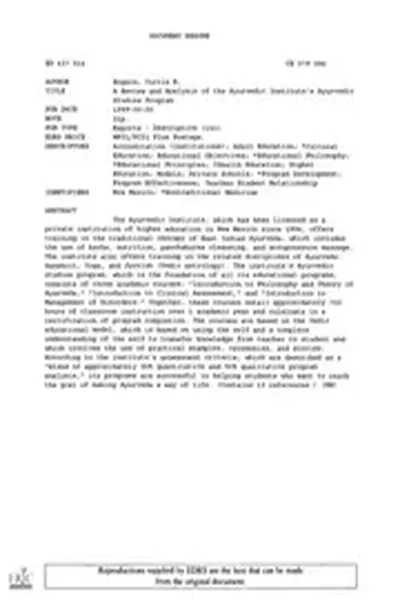
The Only Astrology Book You'll Ever Need
 82
82

The Only Astrology Book You'll Ever Need
Joanna Martine Woolfolk’s "The Only Astrology Book You’ll Ever Need" delivers on its ambitious title by providing a remarkably thorough and accessible entry point into the astrological cosmos. Its strength lies in its exhaustive approach to compatibility, detailing every single Sun sign combination—a feat few other popular guides attempt. The inclusion of updated astronomical data and practical advice for health and finance grounds the esoteric subject matter effectively. However, the book occasionally leans towards generalizations, particularly in its compatibility sections, which, while comprehensive, can sometimes feel repetitive or overly prescriptive. A passage discussing the challenges of Saturn in the seventh house, for instance, offers valuable advice on commitment but could benefit from more nuanced individual variation. Despite this, Woolfolk's work remains a formidable, if somewhat dense, resource for anyone beginning their astrological studies.
📝 Description
82
Joanna Martine Woolfolk's 1999 book covers the foundational elements of a birth chart.
This guide to astrological interpretation details the core components of a birth chart, including Sun signs, Moon signs, and Ascendant placements. It explains the role of planets within the twelve Houses and incorporates recent astronomical findings. The book also provides extensive compatibility analysis, covering all 144 Sun sign pairings.
Woolfolk structured this volume for individuals seeking a thorough understanding of astrological principles, from novices to those with some existing knowledge. It is for readers interested in personal growth through astrological self-awareness, relationship dynamics, and practical life guidance. The text addresses health, financial, and romantic aspects, alongside strategies for managing astrological challenges.
The work examines core astrological components: the twelve zodiac signs, the seven classical planets, and the twelve houses, along with their interrelationships. It highlights the dynamic interplay of these elements in constructing a unique astrological profile. Furthermore, it covers the practical application of astrological knowledge for predicting trends, understanding personality, and fostering interpersonal harmony through detailed sign compatibility.
Joanna Martine Woolfolk's text emerged during a period of renewed interest in esotericism and New Age philosophies in the late 20th century. Following the counterculture movements of the 1960s and 70s, astrology experienced a revival, moving beyond niche circles into popular culture. Books like this one offered accessible frameworks for understanding complex astrological systems, contrasting with more academic or esoteric traditions.
💡 Why Read This Book?
• Gain a complete understanding of all 144 Sun sign compatibility combinations, offering unique insights into interpersonal dynamics beyond basic pairings, as detailed in the extensive compatibility chapters. • Learn to interpret the placement of planets in your Houses, providing a personalized astrological blueprint for different areas of your life, such as career and relationships. • Discover practical applications for astrological knowledge, including advice on health and lifestyle, informed by Woolfolk's comprehensive analysis of each sign's characteristics first published in 1999.
⭐ Reader Reviews
Honest opinions from readers who have explored this book.
❓ Frequently Asked Questions
What is the significance of the Ascendant sign in astrology, according to Woolfolk?
Woolfolk explains that the Ascendant, or rising sign, represents the mask you wear to the world and how others perceive you upon first meeting. It's the zodiac sign that was on the eastern horizon at the exact moment of your birth.
How does "The Only Astrology Book You'll Ever Need" address negative astrological aspects?
The book provides advice on dealing with the challenging or 'negative' aspects of each sign and planetary placement. It aims to offer constructive strategies for managing these energies rather than simply identifying them.
What astronomical discoveries are mentioned in the updated edition?
The updated edition incorporates recent astronomical findings relevant to astrology. While specific discoveries aren't always detailed, the book aims to reflect current astrological understanding in light of celestial science.
Does the book offer guidance on financial astrology?
Yes, Joanna Martine Woolfolk's guide includes advice on financial matters, interpreting how astrological placements and transits might influence one's earning potential and financial stability.
How many Sun sign compatibility combinations are analyzed in the book?
The book thoroughly analyzes all 144 possible Sun sign compatibility combinations, providing detailed insights into the dynamics between every pair of zodiac signs.
When was the first edition of 'The Only Astrology Book You'll Ever Need' published?
The first edition of 'The Only Astrology Book You'll Ever Need' by Joanna Martine Woolfolk was published in 1999.
🔮 Key Themes & Symbolism
Astrological Self-Knowledge
The book emphasizes astrology as a tool for profound self-understanding. It posits that one's birth chart, a snapshot of celestial positions at the moment of birth, acts as a unique cosmic blueprint. By examining the interplay of Sun signs, Moon signs, Ascendant, and planetary placements within the Houses, readers can gain clarity on their innate strengths, challenges, and life path. This internal focus encourages personal growth and acceptance, framing astrological study not as deterministic fate, but as a map for navigating one's individual journey.
Interpersonal Dynamics
A significant portion of the work is dedicated to exploring relationship compatibility across all 144 Sun sign combinations. This detailed analysis moves beyond superficial astrological pairings, aiming to illuminate the underlying dynamics, potential points of friction, and areas of natural harmony between different signs. The book provides practical advice for fostering healthier connections, whether in romance, friendship, or family, by understanding the astrological predispositions of oneself and others.
Holistic Life Guidance
Woolfolk integrates astrological insights with practical advice for everyday living. The book extends its interpretive scope to cover health, lifestyle, and financial matters, suggesting how celestial energies might influence these areas. It also addresses how to work with the more challenging aspects of one's chart, framing astrological awareness as a means to mitigate difficulties and enhance overall well-being and success.
Planetary and House Interpretations
Central to the book's methodology is the detailed interpretation of planetary positions within the twelve astrological Houses. Each house governs a different sphere of life (e.g., self, finances, communication, home). The book explains how the specific planet placed in a particular house colors the expression of that life area, offering nuanced insights into personal potential and challenges based on the complete astrological configuration.
💬 Memorable Quotes
Direct passages from the work, attributed to the author.
“Your Ascendant sign is the face you show the world.”
— This highlights the function of the rising sign as an outward projection, the initial impression one makes on others, and the persona adopted in social interactions.
“Every sign has its shadow side.”
— This acknowledges that no astrological sign is purely positive; challenges and less desirable traits are inherent, and understanding them is key to personal development.
“The Houses show where the planets’ energy is expressed.”
— This concisely explains the role of the astrological houses as the 'stage' upon which the 'actors' (planets) perform their roles in a birth chart.
“Health can be understood through astrological indicators.”
— This interpretation points to the book's approach of using astrological placements to gain insight into potential health predispositions and well-being.
💡 Key Ideas
Editorial paraphrase of the work's core concepts — not direct quotes.
Compatibility is a dialogue between two charts.
This paraphrase emphasizes that relationship astrology isn't about static compatibility but a dynamic interaction between two individual astrological profiles.
🌙 Esoteric Significance
Tradition
This work primarily draws from the Western astrological tradition, which has roots stretching back to Hellenistic Egypt and Babylonian astronomy. It aligns with the psychological astrology popularized in the 20th century by figures like Dane Rudhyar and Liz Greene, focusing on the birth chart as a map for self-discovery and personal growth. While not strictly adhering to a single esoteric lineage like Hermeticism or Kabbalah, it incorporates elements of planetary rulership and house systems common across these traditions, making astrological knowledge accessible.
Symbolism
Key symbols include the twelve zodiac signs, each representing archetypal energies and personality structures. The seven classical planets (Sun, Moon, Mercury, Venus, Mars, Jupiter, Saturn), along with the outer planets, act as dynamic forces within the psyche. The twelve Houses symbolize the different arenas of life—from self-identity (1st House) to spiritual completion (12th House)—where these planetary energies manifest and are experienced by the individual.
Modern Relevance
Woolfolk's approach continues to influence contemporary astrology, particularly its emphasis on psychological interpretation and practical application. Modern practitioners, including those exploring 'evolutionary astrology' or 'trauma-informed astrology,' still reference comprehensive guides like this for foundational knowledge. The book's detailed compatibility analysis remains a popular starting point for many exploring relationship dynamics through an astrological lens, demonstrating its enduring utility in personal development contexts.
👥 Who Should Read This Book
• Aspiring astrologers seeking a foundational text that covers all essential elements of a birth chart, from planetary placements to house interpretations. • Individuals interested in understanding relationship dynamics, as the book offers extensive analysis of all 144 Sun sign pairings. • Readers looking for practical guidance on health, lifestyle, and personal growth informed by astrological principles, offering actionable insights.
📜 Historical Context
Joanna Martine Woolfolk's "The Only Astrology Book You'll Ever Need," first published in 1999, arrived during a robust period for popular astrology. The late 20th century saw a significant mainstreaming of esoteric practices, fueled by countercultural movements and a growing interest in self-help and New Age spirituality. Astrologers like Joyce Jillson and Carroll Righter had already paved the way for accessible astrological guides. Woolfolk's work distinguished itself through its encyclopedic scope, particularly its detailed 144-combination compatibility analysis, a level of detail often absent in more introductory texts. While other authors focused on specific niches, Woolfolk aimed for a comprehensive, all-in-one approach. The book's success reflected a broader cultural moment where individuals sought personal meaning and guidance through symbolic systems, moving astrology from the fringes into popular discourse.
📔 Journal Prompts
The core meaning of your Sun sign placement.
Your Ascendant sign and how it shapes your outward presentation.
The influence of a specific planet in one of your Houses.
Analyzing the compatibility between your Sun sign and another.
Strategies for reading through the challenging aspects of your Moon sign.
🗂️ Glossary
Ascendant (Rising Sign)
The zodiac sign that was rising on the eastern horizon at the exact moment and location of birth. It influences personality, appearance, and how one is perceived by others.
Birth Chart (Natal Chart)
A diagram representing the positions of the Sun, Moon, planets, and sensitive points at the precise time and location of an individual's birth.
Houses
The twelve divisions of the birth chart, each representing a different area of life experience, such as self, finances, communication, home, and career.
Moon Sign
The zodiac sign in which the Moon was located at the time of birth. It represents emotions, instincts, subconscious patterns, and inner needs.
Planets
In astrology, celestial bodies including the Sun, Moon, Mercury, Venus, Mars, Jupiter, Saturn, Uranus, Neptune, and Pluto. Their positions and aspects are interpreted.
Sun Sign
The zodiac sign in which the Sun was located at the time of birth. It represents core identity, ego, vitality, and fundamental personality traits.
Zodiac Signs
The twelve constellations or divisions of the ecliptic, each associated with specific archetypal energies, characteristics, and symbolism.






![Mrs. Davis, (no. 7.) Crown Court, Little Poultney Street, Wardour Street, Soho, ... name and clock face on the door. Who has studied the occult sciences under the most learned sages after many years studious application; answers all adimssable [sic] questions in astrology, ... 1780](/img/thumb/mrs-davis-no-7-crown-court-little-poultney-street-wardour-street-soho-name-and-clock-face-on-the-door-who-has-studied-the-occult-sciences-under-the-most-learned-sages-after-many-years-studious-applica.webp)