Astrology Of The Heart
 78
78

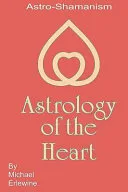
Astrology Of The Heart
Michael Erlewine’s Astrology of the Heart is a departure from the run-of-the-mill astrological manual, aiming for a more shamanic and depth-oriented understanding of natal charts. Erlewine’s strength lies in his attempt to bridge the gap between esoteric concepts like initiation and the practical application of astrological symbolism. He avoids simplistic interpretations, instead focusing on life paths and turning points as revealed through celestial patterns. The section discussing climacteric years, for instance, offers a unique perspective on how astrological transits can map significant psychological and spiritual shifts. However, the book’s ambition sometimes outpaces its clarity. While it promises practical application, some readers might find the esoteric terminology occasionally dense, requiring prior familiarity with subjects like chakra theory or out-of-body experiences. The direct connection between abstract esoteric ideas and specific astrological configurations could be further illuminated. Ultimately, Astrology of the Heart is a valuable, albeit challenging, resource for astrologers seeking to integrate deeper spiritual and psychological frameworks into their practice.
📝 Description
78
Michael Erlewine's 2008 book, Astrology of the Heart, reinterprets natal charts beyond prediction.
Astrology of the Heart, published in 2008, offers an approach to astrological interpretation that moves beyond standard predictive methods. Michael Erlewine focuses on the deeper, shamanic dimensions of chart analysis, presenting the work as a practical guide. It aims to help readers understand significant life events and personal development cycles through their natal horoscope. The book connects concepts like life paths, initiations, and spiritual growth with specific astrological markers.
This book is intended for experienced counseling astrologers who want to enrich their grasp of the psychological and spiritual foundations of astrological practice. It will also interest individuals drawn to esoteric philosophy interested in using the astrological framework to understand experiences like out-of-body events, chakra systems, and personal rites of passage. Readers who feel conventional astrological explanations do not fully address deep life questions may find this a useful resource.
Published in 2008, Astrology of the Heart appeared during a time of continuing interest in depth psychology and esoteric traditions within Western esotericism. Erlewine's work engages with a wider intellectual current that sought to blend spiritual and psychological insights. It draws parallels between ancient wisdom traditions and modern consciousness studies. The book shares common ground with figures like Dane Rudhyar, who also examined the symbolic and psychological aspects of astrology, but Erlewine places a stronger emphasis on shamanic and experiential elements.
💡 Why Read This Book?
• You will learn to identify and interpret astrological markers for personal "rites of passage" and "climacteric years," moving beyond generic life stage analysis as presented in the book's focus on these specific concepts. • You will gain an esoteric framework for understanding "out-of-body experiences" and "initiation" within the context of your own birth chart, as directly explored in Erlewine's unique astrological methodology. • You will discover how to view your "life path" not as a fixed destiny but as an evolving spiritual journey mapped by astrological cycles, a central theme discussed in the book's practical approach to chart interpretation.
⭐ Reader Reviews
Honest opinions from readers who have explored this book.
❓ Frequently Asked Questions
What is the primary focus of Michael Erlewine's Astrology of the Heart?
The book primarily focuses on the deeper, shamanic nature of astrology, exploring life paths, rites of passage, and climacteric years as revealed in a horoscope, rather than abstract theory.
Who is the intended audience for Astrology of the Heart?
It is intended for counseling astrologers seeking a deeper understanding and individuals interested in esoteric topics like out-of-body experiences and chakras.
When was Astrology of the Heart first published?
Astrology of the Heart was first published on October 19, 2008.
Does the book offer practical astrological techniques?
Yes, Erlewine presents it as a practical manual for understanding specific life turning points and esoteric concepts through astrological analysis.
What esoteric topics does the book connect with astrology?
It connects astrology with concepts such as out-of-body experience, the chakra system, initiation, and spiritual growth within the framework of a birth chart.
What distinguishes this book from standard astrological texts?
Its distinction lies in its exploration of the shamanic dimensions of astrology and its focus on life paths and spiritual initiations as astrological themes.
🔮 Key Themes & Symbolism
Life Paths and Turning Points
The book posits that the birth chart is a map of an individual's unique "life path," detailing not just personality traits but significant evolutionary stages. Erlewine emphasizes identifying "turning points" and "climacteric years"—major periods of transition and growth—within the astrological framework. This approach moves beyond predictive astrology to focus on the soul's journey and the symbolic representation of profound initiations and developmental cycles as encoded in the horoscope.
Esoteric Concepts in Astrology
Erlewine seeks to ground esoteric concepts, such as "out-of-body experience," the "chakra system," and "initiation," within tangible astrological interpretations. The horoscope is presented as a tool to understand the energetic and spiritual development of the individual. This integration aims to provide a more holistic view of consciousness and spiritual evolution, showing how astrological configurations can mirror internal states and transformative processes.
Shamanic Astrology Practice
This work advocates for a "shamanic nature of astrology," encouraging practitioners to engage with charts on a deeper, more experiential level. It suggests that understanding astrological symbolism can unlock clear insights into personal mythology and spiritual development. The book serves as a guide for counselors and individuals to connect the celestial map to the inner landscape, facilitating a more profound self-understanding and spiritual practice.
Practical Esoteric Guidance
Astrology of the Heart is framed as a "practical manual" rather than a theoretical treatise. It guides the reader on how to "find and understand" these significant life cycles and esoteric themes within their own horoscope. The focus is on actionable interpretation that can inform personal growth, self-awareness, and the navigation of major life passages, making esoteric wisdom accessible through astrological study.
💬 Memorable Quotes
Direct passages from the work, attributed to the author.
“The esoteric is hid”
— This fragment suggests that deeper, hidden meanings are central to the book's thesis. Erlewine implies that the astrological chart, when viewed through an esoteric lens, reveals layers of reality and personal development that are not immediately apparent on the surface.
“This book is about life paths, rites of passage, climacteric years, turning points in the life, and how to find and understand them in your horoscope.”
— This statement clearly defines the book's scope, promising a practical guide to interpreting significant developmental stages and transitions within the astrological chart. It highlights the focus on personal evolution and major life events.
“Not abstract theory, but a practical manual to understanding what out-of-body experience, the chakras, initiation, and other esoteric topics are really about.”
— This emphasizes the book's hands-on approach. Erlewine aims to clarify complex esoteric concepts by linking them directly to astrological interpretation, offering readers concrete methods for understanding these phenomena in relation to their birth charts.
“Astrology of the Heart will be of interest to the counseling astrologer who wants to understand the shamanic nature of astrology at a deeper level.”
— This positions the book as a specialized resource for professional astrologers. It highlights the unique angle of "shamanic astrology" and its application in a counseling context, suggesting a more profound and experiential approach to chart work.
💡 Key Ideas
Editorial paraphrase of the work's core concepts — not direct quotes.
The work explores how to find and understand significant life turning points in your horoscope.
This paraphrased concept underscores the book's utility. It suggests that readers will be equipped with methods to identify and interpret crucial moments of change and development within their astrological charts, facilitating conscious engagement with life transitions.
🌙 Esoteric Significance
Tradition
The work aligns with the Western Esoteric Tradition, particularly drawing from psychological astrology and archetypal symbolism, while infusing it with a shamanic and experiential emphasis. It moves beyond the more structured Kabbalistic or Hermetic systems to engage with concepts of initiation and consciousness that resonate with Gnostic and neopagan spiritual practices. Erlewine's approach seeks to bridge the symbolic language of astrology with direct inner experience, positioning the birth chart as a map for spiritual evolution.
Symbolism
Key symbols explored include the "life path" itself, representing the soul's evolutionary journey, and "turning points" or "climacteric years," which function as astrological markers for initiations and significant developmental shifts. The "chakras" are also utilized as a symbolic framework for understanding energetic development and consciousness states, which Erlewine aims to correlate with specific astrological configurations, thereby imbuing celestial patterns with psycho-spiritual meaning.
Modern Relevance
Contemporary practitioners interested in depth psychology, consciousness studies, and evolutionary astrology find value in Erlewine's attempt to map spiritual development. Thinkers and practitioners exploring the intersection of astrology with shamanic healing, archetypal psychology, and integral spirituality often reference or build upon the ideas presented. The book's emphasis on identifying profound life transitions and initiations continues to inform modern approaches to holistic self-understanding and personal growth.
👥 Who Should Read This Book
• Counseling astrologers seeking to deepen their interpretive framework beyond standard predictive or personality-based analysis, particularly those interested in the spiritual and shamanic dimensions of the birth chart. • Students of esoteric philosophy and comparative religion who wish to understand how concepts like "initiation" and "out-of-body experiences" can be explored through the symbolic language of astrology. • Individuals undergoing significant life transitions or seeking a more profound understanding of their personal "life path" and developmental "turning points" as mapped by astrological cycles.
📜 Historical Context
Published in 2008, Michael Erlewine's Astrology of the Heart emerged during a period where interest in the psychological and spiritual dimensions of astrology remained strong, following the humanistic astrology wave of the mid-20th century. While not directly engaging with a single major event, the book participated in a broader esoteric milieu that sought to integrate ancient wisdom with modern consciousness studies. Erlewine's focus on shamanic elements and deeper life path interpretations can be seen as a continuation of explorations by figures like Dane Rudhyar, who also pushed astrological thought beyond mere prediction towards symbolic and psychological depth. Unlike purely psychological astrology, Erlewine's work leans into more overtly spiritual and experiential dimensions, referencing concepts like initiation and out-of-body experiences, which were also subjects of interest in comparative religion and mysticism circles of the era.
📔 Journal Prompts
The concept of climacteric years in your birth chart: what astrological indicators might signal such a period for you?
Reflect on how the "life path" described in Astrology of the Heart aligns with your personal journey.
Consider the astrological correlations for "initiation" as presented in the text; how might these manifest in your experiences?
Explore the potential astrological representations of "out-of-body experiences" within your natal chart or transits.
What "turning points" in your life can you identify, and how might astrology offer a symbolic language for understanding them?
🗂️ Glossary
Climacteric Years
Significant periods in a person's life, often associated with major physical, psychological, or spiritual transitions and crises, which Erlewine suggests can be identified through astrological cycles.
Life Path
In the context of this book, the life path refers to the soul's evolutionary journey as depicted and guided by the patterns and configurations within an individual's birth chart.
Initiation
A process or ceremony marking a significant transition or advancement in spiritual knowledge or status. Erlewine explores how astrological events can symbolize or correspond to these internal and external initiatory experiences.
Out-of-Body Experience (OBE)
A subjective experience where a person feels their consciousness has temporarily left their physical body. The book examines how astrological factors might relate to such phenomena.
Shamanic Astrology
An approach to astrology that emphasizes its connection to spiritual healing, altered states of consciousness, and direct experiential understanding, moving beyond purely intellectual interpretation.
Turning Points
Crucial moments or periods in life that signify a major shift in direction, perspective, or life circumstances, which the book aims to help readers identify within their astrological charts.
Chakras
Energy centers within the subtle body, traditionally associated with various psychological and spiritual functions. Erlewine links these to astrological interpretations for a holistic view of human development.