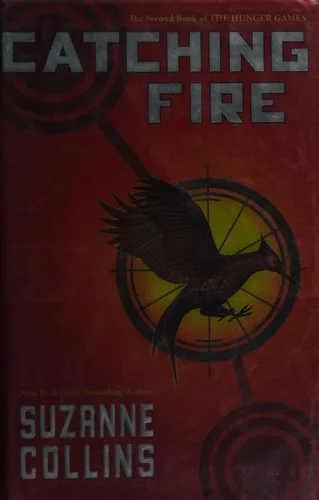
Catching Fire
 73
73

Catching Fire
Suzanne Collins' "Catching Fire" succeeds remarkably in escalating the stakes established in its predecessor. The narrative immediately plunges Katniss Everdeen into a new kind of battle – one not just for survival, but for the soul of a burgeoning rebellion. A particular strength lies in the nuanced portrayal of Katniss’s internal conflict; she is no longer just a girl fighting for her life, but a symbol thrust into a role she never wanted, burdened by the lives she’s taken and the hope she now represents. The introduction of the Quarter Quell, a special anniversary Hunger Games, provides a compelling framework for revisiting familiar threats with even higher stakes. While the pacing occasionally falters under the weight of exposition detailing the districts' unrest, the character arcs, particularly Peeta's, are deeply affecting. Collins avoids easy answers, presenting a world where even acts of defiance carry immense personal cost. The novel serves as a potent exploration of trauma and the corrosive nature of power, making it a more complex and somber read than its predecessor. It solidifies the "Hunger Games" as a significant work of speculative fiction.
📝 Description
73
Published in 2016, Catching Fire continues Katniss Everdeen's struggle against the Capitol.
Catching Fire, the second novel in Suzanne Collins' Hunger Games trilogy, picks up with Katniss Everdeen after her survival in the 74th Hunger Games. The Capitol, led by President Snow, views her defiance as a threat to its authority. As unrest grows in the districts, Snow plans a special, all-star edition of the Games to crush the burgeoning rebellion and eliminate Katniss and other symbols of dissent.
The novel expands on the world of Panem, introducing new characters and deepening the political landscape. Katniss, haunted by the violence she endured and the lives lost, finds herself a reluctant figurehead for the oppressed districts. Her internal conflict mirrors the external struggle against a totalitarian regime that uses spectacle and propaganda to maintain control. The narrative examines the psychological toll of trauma and the complex ethics of resistance.
While ostensibly a young adult dystopian novel, Catching Fire engages with themes of societal control and the manufactured consent common in critical theory. The Capitol's use of the Hunger Games as a tool of both pacification and spectacle echoes historical examples of bread and circuses, designed to distract and intimidate a populace. The novel critiques the power of narrative and image in maintaining authoritarian rule, a concept explored in various philosophical traditions that examine the relationship between power, knowledge, and perception.
💡 Why Read This Book?
• Gain insight into the psychological burden of becoming a public symbol, as seen through Katniss Everdeen’s struggle with her "Mockingjay" status after the 74th Hunger Games. • Understand the mechanics of manufactured rebellion and the Capitol's propaganda tactics, as detailed in the lead-up to the 75th Hunger Games (the Quarter Quell). • Explore the ethical dilemmas of survival and resistance in a totalitarian state, particularly through the complex loyalties and sacrifices faced by District 12 tributes.
⭐ Reader Reviews
Honest opinions from readers who have explored this book.
❓ Frequently Asked Questions
What is the Quarter Quell in "Catching Fire"?
The Quarter Quell is a special edition of the Hunger Games held every 25 years. In "Catching Fire," the 75th Hunger Games features a twist: tributes are chosen from the existing pool of victors, forcing past survivors like Katniss and Peeta back into the arena.
Who is the Mockingjay in "Catching Fire"?
The Mockingjay is a symbol of rebellion against the Capitol in Panem. Katniss Everdeen becomes this symbol after her actions in the 74th Hunger Games inadvertently spark unrest, making her a beacon of hope for the oppressed districts.
What are the main themes explored in "Catching Fire"?
Key themes include rebellion, the corrupting influence of power, propaganda and media manipulation, the psychological effects of trauma and violence, and the complexities of survival in a totalitarian society.
How does "Catching Fire" differ from the first "Hunger Games" book?
"Catching Fire" escalates the political stakes, moving beyond individual survival to focus on the burgeoning rebellion. It delves deeper into the world of Panem and explores the consequences of Katniss's defiance on a larger scale.
What is the significance of District 13 in "Catching Fire"?
District 13, previously believed to have been destroyed, is revealed to be a hidden, functioning society. It plays a crucial role in orchestrating the rebellion against the Capitol, serving as a base for the "Mockingjay" uprising.
When was "Catching Fire" published?
"Catching Fire" was first published in 2016, following the initial release of "The Hunger Games" in 2008 and its sequel in 2010.
🔮 Key Themes & Symbolism
The Mockingjay Symbol
The Mockingjay, initially a product of a failed Capitol experiment, transforms into the ultimate symbol of defiance and hope for the oppressed districts. Katniss Everdeen’s unwitting adoption of this emblem signifies the power of organic symbols to galvanize resistance against a totalitarian regime. The Capitol attempts to control its narrative, but the Mockingjay’s inherent nature—a hybrid, a survivor—mirrors the spirit of rebellion that cannot be easily extinguished. Its omnipresence in the narrative underscores how potent imagery can transcend individual actions and become a unifying force.
Propaganda and Media Control
Panem’s Capitol wields absolute control over information, using the Hunger Games as a spectacle to enforce obedience and distract from systemic injustice. "Catching Fire" meticulously details how the Capitol manipulates media narratives to maintain its power, portraying dissent as chaos and the Games as necessary entertainment. Katniss and other characters must navigate a landscape saturated with propaganda, learning to discern truth from fabrication. The novel highlights the dangers of a populace fed a constant stream of controlled information, where genuine grievances are obscured by manufactured consent and fear-mongering.
Psychological Toll of Violence
The narrative unflinchingly portrays the deep psychological scars left by extreme violence and trauma. Katniss Everdeen, haunted by her experiences in the arena, struggles with PTSD, paranoia, and the moral weight of her actions. "Catching Fire" expands this exploration to encompass the collective trauma of the districts and the specific burden carried by past victors forced to relive their horrors. The book posits that survival often comes at a profound emotional cost, and that the fight against oppression is as much an internal battle against despair and corruption as it is an external one.
Manufactured Rebellion
While Katniss becomes the face of rebellion, the narrative reveals the intricate planning and manipulation involved in orchestrating widespread dissent. District 13, operating in secret, actively cultivates the "Mockingjay" mythos and guides the uprisings. This theme questions the nature of authentic revolution versus strategically manufactured movements. The novel explores the ethical considerations of using symbols and individuals as tools for political change, even for a seemingly just cause, highlighting the complex interplay between genuine popular will and calculated leadership.
💬 Memorable Quotes
Direct passages from the work, attributed to the author.
“She has to be the Mockingjay. The people need a symbol.”
— This statement captures the central burden placed upon Katniss. It signifies the transition from a fight for personal survival to becoming a figurehead for a widespread movement, emphasizing the need for collective hope in a hopeless situation.
“The Capitol is still a threat. The rebellion is still alive.”
— This reflects the precarious balance of power in Panem. Despite the apparent victory in the previous Games, the underlying tension and the continued existence of resistance groups highlight that the struggle for freedom is far from over.
“You don't forget the face of the person who was trying to kill you.”
— This highlights the lasting psychological impact of violence and trauma. It speaks to the difficulty of reconciling past horrors with present circumstances, particularly when former adversaries remain a threat or part of the new order.
“The real war wasn't fought in the arena. It was fought in the minds of the people.”
— This interpretation points to the Capitol's strategy of psychological warfare and propaganda. It suggests that true control is achieved not just through physical force, but by manipulating public perception and ideology.
💡 Key Ideas
Editorial paraphrase of the work's core concepts — not direct quotes.
Winning is surviving. It's getting out of the arena alive.
This quote expresses the primal drive for survival that defines the Hunger Games. It underscores the desperation and the often brutal choices individuals must make when their lives are on the line, reducing complex emotions to a single, stark objective.
🌙 Esoteric Significance
Tradition
While not explicitly aligned with a single esoteric tradition, "Catching Fire" appeals to Gnostic themes of a false, tyrannical demiurge (the Capitol) oppressing a suffering populace. The concept of a hidden, true world or society (District 13) offering salvation echoes Gnostic ideas of a higher spiritual realm. Katniss’s journey as an unwilling savior figure, awakening to a larger cosmic struggle, also mirrors archetypal hero narratives found across various mystical paths. The narrative’s focus on breaking free from illusion and oppressive control aligns with the core pursuit of liberation found in many esoteric philosophies.
Symbolism
The Mockingjay is a potent symbol, representing hybridity, survival, and the unexpected emergence of hope from corruption. It’s a creature born of rebellion against the Capitol’s sterile control. The arena itself functions as a symbolic microcosm of Panem’s societal structure—a place of brutal competition enforced by an external power. The number '75' for the Quarter Quell holds numerological weight, often associated with cycles, transformation, and significant turning points, suggesting the impending upheaval of the established order.
Modern Relevance
Contemporary thinkers and activists exploring themes of systemic oppression, media manipulation, and the power of symbols in social movements find fertile ground in "Catching Fire." It’s frequently cited in discussions about the ethics of resistance, the psychological impact of state-sponsored violence, and the role of individual agency in challenging authoritarian structures. Modern interpretations often draw parallels between Panem's Capitol and contemporary political or corporate powers, making the narrative a touchstone for discussions on power dynamics and the fight for collective liberation.
👥 Who Should Read This Book
• Young adult readers interested in dystopian societies and narratives of rebellion against oppressive regimes. • Adults seeking speculative fiction that engages with themes of political commentary, media manipulation, and the psychological effects of trauma. • Students of comparative literature or sociology examining the rise of dystopian fiction in the 21st century and its reflection of societal anxieties.
📜 Historical Context
Published in 2016, "Catching Fire" arrived at a critical juncture in young adult dystopian fiction, building on the momentum of its 2008 predecessor. The early 2010s saw a surge in popularity for narratives exploring societal collapse and authoritarianism, a trend fueled by contemporary anxieties about economic inequality, political polarization, and the pervasive influence of media. Suzanne Collins' work tapped into a zeitgeist that questioned unchecked power and corporate influence, echoing concerns raised by critics of consumer culture and government surveillance. While series like Veronica Roth's "Divergent" (first published 2011) offered similar thematic explorations, Collins’ "Hunger Games" trilogy, beginning in 2008, predated and arguably helped define the genre's mainstream appeal. The series' success was further amplified by the 2012 film adaptation of the first book, which brought its themes of rebellion and survival to a global audience, solidifying its cultural impact.
📔 Journal Prompts
The Mockingjay's transformation from accidental symbol to revolutionary icon.
Katniss's internal conflict between self-preservation and becoming a public figure.
The Capitol's methods of control through spectacle and propaganda.
Peeta's evolving understanding of love and survival within the Games.
The ethical compromises faced by characters navigating rebellion.
🗂️ Glossary
Panem
The totalitarian nation that serves as the setting for "The Hunger Games." Panem consists of the wealthy Capitol and twelve (formerly thirteen) impoverished, subjugated districts.
The Capitol
The seat of power in Panem, characterized by extreme wealth, advanced technology, and a decadent culture. It maintains control over the districts through force and the annual Hunger Games.
Districts
The twelve regions of Panem, each specializing in a particular industry and exploited by the Capitol. They live under strict martial law and suffer from resource scarcity.
Hunger Games
An annual televised event in which two tributes (a boy and a girl aged 12-18) from each district are forced to fight to the death in a controlled arena until only one survivor remains.
Tributes
The young individuals, one boy and one girl from each district, selected by lottery to participate in the Hunger Games.
Quarter Quell
A special, more brutal iteration of the Hunger Games held every 25 years, often with a unique, challenging twist designed by the Capitol.
Mockingjay
A symbol of rebellion against the Capitol, embodied by Katniss Everdeen, whose unique survival in the 74th Hunger Games sparked hope and unrest in the districts.
🔮 Readers Also Liked
Browse all →









More by Suzanne Collins
All books →





More Free Occult Philosophy Books
View all →