Cartomancy with the Lenormand and the Tarot
 76
76

Cartomancy with the Lenormand and the Tarot
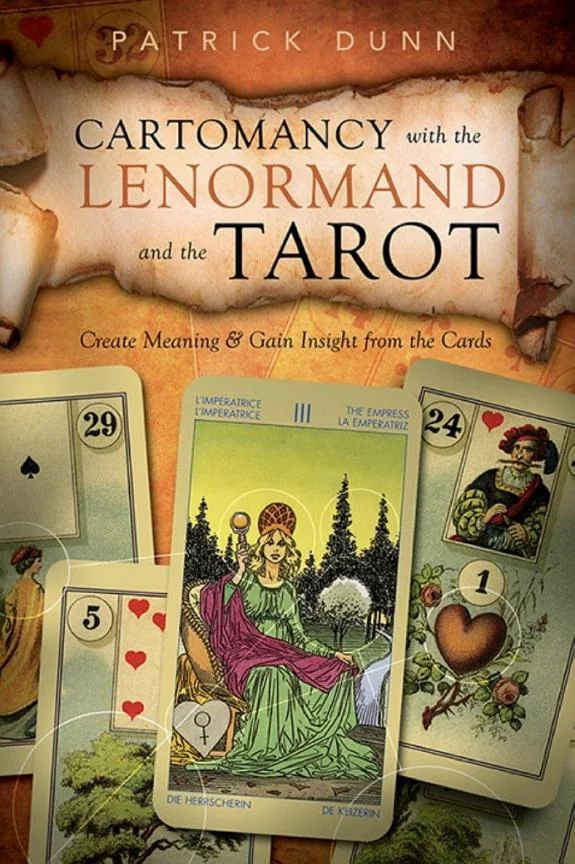
Patrick Dunn's "Cartomancy with the Lenormand and the Tarot" presents a compelling argument for the synergistic power of these two widely used, yet distinct, card systems. Rather than merely outlining correspondences, Dunn advocates for a dynamic interplay where the Lenormand's grounded, almost journalistic clarity acts as a lens for the Tarot's archetypal expanse. The book's strength lies in its practical, instinct-driven approach, which encourages readers to move beyond rote memorization. A particularly illuminating section discusses how the "Letter" card in Lenormand can precisely frame the nature of a message or revelation indicated by a Tarot trump. However, the text occasionally assumes a familiarity with advanced Tarot concepts that might leave absolute beginners adrift. The exploration of the Lenormand's "Animal" card as a signifier for primal energies, when paired with Tarot's more structured arcana, offers a fresh perspective on elemental forces. Dunn's work is a valuable contribution for those seeking to deepen their cartomantic practice beyond conventional pairings.
📝 Description
76
Patrick Dunn's 2025 book harmonizes Tarot and Lenormand cartomancy.
Patrick Dunn's "Cartomancy with the Lenormand and the Tarot" (2025) proposes a new way to read cards by combining the symbolic depth of Tarot with the direct storytelling of Lenormand. The book emphasizes how these two systems can illuminate one another, moving past simple prediction.
Dunn, who has studied symbolic language, suggests that Lenormand's clear images can simplify complex Tarot meanings. Conversely, Tarot's deeper ideas can add richness to Lenormand interpretations. This approach is for experienced card readers who want to enhance their interpretive skills. It will appeal to those who find Tarot too abstract or Lenormand too basic.
Readers interested in comparing divination methods, understanding symbolic logic, and developing a more personal reading style will find this book useful. It is especially helpful for people with some knowledge of either deck who want to discover how they can work together.
This work arrives during a period of renewed interest in esoteric practices. It follows a tradition of cartomancy that has developed since the 18th century. While Tarot originated in 15th-century Italy and Lenormand became popular in the early 19th century, Dunn's book represents a modern attempt to bring these systems together. It connects with current practical and academic study of divination, looking beyond fortune telling to psychological and philosophical interpretation, a direction seen in the work of authors like A.E. Waite.
💡 Why Read This Book?
• Learn to use the Lenormand's direct symbolism, like the "Key" card, to unlock the precise meaning of a Tarot card's message, offering clarity that pure Tarot may not provide. • Gain a method for infusing Lenormand readings with the philosophical depth and narrative complexity found in the Tarot's structure, enhancing storytelling beyond simple prediction. • Develop an intuitive reading style by exploring Patrick Dunn's emphasis on "experiential interpretation," trusting your instincts when combining the directness of the Lenormand "Path" card with the Tarot's archetypal journeys.
⭐ Reader Reviews
Honest opinions from readers who have explored this book.
❓ Frequently Asked Questions
What is the primary difference between the Lenormand and Tarot decks as discussed in Patrick Dunn's book?
Dunn explains that the Lenormand deck, with its 36 simple, narrative pictograms, offers direct, concrete interpretations, while the Tarot, typically 78 cards with complex archetypes, provides deeper symbolic and philosophical layers.
When was "Cartomancy with the Lenormand and the Tarot" first published?
The book by Patrick Dunn was first published on August 5, 2025.
Does this book require prior knowledge of both Lenormand and Tarot?
While prior knowledge is beneficial, Dunn's approach focuses on how the two systems can illuminate each other, suggesting that a foundational understanding of one can be expanded by learning the other through their combined study.
What does Patrick Dunn mean by 'symbolic language' in his approach to cartomancy?
Dunn uses 'symbolic language' to describe the inherent meanings within card imagery. He posits that the Lenormand's symbols are more accessible and direct, while the Tarot's symbols carry greater cosmological and philosophical weight.
Is this book focused on predicting the future?
No, "Cartomancy with the Lenormand and the Tarot" emphasizes looking for deeper meaning and personal understanding, moving beyond simple divination towards exploring the symbolic interplay for insight.
What is the benefit of combining Lenormand and Tarot readings according to the book?
The book suggests that combining them allows the Lenormand's simplicity to clarify Tarot's complexity, and the Tarot's depth to enrich the Lenormand's narrative, resulting in more nuanced and personal readings.
🔮 Key Themes & Symbolism
Symbolic Synergy
The central theme is the powerful synergy achieved by juxtaposing the Lenormand and Tarot decks. Dunn illustrates how the Lenormand's straightforward pictograms, such as the "Fox" or "Ship," can act as precise signifiers for more abstract Tarot concepts. For instance, the "Fox" might clarify the cunning or deceptive aspect of a Tarot card like "The Devil." Conversely, the Tarot's archetypal structure can provide a grander narrative framework for the Lenormand's localized significations, transforming simple answers into profound explorations of the querent's inner landscape.
Experiential Interpretation
Dunn champions an intuitive, instinct-driven approach to card reading. He encourages practitioners to develop a personal dialogue with the cards, moving beyond rigid, pre-defined meanings. The book advocates for "experimental cartomancy," where combining systems is less about following strict rules and more about observing the emergent patterns and insights that arise from personal interaction. This theme emphasizes trusting one's inner knowing, using the cards as a mirror for subjective experience rather than an objective oracle.
Beyond Divination
This work positions cartomancy as a tool for self-discovery and philosophical inquiry, rather than solely fortune-telling. By integrating the Lenormand's narrative economy with the Tarot's cosmological depth, Dunn suggests a method for exploring life's complexities, understanding personal motivations, and mapping inner states. The combined systems become a language for articulating nuanced truths about the human condition, offering insights into psychological dynamics and spiritual growth, aligning with modern esoteric thought's focus on consciousness.
Bridging Systems
The book systematically addresses the perceived differences between the Lenormand and Tarot, framing them not as competing systems but as complementary ones. Dunn explores how the Lenormand's focus on immediate circumstances and the Tarot's exploration of archetypal journeys can be interwoven. He provides techniques for using Lenormand cards to "frame" or "specify" the meaning of Tarot cards, and vice versa, creating a more comprehensive and personalized cartomantic language.
💬 Memorable Quotes
Direct passages from the work, attributed to the author.
“The symbolism of the Lenormand, so accessible and simple, can shine a clear light on the tarot.”
— This statement highlights the core premise of Dunn's work: using the Lenormand's direct imagery to explain and clarify the often complex or multi-layered meanings found within Tarot cards.
“The cosmology and philosophy of the tarot can lend depth and meaning to the Lenormand.”
— This offers the complementary perspective, suggesting that the rich philosophical and spiritual frameworks inherent in Tarot can elevate the Lenormand readings from mere event-focused interpretations to explorations of deeper significance.
“Learn how to combine the little-known Lenormand deck with the tarot for richer, more personal readings.”
— This original blurb excerpt clearly states the book's primary objective: to teach readers a practical method for integrating two distinct divination tools to achieve more profound and individually tailored insights.
“Beyond Divination.”
— This title captures the book's philosophical stance, signaling its intent to move past simple fortune-telling and explore the cards as tools for psychological, spiritual, and personal growth.
💡 Key Ideas
Editorial paraphrase of the work's core concepts — not direct quotes.
Focusing on experimentation and instinct.
This paraphrased concept underscores the book's departure from rigid, dogmatic approaches to card reading, encouraging a personalized and intuitive practice guided by the reader's own experiences and insights.
🌙 Esoteric Significance
Tradition
Dunn's work fits within the broad umbrella of Western Esotericism, specifically engaging with traditions that utilize symbolic systems for spiritual insight and self-understanding. It draws implicitly on Hermetic principles of correspondence and the idea that "As Above, So Below." While not strictly Kabbalistic or Gnostic, it shares with these traditions a focus on deciphering hidden meanings within symbolic language. The book departs from some earlier esoteric cartomancy by emphasizing a pragmatic, instinctual integration rather than adherence to a singular, rigid system, reflecting a more modern, personalized approach to esoteric practice.
Symbolism
Key symbols explored include the Lenormand's "House," representing stability, home, or immediate environment, and the Tarot's "Emperor," signifying structure, authority, and worldly power. Dunn suggests how the "House" can ground the "Emperor's" abstract authority in concrete reality, while the "Emperor" can lend a sense of established order to the "House." Another example is the "Letter" card in Lenormand, used to pinpoint the nature of communication or news, which can clarify the message aspect of Tarot cards like "The Hierophant" or "The Lovers."
Modern Relevance
Contemporary practitioners of modern witchcraft, psychological astrology, and intuitive counseling often seek tools that bridge the symbolic and the practical. Dunn's integrative approach speaks to these fields, offering a method that enhances interpretive skills without requiring adherence to a single, potentially limiting, system. Thinkers and practitioners interested in comparative divination and the semiotics of symbolic systems find value in his work, aligning with a broader trend of deconstructing and rebuilding esoteric practices for contemporary consciousness.
👥 Who Should Read This Book
• Aspiring cartomancers seeking to move beyond basic meanings and develop a more nuanced interpretive vocabulary. • Experienced Tarot readers who find their readings sometimes lack concrete detail and wish to incorporate the Lenormand's directness. • Lenormand practitioners looking to add layers of archetypal depth and philosophical context to their straightforward card interpretations.
📜 Historical Context
Patrick Dunn's "Cartomancy with the Lenormand and the Tarot" emerges in an era marked by a renewed global fascination with esoteric practices and divination, particularly evident since the late 20th century. The book builds upon a long history of cartomancy; the Tarot's lineage traces back to 15th-century Italy, evolving significantly with figures like Antoine Court de Gébelin in the 18th century and the Hermetic Order of the Golden Dawn in the late 19th century. The Lenormand system, named after the famous French fortune-teller Madame Lenormand (1772–1843), gained traction in the early 19th century, offering a more streamlined approach than the elaborate Tarot. Dunn's work engages with a contemporary trend that seeks to synthesize these distinct traditions, moving beyond the occult revivalism of the late 19th and early 20th centuries. While Aleister Crowley and A.E. Waite focused on developing their own unique Tarot decks and interpretations, Dunn's approach is comparative and integrative, reflecting a modern scholarly and practical interest in the cross-pollination of divinatory systems.
📔 Journal Prompts
The Lenormand "Key" card's potential to clarify a specific Tarot archetype.
How the "Tree" card's symbolism of growth and health can inform a Tarot reading about "The World."
Mapping the narrative progression of a Lenormand spread using Tarot's grand cycle.
Interpreting a personal challenge through the combined lens of the Lenormand "Fox" and a challenging Tarot trump.
Developing a personal symbol for "The Fool" inspired by Lenormand's "Child" card.
🗂️ Glossary
Cartomancy
The practice of divination using a deck of cards, most commonly the Tarot or Lenormand.
Lenormand Deck
A system of divination using a deck of 36 cards, characterized by simple, narrative pictograms representing everyday objects and concepts.
Tarot Deck
A deck of usually 78 cards, comprising the Major Arcana and Minor Arcana, used for divination and spiritual exploration, rich in archetypal symbolism.
Symbolic Language
The system of meanings inherent in the imagery and symbols used within divination tools like cards, understood through interpretation and intuition.
Experiential Interpretation
An approach to reading cards that prioritizes the reader's personal intuition, instinct, and subjective experience over rigid, pre-established meanings.
Cosmology
A theory or doctrine concerning the origin, nature, and development of the universe; in cartomancy, it refers to the overarching worldview or structure of meaning represented by the cards.
Divination
The practice of seeking knowledge of the future or the unknown by supernatural means; in this context, it also extends to gaining insight into the present and self.
This book appears in 1 collection
🔮 Readers Also Liked
Browse all →
From the “Cartomancy” Collection
View all →
More Free Divination & Tarot Books
View all →