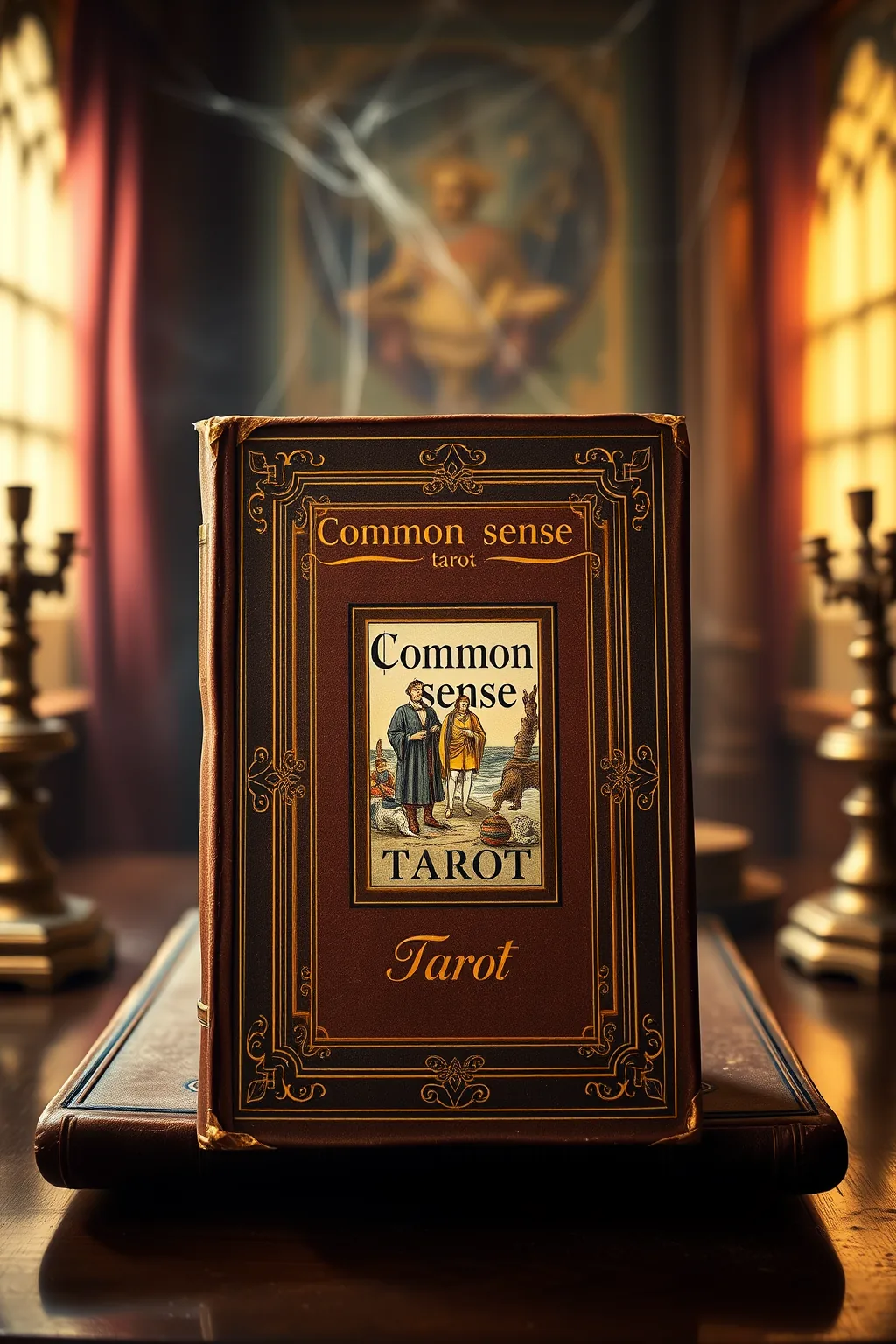
Common Sense Tarot
 84
84

Common Sense Tarot
Camden Benares’s *Common Sense Tarot* eschews the typical mystical preamble, launching directly into the mechanics of card interpretation. Its strength lies in this pragmatic approach, particularly in its clear breakdown of the 78-card structure and the core meanings of each card. The 1992 publication date grounds it in a specific era of esoteric publishing, before the internet flooded the market with ephemeral advice. However, the very 'common sense' Benares champions can sometimes feel reductive. For instance, his interpretation of The Tower, while practical, might underplay the profound psychological upheaval it often symbolizes for more experienced practitioners. The book’s limitation is its occasional lack of depth in exploring the subtler symbolic layers that make Tarot so potent. Ultimately, *Common Sense Tarot* serves as a solid, no-nonsense primer for beginners seeking a direct path to reading the cards.
📝 Description
84
Camden Benares published Common Sense Tarot in 1992, aiming to make tarot accessible.
Camden Benares's *Common Sense Tarot*, first released in 1992, simplifies the 78-card tarot deck into understandable parts. Benares treats the cards not as obscure secrets but as practical aids for self understanding and fortune telling. The book separates the Major and Minor Arcana, making the system easier for newcomers to grasp.
This guide is for people starting with tarot or those who prefer a straightforward method over complex spiritual systems. Benares highlights the practical side of tarot, suggesting that combining personal intuition with structured learning leads to skilled readings. The author wants readers to feel confident giving readings for themselves and others, for personal insight or practical use.
Published in the early 1990s, *Common Sense Tarot* appeared during a time of growing interest in divination and esoteric studies, influenced by New Age trends and a resurgence of interest in Jungian psychology. Benares's approach, however, moves away from highly mystical interpretations. It focuses instead on psychological archetypes and concrete symbolism, fitting into a less dogmatic era for esoteric books.
💡 Why Read This Book?
• Learn a structured method for card interpretation, moving beyond rote memorization to understand the narrative flow of a spread, as detailed in the book's step-by-step instructions. • Gain practical skills for performing readings for yourself and others, applicable for personal insight or even for profit, as Benares suggests. • Grasp the foundational meanings of the 78-card deck, including the Major and Minor Arcana, within the context of 1990s esoteric thought, offering a distinct historical perspective.
⭐ Reader Reviews
Honest opinions from readers who have explored this book.
❓ Frequently Asked Questions
What is the primary focus of Camden Benares's Common Sense Tarot?
The book's primary focus is providing a practical, step-by-step introduction to Tarot reading. It aims to demystify the cards, enabling readers to interpret them for personal insight or professional use without requiring extensive prior esoteric knowledge.
When was Common Sense Tarot first published?
Common Sense Tarot was first published in 1992, placing it within a specific wave of popular interest in divination and esoteric studies during the early 1990s.
Who is the intended audience for this book?
The book is intended for beginners or those seeking a straightforward, less mystical approach to Tarot. It appeals to individuals who prefer clear instruction and practical application over complex symbolic systems.
Does the book cover both Major and Minor Arcana?
Yes, Common Sense Tarot provides comprehensive coverage of the entire 78-card Tarot deck, explaining the meanings and roles of both the Major Arcana and the Minor Arcana within readings.
What makes the 'common sense' approach in this book unique?
The 'common sense' approach emphasizes intuitive understanding combined with systematic learning, presenting Tarot as an accessible tool rather than an arcane mystery. It encourages direct interpretation based on clear symbolism and structure.
Can this book help with professional Tarot reading?
Yes, the book's blurb explicitly mentions interpreting cards 'for profit,' suggesting it provides foundational skills and practical advice intended to support readers looking to offer their services professionally.
🔮 Key Themes & Symbolism
Accessible Divination
Benares positions Tarot as a practical tool, accessible through 'common sense' rather than requiring deep immersion in occult traditions. The book systematically breaks down the 78 cards, emphasizing clear, direct interpretation. This approach democratizes Tarot reading, making it achievable for anyone willing to learn the core meanings and structures, aligning with a pragmatic interpretation of esoteric practices popular in the early 90s.
Psychological Archetypes
While not explicitly Jungian, the work leans into the idea of cards representing universal human experiences and psychological states. The emphasis on understanding card meanings through relatable concepts allows readers to connect with the Tarot on a personal level. This interpretation moves beyond purely predictive divination towards self-understanding and reflection, a hallmark of much New Age literature from the era.
Structured Learning
The book champions a methodical approach to learning Tarot, detailing card meanings, spread layouts, and interpretive techniques in a progressive manner. This structured learning process is designed to build confidence and competence, moving readers from basic comprehension to the ability to conduct meaningful readings for themselves and others. It prioritizes clarity and systematic progression.
Practical Application
A significant theme is the practical utility of Tarot. Benares highlights its use not only for personal guidance but also suggests its potential for professional application ('for profit'). This practical orientation encourages readers to integrate Tarot reading into their lives as a tangible skill, emphasizing its role as a functional tool rather than solely a spiritual pursuit.
💬 Memorable Quotes
Direct passages from the work, attributed to the author.
“The easy, step-by-step instructions enable you to interpret the Tarot cards for yourself and others, for pleasure and for profit.”
— This core statement from the original blurb highlights the book's dual aims: personal enrichment and practical application. It promises a clear, learnable method that bridges the gap between casual interest and professional competence in Tarot reading.
“A comprehensive, in-depth introduction to the world of Tarot reading.”
— This phrase underscores the book's ambition to serve as a thorough starting point. It suggests that despite its 'common sense' approach, the content is substantial enough to provide a solid foundation for understanding the Tarot system.
“Interpret the Tarot cards for yourself and others.”
— This directive emphasizes the active, participatory nature of learning Tarot through Benares's method. It encourages direct engagement with the cards, fostering personal empowerment and the ability to utilize divination for relational and self-reflective purposes.
“Common Sense Tarot”
— The title itself is a statement of intent, promising a grounded, logical, and accessible entry into a subject often perceived as esoteric or mystical. It signals an approach that prioritizes clarity and practical understanding.
“Camden Benares (first published 1992)”
— The author and publication year anchor the work, placing it within a specific period of esoteric literature development. This context helps readers understand its perspective relative to earlier occult traditions and later digital influences.
🌙 Esoteric Significance
Tradition
While not explicitly tied to a singular esoteric lineage like Kabbalah or Hermeticism, *Common Sense Tarot* engages with the broader Western esoteric tradition's interest in divination and symbolic systems. It represents a modern, secularized interpretation that draws implicitly from Jungian psychology's archetypal approach, popular in esoteric circles since the mid-20th century. The work aims to make these symbolic tools practical for everyday life, a common goal in post-occult revival movements.
Symbolism
The book systematically interprets the symbolism of the 78 cards. For example, the imagery of The Fool, often seen as representing new beginnings or leaps of faith, is presented through a lens of initiating action and embracing the unknown. Similarly, the suits of the Minor Arcana—Wands, Cups, Swords, and Pentacles—are explained in relation to elemental correspondences (Fire, Water, Air, Earth), providing a foundational symbolic language for understanding daily life events and challenges.
Modern Relevance
In contemporary practice, Benares's emphasis on structured learning and practical application continues to resonate with beginner Tarot enthusiasts and those seeking straightforward guidance. His work provides a solid foundation that complements more complex, tradition-specific interpretations found in modern esoteric scholarship. Readers often use *Common Sense Tarot* as a stepping stone before exploring deeper symbolic systems or specific schools of divination.
👥 Who Should Read This Book
• Aspiring Tarot readers seeking a clear, step-by-step guide to understanding card meanings and performing readings without getting lost in complex esoteric jargon. • Individuals interested in divination as a practical tool for self-reflection and decision-making, who appreciate a grounded, common-sense approach. • Students of esoteric history looking to understand the evolution of Tarot instruction in the late 20th century, particularly the trend towards psychological and accessible interpretations.
📜 Historical Context
Published in 1992, *Common Sense Tarot* arrived during a burgeoning period for esoteric and New Age literature, fueled by a public appetite for self-help and spiritual exploration. This era saw a diversification of occult practices, moving beyond traditional Hermeticism and ceremonial magic towards more psychologically-oriented or folk-magic approaches. Benares's work reflects this shift by emphasizing practical application and psychological interpretation over rigid dogma. While authors like Rachel Pollack were exploring deeper symbolic and narrative complexities in works like *Seventy-Eight Degrees of Wisdom* (first published 1980), Benares offered a counterpoint focused on accessibility and straightforward instruction. The book’s pragmatic stance appealed to a segment of the audience less interested in historical occult lineages and more focused on immediate utility, distinguishing it from more academically or traditionally inclined Tarot texts.
📔 Journal Prompts
The core meanings of the Major Arcana.
Interpreting the Minor Arcana suits: Wands, Cups, Swords, Pentacles.
Developing a personal 'common sense' approach to card interpretation.
The concept of reading cards 'for pleasure and for profit'.
Applying Tarot insights to everyday situations.
🗂️ Glossary
Major Arcana
The 22 trump cards of the Tarot deck, representing significant life lessons, archetypal figures, and spiritual milestones. These cards are often seen as the overarching narrative or significant events in a reading.
Minor Arcana
The 56 cards divided into four suits (Wands, Cups, Swords, Pentacles), typically representing the mundane events, challenges, and circumstances of daily life. Each suit corresponds to an element and aspects of human experience.
Wands
The suit associated with the element of Fire, representing inspiration, creativity, passion, ambition, and action. Often signifies energy, drive, and beginnings.
Cups
The suit associated with the element of Water, representing emotions, relationships, intuition, love, and the subconscious. Often signifies feelings, connections, and emotional states.
Swords
The suit associated with the element of Air, representing intellect, thoughts, communication, conflict, and challenges. Often signifies mental processes, decisions, and struggles.
Pentacles
The suit associated with the element of Earth, representing material possessions, finances, work, health, and the physical world. Often signifies practical matters, stability, and tangible results.
Spread
A specific arrangement of Tarot cards laid out to address a particular question or situation. Different spreads structure the reading, assigning meaning to the position of each card.