Astral projection and the nature of reality

 78
78

Astral projection and the nature of reality
John Magnus’s *Astral Projection and the Nature of Reality* offers a surprisingly grounded perspective on a topic often shrouded in vagueness. The strength of the text lies in its methodical approach, treating astral projection less as a mystical accident and more as a learnable skill with profound implications for our understanding of consciousness. Magnus avoids the typical hyperbole, instead focusing on the underlying principles and philosophical questions. For instance, his exploration of the 'astral body' as a distinct, though non-physical, energetic form provides a concrete conceptual anchor for readers. However, the book’s limitation is its somewhat dry academic tone, which may alienate readers seeking more immediate, experiential guidance. The passage discussing the subjective construction of perceived reality on the astral planes, while intellectually stimulating, could benefit from more vivid descriptive language. Ultimately, Magnus presents a compelling, if somewhat austere, case for the significance of astral projection in mapping consciousness.
📝 Description
78
John Magnus's 2005 book, Astral Projection and the Nature of Reality, examines consciousness beyond the physical.
Published in 2005, John Magnus's Astral Projection and the Nature of Reality moves past sensationalism to investigate the philosophical and experiential dimensions of out-of-body experiences (OBEs). Magnus does not treat astral projection as solely a psychic event. Instead, he frames it as a means to grasp the layered structure of existence and how reality is subjectively constructed. The book addresses common fears and misconceptions surrounding OBEs, offering a structured guide for safe, conscious exploration.
This work is for serious students of consciousness, metaphysics, and esoteric philosophy. It suits individuals who have encountered astral projection concepts and seek a more rigorous, less dogmatic perspective. Readers interested in the philosophy of mind, comparative religion, and subjective experience will find valuable content. It also speaks to meditation and introspection practitioners curious about expanding awareness.
Magnus's 2005 work appeared as public interest in consciousness studies grew, aided by the internet's reach. While figures like Robert Monroe had popularized OBEs earlier, Magnus's book integrates philosophical inquiry more deeply. It follows a lineage from early 20th-century Theosophy and New Age explorations of altered states. However, Magnus aims for a more critical, conceptual framework, departing from purely anecdotal accounts.
💡 Why Read This Book?
• Gain a structured understanding of astral projection techniques and the theoretical underpinnings of OBEs, as presented in John Magnus's detailed exposition, moving beyond anecdotal accounts. • Explore the philosophical implications of out-of-body experiences for understanding consciousness and reality, a core theme in the book's 2005 publication context. • Learn practical methods for lucid dreaming and astral travel preparation, referencing the specific techniques outlined by Magnus to achieve greater control and awareness.
⭐ Reader Reviews
Honest opinions from readers who have explored this book.
❓ Frequently Asked Questions
What is the primary focus of John Magnus's *Astral Projection and the Nature of Reality*?
The book primarily focuses on a systematic examination of astral projection and out-of-body experiences, exploring their philosophical implications for understanding consciousness and the nature of reality.
When was *Astral Projection and the Nature of Reality* first published?
This work by John Magnus was first published in 2005, placing it within a period of renewed interest in consciousness studies.
Does the book offer practical guidance for astral projection?
Yes, the book provides practical techniques and preparatory methods for individuals seeking to achieve voluntary and lucid astral projection.
What is the author's perspective on the astral body?
John Magnus presents the astral body as a distinct, though non-physical, energetic vehicle for consciousness, integral to the experience of out-of-body states.
Who is John Magnus, the author?
John Magnus is an author known for his work on esoteric subjects, particularly consciousness, astral projection, and metaphysical philosophy, with *Astral Projection and the Nature of Reality* being a key publication.
How does this book differ from other popular works on astral projection?
Unlike more anecdotal accounts, Magnus's book integrates philosophical inquiry and presents a more structured, critical framework for understanding OBEs, distinguishing it from earlier works like Robert Monroe's.
🔮 Key Themes & Symbolism
The Astral Body
Magnus posits the 'astral body' not as a metaphor but as a tangible energetic construct, a vehicle for consciousness separate from the physical form. The work details its perceived structure, its function during out-of-body experiences (OBEs), and its role in navigating non-physical realms. This concept is central to understanding how consciousness can operate independently of the brain, challenging materialistic paradigms. The exploration examines the energetic signature and composition of this subtle body, providing a framework for those seeking to consciously direct its movements and perceptions.
Nature of Reality
A core theme is the assertion that our everyday consensus reality is only one layer of existence. Astral projection is presented as a direct means of experiencing these other layers, revealing a multi-dimensional cosmos. The book questions the solidity and permanence of physical reality, suggesting it is a projection or manifestation of consciousness. By exploring the subjective construction of experience during OBEs, Magnus encourages readers to reconsider their fundamental assumptions about what is real and the power of awareness to shape perception.
Consciousness Autonomy
The work strongly argues for the autonomy of consciousness, demonstrating that awareness can exist and function independently of the physical organism. This challenges conventional neuroscience and offers a metaphysical perspective on subjective experience. Magnus details how the 'will' and intention play crucial roles in initiating, directing, and sustaining astral journeys. The exploration of consciousness's independent nature is presented as a key takeaway from sustained practice, offering wide implications for understanding life, death, and personal identity.
Techniques for OBEs
Beyond philosophical discourse, the book provides systematic techniques for inducing and controlling astral projection. This includes preparatory exercises, visualization methods, and mental states conducive to separating the astral body from the physical. Magnus addresses common obstacles and fears, offering strategies for maintaining lucidity and reading through the astral planes safely. The emphasis is on developing a disciplined approach to these practices, transforming potential chaos into ordered exploration and personal growth.
💬 Memorable Quotes
Direct passages from the work, attributed to the author.
“The astral body is not a phantom but a functional aspect of our multi-layered being.”
— This statement captures Magnus's view of the subtle body as a real, albeit non-physical, component of human existence, essential for exploring consciousness beyond the confines of the physical form.
“Perception on the astral planes is shaped by the observer's conscious intent.”
— This highlights the active role of the individual's mind in constructing their experience during out-of-body states, suggesting that reality is not passively received but actively created.
“Fear is the primary barrier to voluntary astral projection.”
— Magnus identifies psychological resistance, specifically fear of the unknown or loss of control, as the main impediment for individuals attempting to achieve conscious separation from the physical body.
“Understanding the energetic matrix of the astral form facilitates conscious navigation.”
— This points to the importance of comprehending the energetic composition and dynamics of the astral body for effective and controlled travel through non-physical dimensions.
“Consensus reality is but one manifestation of a broader spectrum of existence.”
— This challenges the primacy of physical reality, suggesting that the world we typically perceive is just one facet of a far larger and more complex existential landscape accessible through altered states.
🌙 Esoteric Significance
Tradition
This work fits within the broader Hermetic and Theosophical traditions that explore the subtle bodies and planes of existence. It departs from some Theosophical dogmas by focusing more on the practical and philosophical aspects of astral projection as a tool for self-knowledge rather than adherence to a specific cosmology. Magnus's approach is less about occult hierarchy and more about the direct, experiential investigation of consciousness's capabilities, aligning with a modern, pragmatic esoteric sensibility.
Symbolism
The 'astral body' serves as a central symbol, representing the separable vehicle of consciousness, distinct from the physical form. 'Astral planes' function symbolically as distinct dimensions or states of awareness, each with its own perceived laws and inhabitants. The act of 'projection' itself symbolizes liberation from physical limitations and the potential for expanded perception, a recurring motif in esoteric thought across cultures.
Modern Relevance
Contemporary practitioners of lucid dreaming, energy work, and consciousness exploration often draw upon the structured approach presented by Magnus. His work provides a conceptual foundation for those seeking to integrate subjective experiences of non-physical realms with philosophical inquiry. Thinkers and groups exploring non-dual consciousness and the nature of subjective reality find resonance in Magnus's emphasis on the mind's role in shaping perceived existence.
👥 Who Should Read This Book
• Aspiring explorers of consciousness seeking a structured, philosophical framework for understanding astral projection and out-of-body experiences, moving beyond sensationalism. • Metaphysical students interested in the relationship between consciousness, reality, and the potential for non-physical existence, as explored through rigorous conceptual analysis. • Individuals curious about the practical techniques and preparatory methods for inducing lucid dreams and voluntary astral travel, looking for guidance grounded in principle.
📜 Historical Context
Published in 2005, *Astral Projection and the Nature of Reality* emerged within a field of popular interest in consciousness and spirituality, influenced by earlier works like Robert Monroe's *Journeys Out of the Body* (1971). The early 21st century saw a proliferation of online resources and communities dedicated to psychic phenomena and esoteric studies, providing fertile ground for Magnus's systematic approach. While the New Age movement had widely disseminated concepts of astral travel, Magnus's work distinguished itself by attempting a more philosophical and less purely experiential exposition. It engaged with the intellectual currents of the time, which included a growing academic interest in altered states of consciousness, though often from a neurological or psychological perspective. Magnus's text can be seen as an attempt to bridge these domains, offering a metaphysical framework that sought to explain phenomena often relegated to pseudoscience or subjective reportage, while standing apart from the more mystical interpretations prevalent in some Theosophical circles.
📔 Journal Prompts
The concept of the astral body as a functional aspect of being.
Mapping personal experiences of altered states onto the described astral planes.
Reflecting on the role of conscious intent in shaping perceived reality.
Analyzing the relationship between fear and the ability to achieve voluntary projection.
Contemplating the implications of consciousness autonomy for one's life.
🗂️ Glossary
Astral Body
A non-physical, energetic vehicle of consciousness, distinct from the physical body, believed to be used for out-of-body experiences and travel through astral planes.
Astral Planes
Hypothesized dimensions or levels of reality accessible through altered states of consciousness, such as astral projection, each with unique characteristics and inhabitants.
Out-of-Body Experience (OBE)
A subjective experience in which a person feels their consciousness has detached from their physical body and can perceive their surroundings from a different vantage point.
Lucid Dreaming
The state of being aware that one is dreaming while asleep, often allowing for conscious control over the dream narrative and environment.
Subtle Body
An energetic, non-physical body composed of finer matter than the physical body, encompassing various layers such as the astral body, mental body, etc.
Consciousness Autonomy
The principle that consciousness can exist and function independently of the physical brain or body, a key tenet explored in the book.
Consensus Reality
The shared understanding and agreement about the nature of reality that is commonly held by a group of people, often contrasted with subjective or altered states of awareness.
🔮 Readers Also Liked
Browse all →








More by John Magnus
All books →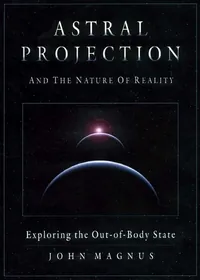
More Free Occult Philosophy Books
View all →