Out of body experiences
 78
78

Out of body experiences
Peterson’s "Out of Body Experiences" distinguishes itself by approaching a notoriously subjective topic with a methodical, almost academic rigor. The strength lies in its systematic categorization of phenomena and its attempt to map commonalities across disparate accounts. Peterson avoids sensationalism, presenting reported experiences as data points for further investigation. A particularly insightful section discusses the "separation phenomenon," detailing the distinct sensory and psychological shifts that characterize the onset of an OBE. However, the work sometimes leans too heavily on theoretical constructs without fully bridging the gap to empirical verification, a common challenge in this field. While Peterson meticulously outlines methods, the subjective nature of inducing and verifying these states remains an inherent limitation. Despite this, the book serves as a valuable, well-organized compendium for those seeking to understand the landscape of out-of-body phenomena.
📝 Description
78
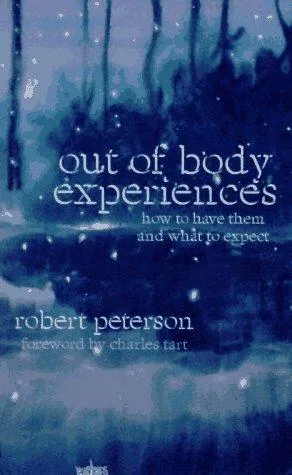
Robert Peterson's 2013 book examines out-of-body experiences beyond anecdotes.
Robert Peterson's 2013 book, "Out of Body Experiences," moves beyond simple personal accounts to systematically analyze the phenomenon. The author breaks down how consciousness may separate from the physical body, detailing methods and states that enable such events. Peterson categorizes various types of out-of-body occurrences, from vivid dreams to spontaneous separations, providing a structured way to understand their varied forms. This work is for serious students of consciousness, parapsychology, and metaphysical questions. It offers an analytical approach to subjects often seen as fringe, appealing to those interested in comparative mysticism and altered states.
The book differentiates between lucid dreaming and actual out-of-body states, emphasizing the distinct sense of reality and control in each. Peterson also discusses the concept of an "astral body" or subtle energetic form. He addresses the subjective realities reported by those who have these experiences, aiming for a coherent understanding of the phenomenon. The text synthesizes historical accounts and modern research, placing out-of-body experiences within a wider context of human consciousness studies.
The study of out-of-body experiences has roots stretching back centuries in shamanic and mystical traditions. Early 20th-century researchers like Sylvan Muldoon and Hereward Carrington documented astral projection and similar phenomena extensively. Peterson's work acknowledges this historical lineage, connecting ancient accounts and early research with contemporary understanding. It positions OBEs within the broader exploration of human consciousness and non-physical existence, treating them as a subject worthy of systematic study.
💡 Why Read This Book?
• Gain a structured understanding of the different types of out-of-body experiences, moving from anecdotal accounts to categorized phenomena as detailed in Peterson's systematic analysis. • Learn about the concept of the "astral body" and its hypothesized role as a vehicle for consciousness during non-physical excursions, as presented in the book's theoretical framework. • Explore the significance of "vibrational states" as potential precursors to separation, offering a concrete element to observe and potentially cultivate for inducing OBEs.
⭐ Reader Reviews
Honest opinions from readers who have explored this book.
❓ Frequently Asked Questions
What is the difference between an out-of-body experience and a lucid dream?
Peterson's work differentiates OBEs from lucid dreams by the perceived reality and the nature of the separation. While lucid dreams occur within the dream state, OBEs involve a distinct sensation of consciousness leaving the physical body, often with a sense of objective reality independent of the dream environment.
Does Robert Peterson's book discuss methods for inducing out-of-body experiences?
Yes, "Out of Body Experiences" outlines various techniques reported to facilitate OBEs. These often include specific relaxation methods, visualization exercises, and the induction of "vibrational states" to prepare consciousness for separation from the physical form.
What is the 'silver cord' mentioned in discussions of out-of-body experiences?
The "silver cord" is a concept explored in Peterson's book, referring to a hypothesized energetic tether that connects the subtle body (or astral body) to the physical body during an out-of-body experience, ensuring the consciousness can return.
When was Robert Peterson's book on out-of-body experiences first published?
Robert Peterson's "Out of Body Experiences" was first published in 2013, contributing a modern synthesis to the long-standing study of consciousness phenomena.
Is 'Out of Body Experiences' suitable for beginners in esoteric studies?
The book is suitable for serious beginners who are looking for a structured, analytical approach to OBEs. While it covers foundational concepts, its depth and systematic nature also appeal to those with prior knowledge of consciousness studies or metaphysics.
What historical figures or concepts does Peterson reference regarding OBEs?
Peterson's work acknowledges historical figures and concepts within the study of OBEs. He builds upon the groundwork laid by earlier researchers such as Sylvan Muldoon and concepts like the astral body and vibrational states, placing them within a contemporary context.
🔮 Key Themes & Symbolism
Consciousness Separation Dynamics
The book meticulously details the subjective mechanics of consciousness disengaging from the physical form. Peterson explores the common sensory alterations reported, such as auditory phenomena like buzzing or rushing sounds, and visual distortions or darkness preceding separation. He analyzes the psychological states associated with this transition, including feelings of detachment, lightness, or a sense of being pulled from the body. The work provides a framework for understanding the distinct phases involved, from the initial recognition of an altered state to the full experience of being outside the physical body and the subsequent return.
The Astral Body and Subtle Energetics
A central theme is the concept of the 'astral body' or subtle energetic form that purportedly carries consciousness during an out-of-body experience. Peterson examines how this non-physical body is described and perceived by experiencers. The text studies the idea of 'vibrational states,' suggesting these are specific energetic frequencies that consciousness must attain to facilitate separation. This exploration connects to ancient ideas of subtle anatomy and energy bodies, positioning OBEs not as mere hallucinations but as verifiable excursions of a distinct consciousness vehicle.
Categorization of OBE Phenomena
Peterson's contribution lies in his systematic approach to categorizing the wide array of reported out-of-body phenomena. He differentiates between spontaneous OBEs, those induced through specific techniques, and experiences that occur within dreams (like lucid dreaming). The book seeks to establish a taxonomy, distinguishing between different perceived realities, levels of awareness, and the nature of the environment encountered during separation. This classification helps to bring order to a field often characterized by subjective and sometimes contradictory accounts.
Philosophical and Experiential Implications
Beyond the mechanics, the book touches upon the wide implications of out-of-body experiences for one's worldview. Peterson discusses how these events can challenge materialistic assumptions about consciousness, suggesting a reality where mind and spirit are not entirely bound by the physical brain. The text considers the personal transformations reported by individuals who have undergone OBEs, including shifts in perspective on life, death, and the nature of existence. It frames these experiences as potentially significant avenues for personal growth and spiritual exploration.
💬 Memorable Quotes
Direct passages from the work, attributed to the author.
“The sensation of separation often involves a distinct feeling of detachment, as if one is observing their physical body from an external vantage point.”
— This highlights the core subjective marker of an OBE: the perceived dissociation of awareness from the corporeal form, a commonality across many firsthand accounts that Peterson seeks to analyze.
“Vibrational states are frequently reported as a precursor, a unique energetic signature that precedes the actual experience of leaving the body.”
— This points to a specific, often cited phenomenon within OBE literature, suggesting that a particular energetic frequency or state is crucial for initiating the separation process.
“The astral body is theorized as a subtle vehicle, capable of independent movement and perception during the disembodied state.”
— This concisely defines the proposed mechanism by which consciousness navigates non-physical realms during an OBE, distinguishing it from the physical form.
“Distinguishing between genuine out-of-body experiences and vivid dream states requires careful attention to the nature of perceived reality and agency.”
— This emphasizes the analytical challenge Peterson addresses: differentiating subjective experiences that may share certain characteristics but differ fundamentally in their underlying nature or origin.
“The silver cord is posited as an energetic connection, ensuring the return of consciousness to its physical anchor.”
— This succinctly explains the theoretical function of the silver cord, a concept found in various traditions discussing subtle bodies and disembodied states.
🌙 Esoteric Significance
Tradition
Peterson's work aligns with the broader Western esoteric tradition, particularly its explorations of subtle bodies and non-physical realms, drawing parallels with concepts found in Theosophy, Hermeticism, and certain branches of Neoplatonism. While not strictly adhering to a single lineage, it participates in the ongoing esoteric project of mapping consciousness beyond the physical brain. It departs from purely mystical or religious interpretations by attempting a more systematic, almost scientific categorization of the phenomenon and its associated experiences, seeking to bridge subjective accounts with a theoretical framework.
Symbolism
The "astral body" serves as a primary symbol, representing the vehicle of consciousness during OBEs, distinct from the physical form and capable of traversing non-physical planes. The "silver cord" functions as another potent symbol, signifying the vital energetic link that anchors consciousness to its physical embodiment, ensuring safe return and continuity. "Vibrational states" symbolize a transitionary phase, an energetic attunement necessary for the consciousness to achieve the necessary frequency for separation from the material world.
Modern Relevance
Contemporary interest in consciousness, particularly non-ordinary states, keeps Peterson's work relevant. It informs discussions in fields ranging from transpersonal psychology to lucid dreaming research and remote viewing communities. Thinkers and practitioners exploring altered states, consciousness mapping, and the philosophical implications of mind-body dualism or non-dualism often find Peterson's systematic approach a useful reference point for understanding reported phenomena and theoretical frameworks.
👥 Who Should Read This Book
• Individuals interested in the scientific and philosophical study of consciousness beyond conventional neuroscience will find Peterson's systematic approach valuable for understanding reported non-physical experiences. • Practitioners of meditation, lucid dreaming, or other consciousness-altering techniques seeking a structured overview of out-of-body phenomena and theoretical underpinnings. • Students of comparative religion and mysticism looking to understand how out-of-body experiences fit within broader spiritual and esoteric traditions.
📜 Historical Context
Robert Peterson's "Out of Body Experiences," published in 2013, enters a field with deep historical roots. The study of phenomena akin to OBEs dates back to ancient shamanic traditions and esoteric philosophies across cultures. In the early 20th century, the Theosophical Society and associated figures like Sylvan Muldoon and Hereward Carrington extensively explored astral projection, laying much of the groundwork for modern discussions. These early researchers, often working within or alongside movements like Spiritualism, documented techniques and subjective reports. Peterson’s work arrives in an era where neuroscience and psychology are increasingly engaging with consciousness studies, though often from a strictly materialistic perspective, creating a contrast with earlier metaphysical approaches. While not directly engaging with a specific contemporary author in his text, Peterson’s synthesis implicitly responds to the ongoing debate between emergent consciousness theories and those positing consciousness as fundamental or capable of independent operation, a discourse shaped by figures from William James to modern proponents of panpsychism.
📔 Journal Prompts
The perceived 'astral body' and its independent existence during separation.
The role of 'vibrational states' in facilitating the separation phenomenon.
Sensory alterations reported during the onset of an out-of-body experience.
The concept of the 'silver cord' and its connection to physical embodiment.
Comparing personal lucid dreaming experiences with the descriptions of OBEs.
🗂️ Glossary
Astral Body
A subtle, non-physical body or vehicle of consciousness, often described as energetic, which is believed to be capable of independent existence and movement apart from the physical body, particularly during out-of-body experiences.
Silver Cord
A hypothesized energetic connection, often described as luminous or elastic, linking the subtle body (or astral body) to the physical body during an out-of-body experience, ensuring the continuity of consciousness and facilitating a safe return.
Vibrational States
Specific subjective states of heightened energetic frequency or oscillation that are often reported by individuals as preceding or accompanying the separation phase of an out-of-body experience.
Separation Phenomenon
The distinct subjective experience of consciousness disengaging from the physical body, often involving sensations of floating, detachment, or movement outside the physical form.
Lucid Dreaming
A state of dreaming in which the dreamer becomes aware that they are dreaming and may be able to exert some degree of control over the dream's narrative or environment.
Subtle Body
A general term for non-physical energetic bodies or vehicles of consciousness, of which the astral body is one specific type, often discussed in esoteric and mystical traditions.
Parapsychology
A field of study that investigates purported psychic phenomena and other paranormal claims, such as telepathy, precognition, and out-of-body experiences, often from a perspective seeking empirical evidence.
🔮 Readers Also Liked
Browse all →







More by Peterson, Robert
All books →

More Free Occult Philosophy Books
View all →