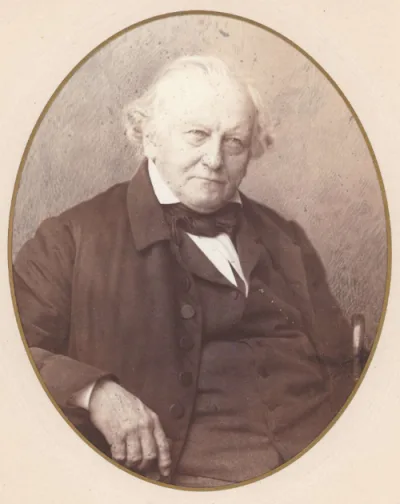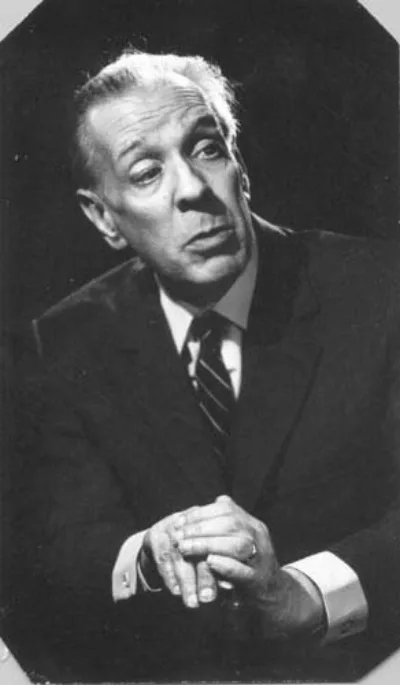
Jorge Luis Borges
Jorge Luis Borges was an Argentine writer known for his intricate short stories, essays, and poetry, often exploring philosophical themes.
Jorge Luis Borges, born in 1899 and passing in 1986, was a prolific Argentine writer whose work spanned short stories, essays, poetry, and translations. His literary output, primarily in Spanish, was meticulously cataloged, distinguishing between original book-length publications and individual pieces published in magazines. This bibliography focuses on collections of his original writings, excluding edited anthologies, chapbooks, and individual translations. Borges's early works included poetry collections like "Fervor de Buenos Aires" (1923) and "Luna de Enfrente" (1925), followed by essay collections such as "Inquisiciones" (1925) and "El tamaño de mi esperanza" (1926).
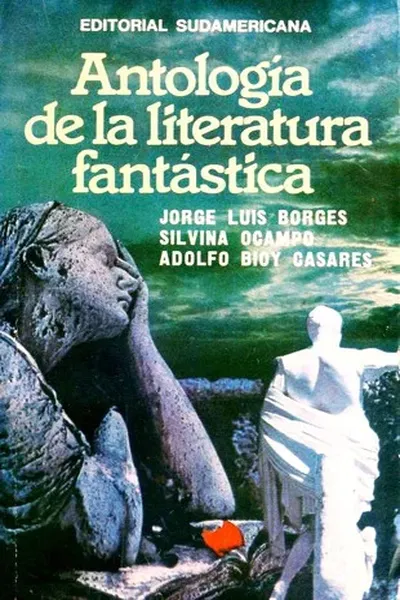
Throughout his career, Borges frequently collaborated with other writers, notably Adolfo Bioy Casares, on works of detective fiction and fantasy, often under pseudonyms. His significant collections of short stories include "Historia universal de la infamia" (1935), "El jardín de senderos que se bifurcan" (1941), "Ficciones" (1944), and "El Aleph" (1949). These collections, along with his poetry and critical essays, cemented his reputation as a master of intricate narratives and philosophical inquiry. His later works continued to explore diverse themes, with poetry collections like "Elogio de la Sombra" (1969) and "El oro de los tigres" (1972), alongside essay collections and lectures.
Early Poetic and Essayistic Explorations
Jorge Luis Borges's literary journey commenced with poetry and essays, establishing a foundation for his later complex narratives. His initial published works were poetry collections, including "Fervor de Buenos Aires" in 1923, followed by "Luna de Enfrente" in 1925. Alongside his poetic endeavors, Borges also delved into essay writing, publishing "Inquisiciones" in 1925 and "El tamaño de mi esperanza" in 1926. These early essays explored various themes, setting a precedent for the intellectual depth that would characterize his subsequent works. The year 1928 saw the publication of "El idioma de los argentinos," and 1929 brought the poetry collection "Cuaderno San Martín." His 1930 work, "Evaristo Carriego," was a focused collection of essays dedicated to the Argentine poet, later expanded to include broader Argentine themes.
Collaborative Ventures and Fictional Narratives
A significant aspect of Borges's bibliography involves his collaborations, particularly with Adolfo Bioy Casares. Together, they produced works in the detective fiction genre under pseudonyms like H. Bustos Domecq and B. Suarez Lynch, including "Seis problemas para don Isidro Parodi" (1942) and "Un modelo para la muerte" (1946). They also co-authored fantasy stories such as "Dos fantasías memorables" (1946). Borges's own groundbreaking collections of short stories began to emerge with "Historia universal de la infamia" (1935), a collection of non-fictional stories and literary forgeries. This was followed by "El jardín de senderos que se bifurcan" (1941), which formed a core part of the celebrated collection "Ficciones" (1944). "El Aleph" (1949) further solidified his reputation, presenting a mix of essays and short stories that explored labyrinthine themes and philosophical paradoxes.
Literary Criticism and Expanded Works
Beyond his fictional narratives, Borges was also a significant literary critic and scholar. Works such as "Discusión" (1932), "Historia de la eternidad" (1936), and "Aspectos de la poesía gauchesca" (1950) showcase his analytical engagement with literature. He co-authored "Antiguas literaturas germánicas" (1951) with Delia Ingenieros and later revisited this topic in "Literaturas germánicas medievales" (1966) with María Esther Vázquez. His critical essays were also compiled in collections like "Otras inquisiciones 1937–1952" (1952). Borges also engaged with foundational Argentine literature, producing "El "Martín Fierro"" (1953) with Margarita Guerrero. His later works included expanded versions of earlier pieces, such as "El libro de los seres imaginarios" (1967), an elaboration of "Manual de zoología fantástica" (1957), also co-written with Guerrero.
Later Poetic Output and Thematic Collections
The latter part of Borges's career was marked by a continued prolific output in poetry and thematic collections. His poetry collections from this period include "El Hacedor" (1960), "Elogio de la Sombra" (1969), "El otro, el mismo" (1969), "El oro de los tigres" (1972), "La Rosa Profunda" (1975), and "La moneda de hierro" (1976). These collections often delved into themes of time, memory, and the nature of reality. He also published significant short story collections such as "El informe de Brodie" (1970) and "El libro de arena" (1975). Borges also compiled lectures and essays into notable volumes like "Siete noches" (1980) and "Prólogos con un prólogo de prólogos" (1977), offering insights into his literary perspectives and philosophical interests.
Books by Jorge Luis Borges
18 free public domain books · Read online or download





![The Widow Ching Pirate [5 stories]](/img/thumb/the-widow-ching-pirate-5-stories-jorge-luis-borges.webp)