Doktor Johannes Faust's Magia Naturalis et Innaturalis

 80
80

Doktor Johannes Faust's Magia Naturalis et Innaturalis


Ophelia Vance (Mystical Literature Reviewer) — Doktor Johannes Faust's 'Magia Naturalis et Innaturalis' stands as a stark, potent artifact of early Renaissance occultism. This work, born from the notorious alchemist's hand, is a challenging yet rewarding descent into the intertwined realms of natural philosophy and the seemingly supernatural. Faust masterfully weaves together alchemical processes with an unapologetic exploration of 'unnatural' magic, offering unique insights into the spiritual and material transformations sought by practitioners of the era. While its historical context is fraught with controversy, the text's esoteric value is undeniable. It is a must-read for serious scholars of Hermeticism, alchemy, and the history of Western esotericism, demanding careful study and a discerning mind.
📝 Description
80
Published in 1505, Doktor Johannes Faust's 'Magia Naturalis et Innaturalis' examines natural and supernatural forces.
Doktor Johannes Faust's 'Magia Naturalis et Innaturalis,' written in 1505, presents a challenging look at the forces governing the natural world and those beyond its perceived limits. Faust, a figure already associated with legend, combines alchemical ideas, Hermetic philosophy, and possibly references to occult agreements. The text contains detailed illustrations, obscure statements, and reflects the spirit of an era where the boundaries between the material and spiritual were thought to be permeable.
This book is not for casual readers. It demands intellectual rigor and a willingness to confront complex concepts. It addresses those interested in the core energies that shape reality, whether visible or hidden. The book appeals to individuals drawn to alchemy, philosophy, and mysticism who seek deeper knowledge. It touches upon forbidden practices and the potentially disturbing realities they claim to uncover. The writing conveys a sense of serious intellectual endeavor mixed with an inherent risk, mirroring the author's bold aims.
Emerging from the intellectual ferment of early 16th-century Germany, 'Magia Naturalis et Innaturalis' sits within a tradition where the study of nature was intertwined with spiritual and occult pursuits. This period saw a blending of Renaissance humanism with older Hermetic and alchemical traditions, seeking to understand God's creation through both empirical observation and mystical insight. Faust's work reflects a desire to categorize and potentially manipulate the forces at play in the cosmos, a common goal among practitioners who saw no strict division between the natural and the supernatural.
✍️ Author
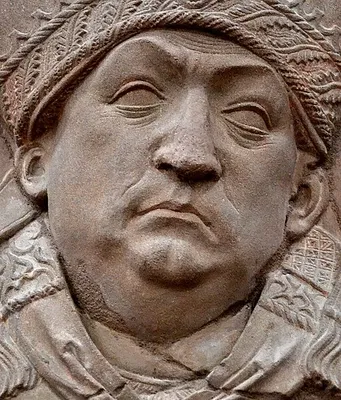
a Doctor Johannes Faust
Faust ( FOWST; German: [faʊst] ) is the protagonist of a classic German legend based on the historical Johann Georg Faust (c. 1480–1540).
💡 Why Read This Book?
Delve into the controversial legacy of a legendary alchemist. 'Magia Naturalis et Innaturalis' offers a rare, unvarnished look at early modern magical theory and practice. It's essential for understanding the historical development of Hermeticism and alchemy, providing unique insights for scholars, practitioners, and anyone fascinated by the pursuit of hidden knowledge.
⭐ Reader Reviews
Honest opinions from readers who have explored this book.
❓ Frequently Asked Questions
What is the primary focus of 'Magia Naturalis et Innaturalis'?
The book explores the interplay between natural magic, derived from observable forces and alchemical principles, and 'unnatural' magic, suggesting a more direct engagement with hidden or potentially darker powers to achieve transformative ends.
Who was Doktor Johannes Faust?
Doktor Johannes Faust was a historical figure from 15th/16th century Germany, known as an alchemist, astrologer, and the subject of numerous legends, often depicted as having made a pact with the devil.
What is the significance of the title 'Magia Naturalis et Innaturalis'?
The title translates to 'Natural and Unnatural Magic,' signaling the book's dual exploration of magic derived from nature's inherent laws and magic that may transcend or defy those laws, hinting at more potent or forbidden practices.
Is this book suitable for beginners in esotericism?
Due to its historical context, potentially challenging language, and controversial subject matter, it is recommended for intermediate to advanced students of esotericism and occult history, rather than absolute beginners.
What kind of knowledge can be found within its pages?
Readers can expect discussions on alchemical processes, the manipulation of natural forces, theoretical frameworks for magical operations, and philosophical reflections on the nature of reality and human potential.
🔮 Key Themes & Symbolism
The Dual Nature of Magic
This theme dissects the fundamental concept of 'Magia Naturalis et Innaturalis' – the division and potential synthesis of magic derived from the observable laws of nature versus magic that operates beyond or in defiance of these laws. It probes the ethical and practical implications of wielding such forces, questioning the boundaries of human agency and the source of ultimate power, reflecting a period grappling with scientific discovery and spiritual upheaval.
Alchemical Transformation and the Great Work
The text is deeply embedded in the alchemical tradition, focusing on the principles of transmutation, not merely of metals, but of the self and the cosmos. It examines the symbolic language of alchemy, the pursuit of the Philosopher's Stone, and the quest for spiritual enlightenment and material perfection. This theme highlights the intricate processes and philosophical underpinnings of the alchemical 'Great Work' as understood by Faust.
The Pursuit of Forbidden Knowledge
Faust's work is inextricably linked to the allure and danger of forbidden knowledge. The 'innatural' aspect of his magic suggests a willingness to explore paths deemed heretical or diabolical by mainstream society. This theme examines the human drive to transcend limitations, the risks associated with acquiring power through unconventional means, and the societal anxieties surrounding esoteric disciplines, particularly those hinting at demonic influence or pacts.
💬 Memorable Quotes
Direct passages from the work, attributed to the author.
“The artificer commands the elements, not by brute force, but by understanding their primal essence.”
— This highlights the alchemical and magical ideal of working with natural forces through knowledge and subtle manipulation rather than coercion, implying a deep connection to the underlying principles of existence.
“To unlock the heavens, one must first understand the secrets of the earth.”
— This speaks to the interconnectedness of the material and spiritual realms in magical and alchemical thought, asserting that mastery of the physical is a prerequisite for ascending to higher spiritual or cosmic understanding.
“The shadow of the divine lies hidden within the deepest crucible.”
— This evokes the alchemical process of purification and transformation, suggesting that divine essence or ultimate truth can be found through intense spiritual and material refinement, even in seemingly dark or challenging circumstances.
“He who seeks the unnatural courts both revelation and ruin.”
— This cautionary statement underscores the inherent risks involved in pursuing knowledge or power that lies outside conventional boundaries, acknowledging the potential for useful insights alongside significant personal peril.
💡 Key Ideas
Editorial paraphrase of the work's core concepts — not direct quotes.
Nature is a mirror wherein the subtle is made manifest.
This quote emphasizes the Hermetic principle of correspondence, suggesting that the physical world reflects deeper, unseen spiritual realities that can be understood through careful observation and study.
🌙 Esoteric Significance
Tradition
This text is a vital, albeit controversial, contribution to the Hermetic and Alchemical traditions of Western Esotericism. It embodies the Renaissance alchemist's drive to synthesize ancient wisdom (Hermes Trismegistus) with empirical observation and speculative philosophy, aiming for spiritual and material perfection. Its exploration of 'unnatural' magic also touches upon themes found in grimoires and demonology, indicating a broader, perhaps more dangerous, engagement with the occult.
Symbolism
The book is rich with alchemical symbolism, utilizing metaphors of metals, celestial bodies, and elemental forces to represent psychological, spiritual, and physical processes. Expect references to the Sun (gold, spirit), Moon (silver, soul), Mercury (transformation, quicksilver), and the Four Elements (fire, water, air, earth), all used to describe stages of transmutation and the intricate dance of cosmic energies.
Modern Relevance
In contemporary esoteric circles, 'Magia Naturalis et Innaturalis' offers a raw, historical perspective on the alchemist's ambition and the enduring human quest for power and knowledge. It challenges modern practitioners to consider the historical roots of their disciplines, the ethical dimensions of magical practice, and the complex relationship between the natural world and perceived supernatural forces, prompting critical reflection on the boundaries of human potential.
👥 Who Should Read This Book
This profound work is essential for serious scholars of Western Esotericism, particularly those specializing in Alchemy and Hermeticism. Practicing occultists and magicians seeking to understand the historical evolution of their crafts will find invaluable context. Seekers of hidden knowledge and philosophical insights into the nature of reality will be challenged and rewarded. While its historical context and potential for confronting dark themes make it less suitable for absolute beginners, those with a foundational understanding of esoteric concepts will find it a deeply useful, albeit demanding, read.
📜 Historical Context
Penned in 1505, 'Magia Naturalis et Innaturalis' emerges from a Germany steeped in the intellectual ferment of the Renaissance and the burgeoning anxieties of the Reformation. This era witnessed a complex interplay between rediscovered ancient philosophies, the rise of humanism, and deeply entrenched religious beliefs. Alchemy and Hermeticism, far from being fringe activities, were often pursued by scholars and even clergy seeking to understand God's creation and unlock its secrets. Faust's work reflects this period's fascination with the hidden potentials of nature and the human mind, while simultaneously foreshadowing the growing suspicion and persecution of esoteric practices as religious and social structures began to solidify, making his controversial pursuits particularly perilous.
📔 Journal Prompts
Reflect on the distinction between 'natural' and 'unnatural' magic as presented by Faust. How do these concepts resonate with your own understanding of spiritual or magical practice?
Consider the alchemical symbolism within the text. What personal or spiritual transformations do these symbols evoke for you?
Faust's life is marked by controversy. How does an author's personal history and reputation influence the interpretation of their esoteric works?
Explore the idea of 'forbidden knowledge.' What are the potential benefits and dangers of seeking knowledge that lies outside conventional understanding?
If you were to start a modern 'Great Work,' what 'elements' would you seek to transmute within yourself, and what symbols might represent this journey?
🗂️ Glossary
Alchemy
An ancient philosophical and proto-scientific tradition practiced throughout the world, concerned with the purported transformation of base metals into noble metals (such as gold) and the discovery of a universal elixir or panacea.
Hermeticism
A religious, philosophical, and esoteric tradition based on writings attributed to Hermes Trismegistus, a syncretic Greco-Egyptian deity. It emphasizes esoteric knowledge, spiritual enlightenment, and the interconnectedness of the cosmos.
Magia Naturalis
Natural Magic, a branch of magic that sought to explain and manipulate the hidden forces and sympathies within the natural world, often through observation, herbalism, and celestial influences.
Magia Innaturalis
Unnatural Magic, referring to magical practices that were believed to operate outside the known laws of nature, potentially involving pacts with supernatural entities or the invocation of forbidden powers.
Great Work (Major work)
In alchemy, the process of creating the Philosopher's Stone, which was believed to transmute base metals into gold and also to confer immortality or perfect health. It is also interpreted as a metaphor for spiritual purification and enlightenment.
This book appears in 1 collection
🔮 Readers Also Liked
Browse all →






From the “Alchemy” Collection
View all →






More Free Alchemy & Hermeticism Books
View all →