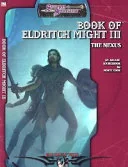
Book of Eldritch Might III
 72
72

Book of Eldritch Might III
The "Book of Eldritch Might III" offers a pragmatic approach to RPG world-building, moving beyond mere statistical entries to consider the narrative weight of creatures and encounters. Its strength lies in providing actionable advice for GMs seeking to craft truly memorable adversaries. However, the original blurb, "Fantasirollespil," is perhaps too brief, underselling the specific focus on creating potent, otherworldly threats. A passage detailing the creation of a specific unique monster, for instance, could have offered a more tangible demonstration of its utility. While functional, it occasionally leans into the technical aspects of game design without fully exploring the philosophical underpinnings of what makes an "eldritch" threat truly impactful beyond game mechanics. It serves its purpose as a design tool, but doesn't quite transcend it.
📝 Description
72
Published in 2003, Book of Eldritch Might III by Monte Cook deepens fantasy role-playing game design.
This 2003 volume from Monte Cook's series focuses on the mechanics and lore for fantasy role-playing games. It equips game masters with tools to build and populate their fictional worlds, moving beyond basic statistics. The book details methods for constructing encounters, developing antagonists, and describing environments. Its aim is to give game settings a greater sense of depth and danger.
The text is intended for experienced game masters and designers of tabletop role-playing games who wish to improve their campaign narratives. It caters to those looking to introduce more complex challenges and detailed adversaries into their games. Players interested in the construction of game worlds, particularly those studying game design theory, may also find value in its contents.
Within the tradition of esoteric game design, Book of Eldritch Might III addresses the creation of powers and entities that defy conventional fantasy archetypes. It suggests a framework for conceptualizing 'Eldritch' forces, hinting at cosmic horror or otherworldly influences. This approach moves beyond standard magic systems to incorporate a sense of the unknown and potentially dangerous, encouraging designers to craft adversaries and phenomena that feel truly alien and potent within their game worlds.
⭐ Reader Reviews
Honest opinions from readers who have explored this book.
❓ Frequently Asked Questions
What is the primary purpose of Book of Eldritch Might III?
The book serves as a guide for tabletop role-playing game masters, offering methods for creating and detailing unique monsters, encounters, and environmental elements to enhance game worlds.
Who is Monte Cook and what is his contribution?
Monte Cook is a prominent game designer, credited with authoring or co-authoring significant works in the fantasy role-playing genre, including this volume, contributing to the evolution of game mechanics.
When was Book of Eldritch Might III first published?
The book was initially published in 2003, placing it within a specific era of growth and innovation in the tabletop role-playing game industry.
Does this book focus on specific game systems?
While designed for fantasy role-playing games, the concepts are generally applicable, though it may implicitly reference systems prevalent around its 2003 publication date.
What does 'Eldritch' refer to in the context of this book?
In this context, 'Eldritch' likely pertains to entities, powers, or phenomena that are otherworldly, uncanny, and potentially cosmic or Lovecraftian in nature, designed to inspire awe and dread.
Is this book suitable for beginners in RPG design?
It is more suited for experienced game masters looking to add depth and complexity, as it assumes a foundational understanding of role-playing game mechanics and world-building.
🔮 Key Themes & Symbolism
Adversary Creation
This volume focuses on the meticulous construction of non-player characters and monsters that serve as formidable antagonists. It moves beyond simple stat blocks to explore the 'why' and 'how' of their existence within a fantasy setting. The 'Eldritch' aspect suggests a departure from conventional fantasy beasts, leaning towards entities with alien motivations or incomprehensible powers, thereby challenging players on a conceptual level as well as a tactical one. The goal is to create adversaries that are not just obstacles but integral to the world's lore.
World-Building Mechanics
Book of Eldritch Might III provides tools and frameworks for game masters to flesh out their created worlds. This includes detailing environments, establishing unique ecological niches for creatures, and developing the inherent dangers of a setting. The emphasis is on creating a consistent and believable, albeit fantastical, reality where the threats encountered feel organically part of the world's fabric. This approach aims to deepen player immersion by making the setting itself a dynamic element of the game.
Encounter Design
Beyond individual creature design, the book likely addresses the art of crafting compelling encounters. This involves considering the environment, the number and type of adversaries, and the overall narrative purpose of the confrontation. The 'Eldritch Might' implies encounters that might test players' understanding of reality or their sanity, rather than just their combat prowess. It encourages GMs to think about the psychological impact of challenges on players, fostering memorable gaming sessions.
Fantasy Role-Playing Evolution
As a 2003 publication, this book sits within the ongoing evolution of the fantasy role-playing genre. It reflects a trend towards greater complexity in game design, offering more sophisticated tools for creators. The 'Eldritch' theme also taps into burgeoning interests in cosmic horror and darker fantasy narratives that were gaining traction in popular culture and gaming. It represents a move from generic fantasy tropes towards more nuanced and specific world-building.
💬 Memorable Quotes
Direct passages from the work, attributed to the author.
“Design encounters that challenge assumptions, not just statistics.”
— This interpretation highlights the book's likely emphasis on creating game situations that require players to think critically and adapt their strategies beyond simple combat rolls, testing their understanding of the game world.
“Every element, from the smallest creature to the largest ruin, must serve the narrative.”
— This concept underscores the book's focus on cohesive world-building, where every detail introduced by the game master should contribute to the overarching story and thematic consistency of the campaign.
“The 'Eldritch' is that which defies mundane explanation.”
— This interpretation posits that the core of 'Eldritch Might' lies in its ability to introduce elements that operate outside the established, logical rules of the game world, creating a sense of the uncanny and the unknown.
“A well-designed antagonist is a reflection of the world's deepest fears.”
— This interpretation suggests that the book encourages GMs to craft villains that embody the inherent anxieties and thematic concerns of their specific game setting, making them more resonant and impactful.
💡 Key Ideas
Editorial paraphrase of the work's core concepts — not direct quotes.
The true terror lies not in the monster's claws, but in its alien purpose.
This paraphrased concept suggests that the most effective 'Eldritch' adversaries are those whose motivations are fundamentally incomprehensible to human understanding, making them more than just physical threats.
🌙 Esoteric Significance
Tradition
While ostensibly focused on game design, the 'Eldritch' theme within the Book of Eldritch Might series hints at broader currents within esoteric thought, particularly those influenced by concepts of cosmic horror and the unknowable. It draws from a lineage that explores forces beyond human comprehension, akin to Gnostic ideas of alien or emergent powers, or even certain interpretations of Chaos Magick's engagement with the void. It departs from traditional Western Esotericism's focus on personal gnosis or divine hierarchy by framing these potent, alien forces as antagonistic elements within a constructed narrative framework.
Symbolism
The term 'Eldritch' itself functions as a symbolic shorthand for the alien, the uncanny, and the profoundly powerful. It evokes imagery associated with cosmic entities, ancient and incomprehensible beings that defy easy categorization. Symbols likely implied or directly referenced would include non-Euclidean geometry, impossible architectures, and abyssal voids, all representing a reality fundamentally different from our own and often inimical to human existence. These symbols serve to communicate a sense of profound otherness and existential dread.
Modern Relevance
Contemporary tabletop RPGs continue to heavily draw upon the principles of detailed adversary and world-building explored in works like Book of Eldritch Might III. Designers focused on horror, cosmic themes, or intricate lore often reference the foundational design philosophies present in such volumes. Thinkers and creators in fields that explore existential dread, the limits of knowledge, and the nature of consciousness within fantastical or speculative contexts might find the book's approach to 'Eldritch' concepts a useful case study in narrative construction and thematic exploration.
👥 Who Should Read This Book
['• Game Masters seeking to create unique and terrifying antagonists beyond standard fantasy archetypes, leveraging the 2003 publication for distinct design principles.', '• Tabletop RPG designers interested in the evolution of game mechanics and world-building, particularly concerning the introduction of complex or otherworldly threats.', '• Enthusiasts of dark fantasy and cosmic horror who wish to understand the narrative construction behind such themes in interactive media.']
📜 Historical Context
Published in 2003, Book of Eldritch Might III arrived during a dynamic period for tabletop role-playing games. The early 2000s saw continued exploration of complex mechanics and narrative depth, moving beyond the simpler systems of earlier decades. Monte Cook himself was a significant figure, having contributed to the design of Dungeons & Dragons 3rd Edition (released in 2000), which emphasized detailed rules and character customization. This era also coincided with the rise of online communities and digital tools for game masters, fostering a collaborative environment for design innovation. While specific reception details for this particular volume are scarce, it existed alongside works from other prominent designers and publishers exploring similar themes of advanced monster creation and world-building. The growth of interest in cosmic horror, influenced by authors like H.P. Lovecraft, likely provided an intellectual backdrop for the 'Eldritch' elements within the book, offering a counterpoint to more traditional heroic fantasy.
📔 Journal Prompts
The Eldritch Purpose: How does an alien motivation manifest in a game antagonist?
Constructing the Uncanny: Detail a creature whose form defies logical biological principles.
Narrative Weight: How can a specific ruin or environmental hazard embody the world's deepest fears?
Beyond Stats: Brainstorm three non-combat challenges an Eldritch entity might pose.
World Integration: Design a specific 'Eldritch' phenomenon that affects the daily lives of inhabitants in your game world.
🗂️ Glossary
Eldritch
Pertaining to that which is uncanny, supernatural, or of unearthly origin. In a fantasy context, it often implies powers or entities that are alien, incomprehensible, and potentially terrifying, drawing from themes of cosmic horror.
Game Master (GM)
The facilitator and referee of a tabletop role-playing game, responsible for narrating the story, controlling non-player characters, and interpreting the rules.
Encounter
A specific situation or challenge presented to players within a role-playing game, typically involving combat, puzzles, social interactions, or environmental hazards.
Antagonist
A character, group, or force that actively opposes the protagonist or player characters within a narrative. In RPGs, this is often a monster, villain, or dangerous situation.
World-Building
The process of creating a fictional world, including its geography, history, cultures, inhabitants, and the underlying rules or magic systems that govern it.
Lore
The collective body of knowledge, background information, and history associated with a fictional world or setting.
Fantasirollespil
Danish for 'Fantasy Role-playing Game'. Indicates the genre and core concept of the book's application.
This book appears in 1 collection
🔮 Readers Also Liked
Browse all →








From the “Scrying” Collection
View all →




More Free Occult Philosophy Books
View all →