The Tortuous Serpent
 75
75

The Tortuous Serpent
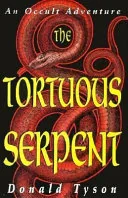
Donald Tyson's "The Tortuous Serpent" presents a compelling fictional chase after a stolen Gnostic grimoire, centering on the real-life figures of John Dee and Edward Kelley. The strength of the novel lies in its vivid evocation of late 16th-century Europe, particularly the scholarly and occult circles in which Dee and Kelley moved. Tyson successfully grounds the narrative in historical fact, portraying the alchemical and magical pursuits with a degree of authenticity that avoids sensationalism. The plot, while driven by a MacGuffin grimoire, effectively uses the historical backdrop of the impending Spanish Armada as a ticking clock. A minor limitation is that the characters, while historically inspired, occasionally feel more like archetypes serving the plot's engine rather than fully fleshed-out individuals. The section detailing Dee and Kelley's consultation of their "shew-stone" for guidance, for instance, captures their documented practices but remains somewhat detached emotionally. Nevertheless, the book offers an engaging glimpse into a unique historical moment and its associated esoteric currents.
📝 Description
75
Donald Tyson's 2006 novel, The Tortuous Serpent, details John Dee and Edward Kelley's quest for a stolen Gnostic grimoire.
Set against the 1588 Spanish Armada threat, the story follows Dee and Kelley as they pursue a potent occult text. Tyson weaves historical detail with a plot centered on this stolen grimoire, reconstructing the political climate and arcane practices of Elizabethan England. The narrative delves into the intellectual currents and esoteric milieu of the late 16th century, a time of religious and political tension. Dee, a mathematician and advisor to Queen Elizabeth I, and Kelley, his associate, were known for their interest in alchemy and ceremonial magic. Their actual pursuits, often mysterious, included attempts to contact angelic beings and uncover hidden knowledge, providing fertile ground for this fictional account.
The novel's core revolves around the Gnostic grimoire, presented as a source of magical power and concealed wisdom. It touches on alchemical ideas, communication with spiritual entities, and the unstable political situation in England. The chase for the grimoire underscores themes of spiritual seeking, how sacred knowledge can be misused, and the interplay between personal drives and significant historical moments. Readers interested in historical fiction with a focus on occult and esoteric subjects, particularly those drawn to Dee, Kelley, and Renaissance magic, will find this work engaging.
This novel sits within the tradition of historical fiction that engages with Western esotericism. It draws upon the historical figures of John Dee and Edward Kelley, who were central to 16th-century occult studies, particularly ceremonial magic and alchemy. The narrative incorporates elements of Gnosticism and Renaissance occult philosophy, exploring themes of hidden knowledge and spiritual quests within a specific historical moment. The book reflects an interest in the esoteric undercurrents of periods marked by significant social and political change.
💡 Why Read This Book?
• Gain insight into the historical milieu of John Dee and Edward Kelley, particularly their alchemical and scrying practices around 1588, offering a window into Renaissance occultism. • Understand the narrative function of a Gnostic grimoire as a plot device, exploring how such ancient texts were perceived as repositories of dangerous or powerful knowledge in the Elizabethan era. • Experience a fictionalized adventure that directly engages with the political anxieties surrounding the Spanish Armada, illustrating how historical events shaped the lives and pursuits of esoteric practitioners.
⭐ Reader Reviews
Honest opinions from readers who have explored this book.
❓ Frequently Asked Questions
Is "The Tortuous Serpent" based on actual events involving John Dee and Edward Kelley?
While the novel is fictional, it is deeply rooted in the historical context of John Dee and Edward Kelley's lives and their known interests in alchemy, magic, and angelic communication during the late 16th century.
What is a Gnostic grimoire, as featured in the book?
A grimoire is a book of magic, spells, and invocations. In "The Tortuous Serpent," the Gnostic grimoire represents a stolen text containing ancient, potentially powerful or heretical, knowledge associated with Gnosticism.
What historical period does "The Tortuous Serpent" primarily cover?
The novel is set in 1588, a pivotal year marked by the looming threat of the Spanish Armada and the active occult pursuits of John Dee and Edward Kelley in Europe.
Does the book accurately portray John Dee's magical practices?
The book attempts to portray Dee's and Kelley's known magical work, including their use of scrying or 'shew-stones,' with historical accuracy, drawing from documented accounts of their activities.
What role does alchemy play in the story?
Alchemy is a significant element, reflecting the historical interests of Dee and Kelley. The pursuit of the grimoire often intertwines with the symbolic and practical aspects of alchemical transformation and the search for hidden wisdom.
Is this a historical biography or a fictional narrative?
It is a fictional narrative that uses historical figures and settings. The plot and specific events are invented, but the characters, their interests, and the historical backdrop are based on research.
🔮 Key Themes & Symbolism
The Stolen Grimoire
The central object of pursuit, the Gnostic grimoire, serves as a potent symbol of lost or forbidden knowledge. Its theft and retrieval drive the narrative, highlighting the perceived power and danger inherent in ancient texts. The book explores how such artifacts were viewed in the Elizabethan era – as keys to hidden truths, potential tools for influence, or even sources of spiritual corruption, reflecting a historical fascination with occult manuscripts.
Renaissance Occultism
The novel immerses readers in the world of late 16th-century esoteric practices. It features alchemical pursuits, ceremonial magic, and angelic communication, reflecting the genuine interests of figures like John Dee. The narrative demonstrates how these practices were not isolated curiosities but were interwoven with intellectual, scientific, and political life, challenging the modern perception of them as purely fringe activities.
Political and Spiritual Division
Set against the backdrop of the Spanish Armada in 1588, the book uses the political tensions of Europe to frame the characters' quest. The division between Catholic Spain and Protestant England mirrors the spiritual and intellectual divisions of the time. The pursuit of the grimoire can be seen as a metaphor for navigating these turbulent waters, seeking order and hidden power amidst chaos.
The Partnership of Dee and Kelley
The dynamic between John Dee and Edward Kelley is central. The novel portrays their complex relationship, balancing Dee's scholarly intellect and Kelley's more practical or perhaps visionary role. Their joint endeavors in scrying and alchemy are depicted as attempts to access divine or hidden knowledge, exploring the challenges and potential rewards of such collaborative esoteric work.
💬 Memorable Quotes
Direct passages from the work, attributed to the author.
“The pursuit of the grimoire across a politically fractured Europe.”
— This phrase captures the core conflict and setting. It highlights the dangerous journey undertaken by Dee and Kelley, emphasizing both the mystical object of their quest and the perilous geopolitical field of the late 16th century.
“The historical accuracy of the personalities and magical work.”
— This points to the novel's grounding in research. It suggests that the author has made a deliberate effort to represent the known characteristics and practices of John Dee and Edward Kelley faithfully within the fictional narrative.
“The year 1588 and the looming shadow of the Spanish Armada.”
— This anchors the story in a specific, critical historical moment. The presence of the Armada provides a tangible external threat and backdrop, amplifying the internal drama and the esoteric pursuits of the protagonists.
“Edward Kelley's role as a medium and alchemist.”
— This highlights a key character and his complex engagement with the occult. Kelley's dual nature as a conduit for spiritual messages and a practitioner of alchemy is central to the historical figure and the novel's depiction.
“The Gnostic nature of the stolen grimoire.”
— This specifies the type of magical text at the heart of the plot. Gnosticism implies a complex system of esoteric beliefs, often involving hidden knowledge and a dualistic worldview, adding a layer of theological intrigue to the grimoire's significance.
🌙 Esoteric Significance
Tradition
The work draws heavily from the Western Esoteric Tradition, specifically Hermeticism and Renaissance occultism, with a strong undercurrent of Gnosticism due to the central role of the grimoire. It reflects the historical period when figures like John Dee sought to synthesize Neoplatonism, Kabbalah, and alchemy into a unified system of spiritual knowledge, often framed by angelic hierarchies and ceremonial practices.
Symbolism
The Tortuous Serpent itself can symbolize the winding path of spiritual initiation or the ouroboros, representing cyclical nature and primal unity. The Gnostic grimoire symbolizes hidden, potentially dangerous, divine knowledge that requires careful handling and interpretation, reflecting Gnostic ideas of secret wisdom necessary for salvation. The Spanish Armada serves as a symbol of external, worldly conflict and the chaos from which the protagonists seek esoteric refuge or power.
Modern Relevance
Contemporary practitioners of Hermeticism and ceremonial magic often look to figures like John Dee for historical precedent. The novel’s exploration of the interplay between esoteric knowledge and worldly affairs remains relevant for modern occultists and historians of magic, particularly in understanding how such practices were integrated into societal structures and individual lives.
👥 Who Should Read This Book
• Students of Renaissance history and the occult: Readers interested in the intellectual and magical currents of the late 16th century, particularly the lives and alleged practices of John Dee and Edward Kelley. • Fans of historical mystery and adventure: Those who enjoy fictional narratives grounded in specific historical periods, featuring quests and intrigue set against significant world events like the Spanish Armada. • Practitioners of Western Esotericism: Individuals seeking fictional explorations of alchemical symbolism, angelic magic, and the concept of sacred or forbidden texts within a historical context.
📜 Historical Context
Donald Tyson's "The Tortuous Serpent" is set in 1588, a year of immense geopolitical tension due to the impending Spanish Armada. This period in Elizabethan England was characterized by religious strife between Protestants and Catholics, and a burgeoning interest in the occult and Hermetic philosophy. John Dee, a figure of considerable intellectual repute, served as advisor to Queen Elizabeth I, while his associate Edward Kelley was known for his alchemical experiments and alleged spiritual communications. Their real-life activities, including Dee's extensive library and Kelley's scrying sessions, formed the basis for their portrayal. This era saw a complex interplay between emerging scientific thought and deeply entrenched magical traditions. Figures like Dee navigated this landscape, attempting to synthesize empirical observation with esoteric knowledge. The novel engages with this milieu, positioning Dee and Kelley's quest against the backdrop of state-level anxieties and the clandestine world of Renaissance magic, a world also populated by figures like Giordano Bruno, though Bruno's own philosophical radicalism led to his condemnation by the Inquisition in 1600.
📔 Journal Prompts
John Dee's intellectual pursuits and their alignment with Elizabethan court life.
The symbolic weight of a stolen Gnostic grimoire in a time of religious upheaval.
Edward Kelley's role as a conduit for divine or angelic communication.
The interplay between personal magical endeavors and the geopolitical climate of 1588.
Reflect on the concept of hidden knowledge as depicted through the grimoire.
🗂️ Glossary
Grimoire
A textbook of magic, typically containing instructions on how to create magical objects, perform rituals, and cast spells. In this context, it refers to a specific Gnostic text.
Gnosticism
A complex set of religious and philosophical movements that flourished in the first centuries CE, characterized by the belief in a secret knowledge (gnosis) necessary for salvation and often featuring a dualistic cosmology.
Alchemy
An ancient practice involving the study of chemical transformation, often aimed at creating the elixir of life or transmuting base metals into gold, but also encompassing spiritual purification and self-discovery.
Scrying
A form of divination involving gazing into a reflective surface, such as a crystal ball or mirror (a 'shew-stone'), to receive visions or messages.
Spanish Armada
The large fleet of ships sent by King Philip II of Spain to invade England in 1588, representing a major military and political conflict between Catholic Spain and Protestant England.
Elizabethan Age
The period of English history during the reign of Queen Elizabeth I (1558–1603), known for its flourishing arts, exploration, and political intrigue.
Ceremonial Magic
A formalized system of ritualistic magic, often involving specific invocations, tools, and procedures, aiming to achieve a particular magical effect or spiritual contact.
This book appears in 1 collection
🔮 Readers Also Liked
Browse all →








From the “Scrying” Collection
View all →








More Free Occult Philosophy Books
View all →