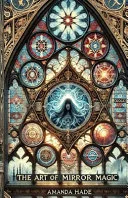
The Art of Mirror Magic
 83
83

The Art of Mirror Magic
Amanda Hade’s *The Art of Mirror Magic* provides a grounded exploration of a practice often shrouded in mystique. The strength lies in its methodical approach, breaking down complex techniques into actionable steps. Hade’s discussion on the mirror as a tool for shadow work, particularly the exercises involving self-confrontation with one’s reflection to identify subconscious resistance, offers a compelling psychological angle often missing in similar texts. However, the book occasionally leans towards overly prescriptive language regarding specific materials and timings, which might feel restrictive to more intuitive practitioners. A passage detailing the construction of a consecrated scrying mirror using a silvered plate and specific incantations illustrates the book's blend of practical instruction and ritualistic depth. Despite minor rigidity, it’s a valuable resource for anyone seeking to understand and practice mirror magic beyond superficial interpretations.
📝 Description
83
Amanda Hade's 2019 book details mirror magic for divination and self-discovery.
This book examines mirrors not just as reflective surfaces but as tools for altered states of consciousness and communication beyond ordinary perception. It positions mirrors as instruments for divination, covering scrying techniques and their use as focal points for ritual work. Practical applications are explained for both newcomers and experienced practitioners.
The text also guides readers in using mirrors for internal exploration and shadow work. Mirrors act as catalysts for self-reflection, uncovering subconscious patterns and hidden psychological aspects. This introspective use transforms the mirror into a partner for personal development and psychic growth.
The book traces the history of mirror magic through various traditions, from ancient Babylonian scrying bowls to Mesoamerican obsidian mirrors. It connects these historical uses with modern occult methods, bridging past and present esoteric understanding.
The practice of mirror magic draws from a long lineage of esoteric traditions that utilize reflective surfaces for spiritual insight and communication. This includes ancient practices like scrying in Babylon and the use of obsidian mirrors by Mesoamerican shamans. The book connects these historical applications to contemporary occult methodologies, showing how mirrors function as conduits for accessing altered states and hidden knowledge within various spiritual frameworks.
💡 Why Read This Book?
• Learn to construct and consecrate a scrying mirror, moving beyond simple reflective surfaces to create a dedicated tool for divination, as detailed in the 'Mirror Consecration Ritual' section. • Understand the principles of shadow work through mirror gazing, enabling the integration of subconscious elements by confronting personal reflections as explored in Chapter 3. • Discover specific mirror-based spellcasting techniques for protection and manifestation, providing practical, actionable methods for esoteric practitioners that differ from general spellcraft.
⭐ Reader Reviews
Honest opinions from readers who have explored this book.
❓ Frequently Asked Questions
What historical cultures are discussed in relation to mirror magic?
The book examines mirror magic across various cultures, referencing the obsidian mirrors used by Mesoamerican shamans and early forms of scrying found in ancient Babylonian practices.
Is 'The Art of Mirror Magic' suitable for complete beginners?
Yes, the book is structured to guide both novices and experienced practitioners, offering foundational knowledge and advanced techniques for mirror scrying, spellcasting, and shadow work.
What is shadow work as presented in this book?
Shadow work, in this context, involves using mirrors for deep self-reflection to confront and integrate subconscious aspects of the psyche, leading to greater self-awareness and wholeness.
Can mirrors be used for protection spells?
Absolutely. The book details methods for creating enchanted mirrors specifically designed to act as protective wards, deflecting negative energies and creating sacred space.
When was 'The Art of Mirror Magic' first published?
The first publication of 'The Art of Mirror Magic' by Amanda Hade was in February 2025.
Does the book cover spirit communication via mirrors?
Yes, it explores the use of mirrors as portals for communicating with spirits and other entities, providing guidance on safe and effective methods for such interactions.
🔮 Key Themes & Symbolism
Divination Through Reflection
This theme centers on the mirror as a primary tool for divination, extending beyond simple fortune-telling. It explores techniques like scrying, where one gazes into a reflective surface to receive visions, insights, or information from the subconscious or external spiritual realms. The book emphasizes the psychological aspect, framing divination as a dialogue with one's inner knowing, amplified by the mirror's reflective properties. It covers the preparation of the mirror and the practitioner, ensuring a clear channel for receiving intuitive guidance.
Shadow Integration
The work positions mirrors as essential instruments for shadow work, a core practice in psychological and esoteric development. By confronting one's reflection, practitioners are encouraged to acknowledge and integrate disowned aspects of their personality, often termed the 'shadow self.' This process involves facing fears, insecurities, and repressed desires that manifest visually through the mirror, facilitating a deeper understanding and acceptance of the whole self. The book provides guided exercises for this introspective work.
Ritualistic Application
This theme focuses on the practical, ritualistic uses of mirrors in magic. It details how to imbue mirrors with specific intentions, creating them as focal points for spellcasting, protection rituals, and summoning. The book outlines the necessary steps for consecrating mirrors, charging them with energy, and performing rites that leverage their reflective and amplifying qualities. Emphasis is placed on ethical considerations and safety protocols when working with mirrors in magical contexts.
Historical Esoteric Practices
The book situates mirror magic within its historical and cultural context, tracing its lineage through various traditions. It references ancient practices, such as the use of polished obsidian by Mesoamerican cultures for divination and shamanic journeying, and early European scrying practices. This historical grounding provides a framework for understanding the evolution of mirror magic and its enduring significance across different eras and belief systems.
💬 Memorable Quotes
Direct passages from the work, attributed to the author.
“The mirror does not lie; it only reflects what is presented.”
— This statement highlights the mirror's objective nature as a reflective surface, emphasizing its utility in revealing truths, whether external or internal, without distortion.
“Scrying is the art of seeing beyond the surface.”
— This interpretation focuses on scrying as a technique that transcends ordinary perception, using the mirror to access deeper layers of reality or consciousness.
“Your reflection is a gateway to your own deeper meaning.”
— This suggests that the act of gazing into a mirror can unlock subconscious material and reveal aspects of the self that are not readily apparent in daily awareness.
“Enchant a mirror to ward off malevolent energies.”
— This points to the practical application of mirror magic for creating protective talismans, capable of deflecting unwanted influences or negative spiritual forces.
“The obsidian mirror served as both oracle and portal.”
— This interpretation emphasizes the dual function of historical mirrors, serving not only to divine future events but also as a conduit to other realms or spiritual entities.
🌙 Esoteric Significance
Tradition
The work firmly situates itself within the Western Esoteric Tradition, drawing connections to Hermeticism and various folk magic practices. It views the mirror not merely as a tool but as a sacred object, echoing traditions that imbue everyday items with spiritual significance. While not explicitly Gnostic or Kabbalistic, its emphasis on inner knowledge and navigating hidden realms aligns with broader esoteric principles of self-discovery and spiritual ascent.
Symbolism
Central to the book's symbolism is the mirror itself, representing the dual nature of reality: the manifest and the unmanifest, the external world and the internal psyche. It symbolizes truth, self-reflection, and the potential for transformation. Another key symbol is the 'shadow,' representing the disowned or unconscious aspects of the self that mirrors help to illuminate and integrate, leading to a more complete and authentic existence.
Modern Relevance
Contemporary practitioners of witchcraft, modern occultism, and psychological shadow work find resonance in Hade's approach. Thinkers exploring embodied cognition and the use of external aids for internal states are indirectly served by this work. Its practical, step-by-step guidance makes it relevant for individuals seeking tangible methods for self-exploration and spiritual development in a digitally saturated world, offering a physical, reflective anchor.
👥 Who Should Read This Book
• Aspiring practitioners of divination seeking to expand their toolkit beyond cards or pendulums, offering concrete methods for scrying and interpreting reflections. • Individuals engaged in psychological self-exploration and shadow work, looking for structured techniques to confront and integrate subconscious aspects of their personality. • Students of Western Esotericism interested in the historical and practical applications of mirrors in magical traditions, providing a bridge between theory and practice.
📜 Historical Context
Published in 2025, *The Art of Mirror Magic* emerges in an era where interest in practical esoteric disciplines has seen a resurgence, often intersecting with psychological self-help and mindfulness practices. The book taps into a long lineage of mirror divination, a practice documented across numerous cultures. For instance, the ancient Greeks and Romans employed polished metal mirrors for divination, while later traditions integrated them into ceremonial magic. The use of obsidian mirrors by Mesoamerican cultures, like the Aztecs and Maya, for scrying and communicating with deities, provides a significant pre-Columbian anchor. The book implicitly engages with the broader Hermetic revival, which gained momentum in the late 19th and early 20th centuries with figures like Aleister Crowley and the Hermetic Order of the Golden Dawn, who explored various forms of divination and ritual. While not directly referencing contemporaries like occult author Lon Milo DuQuette, its focus on practical application and personal transformation aligns with contemporary trends in accessible esotericism.
📔 Journal Prompts
Your personal mirror's most frequent subconscious impressions.
The shadow aspects revealed in your reflection.
A protective mirror ritual's outcome.
Your initial scrying session's vision.
The symbolic meaning of your reflection's 'other'.
🗂️ Glossary
Scrying
The practice of gazing into a reflective surface (like a mirror, bowl of water, or crystal) to receive visions, insights, or divine information.
Shadow Work
A psychological and esoteric process of confronting, acknowledging, and integrating the disowned or unconscious aspects of the self.
Consecration
The ritual act of dedicating an object or space for sacred or magical purposes, often involving purification and empowerment.
Divination
The practice of seeking knowledge of the future or the unknown by supernatural means.
Obsidian Mirror
A mirror traditionally made from polished obsidian, historically used in Mesoamerican cultures for scrying and shamanic practices.
Esoteric
Intended for or likely to be understood by only a small number of people with a specialized knowledge or interest.
Psychic Veil
A metaphorical barrier separating the mundane world from the spiritual or subconscious realms, which can be thinned or pierced through various practices.