Black Orchid
 75
75

Black Orchid
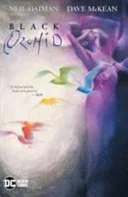
Neil Gaiman's *Black Orchid* demonstrates his characteristic knack for crafting atmospheric narratives that skirt the edges of the uncanny. The graphic novel’s strength lies in its evocative imagery and the subtle, unfolding mystery that compels the reader forward. Gaiman masterfully uses the panel-by-panel progression of the comic medium to build tension, particularly in the early sections where the central enigma is established. A notable passage involves the protagonist's disorientation upon entering a subtly altered reality, where familiar landmarks appear askew, hinting at deeper, unseen shifts. However, the narrative occasionally falters in its resolution, leaving certain thematic threads feeling underdeveloped by the conclusion of its 2019 magazine run. Despite this, *Black Orchid* offers a compelling glimpse into Gaiman's imaginative world-building. It’s a visually arresting piece that rewards patient engagement with its peculiar charm.
📝 Description
75
Neil Gaiman's Black Orchid first appeared in comic magazine installments in 2019.
Neil Gaiman's Black Orchid began as a serialized comic, first appearing in issues 1 through 3 of the Black Orchid comic magazine in 2019. This publication method influenced its episodic structure, with each part designed to stand alone while advancing a larger narrative. This approach allowed for a distinct pacing common in serial comics.
The story unfolds in a setting that feels dreamlike rather than geographically precise. The environment itself acts as a character, mirroring the protagonists' inner states and the unfolding mysteries. Gaiman crafts worlds that are both familiar and strange, where the ordinary can quickly become extraordinary. The visual storytelling, a core element of the comic medium, is key to establishing this unique atmosphere.
Black Orchid examines identity, transformation, and the unseen forces shaping reality. Characters confront situations that alter their self-perception and understanding of the world. The narrative prompts reflection on perception and the hidden connections linking events and people. It addresses the darker, enigmatic aspects of existence with a surreal yet relatable touch.
While not explicitly occult, Black Orchid taps into Gaiman's characteristic blend of myth, folklore, and the uncanny. The narrative's dreamlike settings and transformations suggest an exploration of subjective realities and the liminal spaces between the known and unknown. This aligns with esoteric traditions that view reality as fluid and influenced by internal states or hidden, symbolic forces. The story's engagement with the surreal and enigmatic aspects of existence invites a reading that considers the symbolic and psychological underpinnings often found in esoteric thought.
💡 Why Read This Book?
• Gain insight into Neil Gaiman’s early narrative experimentation through the serialized 2019 comic format, understanding how episodic releases shape storytelling. • Experience a unique blend of the surreal and the mundane, examining how Gaiman uses altered perceptions to explore themes of identity. • Appreciate the symbolic weight of the "Black Orchid" itself as a motif, contemplating its representation of hidden beauty and transformation within the narrative.
⭐ Reader Reviews
Honest opinions from readers who have explored this book.
❓ Frequently Asked Questions
When was Neil Gaiman's Black Orchid first published?
Neil Gaiman's *Black Orchid* was first published in single magazine form in 2019, across issues 1 through 3 of the *Black Orchid* comic series.
What is the primary genre of Black Orchid by Neil Gaiman?
While Gaiman's work often defies strict categorization, *Black Orchid* leans towards the esoteric and fantastical, blending elements of mystery and the surreal within a graphic novel format.
Does Black Orchid by Neil Gaiman have a specific setting?
The setting in *Black Orchid* is often dreamlike and evocative, rather than strictly geographical. It serves to enhance the mysterious and surreal atmosphere of the narrative.
What are some key themes explored in Black Orchid?
*Black Orchid* explores themes of identity, transformation, and the nature of reality, often through characters confronting altered perceptions and hidden forces.
Who is the author of Black Orchid?
The author of *Black Orchid* is Neil Gaiman, a renowned writer known for his contributions to fantasy and comics.
What does the 'Black Orchid' symbolize in the book?
The 'Black Orchid' itself functions as a potent symbol within the narrative, often representing hidden beauty, transformation, or the enigmatic heart of the mystery.
🔮 Key Themes & Symbolism
Shifting Realities
The narrative of *Black Orchid* frequently plays with the concept of altered perceptions and subtly shifting realities. Characters often find themselves in environments that are familiar yet fundamentally changed, prompting a re-evaluation of their surroundings and their own sanity. This theme is crucial to the work's esoteric nature, suggesting that the world we perceive is not necessarily the only or the truest reality. The visual storytelling in the comic medium excels at depicting these disorienting transitions, where the uncanny bleeds into the everyday.
The Enigmatic Black Orchid
The titular Black Orchid serves as a central symbol, embodying mystery, rare beauty, and perhaps a catalyst for transformation. Its presence, whether literal or metaphorical, imbues the narrative with a sense of the extraordinary. In esoteric traditions, rare flowers can represent hidden knowledge or spiritual attainment. The 'Black Orchid' in Gaiman's work invites interpretation: is it a key to unlocking deeper truths, a reflection of the characters' inner states, or a lure into a different plane of existence? Its elusiveness mirrors the elusive nature of profound understanding.
Identity Under Duress
*Black Orchid* examines how identity is challenged when confronted with the inexplicable. The characters grapple with circumstances that force them to question who they are and what they believe. This psychological exploration aligns with esoteric inquiries into the self and its relationship to the greater cosmos. The narrative suggests that true self-discovery often occurs at the precipice of the unknown, where conventional understandings of identity begin to unravel, leading to a potential metamorphosis or a deeper awareness.
The Unseen Connections
A recurring motif is the subtle, often unseen connections that bind events, people, and places. *Black Orchid* hints at a hidden order or a network of influences that operate beyond ordinary comprehension. This speaks to many esoteric philosophies that posit an interconnected universe, where actions and intentions have ripple effects across different planes. The story encourages readers to consider the unseen forces at play in their own lives and the intricate web of causality that shapes existence.
💬 Memorable Quotes
Direct passages from the work, attributed to the author.
“The world felt... thinner.”
— This phrase captures the disorienting sensation of experiencing a reality that has become less substantial, hinting at a breakdown in the perceived solidity of the everyday and the emergence of the uncanny.
“She found herself where she had not intended to be.”
— This suggests a loss of agency or a subtle external manipulation, implying that external forces or altered perceptions are guiding the character's path unexpectedly.
“The air itself seemed to hum with secrets.”
— This evocative description imbues the environment with a palpable sense of mystery and hidden knowledge, suggesting that the atmosphere itself is charged with unseen significance.
“Familiar shapes wore unfamiliar expressions.”
— This highlights the unsettling experience of encountering the known in a distorted or changed manner, where the ordinary becomes strange and potentially threatening.
“The orchid bloomed in shadow, a solitary point of impossible color.”
— This emphasizes the Black Orchid's symbolic nature as an object of rare, perhaps forbidden, beauty and mystery, existing in darkness and defying conventional expectations.
🌙 Esoteric Significance
Tradition
While *Black Orchid* does not explicitly align with a single esoteric lineage like Hermeticism or Kabbalah, its exploration of altered realities and hidden symbolic meanings places it within the broader currents of Western Esotericism. It carries the Gnostic concern with hidden knowledge and the perceived illusory nature of the mundane world. Gaiman's work often taps into archetypal imagery and mythic structures, which are common threads in many esoteric traditions seeking to understand the deeper currents of existence and consciousness. The narrative's focus on internal transformation and the unveiling of unseen forces aligns with the initiatory journey found in various mystical paths.
Symbolism
The 'Black Orchid' itself is a primary symbol, often representing rare, hidden beauty, transformation, or the enigmatic core of the mystery. Its darkness can suggest the subconscious or the unknown, while its nature as a flower signifies growth and unfolding. The altered environments encountered by the characters function symbolically, representing states of consciousness or thresholds between different realities. Familiar objects or places appearing 'thinner' or 'unfamiliar' symbolize a breakdown in ordinary perception, opening a space for esoteric understanding or psychological revelation.
Modern Relevance
Contemporary practitioners of Jungian psychology and mythic studies find resonance in *Black Orchid*'s exploration of archetypes and the shadow self. Its portrayal of shifting realities and the subjective nature of perception is also relevant to modern philosophical discussions on consciousness and phenomenology. For creators and readers interested in the intersection of art, psychology, and the uncanny, Gaiman's work provides a rich example of how symbolic storytelling can engage with deep questions about existence and the self, influencing current trends in speculative fiction and psychological horror.
👥 Who Should Read This Book
• Fans of Neil Gaiman seeking to explore his more esoteric and psychologically complex works beyond his mainstream successes. • Readers interested in graphic narratives that examine themes of identity, altered perception, and the surreal, presented with artistic flair. • Students of comparative mythology and symbolism who appreciate how contemporary artists engage with archetypal imagery and hidden meanings.
📜 Historical Context
Published in 2019, Neil Gaiman's *Black Orchid* emerged in a landscape saturated with superhero narratives and established fantasy franchises. While Gaiman himself was already a celebrated figure in the comics world, particularly for *The Sandman*, *Black Orchid*'s serialized magazine format harked back to earlier comic distribution methods. This period saw continued interest in creator-owned works that explored mature themes and complex mythologies, moving beyond the mainstream. Gaiman's work often engaged with the lineage of surrealism and literary fantasy, subtly referencing authors like Jorge Luis Borges and Angela Carter who similarly played with perception and narrative structure. While *Black Orchid* didn't spark a specific, documented controversy or win major awards upon its initial magazine release, its publication contributed to the ongoing dialogue about the artistic potential of sequential art as a medium for exploring esoteric and philosophical concepts, distinct from more commercially driven superhero fare.
📔 Journal Prompts
The feeling of the world being 'thinner' – explore its personal resonance.
The symbolic meaning of the Black Orchid in your own life or understanding.
Moments of encountering the familiar made strange.
Reflections on unseen connections in your own experiences.
The process of identity shifting under unusual circumstances.
🗂️ Glossary
Esoteric
Relating to or accessible only by a select group of people initiated into special knowledge. In this context, it refers to subjects dealing with hidden meanings, mystical insights, and non-ordinary states of consciousness.
Archetype
A recurring symbol, character type, or narrative pattern that appears in myths, stories, and dreams across cultures, representing fundamental human experiences or concepts.
Surrealism
An artistic and literary movement that sought to release the creative potential of the unconscious mind, for example by the irrational juxtaposition of images. It often features dreamlike imagery and illogical scenes.
Phenomenology
A philosophical approach that focuses on the study of consciousness and the objects of direct experience, emphasizing subjective experience and the way things appear to us.
Symbolism
The use of symbols to represent ideas and qualities, by giving them symbolic meanings that are different from their literal sense. Common in art, literature, and esoteric traditions.
Gnosticism
A collection of religious ideas and systems that originated in the first century CE among Jewish and early Christian groups. It emphasizes personal spiritual knowledge (gnosis) for salvation and often views the material world as a flawed creation.
Jungian Psychology
A school of psychology developed by Carl Jung, focusing on concepts like the collective unconscious, archetypes, individuation, and the balance of conscious and unconscious aspects of the psyche.
This book appears in 1 collection
🔮 Readers Also Liked
Browse all →









From the “Reincarnation” Collection
View all →







More Free Occult Philosophy Books
View all →