Zodiac Signs
 71
71

Zodiac Signs
Frederick Goodman’s "Zodiac Signs" attempts to ground astrological archetypes in their historical and mythological soil. The author’s strength lies in his meticulous tracing of constellation lore, particularly his discussion of how the myths of figures like Hercules (often associated with Leo) were linked to celestial bodies. This approach offers a valuable counterpoint to purely modern, pop-astrology interpretations. However, the book occasionally becomes bogged down in a dense recitation of astronomical facts and historical minutiae, sometimes at the expense of deeper symbolic exploration. For instance, the section on the astronomical necessity of the ecliptic plane, while accurate, could have been more fluidly integrated with its symbolic import. Despite this, Goodman’s work serves as a solid academic primer for understanding the ancient lineage of zodiacal concepts, providing a firm foundation before one engages with more speculative material.
📝 Description
71
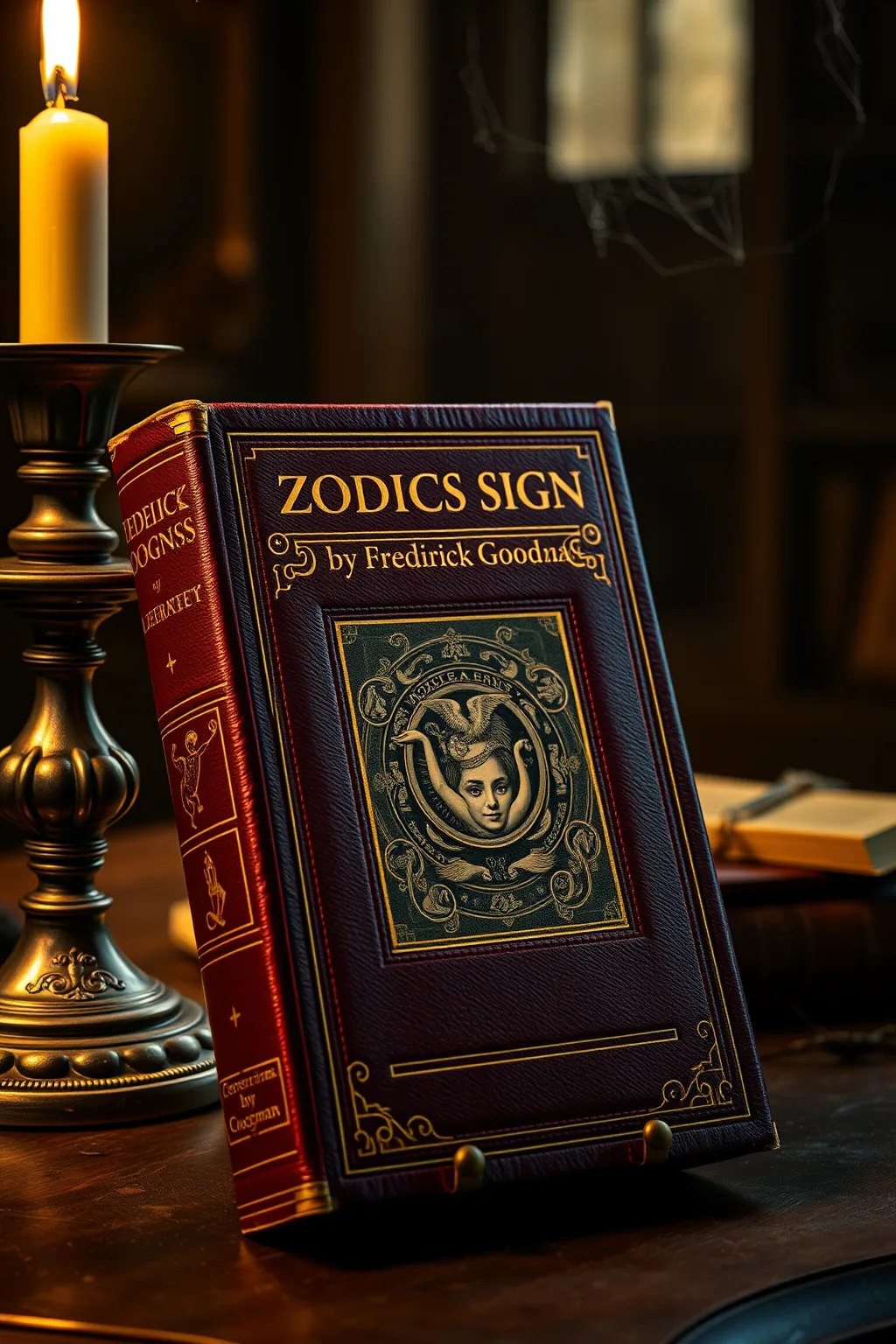
Frederick Goodman's "Zodiac Signs" examines the twelve constellations, moving beyond astrology to their deeper mythological and historical roots.
Published by Frederick Goodman, "Zodiac Signs" delves into the twelve constellations that define the zodiac. The book moves past simple astrological meanings to uncover the rich mythological and historical foundations of these celestial markers. Goodman traces their origins not merely as astrological aids, but as ancient frameworks for understanding the universe and humanity's place within it. The author presents a scholarly yet accessible look at the subject, detailing how these patterns acquired meaning over time.
The work situates the zodiac within its historical development, showing how various ancient cultures recognized and interpreted these constellations. It covers their use in early calendars, navigation, and religious customs. The text highlights the shift from pure astronomical observation to symbolic and divinatory uses. Goodman unpacks specific mythological stories tied to each of the twelve zodiacal constellations, such as the legends of Aries, Taurus, and Gemini. The book also discusses the astronomical phenomenon of precession and its long term effect on the perceived alignment of zodiac signs. It addresses the philosophical ideas connecting celestial movements to earthly occurrences.
This book situates the zodiac within a tradition that views celestial bodies as significant, not just for their physical properties but for their symbolic and divinatory meanings. It connects to ancient cosmological systems that sought to understand human affairs through the patterns of the stars. Goodman's work touches upon how these astronomical observations became intertwined with mythology and philosophy, forming a complex system of interpretation that has persisted through centuries and influenced various esoteric practices.
💡 Why Read This Book?
• Understand the mythological narratives underpinning each zodiac sign, moving beyond modern interpretations to grasp the ancient stories of figures like the Pleiades, as discussed in the chapter on Taurus. • Learn about the astronomical shifts, such as the discovery of precession, that influenced how the zodiac was understood and applied across different eras. • Gain insight into the historical development of the zodiac, recognizing its origins not just in astrology but also in early calendrical and navigational systems used by ancient civilizations.
⭐ Reader Reviews
Honest opinions from readers who have explored this book.
❓ Frequently Asked Questions
What is the primary focus of Frederick Goodman's "Zodiac Signs"?
The book's primary focus is on the mythological and historical dimensions of the twelve zodiac constellations, exploring their ancient origins and the stories associated with them, rather than just modern astrological applications.
Does "Zodiac Signs" cover the astronomical basis of the zodiac?
Yes, Goodman's work addresses the astronomical realities that underpin the zodiac, including concepts like the ecliptic plane and the impact of celestial movements over time.
What kind of mythological content can I expect in this book?
Readers can expect detailed explorations of the myths connected to specific constellations and figures, such as the legends associated with Aries or Gemini, providing historical context for their symbolic meaning.
Is this book suitable for beginners in astrology?
It is suitable for beginners who are interested in the historical and mythological foundations of astrology, offering a more academic perspective than typical introductory guides.
When was Frederick Goodman's "Zodiac Signs" first published?
Frederick Goodman's "Zodiac Signs" was first published in 1990, providing a look at the subject matter from a late 20th-century academic viewpoint.
What makes this book different from other books on zodiac signs?
Unlike many popular astrology books, "Zodiac Signs" emphasizes historical and mythological research, exploring the deep roots of constellation symbolism rather than focusing solely on personality traits or predictions.
🔮 Key Themes & Symbolism
Mythological Constellation Origins
Goodman meticulously traces the ancient myths and legends woven into the fabric of the twelve zodiacal constellations. This theme moves beyond simple astrological associations to explore the narrative archetypes that early cultures projected onto the stars. For example, the book likely discusses the hero myths or divine figures that early astronomers linked to the patterns of stars forming constellations like Orion or Hercules, providing a collection of human storytelling embedded in the cosmos from antiquity.
Historical Astronomy and Calendrics
This theme examines the zodiac not just as an astrological tool but as a fundamental component of ancient astronomy and timekeeping. Goodman explores how constellations were used to mark seasons, guide agriculture, and develop early calendars. The work likely details how cultures like the Babylonians or Egyptians observed celestial movements to establish their yearly cycles, highlighting the practical and scientific applications of zodiacal knowledge long before its widespread divinatory use.
Symbolic Evolution of Zodiacal Signs
The text addresses how the symbolic meaning attributed to each zodiacal sign has evolved over millennia. It investigates the transition from astronomical observation to the development of complex astrological systems. Goodman likely discusses how concepts like precession, the slow wobble of Earth's axis, altered the perceived alignment of constellations with seasons, influencing the symbolic interpretations assigned to signs like Aries or Pisces over vast historical periods.
Cosmological Worldviews
This theme explores the broader cosmological frameworks within which the zodiac operated in ancient societies. It explores how understanding the celestial order, particularly the sun's apparent path through the zodiac, informed a culture's understanding of divine order, human destiny, and the interconnectedness of the cosmos. Goodman likely examines how these stellar patterns were seen as reflecting or influencing earthly events and human character.
💬 Memorable Quotes
Direct passages from the work, attributed to the author.
“The twelve signs were not merely arbitrary divisions but were tied to distinct mythological cycles.”
— This statement highlights Goodman's central thesis: that the zodiac's power and meaning stem from the deep-rooted stories and archetypes associated with each constellation, connecting ancient narratives to celestial patterns.
“Early astronomical observation was intrinsically linked to narrative and divine understanding.”
— This interpretation underscores that ancient stargazing was not purely scientific but deeply interwoven with mythology and religious belief, shaping how humans perceived their place in the universe.
“The symbolic weight of a constellation could shift with astronomical discoveries like precession.”
— This points to the dynamic nature of zodiacal interpretation, acknowledging that scientific understanding of celestial mechanics, such as the slow shift of equinoxes, impacted the symbolic meanings assigned to the stars over time.
“The constellations provided a framework for understanding both the natural world and the human condition.”
— This suggests that the zodiac served a dual purpose in ancient societies: as a tool for observing and predicting natural phenomena and as a symbolic system for interpreting human psychology and destiny.
💡 Key Ideas
Editorial paraphrase of the work's core concepts — not direct quotes.
Understanding the zodiac requires acknowledging its historical development from calendrics to cosmology.
This paraphrased concept emphasizes that a comprehensive grasp of the zodiac necessitates examining its complex origins, encompassing practical uses like timekeeping as well as its role in shaping philosophical and spiritual worldviews.
🌙 Esoteric Significance
Tradition
Goodman’s work draws implicitly from the Western Esoteric Tradition, particularly its Hermetic and astrological branches. While not strictly a practitioner's manual, it provides the historical and mythological bedrock upon which esoteric astrological systems are built. It fits within a lineage of scholarship that seeks to understand the symbolic language of the cosmos, echoing efforts from Renaissance astrologers to modern scholars of esotericism who trace the lineage of astrological concepts back to ancient Mesopotamia and Greece.
Symbolism
Key symbols explored include the individual zodiacal animals and figures (e.g., the Ram for Aries, the Bull for Taurus), representing primal forces and archetypal energies. The book likely examines the celestial sphere itself, particularly the ecliptic, as a symbolic pathway connecting the earthly realm to the heavens. Furthermore, the concept of precession serves as a potent symbol of cosmic cycles, change, and the vastness of time, influencing humanity's perception of divine order.
Modern Relevance
Contemporary esotericists and astrologers often reference foundational historical texts to contextualize their practices. Goodman's book serves as a resource for those seeking to understand the mythological and astronomical origins of zodiacal archetypes, informing modern psychological astrology, archetypal studies, and even some forms of comparative religious scholarship that examine celestial mythologies.
👥 Who Should Read This Book
• Aspiring astrologers seeking to understand the historical and mythological underpinnings of the zodiac beyond basic interpretations. • Students of mythology and comparative religion interested in how ancient cultures used celestial patterns to explain the world and humanity's place in it. • Skeptics curious about the deep historical roots and astronomical basis of zodiacal systems, offering a factual counterpoint to purely speculative approaches.
📜 Historical Context
Published in 1990, Frederick Goodman's "Zodiac Signs" emerged during a period of renewed interest in esoteric studies and comparative mythology, following the counter-cultural shifts of the 1960s and 70s. This era saw popularization efforts in fields like Jungian psychology, which explored archetypes, and a resurgence of interest in ancient wisdom traditions. Goodman's work positioned itself against the backdrop of prevalent, often simplistic, astrological pop-culture, aiming for a more scholarly and historically grounded approach. He engaged with the legacy of figures like Ptolemy, whose "Tetrabiblos" from the 2nd century CE was a foundational text in Western astrology, and implicitly contrasted his work with the more mystical interpretations found in Theosophy, a prominent esoteric movement of the late 19th and early 20th centuries. The book sought to provide an academic anchor for understanding the zodiac's deep historical roots.
📔 Journal Prompts
The mythological narratives of Aries, as presented in the text, and their connection to primal energy.
The historical use of constellations for calendrical purposes, and its implications for understanding ancient societies.
The concept of precession and its impact on the symbolic interpretation of zodiacal signs.
The specific myths associated with the constellation Taurus, and their potential archetypal resonance.
The transition from astronomical observation to symbolic astrological meaning discussed in the book.
🗂️ Glossary
Zodiac
A band of the celestial sphere, divided into twelve equal parts, through which the Sun, Moon, and planets appear to move. Historically significant for astrology and ancient astronomy.
Constellation
A group of stars forming a recognizable pattern that is traditionally named after its apparent form or identified with a mythological figure or object.
Ecliptic
The apparent path of the Sun across the celestial sphere over the course of a year. It is the basis for the zodiacal divisions.
Precession
The slow, conical wobble of Earth's axis, which causes the position of the vernal equinox to shift westward along the ecliptic by about 1 degree every 72 years.
Mythology
A collection of myths, especially one belonging to a particular religious or cultural tradition. In this context, referring to stories associated with celestial bodies.
Cosmology
The branch of astronomy concerned with the origin and evolution of the universe. In historical contexts, it refers to a society's understanding of the order of the universe.
Calendrics
The study or creation of calendars. Ancient calendars were often based on astronomical observations, including the positions of constellations.