Astrology and Divination
 74
74

Astrology and Divination
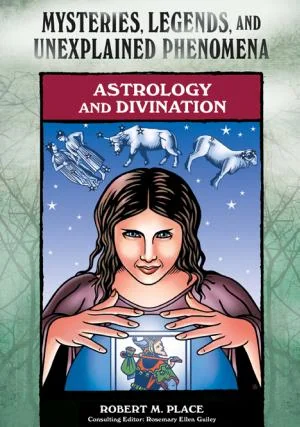
Robert Michael Place’s Astrology and Divination offers a robust scholarly examination of its subject, eschewing New Age platitudes for a more grounded historical and philosophical perspective. The author’s strength lies in his ability to connect disparate historical threads, demonstrating how astrological systems were integrated into worldview across centuries, from ancient Sumer to the Renaissance. A particularly illuminating section details the symbolic correspondence between planets and their perceived influences, treating them as personified forces rather than mere astronomical bodies. However, the book occasionally struggles with accessibility; its dense prose and academic tone might deter readers seeking a more practical, introductory guide to divination. While the exploration of historical usage is thorough, the direct application of these concepts to contemporary practice remains somewhat underdeveloped. Despite this, the work remains a valuable resource for understanding the intellectual and spiritual underpinnings of astrological thought.
📝 Description
74
Robert Michael Place's 2005 book examines astrology beyond simple horoscopes.
Astrology and Divination analyzes the connections between celestial movements and human destiny. It moves past basic horoscopes to examine the complex symbolic language of the stars as it was understood in various historical and esoteric traditions. Place views astrological charts not just as tools for prediction, but as detailed representations of cosmic forces and psychological archetypes. This work is for those seriously interested in esoteric philosophy, practicing astrologers needing a more robust theoretical understanding, and historians of religion and occultism. It attracts individuals who see divination as a way to understand universal patterns and one's place within them, rather than simple fortune-telling. A prior interest in symbolism and comparative mythology is helpful.
The book places its study of astrology within larger historical movements of divination. It traces its origins from ancient Mesopotamia and Egypt, through Hellenistic Greece and the medieval Islamic world. Place acknowledges the long history of celestial observation tied to spiritual and philosophical thought, a practice that existed before astronomy and astrology became separate fields. The book also mentions the Renaissance period's renewed interest in esoteric arts and their later decline.
This book engages with the concept of 'divine science,' the idea that the cosmos follows intelligent principles discoverable through symbolic systems. It explores how traditions from ancient Mesopotamia through the Renaissance viewed celestial observation as intertwined with spiritual and philosophical inquiry. Place connects astrological charts to maps of cosmic energies and psychological archetypes, emphasizing symbolic interpretation over purely mechanical readings. The work acknowledges a lineage of esoteric thought that predates the modern scientific split between astronomy and astrology.
💡 Why Read This Book?
• Understand the historical evolution of astrology from ancient civilizations to the Renaissance, grasping its role as a 'divine science' rather than mere prediction, a perspective detailed in the 'Historical Context' section. • Explore the symbolic language of celestial bodies, learning how planets and zodiacal archetypes function as profound maps of cosmic energies and psychological forces, as presented in the 'Key Concepts' section. • Gain insight into the esoteric traditions that view divination as a method for discerning universal patterns, moving beyond simplistic fortune-telling to a deeper philosophical inquiry.
⭐ Reader Reviews
Honest opinions from readers who have explored this book.
❓ Frequently Asked Questions
When was Robert Michael Place's Astrology and Divination first published?
Astrology and Divination by Robert Michael Place was first published in 2008. This edition provides a comprehensive overview of the subject's historical and philosophical dimensions.
What is the primary focus of Astrology and Divination?
The book focuses on the interconnectedness of celestial mechanics and human fate, examining astrological systems as symbolic languages of cosmic energies and psychological archetypes, rather than just predictive tools.
Does Astrology and Divination cover modern astrological practices?
While the book delves deeply into historical and esoteric traditions, its primary emphasis is on the foundational concepts and historical evolution of astrology, with less direct focus on contemporary practical application.
Who is Robert Michael Place?
Robert Michael Place is an author and scholar known for his work on esoteric traditions, mythology, and symbolism, particularly in relation to ancient cultures and their spiritual practices.
What historical periods are discussed in Astrology and Divination?
The book traces astrological thought from ancient Mesopotamia and Egypt, through Hellenistic Greece and the medieval Islamic world, to the Renaissance revival of esoteric arts.
Is Astrology and Divination suitable for beginners?
The book offers a scholarly and in-depth examination. While accessible to dedicated beginners interested in the philosophical underpinnings, it is best suited for those with a serious interest in esoteric studies or history.
🔮 Key Themes & Symbolism
Celestial Mechanics as Symbolic Language
This theme explores how astrological configurations are interpreted not as deterministic causal chains but as a rich symbolic language. Place examines the historical understanding of planets, signs, and houses as potent archetypes and energetic forces that mirror psychological states and cosmic principles. The work emphasizes that the 'meaning' of a celestial event lies in its symbolic resonance rather than a literal, physical effect, drawing parallels to ancient mythologies and philosophical systems.
The Divine Science Tradition
Place situates astrology within the broader concept of a 'divine science,' an intellectual and spiritual current that views the cosmos as an ordered, intelligent system. This perspective posits that understanding celestial movements offers a pathway to comprehending divine order and humanity's place within it. The book traces this tradition through various cultures, highlighting how divination was integrated into religious, philosophical, and political life before the modern era.
Historical and Cultural Evolution of Divination
The book provides a comprehensive overview of how divination practices, particularly astrology, have evolved across different civilizations. It details the transmission of knowledge from Mesopotamian and Egyptian cultures through Greek, Roman, and Islamic scholars, culminating in its re-emergence during the European Renaissance. This historical lens reveals the shifting societal roles and interpretations of celestial observation and prophecy over millennia.
Planetary Intelligences and Archetypes
A core concept is the understanding of planets as 'intelligences' or personified archetypes rather than inert celestial bodies. Place investigates how these planetary figures, such as Mars representing will or Venus representing harmony, were conceived as active forces influencing the terrestrial realm and human psyche. This approach underscores the psychological and mythological dimensions inherent in traditional astrology.
💬 Memorable Quotes
Direct passages from the work, attributed to the author.
“The cosmos operates according to intelligent principles accessible through symbolic systems.”
— This interpretation highlights the book's central thesis: that the universe is not chaotic but governed by discernible, albeit symbolic, laws. It suggests that understanding these principles, particularly through esoteric disciplines like astrology, allows one to perceive a deeper order.
“Planetary configurations are maps of cosmic energies and psychological archetypes.”
— This interpretation stresses the symbolic and psychological utility of astrology. It suggests that celestial charts function as mirrors reflecting both universal forces and the inner field of the human psyche, offering a framework for self-understanding.
“Divination is a method for discerning universal patterns, not just predicting future events.”
— This interpretation frames divination as a philosophical tool for cosmic comprehension. It distinguishes the practice from simple prognostication, emphasizing its role in revealing underlying order and one's connection to it.
💡 Key Ideas
Editorial paraphrase of the work's core concepts — not direct quotes.
Astrology was seen as a divine science, a way to read the mind of God.
This paraphrase emphasizes the sacred and intellectual role astrology played historically. It positions the practice not as mere fortune-telling but as a profound philosophical and theological pursuit, aimed at understanding divine will and cosmic structure.
The zodiacal archetypes offer a symbolic language for understanding universal patterns.
This paraphrase focuses on the archetypal nature of the zodiac. It suggests that the signs and their associated imagery provide a universal symbolic vocabulary that transcends specific cultures, enabling insight into enduring patterns of existence.
🌙 Esoteric Significance
Tradition
This work is deeply embedded within the Western Esoteric Tradition, particularly drawing from Hermetic, Neoplatonic, and Kabbalistic streams of thought that informed Renaissance magical philosophy. It views astrology not as a mere predictive science but as a symbolic language reflecting a divinely ordered cosmos, a perspective common in these lineages. Place’s approach aligns with the idea of correspondence between the macrocosm and the microcosm, a foundational tenet of Hermeticism.
Symbolism
Key symbols include the planetary intelligences, conceived as active spiritual forces, and the zodiacal archetypes, which represent fundamental patterns of existence. The book interprets the houses of the astrological chart as distinct spheres of life experience that are ritually mapped by celestial configurations. These symbols are presented as a unified language for understanding the divine order and one's place within it.
Modern Relevance
Contemporary thinkers and practitioners in fields like depth psychology (especially Jungian), comparative mythology, and symbolic studies find value in Place's rigorous exploration of astrological symbolism. His work informs modern approaches to archetypal astrology and the use of symbolic systems for personal growth and understanding the human condition, bridging historical concepts with contemporary esoteric thought.
👥 Who Should Read This Book
• Students of Western Esotericism: Those seeking to understand the historical and philosophical underpinnings of astrological traditions within Hermetic and Renaissance magical contexts. • Comparative Religion Scholars: Individuals interested in how celestial observation and divination have been integrated into diverse worldviews throughout history. • Aspiring Astrologers: Practitioners who wish to move beyond basic chart interpretation to a deeper appreciation of the symbolic and philosophical dimensions of astrology.
📜 Historical Context
Published in 2008, Robert Michael Place's Astrology and Divination arrived at a time when interest in esotericism was re-emerging, often outside mainstream academic circles. The book emerged within a landscape influenced by figures like Frances Yates, whose scholarship on Renaissance magic and hermeticism had already re-contextualized these practices as significant intellectual currents. Place's work engages with the long history of astrology, tracing its lineage from Babylonian astronomical records and Hellenistic developments to its integral role in medieval Islamic scholarship and its resurgence during the European Renaissance. It implicitly counters the purely materialistic or dismissive views prevalent in some scientific discourse by presenting astrology as a complex symbolic system with deep philosophical roots. The book's reception likely resonated with scholars and practitioners seeking a rigorous, historically informed perspective, distinguishing itself from more recent, often less academic, popularizations of astrological concepts.
📔 Journal Prompts
The concept of 'divine science' and its historical manifestations.
The symbolic representation of planetary intelligences in ancient and medieval thought.
How Hellenistic astrological developments influenced later esoteric traditions.
The role of the zodiacal archetypes in mapping human experience.
Connecting the historical use of divination to contemporary understandings of symbolic systems.
🗂️ Glossary
Divine Science
A historical and philosophical concept viewing the cosmos as an ordered, intelligent system whose principles can be understood through symbolic disciplines like astrology, revealing a divine order.
Planetary Intelligences
In traditional astrology and esoteric thought, planets are often seen not just as astronomical bodies but as active spiritual forces or intelligences influencing the terrestrial realm and human psyche.
Zodiacal Archetypes
The twelve signs of the zodiac are understood as fundamental patterns or symbolic figures that represent distinct energies, character types, and stages of cosmic or psychological development.
Hellenistic Astrology
The astrological system that developed in the Greco-Roman world from roughly the 2nd century BCE to the 7th century CE, synthesizing Babylonian and Egyptian influences with Greek philosophy.
Hermeticism
A philosophical and religious tradition based on writings attributed to Hermes Trismegistus, emphasizing divine wisdom, correspondence between macrocosm and microcosm, and the pursuit of spiritual knowledge.
Esoteric
Relating to or accessible only by a small number of people with a specialized knowledge or interest; often pertaining to mystical, occult, or spiritual traditions.
Divination
The practice of seeking knowledge of the future or the unknown by supernatural means, often through symbolic systems like astrology, tarot, or scrying.
🔮 Readers Also Liked
Browse all →








More by Robert Michael Place
All books →


More Free Divination & Tarot Books
View all →