Children's Illustrated Book of Tarot
 61
61

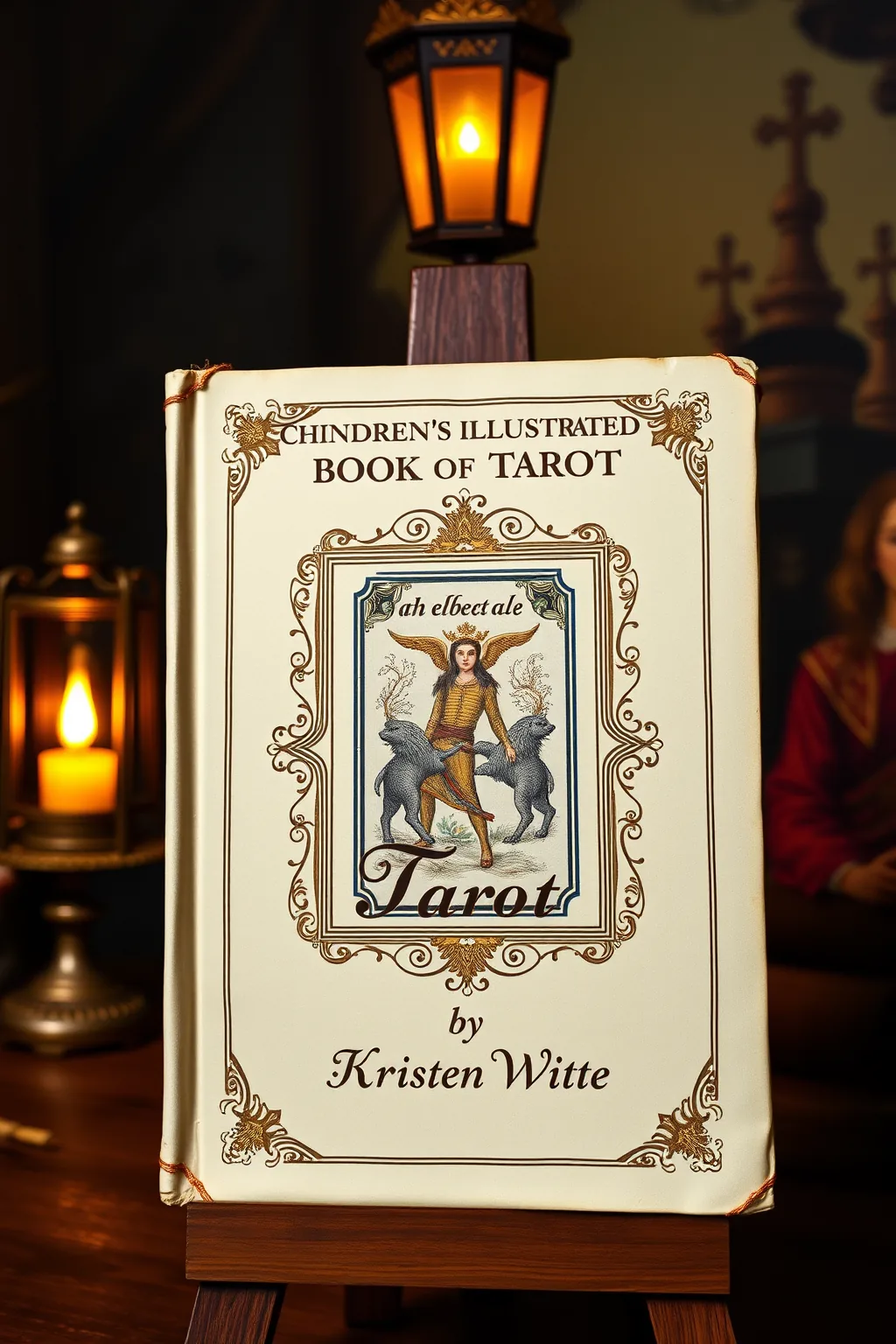
Children's Illustrated Book of Tarot



Marcus Thorne (Esoteric Sciences Reviewer) — Kristen Witte's 'Children's Illustrated Book of Tarot' is a remarkable achievement, bridging the gap between esoteric complexity and youthful accessibility. Witte masterfully distills the profound symbolism of the Tarot into engaging narratives, emphasizing its psychological depth over simplistic prognostication. The illustrations are not merely decorative but integral to conveying the archetypal energies, making this a valuable primer for anyone, regardless of age, seeking to understand Tarot's spiritual and philosophical underpinnings. It’s a rare gem that respects the mystical tradition while making it approachable, fostering intuitive development and a lifelong appreciation for this ancient art. Highly recommended for budding practitioners and curious minds.
📝 Description
61
Kristen Witte's 2019 'Children's Illustrated Book of Tarot' simplifies complex card meanings for young audiences.
Published in 2019, Kristen Witte's book presents the Tarot to children through clear language and illustrations. It aims to make the symbolism of the 78 cards understandable without focusing on fortune-telling. Instead, the book frames the Tarot as a tool for self-reflection and understanding personal experiences. Each card’s imagery is explained to connect with common themes in life and human psychology. Witte uses her art and writing to show how the cards relate to each other, encouraging readers to think about their own intuition and inner world. The book intends to introduce the Tarot system in a straightforward and engaging way that sparks thought and personal discovery.
This volume covers the Major and Minor Arcana, explaining the individual meanings of cards like The Fool, The Magician, and The High Priestess, as well as the suits of Wands, Cups, Swords, and Pentacles. It discusses basic interpretations associated with each card, such as new beginnings for The Fool or creativity for The Magician. The illustrations are designed to highlight the core symbolism of each card, making them easier for children to grasp. The text avoids complex jargon, opting for simple descriptions of the archetypal figures and scenes depicted.
This book enters the esoteric tradition by presenting the Tarot not as a predictive device, but as a symbolic system for psychological insight. It aligns with modern interpretations of Tarot that emphasize its use as a mirror for the inner self, similar to how Carl Jung viewed archetypes. By simplifying these concepts for a younger audience, Witte connects the Tarot to broader ideas of personal growth and understanding universal human patterns. The book draws on the historical use of Tarot imagery as a visual language for spiritual and philosophical concepts.
💡 Why Read This Book?
Discover the mystical language of the Tarot through enchanting illustrations and accessible explanations. This book is an ideal starting point for young seekers and adults alike, fostering intuition and self-discovery. It unveils the rich symbolism and psychological insights embedded within each card, offering a gentle yet profound introduction to a timeless esoteric tradition. Perfect for those curious about divination, archetypes, and the journey of the soul.
⭐ Reader Reviews
Honest opinions from readers who have explored this book.
❓ Frequently Asked Questions
Is this book only for children?
While designed with younger readers in mind, its clarity and depth make it equally valuable for adults beginning their Tarot journey or seeking a fresh perspective on familiar symbolism.
Does this book teach fortune-telling?
The book focuses on understanding the archetypal meanings and psychological insights of the Tarot, encouraging self-reflection and intuition rather than deterministic fortune-telling.
What age is appropriate for this book?
The content is generally suitable for children aged 8 and up, with the engaging visuals and straightforward explanations appealing to a broad range of ages interested in symbolism and introspection.
What makes this Tarot book unique?
Its unique strength lies in its ability to translate complex esoteric concepts into simple, visual narratives, fostering an intuitive understanding of Tarot symbolism and its psychological applications.
Can this book be used for personal development?
Absolutely. By exploring the archetypes and their meanings, readers can gain profound insights into their own inner world, challenges, and potential, making it a powerful tool for personal growth.
🔮 Key Themes & Symbolism
The Archetypal Journey
This theme looks at the core concept of the Tarot as a representation of the universal human journey. It explores how each card embodies specific archetypes – the Hero, the Wise Old Man, the Shadow – and how these figures and their narratives reflect the stages of personal growth, transformation, and the challenges inherent in the human experience. The book illustrates how these archetypes, when understood, can provide clear insights into our own lives and decisions, acting as a symbolic map for navigating life's complexities. It emphasizes the interconnectedness of these archetypes and their role in shaping our understanding of ourselves and the world around us.
Symbolism as a Universal Language
The book illuminates the power of symbolism as a language that transcends spoken words and cultural barriers. It unpacks the rich visual vocabulary of the Tarot, revealing how colors, numbers, figures, and objects within each card carry layers of meaning. Readers are encouraged to develop their own intuitive interpretations, fostering a deeper connection to the subconscious and the subtle energies of the universe. This theme highlights how understanding these symbols can unlock hidden knowledge, providing guidance and clarity on personal paths. It's an exploration of how visual storytelling serves as a conduit to esoteric truths.
Tarot as a Mirror for Self-Discovery
This central theme positions the Tarot not as a predictive tool, but as a profound psychological and spiritual mirror. The book guides readers to use the cards as a means of introspection, self-awareness, and personal development. By examining the reflections presented by the Tarot, individuals can gain clarity on their motivations, fears, desires, and potential paths forward. It emphasizes the therapeutic and empowering nature of engaging with Tarot, encouraging a dialogue between the conscious mind and the intuitive wisdom of the soul, ultimately fostering a journey of self-discovery and inner empowerment.
💬 Memorable Quotes
Direct passages from the work, attributed to the author.
“Each image whispers a secret of the universe.”
— This poetic line underscores the profound symbolic depth of Tarot imagery, suggesting that even the simplest illustration holds esoteric knowledge waiting to be deciphered by the intuitive reader.
“See yourself in the High Priestess's veil.”
— This suggests that the enigmatic High Priestess represents intuition, hidden knowledge, and the subconscious, inviting the reader to look within for inner truths and deeper wisdom.
💡 Key Ideas
Editorial paraphrase of the work's core concepts — not direct quotes.
The cards are not fortune tellers, but storytellers of your soul.
This quote emphasizes the Tarot's role as a narrative tool for self-exploration, highlighting its capacity to reveal inner truths and potential rather than dictating external events.
The Fool's leap is the beginning of all wisdom.
This quote speaks to the importance of courage, innocence, and embracing the unknown as foundational elements for spiritual growth and the acquisition of profound understanding.
The Wheel turns, but your spirit remains.
This quote points to the cyclical nature of life and change, while asserting the enduring essence of the individual spirit that navigates these transformations.
🌙 Esoteric Significance
Tradition
This book draws heavily from the Western Esoteric Tradition, particularly the Hermetic and Kabbalistic influences that have shaped Tarot interpretation for centuries. It aligns with the notion of Tarot as a 'key' to understanding the universe and the human psyche, echoing the principles of correspondence and symbolic language found in these ancient systems. The archetypes presented are deeply rooted in universal mythologies and spiritual journeys, reflecting a lineage of seekers aiming to understand the divine within and without.
Symbolism
The core of the book's esoteric significance lies in its exploration of Tarot symbolism. Each card is presented as a richly layered symbol, encapsulating profound concepts. From the Major Arcana's depiction of life's grand cycles and archetypal figures (The Fool's innocence, The Magician's will) to the Minor Arcana's mirroring of daily experiences and elemental forces, the book reveals how these symbols act as a universal language. It touches upon numerology, elemental correspondences, and the visual narratives that unlock deeper meanings, guiding readers towards intuitive understanding.
Modern Relevance
In an age often characterized by rapid change and information overload, the Tarot offers a grounding anchor for introspection and self-awareness. Kristen Witte's 'Children's Illustrated Book of Tarot' makes this timeless wisdom accessible, demonstrating its relevance for personal growth, emotional intelligence, and intuitive development. The book bridges the gap between ancient esoteric knowledge and contemporary psychological understanding, showing how Tarot can be a powerful tool for navigating modern challenges, fostering creativity, and cultivating a deeper connection to one's inner life and the subtle energies that shape our reality.
👥 Who Should Read This Book
This enchanting book is a treasure for a diverse audience. **Beginners**, both young and old, will find it an accessible and inviting introduction to the mystical world of Tarot, clarifying its complex symbolism. **Parents and educators** seeking to introduce children to concepts of intuition, archetypes, and self-reflection will find it invaluable. **Spiritual seekers and practitioners** looking for a beautifully illustrated guide that emphasizes psychological depth and symbolic understanding over mere prediction will appreciate its thoughtful approach. **Scholars of esotericism** may find it a useful resource for understanding how complex concepts can be effectively communicated to a broader audience.
📜 Historical Context
The resurgence of interest in esoteric practices, including Tarot, in the late 19th and early 20th centuries, heavily influenced by figures like A.E. Waite and Pamela Colman Smith with their Rider-Waite-Smith deck, forms a crucial backdrop for understanding modern Tarot interpretation. This era saw a blending of occult traditions, Jungian psychology, and a desire to find deeper meaning beyond materialist perspectives. Witte's work, while presented accessibly for younger audiences, taps into this rich historical vein, acknowledging the Tarot's evolution from a simple card game to a sophisticated system of divination, psychology, and spiritual inquiry. It reflects a continued fascination with ancient wisdom and its application to contemporary life, making esoteric knowledge more approachable for a new generation.
📔 Journal Prompts
Which card's illustration most speaks to you today, and why?
If The Fool represents a new beginning, what 'leap' might you consider taking?
How does the symbolism of The Magician relate to your own creative powers?
What hidden knowledge might The High Priestess be inviting you to uncover within yourself?
Reflect on a time when you felt like The Hermit – what wisdom did you gain from solitude?
🗂️ Glossary
Arcana
Refers to the divisions of a Tarot deck, typically the Major Arcana (22 cards representing significant life events and archetypes) and the Minor Arcana (56 cards depicting everyday situations and elemental energies).
Archetype
A universal, primordial image or pattern of behavior that is part of the collective unconscious, often represented by figures or situations within the Tarot cards.
Divination
The practice of seeking knowledge of the future or the unknown by supernatural means, often through tools like Tarot cards, which are interpreted for guidance and insight.
Intuition
The ability to understand something immediately, without the need for conscious reasoning; a key faculty developed through Tarot reading.
Symbolism
The use of symbols to represent ideas and qualities, where visual elements in Tarot cards carry deeper meanings beyond their literal depiction, forming an esoteric language.
This book appears in 3 collections
🔮 Readers Also Liked
Browse all →

More by Kristen Witte
All books →
From the “Tarot” Collection
View all →
More Free Divination & Tarot Books
View all →