Astrology and Divination
 81
81

Astrology and Divination
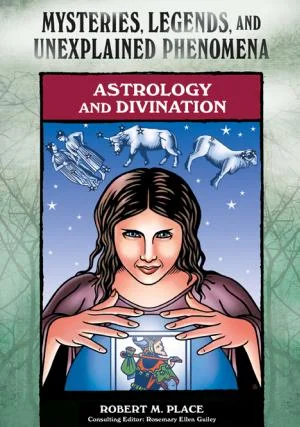
Robert Michael Place's "Astrology and Divination" serves as a foundational text, meticulously detailing a wide array of divinatory arts. Its strength lies in its encyclopedic breadth, moving from the well-trodden paths of astrology and Tarot to more obscure methods like augury and dice casting. Place's scholarly yet accessible approach grounds these practices in historical context, preventing them from appearing as mere esoteric curiosities. A notable passage, for instance, elucidates the geometric principles underlying certain forms of geomancy, a detail often overlooked. However, the sheer volume of information, while commendable, can occasionally lead to a lack of deep engagement with any single method, feeling more like an extended glossary at times. Despite this, the book offers a vital overview for anyone wishing to understand the landscape of divination. It is a solid reference for the serious student of esoteric history.
📝 Description
81
Robert Michael Place's 2008 book examines humanity's long history of seeking knowledge through divination.
Robert Michael Place's "Astrology and Divination" offers a thorough survey of divinatory practices, with a focus on astrology and the symbolic language of Tarot. The book examines the many methods humans have used to seek knowledge about the future or hidden truths. Place also covers a wide range of other divinatory techniques. These include dream interpretation, augury (reading omens from birds), the use of dice, the Chinese I Ching system, and palmistry.
This text is suitable for readers seriously interested in the history and mechanics of divination. It will appeal to students of esoteric traditions, historians of religion and culture, and practitioners wanting a deeper understanding of their craft's origins. Anyone curious about the psychological and cultural reasons for seeking foresight will find substantial material here. The book is especially helpful for those who want to move past basic understandings of astrological charts or Tarot spreads to grasp their historical and philosophical context.
This work situates divination within the broader context of humanity's historical engagement with hidden knowledge and symbolic systems. It acknowledges how these practices, from ancient Mesopotamia to contemporary times, have served as frameworks for meaning-making and understanding the cosmos. Place traces the evolution of these arts, noting their tendency to flourish during periods of change and questioning, and how they have consistently provided vital roles in both personal and collective life, often outside mainstream academic acceptance.
💡 Why Read This Book?
• Gain a broad historical perspective on divination, understanding its roots from ancient augury practices to its development alongside astrology and Tarot, providing context beyond mere fortune-telling. • Grasp the distinct methodologies of various divination systems, differentiating between cosmic correspondence in astrology, symbolic archetypes in Tarot, and chance-based systems like the I Ching as explored in the book. • Understand the cultural and psychological roles divination has played across centuries, appreciating its function in meaning-making and decision-making as detailed through historical examples presented in Place's work.
⭐ Reader Reviews
Honest opinions from readers who have explored this book.
❓ Frequently Asked Questions
What historical periods does Robert Michael Place cover in "Astrology and Divination"?
The book spans from ancient civilizations, such as Mesopotamia and Egypt, through classical Greece and Rome, up to the modern era, charting the evolution of divinatory practices across millennia.
Besides astrology and Tarot, what other divination methods are discussed?
Place examines a variety of methods including dream interpretation, augury (interpreting bird flight), dice casting, the I Ching, and palmistry, offering a wide survey of oracular arts.
Is "Astrology and Divination" suitable for beginners?
Yes, while it is scholarly, the book provides a comprehensive overview that serves as an excellent introduction for beginners curious about the history and diverse forms of divination.
What is the primary focus of the book regarding divination?
The book's primary focus is on providing an overview of divination's history and forms, with a special emphasis on the detailed examination of astrology and the Tarot.
Does the book explore the psychological aspects of divination?
While primarily historical and methodological, the book touches upon the psychological and cultural roles divination has played, particularly in how individuals and societies seek meaning and guidance.
When was "Astrology and Divination" first published?
The original publication date for "Astrology and Divination" by Robert Michael Place was 2009.
🔮 Key Themes & Symbolism
Symbolic Languages of Foresight
This theme centers on how diverse cultures have developed complex symbolic systems to glean insights beyond the mundane. Astrology, with its celestial correspondences, and Tarot, with its archetypal imagery, are prime examples. Place investigates how these systems function not just as predictive tools but as frameworks for understanding cosmic order and human psychology. The book explores the inherent human drive to find patterns and meaning, often through these structured symbolic languages, linking individual fate to universal principles.
The Historical Evolution of Oracles
Place meticulously traces the lineage of divinatory practices, from their ancient origins to their varied manifestations through the centuries. This includes examining how methods like augury, dream interpretation, and even lot-casting (like dice or I Ching) evolved and adapted across different societies and eras. The work highlights the consistent presence of these practices, even when challenged by dominant religious or scientific paradigms, underscoring their persistent appeal in the human quest for guidance and self-understanding.
Methodologies of Divination
A core aspect of the book is its detailed comparison of the different approaches employed in divination. It distinguishes between systems based on cosmic influence (astrology), interpretation of visual symbols (Tarot), and reliance on chance or synchronicity (dice, I Ching). By dissecting these varied methodologies, Place offers readers a nuanced understanding of how each system claims to access hidden knowledge, acknowledging both their theoretical underpinnings and practical applications.
Divination as a Cultural Mirror
The book implicitly argues that the prevalence and form of divinatory practices often reflect the cultural anxieties, beliefs, and aspirations of a given society. Examining methods like augury in Roman society or the philosophical underpinnings of the I Ching in ancient China reveals much about their respective worldviews. Place shows how these practices served vital social and psychological functions, acting as a means to navigate uncertainty, confirm decisions, and reinforce collective identities.
💬 Memorable Quotes
Direct passages from the work, attributed to the author.
“Divination encompasses methods ranging from interpreting celestial patterns to reading the flight of birds.”
— This statement expresses the vast scope of the book, highlighting the spectrum of techniques Place examines. It emphasizes that divination is not monolithic but a diverse field with varied origins and approaches, from the cosmic to the seemingly mundane.
“The Tarot functions as a symbolic language for archetypal energies.”
— This interpretation moves beyond viewing Tarot solely as a card game or simple fortune-telling tool. It frames the Tarot as a sophisticated system of visual symbols that communicate profound psychological and spiritual concepts, aligning with Jungian archetypes.
“Dreams have historically served as a source of divine messages or subconscious insights.”
— This interpretation addresses the inclusion of dream analysis within the broader context of divination. It acknowledges the dual role dreams have played across cultures: as potential divine communications or as windows into the individual's own psyche.
“The I Ching utilizes chance operations to reveal patterns and guidance.”
— This concept highlights the unique methodology of the I Ching, differentiating it from purely interpretive or astrological systems. It points to the use of random elements, like hexagram generation, as a means to access timely wisdom and insights.
💡 Key Ideas
Editorial paraphrase of the work's core concepts — not direct quotes.
Astrology posits a correspondence between celestial events and earthly occurrences.
This paraphrased concept explains the fundamental principle of astrology as presented in the book. It suggests a cosmic order where the movements of planets and stars are not random but are intrinsically linked to human lives and world events.
🌙 Esoteric Significance
Tradition
The work fits within the broad tradition of Western Esotericism, particularly the study of Hermeticism and Renaissance occult philosophy, which saw astrology and various forms of divination as integral to understanding the cosmos. Place's approach is scholarly, aiming to provide a historical and methodological overview rather than advocating for a specific practice. It departs from purely devotional or dogmatic presentations by focusing on the historical development and comparative analysis of different oracular systems.
Symbolism
Key symbols explored include the celestial bodies in astrology, representing cosmic influences and archetypal forces, and the archetypal imagery within the Tarot cards, such as The Fool or The High Priestess, which serve as visual metaphors for spiritual journeys and psychological states. The book also touches upon the symbolism of chance and pattern found in systems like the I Ching, where hexagrams are seen as representations of universal processes and situations.
Modern Relevance
Contemporary practitioners of astrology and Tarot, as well as scholars of religion and cultural studies, continue to draw on works like Place's for historical context and methodological understanding. The book's detailed survey informs modern approaches to these ancient arts, encouraging a more historically aware and philosophically grounded practice, moving beyond simplistic interpretations often found in popular media.
👥 Who Should Read This Book
• Students of comparative religion and cultural history seeking to understand the role of divination across different societies and eras. • Aspiring astrologers and Tarot practitioners who wish to ground their studies in a comprehensive historical and theoretical framework beyond introductory guides. • Skeptics or curious individuals interested in the psychology and sociology behind humanity's enduring quest for foresight and meaning through oracular methods.
📜 Historical Context
Robert Michael Place's "Astrology and Divination," first published in 2009, emerged during a period of renewed academic and popular interest in esoteric traditions, often termed the 'occult revival' which saw significant momentum from the late 20th century onwards. The work situates itself within a lineage of scholarship that seeks to understand divination not merely as superstition but as a culturally significant phenomenon. It implicitly engages with a long tradition of divinatory practice, contrasting with the rationalist skepticism prevalent since the Enlightenment. While not directly engaging in polemics, the book implicitly counters reductionist views by presenting the historical breadth and philosophical underpinnings of these arts. It follows in the footsteps of earlier comprehensive works on divination, such as those by scholars like Patrick Curry, who also explored the historical persistence of magical and divinatory beliefs in the modern West.
📔 Journal Prompts
The symbolic language of Tarot cards, such as The Fool, and their potential meanings.
The historical development of augury and its place in ancient societies.
The concept of celestial correspondence in astrological traditions.
The role of synchronicity in divination as explored in the text.
The I Ching's method of using chance operations for insight.
🗂️ Glossary
Augury
An ancient practice of divination, particularly prominent in Roman culture, that involved interpreting the flight, behavior, and calls of birds to understand divine will or predict future events.
Tarot
A deck of cards, typically containing 78 cards, used for divination and as a tool for exploring psychological states and spiritual insights through symbolic imagery.
I Ching
An ancient Chinese divination text and the oldest of the Chinese classics, revered as a source of wisdom. It uses a system of hexagrams generated by chance to provide guidance.
Palmistry
A divinatory practice involving the study of the palm of the hand, including its lines, mounts, and shape, to interpret character and predict future events or life patterns.
Oracular
Relating to an oracle, or a person or agency considered to be a source of wise counsel or prophetic predictions inspired by a deity or supernatural power.
Synchronicity
A concept coined by Carl Jung, referring to the occurrence of two or more events that appear meaningfully related but have no discernible causal connection; often considered significant in divination.
Geomancy
A form of divination that involves interpreting patterns formed by tossing soil, sand, or small stones, or by drawing marks on a surface, often based on mathematical or geometric principles.
This book appears in 1 collection
🔮 Readers Also Liked
Browse all →








From the “Divination” Collection
View all →







More Free Astrology & Cosmology Books
View all →![Mr. Patridge's [sic] judgement and opinion of this frost. Foretelling how long it is like to continue, according to the rules of astrology. ... 1709](/img/thumb/mr-patridge-s-sic-judgement-and-opinion-of-this-frost-foretelling-how-long-it-is-like-to-continue-according-to-the-rules-of-astrology-1709-patridge-mr.webp)