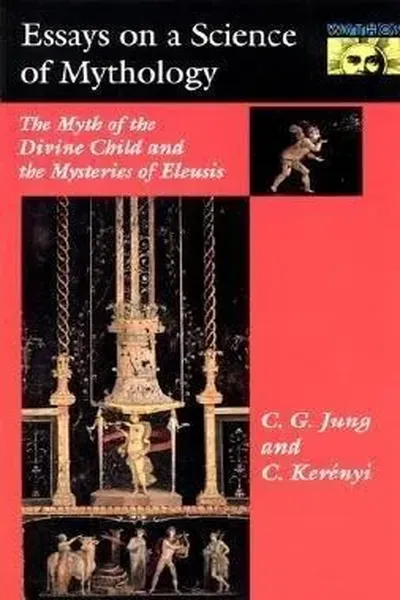
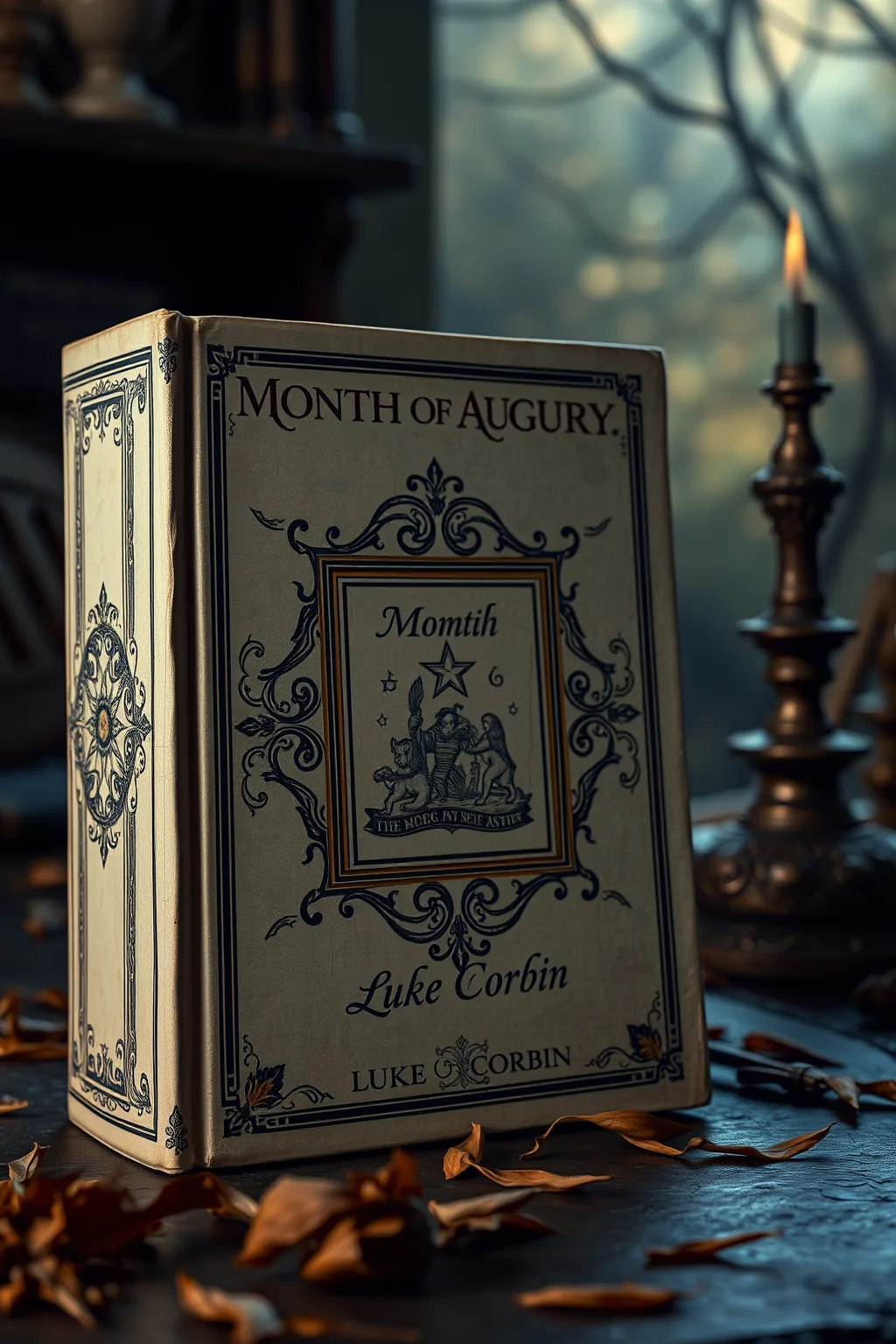
Month of Augury
 61
61

Month of Augury



Alaric Kestrel, Metaphysical Studies Reviewer: Luke Corbin's 'Month of Augury' is a luminous work that captivates the discerning reader with its profound engagement with esoteric principles. The novel skillfully navigates the complexities of divination, imbuing its characters and plot with an authentic sense of mystical resonance. Corbin’s prose is both elegant and evocative, drawing the reader into a world where the patterns of fate are not merely observed but actively felt. This book is a rare gem, offering profound insights into the interconnectedness of all things for those who seek deeper meaning beyond the superficial. An essential read for students of occult philosophy and practitioners of the divinatory arts.
📝 Description
61
Luke Corbin's 'Month of Augury' examines how celestial events align with human fortune.
Published in 2021, Luke Corbin's 'Month of Augury' is a novel that focuses on the practice of augury, the interpretation of omens. The narrative unfolds within a world where signs from the heavens directly influence earthly events and individual destinies. Corbin structures the plot around specific astronomical configurations and their perceived correlations with human actions and outcomes.
The book's characters grapple with questions of free will against the backdrop of a universe that appears to operate according to predetermined celestial cycles. It depicts a reality where the natural and supernatural intertwine, with psychic phenomena and hidden knowledge playing significant roles. Readers encounter a system where understanding these cosmic signals is key to comprehending one's place and purpose.
This work is situated within traditions that seek meaning in celestial phenomena, such as astrology and various forms of divination that interpret signs and portents. It draws upon the historical practice of augury, where priests or seers would observe bird flight, entrails, or other natural events to understand divine will or predict the future. The novel engages with the idea that the cosmos holds a patterned language that can be deciphered to gain insight into human affairs and the underlying order of existence.
💡 Why Read This Book?
Embark on a journey where the ordinary yields to the extraordinary. 'Month of Augury' offers a unique blend of gripping fantasy and profound metaphysical inquiry. Ideal for seekers of hidden knowledge, scholars of symbolism, and practitioners of divination, this novel illuminates the subtle art of reading the universe's signs. Discover how ancient wisdom can inform modern understanding and unlock the secrets whispered by the cosmos.
⭐ Reader Reviews
Honest opinions from readers who have explored this book.
❓ Frequently Asked Questions
What is the primary genre of 'Month of Augury'?
While rooted in fiction and fantasy, 'Month of Augury' deeply explores themes of divination, prophecy, and esoteric philosophy, making it a rich read for those interested in metaphysical literature.
Does the book require prior knowledge of divination?
No, the book is accessible to readers without prior knowledge. Corbin masterfully introduces concepts through narrative, allowing newcomers to engage with the esoteric elements organically.
What kind of atmosphere does the book create?
The atmosphere is one of profound mystery, ancient wisdom, and subtle cosmic influence, blending elements of suspense with contemplative introspection.
Who is the intended audience for this book?
The book is intended for readers who are curious about divination, symbolism, fate, and the deeper philosophical questions of existence, whether they are seasoned practitioners or simply intellectually curious.
How does the military aspect of the subjects tie into the esoteric themes?
The military elements often serve as a crucible for testing the characters' understanding of destiny and the application of divinatory insights in high-stakes situations, mirroring the eternal battles of will and fate.
🔮 Key Themes & Symbolism
The Language of Signs
This theme examines the intricate ways the universe communicates through symbols, omens, and synchronicity. Corbin masterfully illustrates how seemingly random occurrences are, in fact, coded messages from the cosmos, guiding protagonists and shaping destinies. It explores the art of interpretation, the responsibility that comes with foresight, and the inherent patterns woven into the fabric of reality. Readers are invited to contemplate the profound interconnectedness between the macrocosm and the microcosm, and how understanding these signs can lead to greater wisdom and control over one's path.
Fate vs. Free Will
At its heart, 'Month of Augury' grapples with the age-old philosophical dichotomy of predestination versus individual agency. The narrative presents a world where destinies appear preordained, yet characters are constantly faced with choices that ripple through time. Corbin probes the extent to which we are bound by fate and the power we possess to alter our course. This exploration encourages readers to examine their own lives, questioning whether they are merely passengers on a predetermined journey or active architects of their own future, and how the awareness of potential outcomes influences present decisions.
The Shadow of Conflict
While a fantasy narrative, the inclusion of military themes adds a visceral layer to the exploration of destiny. The battlefield becomes a stark arena where the consequences of prophecy and augury are dramatically tested. This theme examines how conflict, both internal and external, forces characters to confront their deepest fears and beliefs about fate. It highlights the ethical dilemmas that arise when foreknowledge is applied to situations of life and death, and how the pressures of war can either shatter or forge one's resolve in the face of an uncertain future.
💬 Memorable Quotes
Direct passages from the work, attributed to the author.
“In the silence between breaths, destiny whispers its name.”
— This highlights the importance of introspection and stillness for perceiving the subtle, often overlooked, messages of fate that guide our lives.
“Every choice is a seed sown in the garden of what will be.”
— This metaphor emphasizes the power of individual decisions to shape future outcomes, suggesting that even small actions have significant, long-term repercussions.
“War is but a shadow cast by the conflicts within the soul.”
— This profound statement links external strife to internal turmoil, suggesting that societal wars are reflections of deeper psychological and spiritual battles fought by individuals.
💡 Key Ideas
Editorial paraphrase of the work's core concepts — not direct quotes.
The stars do not dictate, they illuminate.
This quote suggests that celestial bodies offer guidance and insight, rather than imposing an unchangeable fate, empowering individuals to use this knowledge wisely.
The truest augury lies not in the cards, but in the courage to face the truth.
This quote posits that the ultimate form of divination is internal, requiring bravery to confront one's own destiny and the realities it presents, rather than relying solely on external tools.
🌙 Esoteric Significance
Tradition
The book draws heavily from Hermeticism and Neoplatonism, traditions that emphasize the interconnectedness of the universe, the existence of hidden correspondences, and the power of symbolic language. It reflects the Hermetic principle of 'As Above, So Below,' suggesting that cosmic patterns mirror earthly events. The concept of augury itself is an ancient practice found across numerous esoteric traditions, aiming to discern divine will or future events through observation of natural phenomena or ritualistic casting.
Symbolism
Key symbols abound, including celestial alignments representing cosmic order and influence, elemental forces embodying primal energies, and specific divinatory tools (implied or explicit) acting as conduits for hidden knowledge. The narrative likely employs archetypal imagery from mythology and folklore, imbuing characters and events with deeper, universal meanings that resonate with the collective unconscious. The interplay of light and shadow can symbolize the known versus the unknown, or spiritual illumination versus ignorance.
Modern Relevance
In a world often characterized by rapid change and uncertainty, 'Month of Augury' offers a compelling exploration of finding meaning and guidance through deeper understanding of universal patterns. Its themes of fate, free will, and the power of introspection resonate strongly with contemporary seekers. The novel encourages a more conscious engagement with the world, fostering critical thinking about destiny and empowering readers to seek their own truths beyond superficial explanations.
👥 Who Should Read This Book
This novel is a treasure for the intellectually curious and spiritually inclined. Beginners to esoteric studies will find an accessible yet profound introduction to themes of divination and cosmic symbolism, presented through an engaging narrative. Scholars of comparative mythology and occult philosophy will appreciate the nuanced exploration of ancient concepts within a fresh context. Seekers of deeper meaning and personal growth will be drawn to the philosophical inquiries into fate and free will. Practitioners of divination and Tarot will find validation and new perspectives on the art of reading signs and understanding universal currents.
📜 Historical Context
While 'Month of Augury' is a work of fiction, its thematic resonance with esoteric traditions places it within a broader historical context of human fascination with the unseen forces that govern existence. Throughout history, cultures have sought to understand and predict the future through various divinatory practices, from ancient Babylonian astrology and Greek oracles to medieval scrying and Renaissance alchemy. The novel taps into this enduring human impulse, echoing the anxieties and aspirations of individuals throughout various eras who looked to the heavens, natural phenomena, or symbolic systems for guidance. The integration of military themes can be seen as reflecting periods of intense upheaval and conflict, where the need for certainty and the desire to influence outcomes were paramount, from the classical world to the more recent past.
📔 Journal Prompts
Reflect on a time you felt a strong sense of synchronicity. What was the event, and what meaning did you derive from it?
Consider a significant decision you made. To what extent do you believe it was guided by fate, and to what extent was it a product of your own free will?
If you could receive one unambiguous 'sign' from the universe about your current path, what question would you ask, and what form would you hope the sign would take?
How does the concept of 'As Above, So Below' manifest in your daily life or in the world around you?
Explore the inner conflicts you face. How might these internal battles be mirrored in external circumstances or societal challenges?
🗂️ Glossary
Augury
A practice of divination, typically involving the interpretation of omens, signs, or the flight of birds, to discern the will of the gods or predict future events. It emphasizes observing patterns in nature for guidance.
Hermeticism
A philosophical and religious tradition based on the writings attributed to Hermes Trismegistus. It emphasizes hidden knowledge, the interconnectedness of all things, and the principle 'As Above, So Below.'
Synchronicity
A concept coined by Carl Jung, referring to the meaningful coincidence of two or more events where something other than the probability of chance is involved. It suggests a connection between the inner psychological state and external events.
Esoteric
Intended for or likely to be understood by only a small number of people with a specialized knowledge or interest. It refers to hidden, inner, or mystical teachings.
Correspondence
In esoteric traditions, this refers to the belief that there are sympathetic relationships or parallels between different domains of existence, such as between the celestial and terrestrial spheres, or between different symbolic systems.
This book appears in 1 collection
🔮 Readers Also Liked
Browse all →








More by Luke Corbin
All books →
From the “Augury” Collection
View all →







More Free Divination & Tarot Books
View all →