Astral travel
 73
73

Astral travel
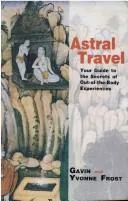
Gavin and Yvonne Frost’s "Astral Travel" offers a clear, grounded approach to a topic often shrouded in sensationalism. Unlike many texts that lean into speculative fantasy, the Frosts present astral projection as a disciplined practice, emphasizing its potential for spiritual growth and self-discovery. Their methodical breakdown of the astral body, the silver cord, and the nature of the astral plane provides a tangible framework for understanding these phenomena. A particular strength is the practical advice on preparation and safety, acknowledging the potential disorientation associated with leaving the physical form. However, the book's 1985 publication date means its language and some of its conceptualizations feel slightly dated compared to contemporary neurological or psychological perspectives on consciousness. Despite this, "Astral Travel" remains a foundational text for serious practitioners, offering a coherent system for exploring non-physical realities with intention and awareness.
📝 Description
73
Gavin and Yvonne Frost's 1985 book explains the mechanics of astral projection and the nature of the astral plane.
This text addresses astral travel, also known as out-of-body experience (OBE). It defines the practice as projecting consciousness beyond the physical body to explore other dimensions, distinguishing it from dreaming. The book details the astral plane, its inhabitants, and the ethics surrounding these projections. It is intended for individuals seriously interested in the practice, including those who have had spontaneous OBEs and seek explanation, or those who actively pursue astral projection through meditation and esoteric disciplines. The authors present practical exercises and theoretical frameworks for the disciplined student of consciousness.
The work introduces core concepts like the 'astral body,' a subtle energetic form separate from the physical, and the 'silver cord,' the metaphysical link between the two during projection. It also covers the 'astral plane' as a non-physical dimension accessible to consciousness. The book aims to systematize and clarify these practices for a modern audience.
The concept of astral projection has ancient roots in various spiritual traditions. Its Western popularization grew in the late 19th and early 20th centuries with movements like Theosophy. Gavin and Yvonne Frost's book, published in 1985, belongs to a later period of esoteric literature that focused on systematizing and demystifying these practices. It builds upon earlier work by figures such as Sylvan Muldoon and Robert Monroe, aiming to make the subject accessible to a contemporary audience seeking practical understanding.
💡 Why Read This Book?
• Learn the specific mechanics of projecting the "astral body," as detailed by the Frosts, to understand the energetic form distinct from your physical self. • Grasp the function and significance of the "silver cord" and its role in maintaining connection and safety during out-of-body experiences. • Explore the foundational concepts of the "astral plane" as presented in the book, differentiating it from dream states and understanding its perceived inhabitants.
⭐ Reader Reviews
Honest opinions from readers who have explored this book.
❓ Frequently Asked Questions
What is the "silver cord" mentioned in astral travel literature?
The "silver cord" is a metaphysical concept referring to a vital energetic link connecting the astral body to the physical body during astral projection. It is believed to ensure the safe return of consciousness to the physical form.
When was Gavin and Yvonne Frost's book on astral travel first published?
Gavin and Yvonne Frost's book on astral travel was first published in 1985, positioning it within the wave of esoteric literature from the late 20th century.
Are there specific safety precautions recommended for astral travel?
Yes, texts on astral travel, including the Frosts' work, often emphasize the importance of preparation and maintaining a clear intention to return to the physical body to ensure safety.
How does astral travel differ from lucid dreaming?
While both involve altered states of consciousness, astral travel is perceived as a conscious projection of the "astral body" into a distinct plane of existence, whereas lucid dreaming is awareness within the dream state itself.
What is the "astral plane" as described in esoteric texts?
The "astral plane" is described as a non-physical dimension of existence, often perceived as a realm of thoughts, emotions, and subtle energies, accessible through practices like astral projection.
Who are Gavin and Yvonne Frost?
Gavin and Yvonne Frost were authors and teachers in the esoteric and spiritual field, known for their practical approach to subjects like astral travel and consciousness exploration.
🔮 Key Themes & Symbolism
The Astral Body and Silver Cord
The book meticulously details the concept of the "astral body," an energetic duplicate of the physical form, and its capacity for independent movement. Central to this is the "silver cord," a vital, luminous tether believed to connect the astral and physical bodies. The Frosts explain its function not just as an anchor but as a conduit for life force, emphasizing its resilience and the importance of understanding its role for safe and successful astral projection. This provides a tangible, albeit subtle, framework for the disembodied experience.
Working through the Astral Plane
Central to the practice is an understanding of the "astral plane" itself – a non-physical dimension described as a area of thought-forms, energies, and consciousness. The Frosts offer guidance on its nature, potential inhabitants (often described as elementals or thought-forms rather than distinct entities), and the subjective experience of navigating it. This section addresses the perceived reality and structure of this plane, distinguishing it from the physical world and the dream state, and highlighting its potential for learning and exploration.
Conscious Projection Techniques
The work provides practical instructions and exercises aimed at achieving conscious astral projection. This involves developing mental discipline, relaxation techniques, and specific visualization methods to facilitate the separation of the astral body from the physical. The Frosts stress the importance of intention, focus, and overcoming the fear of separation. This focus on technique distinguishes the book as a practical guide rather than a purely theoretical treatise on the subject.
Ethics and Responsibility in OBEs
Beyond the mechanics, "Astral Travel" addresses the ethical dimensions of exploring non-physical realms. The Frosts discuss the importance of maintaining positive intent and the potential karmic implications of interactions or observations made during an out-of-body experience. This perspective grounds the practice within a framework of spiritual responsibility, suggesting that astral travel is not merely an exploration of phenomena but a path that requires moral consideration and self-awareness.
💬 Memorable Quotes
Direct passages from the work, attributed to the author.
“The astral body is not a phantom, but a vehicle.”
— This statement reframes the astral body from a mere spectral apparition to a functional instrument for conscious exploration beyond the physical. It suggests agency and purpose in the out-of-body state.
“The silver cord is the life-line between the physical and astral bodies.”
— This highlights the critical, life-sustaining connection of the silver cord. It underscores that the separation during astral projection is not absolute but maintained by this essential energetic link.
“Fear is the primary barrier to projection.”
— This points to the psychological aspect of astral travel. The Frosts identify fear—of the unknown, of separation, of not returning—as the main obstacle to overcome through understanding and practice.
“The astral plane is a area of thought-forms.”
— This conceptualizes the astral plane not as a static location but as a dynamic environment shaped by consciousness and thought. It implies that what one encounters is influenced by one's own mental state.
“Always maintain the intention to return.”
— This is a practical directive for safety. It serves as a constant reminder to anchor consciousness to the physical form, ensuring a secure re-integration after the astral journey.
🌙 Esoteric Significance
Tradition
The work aligns with the broader Hermetic and Theosophical traditions that explore subtle bodies and non-physical planes of existence. It departs from purely theoretical treatises by emphasizing practical, repeatable techniques for achieving astral projection, positioning itself as a manual for experiential spiritual development within these lineages.
Symbolism
Key symbols include the "astral body," representing the soul's vehicle for exploration, and the "silver cord," symbolizing the vital, unbreakable connection to the physical form and life force. The "astral plane" itself functions symbolically as a area of consciousness, thought-forms, and subjective reality, distinct from but interconnected with the physical.
Modern Relevance
Contemporary practitioners of consciousness studies, lucid dreaming enthusiasts, and those involved in modern esoteric orders often reference the Frosts' work. Its clear, direct approach to OBEs continues to inform discussions on subjective reality and the exploration of consciousness beyond the brain.
👥 Who Should Read This Book
• Aspiring astral travelers seeking a practical, step-by-step guide to achieving out-of-body experiences. • Students of consciousness interested in understanding the theoretical framework and mechanics of the "astral body" and "astral plane." • Individuals curious about the historical development of OBE literature, particularly the practical manuals emerging in the late 20th century.
📜 Historical Context
Published in 1985, Gavin and Yvonne Frost's "Astral Travel" entered a landscape shaped by earlier esoteric explorations. The mid-20th century had seen significant interest in out-of-body experiences, notably through the work of figures like Sylvan Muldoon in the 1930s and later Robert Monroe, whose Monroe Institute was founded in 1971. The Frosts' book built upon this foundation, offering a more systematized approach that resonated with the burgeoning New Age movement. While not directly engaging in a public debate, their work implicitly contributed to the discourse on consciousness separate from established scientific paradigms. The era saw a growing interest in subjective experience and alternative spiritualities, with books like "Astral Travel" providing practical guides for those seeking to explore these dimensions beyond traditional religious frameworks.
📔 Journal Prompts
The nature of the astral body as a vehicle.
The function and feeling of the silver cord during projection.
Experiences encountered on the astral plane.
Overcoming fear as a barrier to projection.
The ethical implications of astral exploration.
🗂️ Glossary
Astral Body
An energetic or subtle body, distinct from the physical, believed to be capable of separating from the physical form for exploration of other dimensions.
Astral Plane
A non-physical dimension or area of existence accessible through out-of-body experiences, often described as a area of thought-forms and energies.
Silver Cord
A luminous, vital tether connecting the astral body to the physical body during astral projection, ensuring the return of consciousness.
Out-of-Body Experience (OBE)
A sensation of leaving one's physical body and being able to perceive oneself and the surroundings from a point outside the physical form.
Thought-form
An energetic construct or entity created by conscious thought, often described as inhabitants or phenomena of the astral plane.
Lucid Dreaming
The state of being aware that one is dreaming while asleep, allowing for some degree of control over the dream narrative.
Projection
The act of consciously sending one's consciousness or astral body out of the physical form into another realm or location.
🔮 Readers Also Liked
Browse all →








More by Gavin Frost, Yvonne Frost
All books →



More Free Occult Philosophy Books
View all →