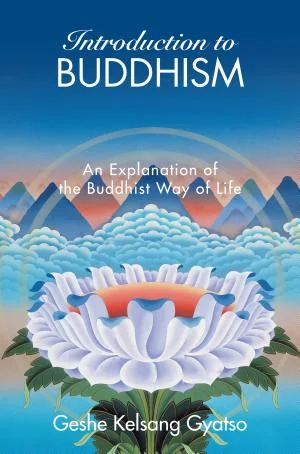
Introduction to Buddhism
 71
71

Introduction to Buddhism
Kelsang Gyatso’s "Introduction to Buddhism" approaches its subject with a commendable directness, particularly in its explanation of the Four Noble Truths. The initial presentation of suffering, its origins, cessation, and the path to cessation is exceptionally clear, a significant strength for newcomers. However, the book’s adherence to a specific lineage, while providing depth, may present a monolithic view of Buddhism that overlooks the diversity of other traditions. For instance, the detailed exposition of the Noble Eightfold Path is rigorous, but the nuanced differences in interpretation across various schools are less explored. The work succeeds in its aim to make core Buddhist principles understandable, even if it leans heavily on a particular interpretive framework.
This introduction offers a solid, if somewhat singular, perspective on Buddhist thought.
📝 Description
71
Kelsang Gyatso's 2008 "Introduction to Buddhism" clarifies the Gelug school's view on core Buddhist ideas.
This volume lays out the main ideas of Buddhism. It addresses basic philosophical questions within the tradition, presenting a structured way to grasp Buddhist thought. The book aims for clarity, making difficult doctrines understandable without losing their depth. It covers the core principles that shape the Buddhist worldview.
The book is for people new to Buddhist philosophy and practice, offering a clear starting point. It also benefits those already familiar with Buddhism, as it presents common ideas in a way that can renew and deepen understanding. Its clear style suits anyone curious about the Buddhist way of life and its ethical structure, regardless of prior knowledge.
Published in 2008, this work comes from the Gelug school of Tibetan Buddhism. It enters a time when Western interest in Eastern thought was growing. The book offers a systematic presentation of Buddhist teachings, focusing on concepts like mindfulness and compassion. It aims to make these principles accessible to a modern audience.
💡 Why Read This Book?
• Gain a structured understanding of the Four Noble Truths as presented within the Gelug tradition, offering a clear framework for analyzing personal suffering and its remedies. • Learn about the concept of karma and rebirth as explained by Kelsang Gyatso, providing a specific causal model for understanding actions and their consequences. • Explore the Noble Eightfold Path, detailing its eight components as a practical guide to ethical conduct, mental discipline, and wisdom, directly from the 2008 publication.
⭐ Reader Reviews
Honest opinions from readers who have explored this book.
❓ Frequently Asked Questions
What is the historical context of Kelsang Gyatso's "Introduction to Buddhism"?
Published in 2008, the book emerged as global interest in Eastern philosophies grew, offering a systematic presentation of Buddhist teachings from the Gelug school of Tibetan Buddhism.
What are the core Buddhist principles covered in this book?
The book systematically covers fundamental principles like the Four Noble Truths, karma, rebirth, the Noble Eightfold Path, emptiness, compassion, and wisdom.
Is "Introduction to Buddhism" suitable for experienced practitioners?
Yes, while accessible to beginners, the book's clear presentation and detailed explanations of core concepts can refresh and deepen the understanding of those already familiar with Buddhist practice.
What specific Buddhist school does this book primarily represent?
The book primarily presents teachings from the Gelug school of Tibetan Buddhism, as interpreted by author Kelsang Gyatso.
When was "Introduction to Buddhism" by Kelsang Gyatso first published?
The book "Introduction to Buddhism" by Kelsang Gyatso was first published in 2008.
What is the "Noble Eightfold Path" as discussed in the book?
The Noble Eightfold Path is presented as a practical guide comprising eight interconnected elements: Right View, Right Intention, Right Speech, Right Action, Right Livelihood, Right Effort, Right Mindfulness, and Right Concentration.
🔮 Key Themes & Symbolism
The Four Noble Truths
This foundational theme dissects the Buddhist understanding of suffering (dukkha). It moves from acknowledging suffering's existence to identifying its origins, affirming its cessation, and outlining the Noble Eightfold Path as the means to achieve that cessation. The work presents these truths not as pessimistic pronouncements but as diagnostic steps towards liberation, emphasizing a practical, analytical approach to the human condition that aligns with esoteric traditions seeking to understand and transcend worldly limitations.
Karma and Rebirth
The book elaborates on the intricate law of karma, explaining how volitional actions create causes and conditions that lead to future effects. This concept is intrinsically linked to rebirth, detailing the cyclical nature of existence (samsara) driven by ignorance and desire. Understanding karma is presented as crucial for ethical decision-making and for comprehending the vast scope of spiritual progression beyond a single lifetime, a core tenet in many esoteric cosmologies.
The Noble Eightfold Path
This theme details the practical methodology for achieving enlightenment. It is segmented into three training categories: wisdom (Right View, Right Intention), ethical conduct (Right Speech, Right Action, Right Livelihood), and mental discipline (Right Effort, Right Mindfulness, Right Concentration). The Path is presented as a holistic system for transforming one's being, integrating ethical living with contemplative practice to cultivate the insight necessary for spiritual realization.
Emptiness and Wisdom
The work addresses the concept of shunyata, or emptiness, often misunderstood as nihilism. Instead, it is presented as the absence of inherent, independent existence in all phenomena. Cultivating wisdom (prajna) involves realizing this emptiness, which liberates the mind from attachment and delusion. This theme touches upon profound metaphysical understandings central to esoteric philosophies that seek to deconstruct perceived reality.
💬 Memorable Quotes
Direct passages from the work, attributed to the author.
“The cause of suffering is ignorance.”
— This statement expresses the Buddhist view that our distress stems not from external circumstances but from a fundamental misunderstanding of reality, particularly the nature of self and phenomena.
“The Noble Eightfold Path is the path leading to the cessation of suffering.”
— This highlights the practical, actionable aspect of Buddhist philosophy, presenting a structured method for spiritual development and the alleviation of existential pain.
“All conditioned things are impermanent.”
— This fundamental observation underscores the transient nature of all existence, encouraging detachment from the constantly changing world and fostering acceptance of change.
“When we understand karma, we understand the actions of others.”
— This suggests that a grasp of the principle of cause and effect can foster empathy and reduce judgment, as one recognizes the complex web of past actions influencing present behaviors.
“The ultimate goal is to attain liberation from the cycle of rebirth.”
— This points to the highest aspiration within Buddhism, the release from samsara and the attainment of nirvana, a state of profound peace and enlightenment.
🌙 Esoteric Significance
Tradition
This work aligns with the Tibetan Buddhist tradition, specifically the Gelug school, which emphasizes rigorous philosophical analysis and meditative practice. While not typically categorized alongside Western esoteric traditions like Hermeticism or Kabbalah, its exploration of consciousness, emptiness, and liberation shares common ground with Gnostic and Neoplatonic quests for ultimate truth and transcendence of material reality.
Symbolism
Key symbols include the Dharma Wheel, representing the Buddha's teachings and the Noble Eightfold Path, and the Lotus Flower, symbolizing purity, spiritual growth, and enlightenment emerging from the mud of samsara. The concept of emptiness (shunyata) itself functions as a profound symbolic negation, pointing towards a reality beyond conceptualization and dualistic thinking, a common theme in mystical traditions.
Modern Relevance
Contemporary interest in mindfulness, secular Buddhism, and contemplative practices often draws implicitly or explicitly from the foundations laid by works like this. Thinkers and practitioners in fields ranging from positive psychology to consciousness studies find value in the Buddhist emphasis on mental training, ethical conduct, and the deconstruction of ego, continuing the lineage's influence.
👥 Who Should Read This Book
• Beginning students of Tibetan Buddhism seeking a systematic, scholastic introduction to core doctrines and practices from the Gelug tradition. • Comparative religion scholars interested in understanding the philosophical underpinnings of a major Buddhist lineage as presented by a contemporary master. • Individuals exploring meditation and mindfulness who wish to contextualize these practices within a broader ethical and philosophical framework.
📜 Historical Context
Published in 2008, Kelsang Gyatso's "Introduction to Buddhism" arrived at a time when Western engagement with Buddhist thought was widespread, yet often fragmented. While figures like the Dalai Lama were gaining prominence, and various Buddhist traditions (Zen, Theravada) had established footholds, Gyatso's work focused specifically on the Gelug school of Tibetan Buddhism. This lineage, known for its scholastic tradition and emphasis on logic, offered a distinct approach compared to the more experiential or meditative practices emphasized by other schools. The book entered a discourse where comparative religion studies were flourishing, but also where popular interpretations sometimes diluted the philosophical rigor of Buddhist teachings. Gyatso's presentation aimed to provide a comprehensive, systematic overview rooted in the teachings of masters like Je Tsongkhapa, offering a counterpoint to more generalized or simplified introductions.
📔 Journal Prompts
The Four Noble Truths as a framework for understanding personal dissatisfaction.
Reflecting on the nature of karma in daily decisions.
The Noble Eightfold Path and its application in contemporary ethical dilemmas.
Personal interpretations of emptiness (shunyata) beyond intellectual understanding.
Cultivating compassion (karuna) through mindful awareness of others.
🗂️ Glossary
Dukkha
Often translated as 'suffering,' this term encompasses a broader sense of dissatisfaction, unease, stress, and the inherent unsatisfactoriness of conditioned existence.
Karma
The principle of cause and effect governing actions. Intentional actions (karma) create imprints that lead to future experiences and shape the cycle of rebirth.
Samsara
The cycle of birth, death, and rebirth, characterized by suffering and driven by ignorance, attachment, and aversion. It is the state from which Buddhists seek liberation.
Nirvana
The ultimate goal of Buddhist practice; the cessation of suffering and the cycle of rebirth. It is a state of liberation, peace, and enlightenment.
Shunyata
Emptiness; the lack of inherent, independent existence in all phenomena. It is a key concept in Mahayana Buddhism, realized through wisdom.
Prajna
Wisdom; useful insights into the true nature of reality, particularly the realization of emptiness. It is considered essential for achieving enlightenment.
Karuna
Compassion; the sincere wish for all sentient beings to be free from suffering. It is a vital quality cultivated alongside wisdom.
This book appears in 1 collection
🔮 Readers Also Liked
Browse all →








From the “Meditation” Collection
View all →








More Free Occult Philosophy Books
View all →