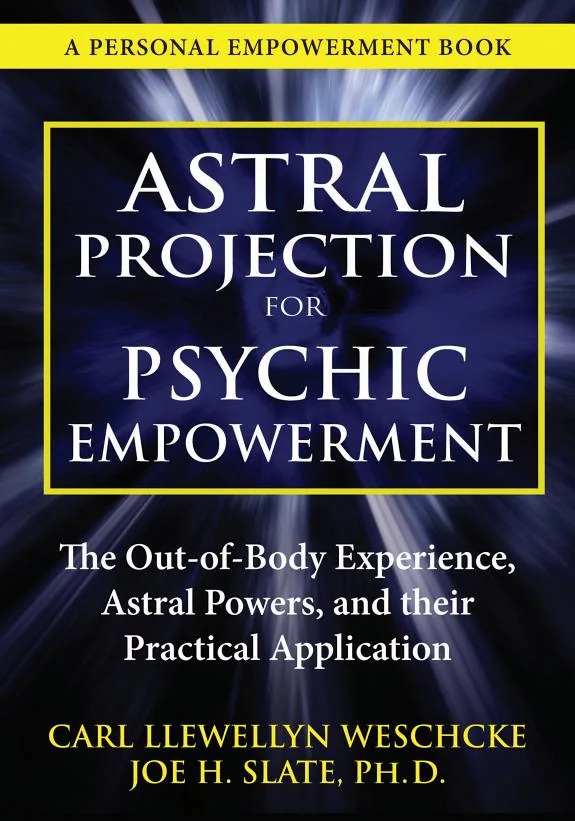
Astral Projection for Psychic Empowerment
 83
83

Astral Projection for Psychic Empowerment
Carl Llewellyn Weschcke and Joe H. Slate’s *Astral Projection for Psychic Empowerment* attempts to demystify the often-sensationalized topic of out-of-body travel. The book’s primary strength lies in its methodical approach, presenting astral projection as a skill that can be cultivated through specific exercises, a stark contrast to more mystical or purely intuitive accounts. The inclusion of case studies and references to laboratory research, however brief, lends an air of empirical inquiry that anchors the more speculative elements. I found the seven-day developmental program particularly concrete, offering a structured pathway for the curious practitioner. A limitation, however, is the book's occasional reliance on jargon that might alienate newcomers, and the scientific references, while present, could have been more deeply integrated or critically examined. The discussion around the 'astral cord' is a memorable concept, providing a tangible safety mechanism for those apprehensive about the unknown. Despite its minor shortcomings, the work offers a grounded and actionable guide for exploring consciousness beyond the physical.
📝 Description
83
Published by Carl Llewellyn Weschcke and Joe H. Slate, this book details controlled astral projection.
This guide presents controlled, self-induced astral projection not as fantasy but as a verifiable method for accessing non-physical realms. It outlines techniques for separating consciousness from the physical body, emphasizing safety and clarity. The work details how to initiate and manage these experiences, ensuring the practitioner remains anchored and can return at will. Astral projection is positioned as a tool for expanding awareness and achieving personal growth through direct experience with subtle energies and dimensions beyond ordinary perception.
The practice is designed for individuals seeking to expand consciousness and unlock latent psychic abilities. It suits those interested in self-discovery, exploring altered states, and gaining knowledge not accessible through conventional means. The book caters to readers who approach these topics with open-mindedness and a desire for structured, practical guidance. It aims to empower readers to harness their own inner potential through disciplined practice and understanding.
This book builds upon the legacy of concepts like out-of-body experiences (OBEs) and astral projection, which have roots stretching back to ancient civilizations and were systematized in Western esotericism by movements like Theosophy and the Hermetic Order of the Golden Dawn. It offers a modern interpretation and practical framework grounded in historical precedent and contemporary research, acknowledging a long lineage of individuals who have explored these states of consciousness.
The concept of out-of-body experiences and astral projection has ancient roots in Egyptian, Vedic, and Platonic traditions. In the late 19th and early 20th centuries, Western esoteric movements like Theosophy and the Hermetic Order of the Golden Dawn revived and systematized these practices. This book contributes to that lineage by offering a modern, practical framework for astral projection, grounded in historical precedents and contemporary understanding of subtle energies and non-physical dimensions.
💡 Why Read This Book?
• Learn verifiable techniques for controlled, self-induced astral projection, distinct from mere dreaming, as detailed in the seven-day developmental program. • Understand the conceptual framework of the 'astral body' and the 'astral cord' as presented in the text, offering practical safety measures for exploration. • Explore documented case studies and scientific test results from laboratory studies that support the reality of astral projection as a psychological and potentially physical phenomenon.
⭐ Reader Reviews
Honest opinions from readers who have explored this book.
❓ Frequently Asked Questions
What is the primary goal of astral projection according to this book?
The primary goal is to achieve controlled, self-induced astral projection to access new sources of knowledge and unleash one's highest potential, moving beyond ordinary sensory perception.
Who are the authors of Astral Projection for Psychic Empowerment?
The book was written by Carl Llewellyn Weschcke and Joe H. Slate. It was first published in 2012.
Does the book offer practical steps for learning astral projection?
Yes, the book provides a comprehensive guide that includes a seven-day developmental program designed to teach controlled, self-induced astral projection techniques.
What kind of evidence does the book present to support astral projection?
It includes true case studies of astral projection experiences and references scientific test results from laboratory studies on the subject.
Is astral projection presented as a dangerous practice in this book?
No, the book emphasizes learning controlled projection and includes methods to ensure safety and the ability to return to the physical body at will.
What is the 'astral body' as described in the book?
The 'astral body' is described as a subtle, non-physical vehicle for consciousness that can separate from the physical body during astral projection.
🔮 Key Themes & Symbolism
Conscious Separation
This theme centers on the deliberate and controlled detachment of consciousness from the physical body. The work emphasizes techniques that allow individuals to initiate and manage these out-of-body experiences (OBEs), distinguishing them from spontaneous or uncontrolled events. It details methods for achieving a state where the 'astral body' can travel independently while maintaining a connection to the physical form, ensuring safe return. This focus on control is presented as crucial for harnessing the knowledge and insights gained during projection.
Psychic Empowerment
The book posits astral projection as a direct pathway to unlocking latent psychic abilities and expanding personal potential. By engaging with non-physical realities, practitioners are encouraged to develop heightened intuition, clairvoyance, and a deeper understanding of consciousness. The empowerment aspect lies in gaining direct experiential knowledge, moving beyond theoretical belief to personal verification. This internal development is framed as a means of self-mastery and elevated awareness, accessible through disciplined practice.
Empirical Approach to Esotericism
A notable aspect is the attempt to ground the practice of astral projection in empirical evidence. The authors incorporate real-life case studies and reference scientific test results from laboratory studies. This approach seeks to validate the subjective experiences of astral projection through objective observation and documentation, bridging the gap between esoteric traditions and scientific inquiry. It aims to present astral projection not as mere fantasy but as a phenomenon worthy of investigation.
Structured Developmental Program
The inclusion of a specific seven-day developmental program is a key feature. This structured curriculum provides readers with a step-by-step guide to learning and practicing astral projection. It breaks down the complex process into manageable daily exercises, making the practice accessible even to beginners. The program is designed to build skills progressively, from basic relaxation and visualization to more advanced techniques for conscious separation and exploration.
💬 Memorable Quotes
Direct passages from the work, attributed to the author.
“Controlled, self-induced astral projection to reach new sources of knowledge.”
— This core concept defines the book's objective: not accidental out-of-body experiences, but deliberately initiated journeys into non-physical realms for the purpose of learning and discovery.
“True case studies of astral projection.”
— The inclusion of personal accounts lends anecdotal weight to the practice, suggesting that these experiences are real and have been undergone by numerous individuals.
“Scientific test results from laboratory studies.”
— This points to an effort to validate astral projection through empirical research, moving it from the area of pure belief into something observable and measurable.
“A seven-day developmental program that will unleash your highest potential.”
— This highlights the book's practical, structured approach, offering a time-bound curriculum designed to foster significant personal growth through specific exercises.
“The practitioner remains anchored and can return at will.”
— This emphasizes safety and control, addressing common fears associated with out-of-body experiences by assuring readers of their ability to manage the process.
🌙 Esoteric Significance
Tradition
This work fits within the broader lineage of Western Esotericism, particularly drawing from magical and occult traditions that focus on the development of consciousness and subtle bodies. It carries the teachings found in Theosophy and later New Age interpretations of astral travel, emphasizing the separation of consciousness from the physical form. However, it departs from purely mystical approaches by attempting to offer a structured, almost scientific, methodology and incorporating references to empirical research, aligning it with a more pragmatic, practice-oriented facet of esoteric study.
Symbolism
While the book focuses heavily on practical technique, the concept of the 'silver cord' or 'astral cord' serves as a potent symbol of connection and safety. It represents the vital link between the physical body and the consciousness during projection, symbolizing grounding and the assurance of return. The 'astral body' itself symbolizes the soul or consciousness as a distinct, mobile entity, capable of independent existence and exploration beyond the limitations of physical form.
Modern Relevance
Contemporary thinkers and practitioners in fields like consciousness research, transpersonal psychology, and modern occultism continue to explore the concepts presented in this book. Its emphasis on structured practice and empirical validation speaks to those seeking to integrate subjective spiritual experiences with objective methodologies. Communities focused on lucid dreaming, remote viewing, and out-of-body experiences often reference foundational texts like this for practical guidance and theoretical frameworks.
👥 Who Should Read This Book
• Aspiring practitioners of out-of-body experiences seeking a structured, seven-day program to initiate controlled astral projection. • Individuals interested in consciousness studies and esoteric traditions who desire a guide that attempts to bridge subjective experience with scientific inquiry. • Those looking to develop their psychic abilities and explore non-physical realms, requiring practical techniques and safety protocols for such exploration.
📜 Historical Context
Published in 2012, *Astral Projection for Psychic Empowerment* arrived at a time when interest in consciousness studies and alternative spiritual practices was gaining mainstream traction, partly fueled by the internet's accessibility to esoteric information. This era saw a resurgence of interest in techniques explored by earlier occult revival movements, such as those associated with the Hermetic Order of the Golden Dawn, which codified many practices of Western esotericism in the late 19th century. Authors like Aleister Crowley and Dion Fortune were key figures in this earlier period, exploring altered states and psychic phenomena. Weschcke and Slate’s work builds upon this foundation, but distinguishes itself by integrating references to modern scientific investigation, attempting to bridge the gap between traditional occultism and contemporary empirical inquiry. While not directly engaging with specific contemporaries in the text, the book's approach reflects a broader trend of seeking empirical validation for subjective spiritual experiences, contrasting with purely faith-based or purely psychological interpretations of OBEs.
📔 Journal Prompts
Reflect on the concept of the 'astral body' as presented in the book. How does it differ from your current understanding of consciousness?
Consider the implications of 'controlled, self-induced astral projection' for personal knowledge acquisition.
Analyze the role of the 'astral cord' in ensuring safety during projection. What does this symbol represent to you?
Evaluate the integration of 'case studies' and 'laboratory studies' in validating astral projection. What are the strengths and weaknesses of this approach?
Map out potential applications of knowledge gained through astral projection to your daily life, as suggested by the 'seven-day developmental program'.
🗂️ Glossary
Astral Projection
The intentional separation of consciousness from the physical body to travel in non-physical realms, often referred to as the astral plane.
Astral Body
A subtle, non-physical body or vehicle of consciousness that is believed to separate from the physical body during astral projection.
Astral Cord / Silver Cord
A psychic or energetic tether connecting the physical body to the astral body, ensuring the consciousness can return safely.
Self-induced Projection
Astral projection that is consciously initiated and controlled by the individual, rather than occurring spontaneously.
Subtle Energies
Forms of energy believed to exist beyond the electromagnetic spectrum, which are often manipulated or perceived during esoteric practices.
Seven-Day Developmental Program
A structured, time-based curriculum presented in the book designed to guide the reader through the process of learning astral projection.
Case Studies
Accounts of specific instances or experiences of astral projection, used as evidence or illustration within the text.