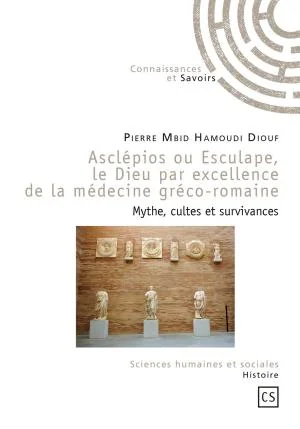
Asclépios ou Esculape, le Dieu par excellence de la médecine gréco-romaine
 81
81

Asclépios ou Esculape, le Dieu par excellence de la médecine gréco-romaine
Pierre Mbid Hamoudi Diouf's rigorous examination of Asclepius offers a vital counterpoint to the often exclusive focus on empirical medicine in contemporary discourse. The work's strength lies in its detailed exposition of the Asclepian cult and its therapeutic practices, particularly the role of dream incubation. However, the author's critique of modern medicine, while important, sometimes lacks the nuanced engagement with specific scientific advancements that would further solidify his argument against them. A particularly compelling passage details the ritualistic cleansing and supplication required of supplicants at Asclepian sanctuaries, illustrating a profound connection between spiritual state and physical well-being. The book serves as a crucial reminder of the multifaceted nature of healing throughout history.
📝 Description
81
Pierre Mbid Hamoudi Diouf's 2023 book re-examines ancient Greco-Roman healing practices centered on Asclepius.
Asclépios ou Esculape, le Dieu par excellence de la médecine gréco-romaine analyzes the magico-religious and divine healing practices of ancient Greece and Rome. The author argues that these older systems held significant cultural and therapeutic value, contrary to modern views that dismiss them as mere superstition. The work focuses on Asclepius, the god of healing, as a central figure in these ancient medical understandings.
This book is suited for academics in ancient history, religious studies, and the history of medicine. It will also interest those involved in esoteric traditions, comparative religion, and readers curious about the philosophical foundations of healing across different historical periods. Individuals interested in how divine and magical elements were incorporated into historical medical practices will find this study valuable.
This work engages with the esoteric tradition by investigating healing practices that were deeply intertwined with religious belief and divine intervention, particularly the cult of Asclepius. It looks beyond purely rational or empirical explanations of health and illness, considering how spiritual and magical elements played a role in ancient therapeutic systems. The book provides a counterpoint to purely materialistic interpretations of history and medicine, suggesting that ancient peoples understood health in a more holistic, divinely connected manner.
💡 Why Read This Book?
• Understand the cultural and religious significance of the Asclepian cult, learning about the specific rituals and sanctuaries that defined ancient Greco-Roman healing practices. • Gain a critical perspective on the historical marginalization of magico-religious medical forms, recognizing Asclepius as a divine figure central to pre-scientific therapeutics. • Explore the concept of dream incubation (enkoimesis) within Asclepian temples, understanding its role in diagnosis and healing as presented in the book.
⭐ Reader Reviews
Honest opinions from readers who have explored this book.
❓ Frequently Asked Questions
What was the primary role of Asclepius in Greco-Roman medicine?
Asclepius was revered as the god of medicine and healing in Greco-Roman antiquity. His cult centered around sanctuaries where individuals sought cures through divine intervention, often involving dream incubation and ritual practices.
How does this book challenge modern medical views?
The book challenges the exclusive validation of scientific medicine by re-examining the historical efficacy and cultural importance of ancient magico-religious healing practices, particularly those associated with Asclepius.
What is dream incubation (enkoimesis) as discussed in the book?
Dream incubation, or enkoimesis, refers to the practice of sleeping in sacred Asclepian temples to receive divine dreams believed to offer diagnosis or healing guidance from the god.
When was Asclépios ou Esculape first published?
The book "Asclépios ou Esculape, le Dieu par excellence de la médecine gréco-romaine" by Pierre Mbid Hamoudi Diouf was first published on February 19, 2016.
What historical period does the book focus on?
The book primarily focuses on the medical practices and beliefs of Greco-Roman antiquity, specifically exploring the cult of Asclepius and contrasting it with modern scientific medicine.
Is this book suitable for someone interested in esotericism?
Yes, the book is categorized as Esoteric and explores the intersection of divine intervention, religious practices, and healing, offering insights relevant to esoteric traditions interested in ancient healing arts.
🔮 Key Themes & Symbolism
The Asclepian Cult
This theme centers on the worship and therapeutic practices surrounding Asclepius, the Greco-Roman god of healing. The book details the organization of Asclepian sanctuaries, such as Epidaurus, which served as major pilgrimage sites. It explores the rituals, sacrifices, and supplications performed by those seeking divine aid for ailments, highlighting the integration of religious devotion into the healing process. The divine nature of Asclepius is presented as a foundational element of ancient medical understanding, distinct from purely physical interventions.
Divine Dreams and Healing
A significant aspect explored is the practice of 'enkoimesis' or dream incubation within Asclepian temples. This theme studies how supplicants would sleep in sacred precincts hoping to receive diagnostic or curative dreams directly from Asclepius. The book examines the interpretation of these dreams and their role in shaping treatment, suggesting a sophisticated psychological and spiritual dimension to ancient healing. It posits that these divine dreams were considered as potent as any physical remedy.
Critique of Scientific Exclusivity
This theme addresses the book's core argument: the modern tendency to dismiss ancient medical systems, particularly magico-religious ones, as ineffective superstition. Diouf contrasts the holistic approach of the Asclepian tradition with the reductionist tendencies he perceives in contemporary scientific medicine. The work advocates for a re-evaluation of historical healing modalities, suggesting that the divine and the empirical were not mutually exclusive in antiquity and that modern approaches may overlook valuable dimensions of well-being.
Asclepius as Divine Physician
This theme focuses on Asclepius not merely as a deity but as the archetypal physician. The book examines the myths and iconography associated with him, particularly the serpent-entwined staff, a symbol of regeneration and healing. It positions Asclepius as the ultimate authority in matters of health, whose divine power transcended human understanding and medical knowledge of the time. His role is presented as a bridge between the mortal and the divine domains of healing.
💬 Memorable Quotes
Direct passages from the work, attributed to the author.
“The modern scientific opinion often judges scientific medicine as the only true medicine, neglecting ancient magico-religious practices.”
— This statement expresses the book's central thesis: a critique of modern medical hubris and a call to recognize the validity and importance of ancient healing traditions that integrated the divine and the magical.
“Asclepius, the God par excellence of Greco-Roman medicine.”
— This phrase emphasizes Asclepius's supreme status in the ancient medical pantheon, suggesting his role extended beyond mere healing to embodying the very essence of medical authority and divine intervention.
“Ancient practices are often relegated to a far lower scale, devoid of efficacy in favor of so-called scientific medicine.”
— This interpretation highlights the perceived bias in historical scholarship and modern perception, which tends to devalue ancient therapeutic systems, attributing their perceived successes to placebo or superstition rather than inherent efficacy.
“The importance of divine dreams experienced in Asclepian temples.”
— This points to the concept of 'enkoimesis' and the significant role dreams played in ancient healing, suggesting they were viewed as direct communications from the divine for diagnosis and treatment.
“Challenging the modern paradigm of medicine through historical re-evaluation.”
— This conveys the book's methodological approach: using historical analysis of Greco-Roman healing traditions, particularly the cult of Asclepius, to question the absolute dominance of contemporary scientific medical models.
🌙 Esoteric Significance
Tradition
This work fits within the broader esoteric tradition's interest in ancient healing systems and the divine feminine/masculine archetypes. While not strictly Hermetic or Kabbalistic, it aligns with a Gnostic or Neoplatonic perspective that acknowledges spiritual and divine forces as integral to physical well-being. It appeals to the esoteric library's focus on texts that explore non-material influences on health and consciousness, bridging ancient religious practice with a modern esoteric sensibility.
Symbolism
The primary symbol is Asclepius himself, representing divine healing power and the integration of life force (often symbolized by the serpent). The serpent entwined around a staff is a potent symbol of regeneration, transformation, and the alchemical process of healing. Another motif is the sacred precinct of the temples, representing a liminal space where the mundane world meets the divine, facilitating miraculous cures through faith and ritual.
Modern Relevance
Contemporary esoteric practitioners, particularly those involved in energy healing, shamanism, or psychospiritual therapy, find resonance in Diouf's work. It supports the idea that healing involves more than just biochemical interventions, validating practices that incorporate intention, ritual, and spiritual connection. Thinkers exploring the placebo effect, the mind-body connection, and the efficacy of ancient spiritual technologies can draw upon the book's historical analysis of the Asclepian model.
👥 Who Should Read This Book
['• Students of Ancient History and Religion: Gain a deeper understanding of the complex relationship between divinity, ritual, and healing in the Greco-Roman world, moving beyond purely rationalist interpretations.', '• Esoteric Practitioners and Researchers: Discover historical precedents for divine intervention and spiritual healing, finding parallels with modern esoteric practices and archetypal healing figures like Asclepius.', '• Medical Historians and Anthropologists: Re-evaluate the efficacy and cultural significance of pre-scientific medical systems, challenging the narrative of linear progress solely defined by modern scientific medicine.']
📜 Historical Context
Published in 2016, Pierre Mbid Hamoudi Diouf's work emerges in an era increasingly interested in the history of medicine and alternative healing modalities. It revisits the Greco-Roman world, specifically the period where the cult of Asclepius flourished alongside the rationalist medicine pioneered by figures like Hippocrates in the 5th century BCE. While Hippocratic physicians sought natural explanations for disease, the Asclepian cult offered a divine, miraculous dimension to healing. Diouf's text engages with this historical tension, arguing against the wholesale dismissal of the latter by modern scholarship. The book implicitly critiques the positivist approach that dominated much of 20th-century historical inquiry into medicine, which often marginalized religious or magical elements. Unlike contemporaries who might focus solely on the empirical advancements of Galen or Vesalius, Diouf redirects attention to the enduring power of the divine healer.
📔 Journal Prompts
Asclepius as the divine physician: explore the implications of a god embodying healing.
The practice of enkoimesis: reflect on the role of dreams in ancient and modern healing.
Contrast the Asclepian sanctuary's atmosphere with a contemporary hospital.
Analyze the serpent-staff symbol of Asclepius for its regenerative meanings.
Consider how magico-religious elements were integrated into Greco-Roman life.
🗂️ Glossary
Asclépios
The Greek name for Asclepius, the god of medicine and healing in ancient Greek and Roman mythology. He was believed to possess the power to cure all illnesses and even raise the dead.
Esculape
The Roman name for Asclepius, adopted and integrated into Roman religious practices. His worship and healing cults were widespread throughout the Roman Empire.
Médecine magico-religieuse
Magico-religious medicine refers to healing practices that combine magical rituals, prayers, incantations, and divine appeal, believing that supernatural forces influence health and disease.
Médecine divine
Divine medicine specifically attributes healing power to deities or divine intervention, often sought through supplication, offerings, and rituals performed in sacred places dedicated to healing gods.
Enkoimesis
A Greek term referring to the practice of ritualistic sleep or dream incubation within sacred Asclepian temples, where supplicants believed they would receive diagnostic or therapeutic dreams from the god.
Sanctuaires d'Asclépios
Sacred sites dedicated to the worship of Asclepius, such as Epidaurus, Pergamon, and Cos, which served as major centers for healing, pilgrimage, and the practice of divine medicine in antiquity.
Médecine scientifique
Scientific medicine, in the context of the book, refers to the empirical, evidence-based approach to diagnosis and treatment that characterizes modern medical practice, often contrasted with ancient methods.
🔮 Readers Also Liked
Browse all →









More Free Occult Philosophy Books
View all →
![Τ[alpha] Ελευσίν[alpha] μυστήρι[alpha]](/img/thumb/τalpha-ελευσίνalpha-μυστήριalpha-paul-françois-foucart-360580.webp)