Mindfulness
 81
81

Mindfulness
Williams and Penman's "Mindfulness" offers a pragmatic, accessible entry into a practice that has seen a meteoric rise in popularity since its initial publication in 2012. Its strength lies in its clear articulation of Mindfulness-Based Cognitive Therapy (MBCT) principles, making complex psychological concepts digestible for the lay reader. The book effectively demystifies meditation, presenting it not as an esoteric ritual but as a practical skill for managing everyday distress. One particularly effective section details the "body scan" meditation, a concrete exercise that grounds the reader in physical sensation, a vital counterpoint to racing thoughts. However, the book occasionally leans towards an overly clinical tone, which might alienate those seeking a more spiritual or philosophical exploration of consciousness. While it successfully bridges the gap between therapeutic technique and personal growth, a deeper engagement with the philosophical underpinnings of mindfulness could have enriched its offering. Despite this, "Mindfulness" remains a valuable resource for anyone seeking evidence-based strategies to cultivate inner calm.
📝 Description
81
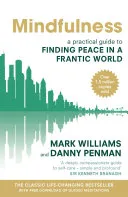
In 2010, Mark Williams and Danny Penman published 'Mindfulness,' a guide to mental well-being.
This book presents a structured approach to mental well-being, adapting ancient contemplative practices for modern life. It teaches techniques to interrupt negative thinking patterns and emotional reactions that often lead to stress and unhappiness. The goal is to build a stable awareness of the present moment, fostering resilience and a calmer approach to life's challenges.
It is especially helpful for those struggling with ongoing stress, anxiety, or low moods, who feel stuck in worry or rumination. The book acts as a practical manual for improving emotional control and gaining a more balanced outlook. Readers interested in psychological methods with roots in contemplative traditions will find it valuable, offering concrete tools for inner peace. The work is intended for anyone seeking to manage their mental state more effectively.
The book draws on Mindfulness-Based Cognitive Therapy (MBCT), developed in the late 1990s by Zindel Segal, Mark Williams, and John Teasdale. MBCT itself emerged from Zindel Segal's work with Zindel Segal, integrating principles from Jon Kabat-Zinn's Mindfulness-Based Stress Reduction with cognitive behavioral therapy. The aim was to provide a clinical framework for individuals prone to recurrent depression, teaching them to recognize and detach from negative thought cycles before they become overwhelming. This marked a step in bringing contemplative practices into mainstream psychological care.
💡 Why Read This Book?
• You will learn to recognize and disengage from habitual negative thought patterns, a skill directly taught through the structured exercises derived from MBCT, first developed in the late 1990s. • You will gain practical techniques for cultivating present-moment awareness, such as the "body scan" meditation detailed in the book, helping to reduce stress and anxiety. • You will understand how to meet challenging life events with greater equanimity by developing the capacity for "decentering," observing thoughts and feelings without immediate reactivity.
⭐ Reader Reviews
Honest opinions from readers who have explored this book.
❓ Frequently Asked Questions
What is Mindfulness-Based Cognitive Therapy (MBCT) and how does it differ from other therapies?
MBCT, developed by Segal, Williams, and Teasdale around the late 1990s, integrates mindfulness meditation with cognitive behavioral therapy. It specifically targets the relapse of depression by teaching individuals to observe their thoughts and feelings without judgment, fostering detachment from negative cognitive patterns.
Can mindfulness truly help with chronic anxiety and stress?
Yes, the practices outlined in "Mindfulness" are designed to interrupt the stress response cycle. By cultivating present-moment awareness and decentering from anxious thoughts, individuals can learn to respond to stressors more calmly, as supported by the principles of MBCT.
How much time does it take to see results from the mindfulness practices in this book?
The book suggests incorporating simple practices into daily life. While consistent practice is key, the authors indicate that noticeable shifts in managing stress and improving well-being can begin to emerge within weeks of regular engagement with the techniques.
Is this book suitable for absolute beginners with no prior meditation experience?
Absolutely. "Mindfulness" is structured to guide complete novices. It breaks down mindfulness meditation into manageable steps, starting with basic awareness exercises and gradually introducing more complex techniques like the body scan and mindful movement.
What is the core difference between MBCT and standard Cognitive Behavioral Therapy (CBT)?
While CBT focuses on identifying and changing negative thought content, MBCT, as presented by Williams and Penman, emphasizes changing one's relationship to thoughts. It teaches individuals to observe thoughts as transient mental events rather than accepting them as truths.
🔮 Key Themes & Symbolism
Decentering from Negative Thoughts
A core concept presented is "decentering," the ability to step back and observe one's thoughts and feelings as mental events, rather than identifying with them. This detachment is crucial for breaking cycles of rumination and negative self-talk. The book provides practical exercises, stemming from the MBCT framework developed by Williams, Segal, and Teasdale, to cultivate this skill, enabling readers to recognize that thoughts are not facts and can be allowed to pass without undue distress or reaction.
Cultivating Present-Moment Awareness
The practice of "present-moment awareness" is foundational. It involves intentionally bringing one's attention to the immediate experience – sensations, emotions, thoughts – without judgment. This anchors the individual in the here and now, counteracting the tendency to dwell on the past or worry about the future. Techniques like mindful breathing and the body scan, detailed extensively, are designed to train this capacity, fostering a stable and grounded state of being.
Mindfulness-Based Cognitive Therapy (MBCT)
The book is a popularization of MBCT, a clinical intervention that emerged in the late 1990s. It combines elements of mindfulness meditation, influenced by figures like Jon Kabat-Zinn, with traditional Cognitive Behavioral Therapy (CBT). MBCT is particularly effective in preventing relapse in recurrent depression and managing chronic stress and anxiety by teaching participants to relate differently to their internal experiences, rather than solely focusing on changing thought content.
💬 Memorable Quotes
Direct passages from the work, attributed to the author.
“Break the cycle of anxiety, stress, unhappiness, and exhaustion.”
— This expresses the book's primary promise: to offer practical tools and techniques derived from MBCT that interrupt habitual negative patterns, leading to a reduction in psychological distress and an increase in overall well-being and vitality.
“Promotes the kind of happiness and peace that gets into your bones.”
— This highlights the goal of deep, integrated well-being, suggesting that the practices lead to a fundamental shift in one's internal state, rather than superficial mood improvement. It speaks to a profound sense of contentment that permeates all aspects of life.
“Meet the worst that life throws at you with new courage.”
— This emphasizes the resilience-building aspect of mindfulness. By developing a more stable and non-reactive relationship with internal experiences, individuals are better equipped to face adversity and challenges with a stronger sense of inner fortitude and less emotional overwhelm.
“Based on Mindfulness-Based Cognitive Therapy (MBCT).”
— This statement anchors the book's methodology in a clinically validated approach. It signifies that the practices are not merely philosophical suggestions but are derived from a therapeutic framework with empirical support for its efficacy in mental health.
“A straightforward form of mindfulness meditation.”
— This reassures the reader that the meditative practices presented are accessible and not overly complex or esoteric. It suggests a practical, user-friendly approach designed for integration into everyday life, explaining meditation for beginners.
🌙 Esoteric Significance
Tradition
While presented secularly, the book's roots lie in Buddhist contemplative traditions, specifically Vipassanā meditation. MBCT, the framework underpinning the work, adapted these ancient techniques for a clinical context, stripping away explicit religious dogma. It represents a modern, Western interpretation of meditative discipline, focusing on psychological benefits rather than spiritual liberation, thus fitting within the broad esoteric endeavor of understanding and mastering the human mind and consciousness.
Symbolism
The practice of "decentering" can be seen symbolically as the development of the "witness consciousness" – an internal observer distinct from the stream of thoughts and emotions. The "body scan" itself acts as a symbolic anchor, grounding the practitioner in the physical reality of the present moment, a common motif in many esoteric traditions that seek to overcome disembodied intellectualization or spiritual escapism.
Modern Relevance
Contemporary thinkers and practitioners in fields ranging from positive psychology to neuroscience continue to explore and build upon the principles of MBCT. Schools of therapy, such as Acceptance and Commitment Therapy (ACT), share conceptual overlaps. Furthermore, the widespread adoption of mindfulness in corporate wellness programs and education demonstrates its enduring relevance as a tool for stress reduction and enhanced focus in secularized modern society.
👥 Who Should Read This Book
• Individuals experiencing chronic stress, anxiety, or low mood seeking evidence-based, practical techniques to manage their emotional states, directly learning the core principles of MBCT. • Healthcare professionals and therapists interested in understanding and potentially integrating mindfulness-based interventions into their practice, gaining insight into a key modality developed by Mark Williams. • Anyone curious about the intersection of ancient contemplative practices and modern psychology, looking for a grounded, accessible introduction to mindfulness meditation beyond purely spiritual or philosophical texts.
📜 Historical Context
Published in 2012, "Mindfulness" arrived during a period of burgeoning interest in contemplative practices within Western psychology and culture. It capitalized on the growing empirical validation of mindfulness, particularly its clinical application through Mindfulness-Based Stress Reduction (MBSR) and the more specific Mindfulness-Based Cognitive Therapy (MBCT). MBCT itself was a significant development from the late 1990s, spearheaded by Zindel Segal, Mark Williams, and John Teasdale, aiming to prevent depressive relapse. This occurred within an intellectual climate where the mind-body connection was gaining broader acceptance, challenging purely biomedical models of mental health. While secularized mindfulness was gaining traction, it also faced critiques from some quarters, such as traditional Buddhist practitioners, who cautioned against its decontextualization, and from skeptics who questioned its efficacy or perceived it as mere self-help without depth. The book's success reflects a broader societal search for meaning and effective coping mechanisms in an increasingly complex and stressful world.
📔 Journal Prompts
The practice of "decentering" and its impact on your habitual reactions.
Your experience with present-moment awareness during the "body scan" exercise.
Identifying automatic thought patterns that contribute to stress.
How cultivating equanimity changes your response to difficult situations.
The role of non-judgmental observation in processing emotions.
🗂️ Glossary
Mindfulness
The practice of paying attention in a particular way: on purpose, in the present moment, and non-judgmentally. It is the foundation of the techniques presented in the book.
Mindfulness-Based Cognitive Therapy (MBCT)
A structured program combining mindfulness meditation techniques with cognitive behavioral therapy principles, designed to help individuals manage mood and prevent relapse in depression.
Decentering
The ability to observe thoughts and feelings as transient mental events, rather than identifying with them or accepting them as literal truths.
Present-Moment Awareness
The state of intentionally focusing one's attention on the current experience, including thoughts, feelings, bodily sensations, and the surrounding environment, without judgment.
Body Scan
A mindfulness meditation practice involving systematically bringing awareness to different parts of the body, noticing any sensations without judgment, to cultivate embodied presence.
Rumination
The repetitive and passive focus on the symptoms or causes of negative emotions, often leading to prolonged distress and exacerbating conditions like depression and anxiety.
Equanimity
A state of mental calmness and composure, especially in difficult situations. It involves maintaining balance and stability in the face of life's ups and downs.