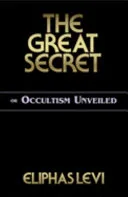
The Great Secret Or Occultism Unveiled
 72
72

The Great Secret Or Occultism Unveiled
Eliphas Levi's "The Great Secret" is not a beginner's guide; it's a dense, demanding exposition that requires focused attention. Levi, the self-proclaimed renovator of European esoteric thought in the 19th century, presents a complex synthesis of Kabbalah, Hermeticism, and magic. The work's strength lies in its systematic approach to occult doctrine, attempting to provide a coherent framework for understanding the universe and humanity's place within it. However, its archaic language and intricate philosophical arguments can be a significant hurdle for contemporary readers. A particularly illustrative, albeit challenging, passage discusses the 'Great Arcanum' and its connection to divine creation, demanding careful exegesis. While dense, the book offers a crucial window into 19th-century occultism, making it valuable for those committed to tracing the lineage of esoteric ideas. Levi's ambition to systematize magic is his enduring contribution, though the accessibility of his method remains debatable.
📝 Description
72
Eliphas Levi's The Great Secret, published in 1900, sought to unveil the core principles of hermetic philosophy.
This volume is the final part of Eliphas Levi's "Studies in Hermetic Tradition," following "The Book of Splendours" and "The Mysteries of the Qabalah." It aims to clarify the central tenets and hidden knowledge within hermetic philosophy. The book offers a thorough examination of occult doctrines that influenced esoteric thought in 19th-century Europe.
Published after Levi's death, The Great Secret appeared during a significant occult revival across Europe. Levi, a key figure in this movement, attempted to combine esoteric traditions with a logical, philosophical viewpoint. His writings presented a different path from purely mystical or religious viewpoints, anchoring occultism in what he saw as universal laws and ancient understanding. This approach challenged the dominant scientific materialism of the era.
The Great Secret is situated within the 19th-century European occult revival, a period influenced by figures like Helena Blavatsky and the Hermetic Order of the Golden Dawn. Levi's work aimed to synthesize various esoteric traditions, including Kabbalah and Hermeticism, presenting them through a rational lens. He sought to demonstrate a hidden universal order accessible through disciplined study and practice, offering an alternative to purely spiritual or mystical interpretations of the occult.
💡 Why Read This Book?
• Understand the foundational Kabbalistic framework Eliphas Levi used to structure his occult philosophy, as detailed in "The Great Secret," offering a specific lens on the macrocosm-microcosm relationship that distinguishes it from other esoteric texts. • Grasp Levi's concept of the 'Astral Light' as a universal medium, a core tenet in his system, providing a unique perspective on spiritual energy and consciousness not commonly found in simpler occult introductions. • Explore Levi's synthesis of ancient Hermetic principles with 19th-century intellectual currents, as presented in this concluding volume of his "Studies in Hermetic Tradition" series, offering historical depth for serious occult scholars.
⭐ Reader Reviews
Honest opinions from readers who have explored this book.
❓ Frequently Asked Questions
What is the primary focus of "The Great Secret" by Eliphas Levi?
"The Great Secret" focuses on unveiling the core principles of occultism and hermetic philosophy, synthesizing Kabbalistic, magical, and philosophical doctrines to present a systematic view of the universe and spiritual attainment.
When was "The Great Secret" first published?
Eliphas Levi's "The Great Secret" was first published posthumously in October 1900, concluding his "Studies in Hermetic Tradition" series.
Is "The Great Secret" suitable for beginners in occult studies?
While it offers foundational occult concepts, "The Great Secret" is generally considered dense and complex, better suited for students with prior exposure to esoteric or philosophical texts, especially Levi's earlier works.
What are the main esoteric traditions discussed in the book?
The book primarily draws from Kabbalah and Hermeticism, integrating them with elements of ceremonial magic and philosophical occultism as understood in the 19th century.
How does "The Great Secret" relate to Levi's other books?
It serves as the concluding volume in his "Studies in Hermetic Tradition" series, following "The Book of Splendours" and "The Mysteries of the Qabalah," bringing together and elaborating on themes introduced in those earlier works.
What is the 'Great Secret' that the book refers to?
The 'Great Secret' refers to the fundamental principles of occult science and the hidden order of the universe, particularly concerning divine creation and the relationship between the spiritual and material realms, as interpreted through hermetic and Kabbalistic lenses.
🔮 Key Themes & Symbolism
The Astral Light
Levi posits the Astral Light as a fundamental, omnipresent medium that connects the spiritual and material realms. He describes it as a cosmic fluid, a vehicle for thought and will, and the source of all phenomena. Understanding and manipulating this light is central to occult practice, enabling the magician to influence the physical world through psychic and spiritual means. This concept underpins Levi's view of magic as a science of universal forces.
Kabbalistic Synthesis
The work heavily integrates Kabbalistic concepts, particularly the Sephiroth and the Tree of Life, as a structural framework for understanding divine emanation and cosmic order. Levi uses Kabbalah not merely as a symbolic system but as a key to unlocking universal laws. He explores the Hebrew alphabet and divine names as potent forces, demonstrating how these ancient teachings provide a blueprint for both creation and human spiritual development.
The Great Arcanum
Referred to as the ultimate secret of occultism, the Great Arcanum encompasses the principles of divine creation and the potent force of love and will. Levi links it to the union of opposites, the reconciliation of spiritual and material existence, and the realization of humanity's divine potential. It is the key to understanding life, death, and rebirth, representing the ultimate goal of esoteric attainment.
Will and Imagination in Magic
Levi emphasizes the crucial role of directed will and potent imagination in occult operations. He argues that the human mind, when properly trained and focused, can interact with the Astral Light and manifest desired outcomes. This involves not just mental discipline but also the symbolic representation of intent, making rituals and talismans powerful tools for shaping reality according to the magician's will.
💬 Memorable Quotes
Direct passages from the work, attributed to the author.
“The infallible science of the magi, which is the science of universal equilibrium.”
— This statement captures Levi's view of magic as a precise, almost scientific discipline, focused on understanding and balancing the fundamental forces of the cosmos to achieve predictable results.
“The Great Arcanum is the key of the science of the Magi.”
— This highlights the central importance of the 'Great Arcanum' within Levi's system, presenting it as the ultimate secret and the foundational principle for all occult knowledge and practice.
“The Astral Light is the living soul of the world.”
— This evocative phrase describes the Astral Light not just as an inert medium but as a vital, animating force that connects all existence, embodying the dynamic essence of the universe.
“To know, to will, to dare, and to be silent: these are the four words of the magician.”
— This famous quaternity, often attributed to various esoteric traditions, is central to Levi's practical occultism, outlining the essential virtues and actions required for successful magical operation and personal transformation.
“Man is a god in the making.”
— This concept suggests that humanity possesses an inherent divine potential, capable of evolving towards a state of godhood through self-knowledge, spiritual discipline, and alignment with universal laws.
🌙 Esoteric Significance
Tradition
Levi's work is deeply embedded in the Western Esoteric Tradition, particularly drawing from Hermeticism, Kabbalah, and ceremonial magic. "The Great Secret" synthesizes these streams, aiming to provide a unified doctrine. It departs from purely mystical contemplation by emphasizing the practical application of occult principles through ritual and will, positioning magic as a 'science' of spiritual forces, a key aspect of 19th-century occult revivalism.
Symbolism
Key symbols include the Caduceus of Hermes, representing the balance of opposing forces and the flow of the Astral Light; the Pentagram, symbolizing the microcosm of humanity and its dominion over elemental forces; and the Tree of Life, serving as a cosmological map for divine emanation and human spiritual ascent, central to Kabbalistic cosmology.
Modern Relevance
Contemporary practitioners of ceremonial magic, Qabalists, and students of Western esotericism frequently reference Levi's foundational texts. His systematic approach influences modern magical orders and authors seeking to understand the historical development of occult thought. Thinkers in fields like comparative religion and the history of consciousness studies also engage with his work to trace the lineage of esoteric ideas.
👥 Who Should Read This Book
['• Students of 19th-century occultism seeking primary source material on the synthesis of Kabbalah and Hermeticism as practiced by Eliphas Levi.', "• Aspiring ceremonial magicians interested in Levi's theories on the Astral Light, will, and ritual efficacy, providing a conceptual basis for practice.", '• Scholars of Western Esoteric Traditions looking to understand a key figure who significantly shaped modern occult philosophy and practice.']
📜 Historical Context
Eliphas Levi penned "The Great Secret" in the latter half of the 19th century, a period marked by a significant resurgence of interest in occultism and spiritualism across Europe. This era saw the proliferation of secret societies and esoteric orders, such as the Hermetic Order of the Golden Dawn, which would later be heavily influenced by Levi's writings. Levi himself was a central figure, striving to reconstruct and systematize occult traditions, presenting them as a coherent, philosophical science. He operated within an intellectual milieu that included figures like Helena Blavatsky, though Levi's approach was generally more rooted in the Western Hermetic and Kabbalistic traditions than Blavatsky's Eastern-influenced Theosophy. His work offered a structured alternative to the prevailing scientific materialism and orthodox religious dogma, positioning esoteric knowledge as a valid path to understanding reality. While celebrated by occultists, his ideas also faced skepticism from mainstream academia and religious institutions.
📔 Journal Prompts
The concept of the Astral Light as described by Levi, its properties and influence.
Eliphas Levi's interpretation of the Great Arcanum and its relation to universal forces.
The role of Will and Imagination in achieving occult aims, as outlined by Levi.
Connections between the Kabbalistic Tree of Life and the structure of the universe in Levi's system.
The magician's fourfold path: To Know, To Will, To Dare, and To Be Silent.
🗂️ Glossary
Astral Light
In Levi's system, a universal, omnipresent fluidic medium that is the intermediary between spirit and matter, the vehicle of thought and will, and the source of all phenomena.
Great Arcanum
The supreme secret of occult science, often interpreted as the principle of divine creation, the union of opposites, or the realization of humanity's divine potential through esoteric knowledge and practice.
Kabbalah
A system of Jewish mysticism and esoteric interpretation that deals with the nature of God, the creation of the universe, and the relationship between the divine and the human, often represented by the Tree of Life.
Hermeticism
A philosophical and religious tradition based on the purported teachings of Hermes Trismegistus, emphasizing principles like 'As Above, So Below' and the unity of all things.
Microcosm
The belief that the human being (or the Earth) is a miniature reflection or representation of the larger universe (the Macrocosm).
Macrocosm
The universe considered as a whole; the greater world, in contrast to the microcosm.
Ceremonial Magic
A systematic form of ritual magic, often involving elaborate procedures, incantations, and symbolic tools, designed to invoke spiritual entities or influence the material world.




![[Catalogue of Frederick Hockley's Book Sale]](/img/thumb/catalogue-of-frederick-hockley-s-book-sale-george-redway.webp)