Ancient Aliens and Other Unsolved Mysteries of the Past
 84
84

Ancient Aliens and Other Unsolved Mysteries of the Past
Otto Binder's 1970 collection, Ancient Aliens and Other Unsolved Mysteries of the Past, offers a considered, though now dated, examination of phenomena that skirt the edges of accepted history. Binder, leveraging his background as a science writer and former NASA technician, approaches subjects like ancient astronaut theories with a degree of scientific rigor unusual for the time. He avoids sensationalism, instead presenting arguments and evidence for readers to consider. The section on the mysterious Voynich Manuscript, for example, details the challenges of its decipherment and the various theories surrounding its origin, highlighting the limitations of conventional linguistic analysis when faced with such an anomaly. However, the book's primary limitation is its reliance on information and scientific understanding from the late 1960s and early 1970s. Some of Binder's conclusions or speculations have since been addressed by further research or have fallen out of favor within their respective fields. Despite this, the work remains a valuable historical document of early inquiries into these subjects. Binder’s disciplined approach makes this collection a solid, if somewhat superseded, entry point for understanding the historical discourse on ancient mysteries.
📝 Description
84
Otto Binder's 1970 book investigates phenomena that challenge conventional history.
First published in 1970, Ancient Aliens and Other Unsolved Mysteries of the Past is a collection of essays by Otto Binder. Binder, who worked as a NASA technician, examines subjects that go against standard historical and scientific views. The book is for anyone curious about how science, history, and unexplained occurrences connect. It will appeal to readers who question accepted stories and look for different reasons behind ancient objects, unusual sky events, and supposed alien meetings. Those interested in ufology, archaeoastronomy, and less common historical ideas will find it relevant.
Binder's work appeared when public interest in UFOs and space travel was growing, especially after the 1960s space race. This period saw more official attention and public talk about unidentified flying objects. Binder's past experience as a technician gave his writing weight, setting it apart from purely imaginative theories. The book considers the possibility that aliens visited Earth in ancient times, looks at confusing archaeological discoveries, and questions the nature of consciousness and its link to strange events. Binder reflects on what these puzzles mean for human history and humanity's position in the universe.
This book emerged during a time of increased public and governmental interest in UFOs and space, particularly following the 1960s space race. Binder's background as a former NASA technician lent a unique perspective to his examination of these topics, distinguishing his work from more speculative accounts. It taps into a growing fascination with the unexplained that characterized the late 20th century, seeking rational, albeit unconventional, explanations for ancient mysteries.
💡 Why Read This Book?
• Gain an understanding of early 1970s perspectives on ancient astronaut theories, specifically Binder's analysis of artifacts that challenged conventional archaeology at the time. • Explore Binder's specific examination of the Voynich Manuscript, learning about the challenges of its decipherment and the speculative theories from the period. • Appreciate the historical context of UFO research as presented by a science writer with aerospace credentials, offering insight into the discourse surrounding unexplained aerial phenomena in the 1960s.
⭐ Reader Reviews
Honest opinions from readers who have explored this book.
❓ Frequently Asked Questions
When was Otto Binder's 'Ancient Aliens and Other Unsolved Mysteries of the Past' first published?
The book was first published on December 15, 1970. This places its content firmly within the late 1960s and early 1970s, a period of significant public interest in UFOs and space exploration.
What was Otto Binder's background before writing this book?
Otto Binder was a distinguished science writer with a background as a former NASA technician. He specialized in space and the UFO phenomenon, authoring ten science books and numerous articles for national magazines.
What kind of mysteries does the book cover?
The book covers a range of mysteries, including the possibility of ancient extraterrestrial visitors, puzzling archaeological discoveries, and phenomena that challenge established historical accounts. It delves into topics that question mainstream interpretations of the past.
Is the book still relevant today?
While the scientific understanding has evolved since 1970, the book offers valuable historical context for early investigations into these topics. It provides insight into how science writers of the era approached unexplained phenomena.
What is the 'Space World' magazine mentioned in relation to Binder?
'Space World' magazine was a publication geared towards astronauts, and Otto Binder served as its editor-in-chief. This role highlights his deep involvement in the aerospace and space exploration discourse of his time.
Does the book present definitive answers to the mysteries?
No, the book primarily explores mysteries and presents various theories and evidence for readers to consider. Binder's approach is analytical rather than declarative, aiming to stimulate thought about unexplained aspects of history and science.
🔮 Key Themes & Symbolism
Ancient Astronaut Theories
Binder critically examines the hypothesis that extraterrestrial beings visited Earth in antiquity, influencing human civilization and technology. He presents evidence from ancient texts, megalithic structures, and anomalous artifacts, questioning whether conventional history adequately explains their existence. The work explores how these perceived interventions might reshape our understanding of human development and ancient cultures, suggesting a cosmic context for our past.
Unexplained Archaeological Anomalies
The book investigates enigmatic archaeological finds that defy easy explanation within standard historical frameworks. This includes discussions on artifacts whose origins or purposes are unclear, structures built with impossible precision, and evidence suggesting advanced knowledge in ancient societies. Binder uses these anomalies as focal points to question the completeness of our archaeological record and the evolution of human technological capabilities.
The UFO Phenomenon
Given Binder's background, a significant theme is the exploration of unidentified flying objects and potential extraterrestrial contact. He analyzes reports and sightings from the mid-20th century, a period of heightened UFO interest. The work considers the implications of these phenomena for science, society, and humanity's perception of its place in the universe, reflecting the growing discourse around aerial mysteries.
Limits of Conventional Science
A recurring thread is the idea that established scientific and historical paradigms may be insufficient to explain certain phenomena. Binder highlights instances where current knowledge struggles to account for ancient achievements or ongoing mysterious events. This theme encourages readers to consider the possibility that our understanding of physics, history, and even consciousness might be incomplete.
💬 Memorable Quotes
Direct passages from the work, attributed to the author.
“The universe is vast, and the possibilities for life and intelligence are manifold.”
— This statement reflects Binder's scientific perspective, suggesting that the sheer scale of the cosmos implies a high probability for non-terrestrial life, a foundational idea for theories of ancient alien visitation.
“Some ancient artifacts present technological challenges that our current understanding struggles to reconcile with the presumed capabilities of their creators.”
— This interpretation highlights Binder's focus on archaeological enigmas, pointing to ancient constructions or objects that seem to exceed the expected technological prowess of their historical context.
“The consistent reporting of anomalous aerial phenomena across decades warrants serious scientific consideration.”
— Binder, with his aerospace background, emphasizes the pattern and persistence of UFO sightings, arguing for their investigation beyond mere dismissal or folklore.
“Our historical records may only represent a fraction of the true story of humanity's development.”
— This conveys Binder's skepticism about the completeness of current historical narratives, suggesting that significant chapters of human history, possibly involving external influences, remain unwritten or undiscovered.
“The nature of consciousness itself remains one of science's greatest unsolved mysteries.”
— This interpretation points to Binder's recognition that subjective experience and mental phenomena are areas where scientific explanation is still nascent, potentially linking to other unexplained mysteries.
🌙 Esoteric Significance
Tradition
Binder's work doesn't align strictly with a singular esoteric tradition like Hermeticism or Theosophy, but rather operates at the intersection of scientific inquiry and metaphysical speculation. It reflects a broader modern esoteric tendency to reinterpret ancient history and religious texts through lenses informed by ufology and pseudohistory. His approach can be seen as a secularized form of seeking hidden knowledge, wherein ancient myths are re-read as records of alien encounters rather than divine or symbolic narratives.
Symbolism
The primary 'symbol' in Binder's work is the artifact or structure that appears anomalous – the Nazca Lines, ancient Egyptian hieroglyphs depicting advanced technology, or biblical accounts of celestial visitors. These are treated not as symbolic representations within a mythological framework, but as literal evidence of technologically advanced, non-human intervention. The 'flying machine' depictions in ancient art, for instance, are interpreted literally as spacecraft, bypassing allegorical or spiritual meanings.
Modern Relevance
Binder's explorations resonate with contemporary fringe historical theories and the ongoing popular fascination with ancient astronaut hypotheses. Thinkers and documentary series that explore ancient aliens, such as those inspired by von Däniken, continue to draw upon the types of questions and evidence Binder presented. His work is foundational for those seeking to connect archaeological anomalies with extraterrestrial narratives, influencing current debates in archaeoastronomy and alternative history circles.
👥 Who Should Read This Book
• Students of 20th-century pseudoscience and the history of ufology, seeking to understand the intellectual landscape that shaped early popular theories about ancient aliens. • Readers interested in comparative mythology and archaeology who are open to unconventional interpretations of ancient texts and artifacts. • Individuals curious about the intersection of science, history, and speculative thought, particularly concerning unexplained phenomena from the mid-20th century.
📜 Historical Context
Otto Binder's *Ancient Aliens and Other Unsolved Mysteries of the Past*, published in 1970, emerged during a key era for popular interest in the unexplained. The late 1960s saw the height of the Cold War space race, fueling public imagination about extraterrestrial possibilities, and the burgeoning ufology movement was gaining traction. Books like Erich von Däniken's *Chariots of the Gods?* (published in German in 1968 and English in 1969) had already ignited widespread debate about ancient astronauts. Binder, with his credentials as a former NASA technician and science writer for magazines like *Space World*, brought a distinct voice to this discourse. Unlike some contemporaries who focused solely on sensationalism, Binder attempted a more analytical approach, engaging with scientific principles. His work positioned itself within a broader intellectual current that questioned established historical narratives, influenced by figures like Immanuel Velikovsky, whose theories on planetary catastrophes were highly controversial. Binder's book represented an attempt to synthesize emerging ideas about space, ancient civilizations, and the UFO phenomenon for a public increasingly eager to explore these frontier topics.
📔 Journal Prompts
The possibility of ancient astronaut visitation, as explored in Binder's analysis.
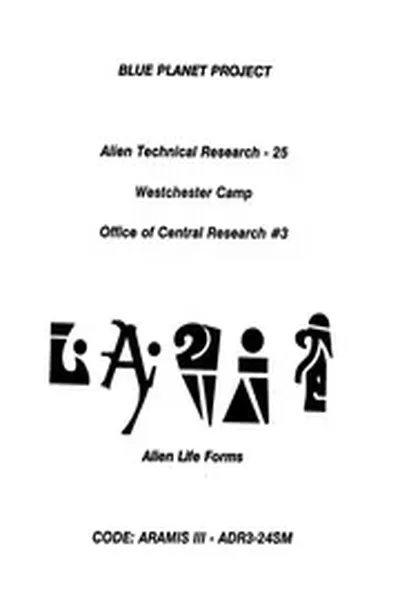
Binder's examination of the Voynich Manuscript's enigmatic script.
The implications of unexplained aerial phenomena reported in the 1950s and '60s.
Ancient artifacts that challenge conventional explanations of historical technology.
The scientific writer's role in presenting speculative theories to the public.
🗂️ Glossary
Ancient Astronaut Theory
The hypothesis suggesting that extraterrestrial beings visited Earth in antiquity and were often mistaken for gods, influencing human culture, technology, and religion.
Ufology
The study or collection of information and lore about unidentified flying objects (UFOs) and alleged extraterrestrial activity, often considered a pseudoscience.
Archaeoastronomy
The interdisciplinary study of how people in the past understood and used astronomical phenomena, often examining alignments of ancient structures with celestial bodies.
Voynich Manuscript
A mysterious illustrated codex written in an unknown script and language, dating to the early 15th century, which has defied all attempts at decipherment.
NICAP
The National Investigations Committee on Aerial Phenomena, a prominent UFO research organization in the United States during the mid-20th century, of which Binder was a member.
Megalithic Structures
Large structures constructed using massive stones, such as Stonehenge or certain ancient temples, often noted for their engineering complexity and astronomical alignments.
Anomalous Artifacts
Objects or pieces of evidence from archaeological sites that appear to contradict conventional understanding of the historical period or the technological capabilities of the time.