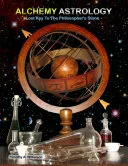
Alchemy Astrology, Lost Key To The Philosopher's Stone
 84
84

Alchemy Astrology, Lost Key To The Philosopher's Stone
Wilkerson's "Alchemy Astrology, Lost Key To The Philosopher's Stone" attempts a much-needed bridge between theoretical astrology and hands-on alchemical practice. Its strength lies in its direct, functional approach, providing concrete tables and charts intended for laboratory use, a departure from more purely philosophical alchemical texts. The author, clearly a working practitioner, imbues the text with a sense of lived experience. However, the book's primary limitation is its dense, almost manual-like presentation, which may prove challenging for absolute beginners in either astrology or alchemy without prior foundational knowledge. A particularly illustrative passage details the calculation of the 'Right Ascensions' for specific planetary hours, demonstrating the book's commitment to precise, actionable guidance. Ultimately, it’s a specialized tool for those already immersed in the alchemical arts.
📝 Description
84
Timothy A. Wilkerson's 2018 book connects astrological timing to alchemical laboratory work.
Timothy A. Wilkerson's Alchemy Astrology, Lost Key To The Philosopher's Stone details how to synchronize astrological principles with alchemical practice. The author, a practicing alchemist and astrologer, outlines a method for determining the best astrological moments to prepare herbal and mineral remedies. This guide is useful for both beginners and experienced practitioners who want to align their material work with celestial cycles. It is especially relevant for those involved in or aspiring to alchemical practices, particularly in creating medicinal preparations.
The book appeals to astrologers looking to apply their knowledge to a hands-on craft. Alchemists who understand the historical and practical value of celestial timing will also find it beneficial. Readers interested in the intersection of esoteric traditions and practical application will discover its value. The work revives and organizes a specific, observational method for this ancient synergy, using compiled data that links planetary positions to successful substance transformations.
The practice of linking astrological and alchemical endeavors has ancient origins, dating back to Hellenistic Egypt and continuing through the medieval and Renaissance periods. Figures like Claudius Ptolemy established astrological frameworks, while alchemists such as Nicolas Flamel were associated with both disciplines. This book revives and codifies a specific, observational approach to this ancient synergy, drawing on historical data connecting planetary positions to effective substance transformations.
💡 Why Read This Book?
• Learn a specific technique for aligning laboratory work with celestial movements, directly applicable to enhancing the potency of herbal and mineral remedies, as detailed in Wilkerson's astrological timing tables. • Gain practical insights into historical alchemical methods by understanding how practitioners like those described in the book utilized planetary positions, referencing the 2011 publication date as a modern revival of these practices. • Discover how to calculate optimal astrological windows for alchemical operations, moving beyond theoretical correspondences to actionable steps for preparing remedies, as outlined in the book's 'how-to' format.
⭐ Reader Reviews
Honest opinions from readers who have explored this book.
❓ Frequently Asked Questions
Is "Alchemy Astrology, Lost Key To The Philosopher's Stone" suitable for someone new to both alchemy and astrology?
The book is written as a "how to" handbook for practical alchemical laboratory work, suggesting it's best suited for those with some existing knowledge of either alchemy or astrology. While it includes blank charts for beginners, the core content assumes a certain familiarity with astrological principles and alchemical processes.
What kind of remedies can be made using the methods in this book?
The book focuses on creating the most powerful herbal and mineral remedies possible. It provides astrological methods to determine the opportune moments for preparing these substances, enhancing their inherent virtues through precise timing.
Who is Timothy A. Wilkerson?
Timothy A. Wilkerson is presented as a working alchemist and astrologer. His dual expertise informs the practical, hands-on approach of the book, aiming to bridge the gap between celestial observation and material laboratory operations.
What historical basis does the book draw upon?
The book draws upon centuries of observations compiled by alchemists and astrologers regarding the positioning of the sun, moon, and planets. This historical practice sought to apply cosmic clues to alchemical operations and remedy preparation.
Does the book explain the philosophical aspects of alchemy, or is it purely practical?
The book emphasizes practical laboratory work and the 'how-to' of using astrology for alchemical timing. While it acknowledges the historical connection between astrology and alchemy, its primary focus is on the application of astrological data for making remedies.
What specific astrological tools are included or recommended?
The book includes blank charts and tables intended for practical use. It guides readers on how to use these tools to determine the most powerful timings for alchemical preparations based on celestial configurations.
🔮 Key Themes & Symbolism
Astrological Timing for Materia Medica
The central theme is the precise application of astrological knowledge to enhance the potency of alchemical preparations, particularly herbal and mineral remedies. Wilkerson posits that the efficacy of these substances is significantly influenced by the cosmic alignments present at their creation. The book details how to use planetary positions, lunar phases, and solar cycles to identify optimal windows for gathering ingredients and performing laboratory operations, moving beyond symbolic associations to practical, verifiable results in the alchemical process.
The Practical Alchemist's Handbook
This work serves as a functional manual for the working alchemist, emphasizing actionable techniques over abstract theory. It provides the 'how-to' for integrating astrological calculations directly into laboratory procedures. By offering blank charts and tables, the book empowers practitioners to perform their own timing analyses, facilitating the creation of more powerful remedies. It is a resource for those engaged in the physical Great Work, seeking tangible improvements in their craft through celestial mechanics.
Historical Synergy of Alchemy and Astrology
Wilkerson explores the enduring historical connection between alchemy and astrology, a relationship recognized since antiquity. The book synthesizes accumulated observations from past practitioners who understood that celestial patterns held sway over material transformations. It revives this ancient understanding, presenting it not as a forgotten art but as a viable methodology for modern alchemical endeavors, grounded in empirical observation across centuries of practice.
The Philosopher's Stone as Potent Remedy
While referencing the ultimate goal of the Philosopher's Stone, the book's immediate focus is on its lesser manifestations: potent herbal and mineral remedies. It suggests that the principles guiding the creation of the Stone are applicable on a smaller scale to everyday alchemical work. By mastering the timing for lesser works, the practitioner gains experience and insight relevant to the grander alchemical objectives, viewing the creation of powerful medicines as a step on the path.
💬 Memorable Quotes
Direct passages from the work, attributed to the author.
“A 'how to' astrology handbook for practical alchemical laboratory work.”
— This concise statement from the original blurb defines the book's core purpose: a functional guide that marries astrological calculation with the tangible operations of an alchemical laboratory.
“This method is used to determine when to make the most powerful herbal and mineral remedies possible.”
— This highlights the practical, results-oriented goal of the book. It's not just about theory; it's about achieving superior outcomes in the creation of alchemical medicines through precise timing.
“A great astrology resource for beginners and adepts.”
— This suggests the book offers value across different skill levels, providing foundational information for newcomers while offering advanced techniques or nuanced applications for experienced practitioners.
“Through the centuries, alchemists and astrologers have compiled observations based on the positioning of the sun, moon, and planets.”
— This points to the historical grounding of the book's methodology, emphasizing that the techniques presented are built upon a long tradition of empirical correlation between celestial events and alchemical processes.
“They found that these cosmic clues could be applied to deter...”
— This incomplete sentence from the blurb hints at the application of astrological insights to influence or direct alchemical operations, suggesting a proactive engagement with celestial timing rather than passive observation.
🌙 Esoteric Significance
Tradition
This work firmly belongs within the Hermetic tradition, specifically its alchemical and astrological branches. It operationalizes the principle of 'As Above, So Below' by directly linking celestial mechanics (macrocosm) to material operations (microcosm) in the alchemical laboratory. It departs from purely philosophical or spiritual interpretations of alchemy by providing a practical, empirical framework for timing, emphasizing results in the creation of potent remedies as a tangible expression of cosmic influence.
Symbolism
Key symbols implicitly employed include the Sun and Moon, representing fundamental alchemical principles (e.g., Sol as gold/masculine, Luna as silver/feminine) whose positions are critical for timing. Planetary symbols are also central, as their specific configurations are used to determine auspicious moments for operations. The 'Philosopher's Stone' itself, while the ultimate goal, is approached through the lens of its manifested power in potent herbal and mineral 'lesser works'.
Modern Relevance
Contemporary practitioners of traditional astrology, those engaged in herbalism with an esoteric bent, and modern alchemists seeking to refine their craft often reference or utilize the principles outlined in this book. It provides a methodological anchor for those skeptical of purely theoretical approaches, offering a tangible way to integrate astrological insights into physical practice, aligning with a broader trend in modern esotericism towards embodied and practical application.
👥 Who Should Read This Book
• Practicing alchemists seeking to enhance the efficacy of their herbal and mineral preparations by integrating precise astrological timing into their laboratory work. • Astrologers interested in applying their skills to a tangible, practical craft beyond horary or natal chart interpretation, focusing on material outcomes. • Students of Hermeticism and Western esotericism who wish to understand the historical and practical synergy between astrology and alchemy, moving from theory to application.
📜 Historical Context
Published in 2011, "Alchemy Astrology, Lost Key To The Philosopher's Stone" emerges in a period of renewed interest in Western esotericism, particularly Hermeticism and traditionalist movements. This era saw a rise in practitioners seeking empirical and practical applications of ancient arts, often diverging from purely academic or esoteric philosophical interpretations. The book situates itself within this milieu by reviving a specific, observational methodology for alchemical timing, a practice deeply rooted in Hellenistic astrology and medieval alchemy. While contemporaries like Manly P. Hall had previously explored the intersection of these fields in the mid-20th century, Wilkerson's work focuses on a more granular, laboratory-oriented application. The book’s emphasis on verifiable timing for remedy creation provides a concrete counterpoint to more speculative or purely symbolic alchemical literature prevalent at the time.
📔 Journal Prompts
The calculation of astrological windows for herbal remedies: What specific planetary aspects are most crucial?
Reflect on the historical compilation of observations by alchemists and astrologers. How might these ancient insights apply today?
Consider the concept of 'most powerful' remedies. What does this power signify in an alchemical context?
Analyze the relationship between the macrocosm (planetary positions) and the microcosm (laboratory operations) as presented in the book.
How can the 'how-to' nature of this handbook inform your personal alchemical practice or astrological studies?
🗂️ Glossary
Alchemical Laboratory Work
The practical, hands-on processes involved in alchemy, focusing on the manipulation of substances (herbal, mineral, etc.) to achieve specific transformations or create potent preparations.
Philosopher's Stone
In alchemy, the legendary substance capable of transmuting base metals into gold or silver, and often associated with a universal elixir for longevity and perfection.
Herbal Remedies
Medicinal preparations derived from plants, often utilized in alchemy for their specific virtues which can be enhanced through astrological timing.
Mineral Remedies
Medicinal preparations derived from minerals or inorganic substances, similarly considered to benefit from precise astrological timing in their creation.
Planetary Positioning
The relative locations and configurations of the celestial bodies (Sun, Moon, planets) in the sky at a given time, used in astrology to interpret influences and timing.
Adepts
Individuals who have attained a high level of skill, knowledge, or mastery in a particular field, especially in esoteric or mystical disciplines like alchemy.
Great Work
A term often used synonymously with the entire alchemical process, or specifically referring to the major work or creation of the Philosopher's Stone.