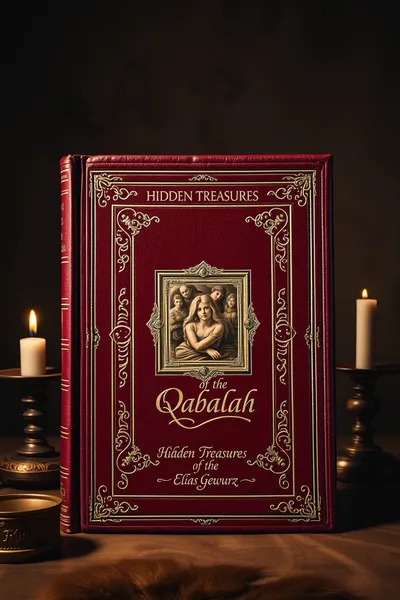
Alchemy and Kabbalah in the Tarot
 83
83

Alchemy and Kabbalah in the Tarot
Samael Aun Weor's "Alchemy and Kabbalah in the Tarot" offers a dense, if sometimes challenging, integration of two formidable esoteric traditions. Its primary strength lies in its ambitious attempt to map the Qabalistic Tree of Life and alchemical stages directly onto the Tarot trumps and court cards, providing a coherent, albeit specific, interpretive lens. The work's detailed examination of the Hebrew letters corresponding to the Major Arcana is particularly compelling, offering a structured approach for those familiar with Kabbalistic principles. However, the text can feel overly dogmatic at times, presenting its synthesis as the singular truth without engaging sufficiently with alternative interpretations or historical scholarship surrounding both Alchemy and Kabbalah. A notable passage details the "Alchemical Wedding" within the symbolism of the Lovers card, illustrating the union of opposites, which exemplifies the book's intricate symbolic connections. This book is a formidable resource for dedicated practitioners seeking a specific, integrated path, but less accessible for the casual inquirer.
📝 Description
83
Published in 2009, Alchemy and Kabbalah in the Tarot connects Tarot symbolism to ancient esoteric systems.
Samael Aun Weor's book argues that the 78 Tarot cards contain practical spiritual teachings common to major mystical traditions. He proposes these cards function as a symbolic map of the cosmos and the human mind. The work suggests that understanding these symbols offers a way to grasp the complex nature of reality and expand consciousness beyond ordinary perception. Weor connects the Hebrew alphabet, a core element of Kabbalistic thought, to the Major Arcana cards. The book aims to show how these ancient systems provide a framework for personal transformation and spiritual growth. It is written for those who study esoteric philosophy, comparative religion, and Western mysticism, especially those looking for links between different spiritual paths.
This work draws from Hermeticism, Kabbalah, and European alchemy. It situates itself within the early 21st-century revival of occult studies, following figures like Blavatsky and Steiner but aiming for a unique synthesis. The book connects these traditions through the symbolic language of the Tarot, viewing the cards as a key to understanding universal spiritual laws and human potential.
💡 Why Read This Book?
• Gain a structured understanding of the Tarot by mapping its 78 cards onto the Kabbalistic Tree of Life and alchemical processes, as detailed in the book's comparative analyses. • Discover the symbolic correspondences between the Hebrew alphabet and the Major Arcana, offering a unique Qabalistic interpretive framework absent in many Tarot guides. • Learn practical techniques for spiritual transformation by applying the alchemical stages of transformation (e.g., calcination, dissolution) to personal development, as outlined by Weor.
⭐ Reader Reviews
Honest opinions from readers who have explored this book.
❓ Frequently Asked Questions
What is the relationship between Alchemy and Kabbalah according to Samael Aun Weor?
Samael Aun Weor posits that Alchemy and Kabbalah are two facets of the same ancient, practical science. He views Kabbalah as the theoretical, spiritual framework and Alchemy as the practical, transformative method for achieving spiritual realization, both encoded within universal symbols like the Tarot.
How does Samael Aun Weor connect the Tarot to Kabbalah?
Weor connects the Tarot primarily through the 22 Major Arcana, which he meticulously maps onto the 22 Hebrew letters and the paths of the Kabbalistic Tree of Life, revealing a deep symbolic and structural correspondence.
What are the key alchemical processes discussed in relation to the Tarot?
The book details the seven alchemical stages: calcination, dissolution, separation, conjunction, fermentation, distillation, and coagulation. These are presented as symbolic representations of inner transformation mirrored in specific Tarot cards and sequences.
Is this book suitable for beginners in Tarot?
While comprehensive, the book assumes a certain familiarity with esoteric concepts like Kabbalah and Alchemy. Beginners might find it dense, but dedicated students seeking a profound, integrated system will find it invaluable.
When was "Alchemy and Kabbalah in the Tarot" first published?
The work by Samael Aun Weor, "Alchemy and Kabbalah in the Tarot," was first published in 2009, bringing these ancient teachings to a modern audience.
What is the core message regarding consciousness in the book?
The book emphasizes that our consciousness is part of a multidimensional universe and can be expanded to perceive realities beyond the physical. Alchemy and Kabbalah provide the methods and symbolic language for this expansion.
🔮 Key Themes & Symbolism
Tarot as Cosmic Map
The book presents the Tarot, particularly the 78 cards, not as mere fortune-telling tools but as a profound symbolic representation of the entire cosmos and the human spiritual journey. Each card is analyzed for its correspondence to Qabalistic principles and alchemical processes, illustrating a universal language of creation and transformation. This perspective shifts the reader's understanding from superficial interpretation to a deeper engagement with archetypal energies.
The Kabbalistic Framework
Central to Weor's synthesis is the Kabbalistic Tree of Life. He meticulously aligns the 22 Major Arcana of the Tarot with the 22 Hebrew letters and the paths connecting the Sephiroth. This establishes a structured, intellectual basis for understanding the spiritual hierarchy and the flow of divine energy, providing a rigorous system for interpreting the Tarot's deeper meanings and their relation to divine emanation.
Alchemical Transformation
Weor interprets the stages of alchemical work—from the prima materia to the philosopher's stone—as a metaphor for inner, spiritual evolution. He maps these processes onto the Tarot cards and Qabalistic paths, suggesting a practical method for psychological and spiritual purification and integration. The goal is not material gold, but the transmutation of the human psyche into a divine, conscious being.
Consciousness and Multidimensionality
The work asserts that the ancient sciences of Alchemy and Kabbalah, as revealed through the Tarot, hold the key to understanding our place in a multidimensional universe. It suggests that by mastering these symbolic systems, individuals can expand their consciousness to perceive realities invisible to the ordinary senses, aligning esoteric knowledge with the burgeoning scientific understanding of quantum physics and consciousness studies.
💬 Memorable Quotes
Direct passages from the work, attributed to the author.
“The ancient sciences are Alchemy and Kabbalah, the practical, spiritual knowledge hidden in the depths of every great religion.”
— This statement frames the book's core argument: that seemingly diverse spiritual traditions share a common, practical esoteric foundation, with Alchemy and Kabbalah serving as the keys to unlocking this universal wisdom.
“We are a part of a multidimensional universe, and that our Consciousness... can expand to perceive matter and energy that are invisible to the flesh.”
— This highlights the book's metaphysical premise, linking esoteric practices to the potential for expanded perception and aligning ancient wisdom with contemporary ideas about consciousness and the nature of reality.
“The Hebrew alphabet corresponds to the Major Arcana of the Tarot.”
— This concise statement points to a specific, structural link Weor establishes between Qabalistic Gematria (via Hebrew letters) and the Tarot's archetypal imagery, forming a central to his interpretive methodology.
“Alchemy illuminates the path of internal transformation.”
— This emphasizes the practical, psychological dimension of alchemy as presented in the book, framing it as a direct method for inner purification and spiritual development, mirrored in the Tarot's symbolic narrative.
“The Tarot is a map of the soul's journey.”
— This interpretation captures the book's view of the Tarot as a dynamic guide for self-understanding and spiritual progress, connecting its symbolism to the unfolding of human consciousness and its potential for transcendence.
🌙 Esoteric Significance
Tradition
This work is firmly rooted in the Western Esoteric Tradition, particularly drawing from Gnostic, Hermetic, and Kabbalistic lineages. It positions itself as a practical guide within these traditions, aiming to reveal the underlying unity of their teachings through the symbolic language of the Tarot. Weor's approach synthesizes these streams, emphasizing the transformative potential inherent in their combined study, departing from purely theoretical or historical analyses to focus on direct spiritual application.
Symbolism
The book extensively uses the symbolism of the Tarot, mapping its 78 cards onto the Kabbalistic Tree of Life and the stages of Alchemical transformation. Key symbols include the Hebrew letters associated with the Major Arcana (e.g., Aleph for The Fool, Beth for The Magician), representing divine manifestation and cosmic principles. Alchemical symbols like the 'Alchemical Wedding' (union of opposites) and the seven stages (calcination, dissolution, etc.) are interpreted as processes of inner purification and spiritual realization.
Modern Relevance
Contemporary practitioners of Western esotericism, comparative mythology scholars, and those interested in consciousness studies find relevance in Weor's synthesis. His work informs modern Tarot interpretation beyond divination, emphasizing psychological depth and spiritual development. Thinkers exploring the intersection of ancient wisdom and modern science, particularly regarding consciousness and multidimensional reality, often reference or build upon the integrated frameworks presented in texts like this.
👥 Who Should Read This Book
• Students of Western Esotericism seeking to integrate Kabbalah, Alchemy, and Tarot: This book offers a specific, detailed methodology for understanding the interconnectedness of these disciplines. • Practitioners of Gnostic or Hermetic paths looking for practical application: Readers will find symbolic keys and conceptual frameworks for inner transformation aligned with these traditions. • Comparative religion scholars interested in esoteric symbolism: The work provides a unique case study on how ancient traditions are synthesized and reinterpreted for contemporary spiritual exploration.
📜 Historical Context
Samael Aun Weor's "Alchemy and Kabbalah in the Tarot," first published in 2009, emerged in an era marked by a resurgence of interest in Western esotericism, building upon foundations laid by 19th and early 20th-century figures. The work engages with intellectual currents influenced by Theosophy, Hermeticism, and Gnosticism, seeking to synthesize these streams into a unified system. Weor's approach diverges from purely academic Kabbalah or historical Alchemy, focusing instead on their practical, transformative applications for the individual. His synthesis can be seen as a response to the fragmented nature of esoteric studies in the modern period, aiming to provide a coherent methodology. While specific contemporaries who directly engaged with this particular 2009 publication are difficult to pinpoint without extensive reception data, the broader context includes thinkers like Manly P. Hall, whose encyclopedic works also explored the connections between various esoteric traditions, and contemporary occult authors who continue to reinterpret these ancient systems.
📔 Journal Prompts
The mapping of the Hebrew letters to the Major Arcana: Which correspondence initially challenges or confirms your understanding of the Tarot?
Alchemical processes as stages of inner transformation: Identify one stage that mirrors a current personal challenge.
The concept of consciousness expansion: How might the symbolic journey of the Tarot cards facilitate this expansion in your life?
The Prima Materia: Reflect on the raw, unformed potential within yourself that awaits transmutation.
The symbolism of the Ace of Wands: How does this card represent initiation and new beginnings within the broader alchemical context?
🗂️ Glossary
Kabbalah
A system of Jewish mysticism focused on understanding the nature of God and creation through esoteric interpretations of scripture, often visualized through the Tree of Life (Etz Chaim).
Alchemy
An ancient tradition combining philosophy, mysticism, and early chemical experimentation, primarily focused on transmuting base metals into gold and discovering a universal elixir, but also representing inner spiritual transformation.
Major Arcana
The 22 trump cards of the Tarot deck, representing significant archetypal figures, spiritual lessons, and major life events or stages in the Fool's Journey.
Tree of Life (Kabbalah)
A diagram used in Kabbalah consisting of ten interconnected circles (Sephiroth) and 22 paths, symbolizing the structure of the cosmos, the nature of God, and the path of spiritual ascent.
Prima Materia
In Alchemy, the fundamental, undifferentiated substance from which all things are created; often seen as the starting point for the alchemical process and a symbol of the unmanifest potential within the individual.
Sephiroth
The ten divine emanations or attributes of God described in Kabbalistic cosmology, represented as spheres on the Tree of Life, through which God manifests and interacts with the universe.
Hebrew Alphabet
The alphabet used in Hebrew, consisting of 22 consonants, each imbued with numerical (Gematria) and symbolic meaning within Kabbalistic tradition, often linked to cosmic forces and Tarot cards.
This book appears in 1 collection
🔮 Readers Also Liked
Browse all →
From the “Tarot” Collection
View all →
More Free Kabbalah & Jewish Mysticism Books
View all →