Ein Visionär von Gott inspiriert - Nostradamus
 78
78

Ein Visionär von Gott inspiriert - Nostradamus
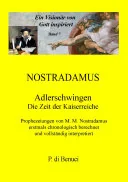
P. di Benuci’s "Ein Visionär von Gott inspiriert - Nostradamus" undertakes the ambitious task of mapping Nostradamus's prophecies onto the tumultuous 19th century. The chronological ordering and interpretation of quatrains are commendable, providing a structured approach to a notoriously fragmented body of work. The book’s strength lies in its attempt to connect specific verses to the political shifts in France during the Napoleonic eras and the eventual rise of the Republic. However, the interpretations, while detailed, often feel like post-hoc rationalizations, fitting events to verses rather than allowing the verses to stand independently. A particular passage discussing the rise of Napoleon III, while detailed, relies heavily on inferential leaps that stretch the credibility of direct prophecy. The limitation here is the inherent subjectivity in interpreting such ancient and ambiguous verses. Ultimately, it offers a focused lens on a specific century's prophecies, but readers should approach the interpretations with a critical eye.
📝 Description
78
This volume, the seventh in its series, interprets Nostradamus's prophecies specifically for the 19th century.
This book examines Nostradamus's quatrains with a focus on their relevance to 19th-century events. It presents these prophecies in a chronological order, followed by an interpretation that seeks to clarify their predictive accuracy concerning that specific historical period. The work aims to decipher the enigmatic verses attributed to the 16th-century seer.
The 19th century in France, the era under examination, experienced considerable political change. This included the First French Empire under Napoleon I, the Bourbon Restoration, the Second French Empire under Napoleon III, and the eventual rise of the Third Republic. This dynamic period forms the backdrop against which Nostradamus's predictions for the 1800s are analyzed.
The central idea is to apply Nostradamus's prophetic system to the 19th century. This process involves scrutinizing his quatrains for forecasts about political structures, societal changes, and potential conflicts. The book interprets these verses by referencing documented historical occurrences and figures from that time, with particular attention paid to the Napoleonic periods and the subsequent French governmental shifts.
This book belongs to the tradition of prophetic exegesis, specifically focusing on the quatrains of Michel de Nostredame. Such works often attempt to align prophetic verses with historical occurrences, seeking patterns and foretelling future events through past interpretations. It situates itself within a long history of scholars and enthusiasts who have sought to unlock the predictive power of Nostradamus's cryptic verses, particularly concerning significant historical epochs.
💡 Why Read This Book?
• Understand the specific political landscape of 19th-century France, including the Napoleonic eras and the Third Republic, as seen through Nostradamus's quatrains. • Analyze how P. di Benuci interprets specific verses, offering a method for deconstructing prophetic language applied to historical events. • Explore the potential predictive power of Nostradamus concerning the detailed political shifts and governmental changes that defined the 1800s.
⭐ Reader Reviews
Honest opinions from readers who have explored this book.
❓ Frequently Asked Questions
What specific historical period does this volume of Nostradamus's prophecies focus on?
This volume, "Ein Visionär von Gott inspiriert - Nostradamus," concentrates exclusively on the quatrains interpreted to apply to the 19th century, a period of significant political change in France.
How does the book present Nostradamus's prophecies for the 19th century?
The book presents the prophecies in chronological order and provides interpretations for each quatrain, aiming to connect them to specific events and figures of the 19th century.
What were the major political events in France during the 19th century discussed in relation to the prophecies?
The text discusses the French Empire under Napoleon I and Napoleon III, the Bourbon Restoration, and the establishment of the Third Republic, linking these to Nostradamus's verses.
Is this book a general overview of Nostradamus's work?
No, this is a specialized volume focusing solely on Nostradamus's quatrains that are interpreted as pertaining to the 19th century, offering detailed analysis rather than a broad survey.
What is the primary goal of the interpretations provided in this book?
The primary goal is to demonstrate how Nostradamus's cryptic verses can be understood as predictions for the specific political and social developments of the 19th century.
Who is the author of this specific interpretation of Nostradamus's 19th-century quatrains?
The author is P. di Benuci, and this work was first published on September 28, 2020.
🔮 Key Themes & Symbolism
Napoleonic Era Prophecies
The volume meticulously examines Nostradamus's quatrains as they relate to the reigns of Napoleon I and Napoleon III. It explores interpretations connecting specific verses to the rise and fall of these empires, the political machinations, and the broader impact on France. The book attempts to draw parallels between the seer's cryptic verses and the historical trajectories of these powerful French leaders and their eras.
Political Transitions in France
Central to the book is the analysis of France's volatile political landscape in the 19th century. It interprets quatrains that are believed to foreshadow the transitions between imperial rule, monarchical restoration, and the eventual establishment of the Republic. This theme focuses on the cyclical nature of power and governance as predicted by Nostradamus.
Interpretive Methodology
The work implicitly showcases a specific methodology for deciphering prophetic texts. By arranging quatrains chronologically and applying them to a defined historical period, P. di Benuci demonstrates a structured approach to connecting ancient prophecies with later events. This theme explores the challenges and techniques involved in such historical-prophetic exegesis.
The Third Republic Foreshadowed
A significant focus is placed on Nostradamus's potential foresight regarding the establishment of the Third French Republic. The interpretations within this book seek to identify verses that accurately predicted the end of imperial rule and the subsequent era of republican governance, offering a specific lens on this key French historical development.
💬 Memorable Quotes
Direct passages from the work, attributed to the author.
“The quatrains for the 19th century address the Napoleonic empires and the subsequent Republic.”
— This concise statement expresses the book's primary thesis: Nostradamus's verses are not random but specifically map onto the significant political shifts in France during the 1800s, particularly the rise and fall of Napoleonic rule and the emergence of republicanism.
“Chronological ordering reveals patterns in Nostradamus's predictions.”
— This highlights the methodological approach of the book. By arranging the quatrains by the century they are believed to foretell, the author suggests that a linear progression or thematic coherence emerges, aiding in deciphering their intended meaning.
“France's imperial phases are seen reflected in the seer's verses.”
— This interpretation emphasizes the book's focus on specific historical periods within the 19th century. It points to the author's belief that Nostradamus's writings contain clear allusions to the imperial ambitions and political structures that defined France during this era.
“The Bourbon Restoration period is analyzed through specific quatrains.”
— This suggests that the book does not solely focus on the Napoleonic eras but also addresses other significant political moments within the 19th century, such as the return of the Bourbon monarchy, interpreting Nostradamus's verses in light of these events.
“The final establishment of the Republic is a key interpretive focus.”
— This indicates that a significant portion of the book is dedicated to understanding how Nostradamus's prophecies might have foreseen the transition to and nature of the French Republic in the later part of the 19th century.
🌙 Esoteric Significance
Tradition
This work falls within the tradition of prophetic interpretation, specifically focusing on the legacy of Michel de Nostredame. It aligns with esoteric practices that seek to uncover hidden knowledge and divine foresight within historical texts. While not strictly Hermetic or Kabbalistic, it draws on the idea of divinely inspired vision and the potential for seers to glimpse future events, applying this to a specific historical epoch.
Symbolism
The quatrains themselves are rich with symbolic language. Motifs such as 'emperors,' 'kings,' 'republics,' and specific geographical references (like France) function as symbolic anchors for interpreting future events. The book likely explores how these symbols, when applied to the 19th century, represent not just literal rulers but broader political forces and societal transformations.
Modern Relevance
Contemporary interest in Nostradamus remains strong, particularly within circles exploring historical prophecy and alternative historical narratives. Thinkers and practitioners interested in synchronicity, pattern recognition in history, and the enduring power of prophetic literature continue to draw upon interpretations of Nostradamus's work, including analyses focused on specific centuries like the 19th.
👥 Who Should Read This Book
• Students of prophecy and esotericism interested in Nostradamus's specific predictions for the 19th century. • Historians of France seeking an alternative lens through which to view the political upheavals of the Napoleonic era and the Third Republic. • Readers of comparative religion and occult studies looking for detailed interpretations of prophetic texts applied to a defined historical period.
📜 Historical Context
The 19th century in France was a period of intense political flux, marked by the Napoleonic Wars and their aftermath, the Bourbon Restoration, and the eventual establishment of the Third Republic. This era of shifting regimes and ideologies provides a rich backdrop for examining prophetic interpretations. Contemporaries like Victor Hugo, though not a prophet, captured the social and political turbulence of this time in his literature. P. di Benuci's work engages with this context by applying Nostradamus's 16th-century quatrains to these later events. While the positivist philosophy gained traction, challenging supernatural claims, esoteric interests persisted. Unlike the overtly political analyses of thinkers like Hippolyte Taine, this book focuses on a specific form of predictive exegesis, attempting to find pre-ordained patterns in historical change, particularly concerning France's governmental structures from Napoleon I to the late 1800s.
📔 Journal Prompts
Nostradamus's quatrains concerning the Napoleonic eras.
The symbolic representation of 'Republic' in 19th-century prophecies.
Interpreting the verses related to the Bourbon Restoration.
The perceived link between quatrains and the Third Republic's establishment.
Analyzing the chronological framework applied to Nostradamus's predictions.
🗂️ Glossary
Quatrain
A stanza of four lines, especially one having a rhyme scheme in which the first, second, and fourth lines rhyme, and the third line does not. Nostradamus famously wrote his prophecies in quatrains.
Nostradamus
Michel de Nostredame (1503-1566), a French astrologer, physician, and reputed seer, famous for his book 'Les Prophéties,' a collection of quatrains predicting future events.
Napoleon I
Napoleon Bonaparte (1769-1821), Emperor of the French, whose reign profoundly shaped France and Europe in the early 19th century.
Napoleon III
Louis-Napoléon Bonaparte (1808-1873), nephew of Napoleon I, who served as President of the Second Republic and then Emperor of the Second French Empire.
Bourbon Restoration
The period from 1814 to 1830 when the Bourbon dynasty was restored to the French throne after the fall of Napoleon.
Third Republic
The republican regime of France that lasted from 1870 until 1940, established after the fall of Napoleon III.
Esoteric
Intended for or likely to be understood by only a small number of people with a specialized knowledge or interest; dealing with hidden, inner, or mysterious things.
This book appears in 1 collection
🔮 Readers Also Liked
Browse all →







From the “Nostradamus” Collection
View all →






More Free Occult Philosophy Books
View all →