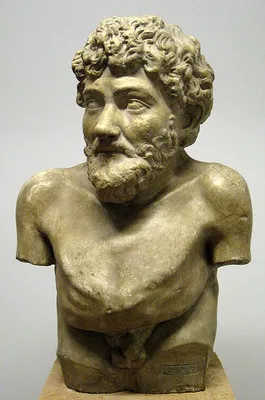
Aesop
Aesop, an ancient Greek storyteller, is credited with fables that have been transmitted and reinterpreted across cultures and eras.
Aesop was an enslaved storyteller from ancient Greece, believed to have lived between 620 and 564 BCE. The collection of fables known as Aesopica is attributed to him, though their origins are complex and unclear. These stories were initially part of an oral tradition and were not formally gathered until centuries after his death, by which time numerous other tales, jokes, and proverbs had become associated with his name. Some of these attributed materials predate Aesop or originated outside the Greek sphere, and the collection has continued to grow over time, incorporating new stories from various sources.
The fables were disseminated through oral tradition and later through written manuscripts in Latin and Greek, becoming some of the earliest printed books. Initially intended for adults with themes touching on religious, social, and political matters, they evolved to serve as ethical guides, particularly for children from the Renaissance onward. Their moral and ethical dimensions have been reinforced through various artistic expressions, and the interpretation of their meanings has shifted throughout history. While ancient accounts and the fables themselves present contradictions, leading to the modern view that Aesop was not the sole originator but a focal point for the genre, his name remains synonymous with moral storytelling.
Fables as Vehicles for Truth
Aesop's fables are characterized by their use of simple, often fictitious incidents to convey profound truths. Philosophers and historians noted that Aesop employed humble narratives, frequently featuring talking animals, to impart wisdom and ethical guidance. This method allowed for the communication of deeper meanings by presenting stories known to be untrue, thereby highlighting the underlying reality or moral lesson. The fables were typically brief, straightforward, and grounded in a recognizable nature, serving as practical guides for life. They often included a contextual introduction and concluded with an explicit moral, though some were invented to illustrate existing proverbs or served as jokes.
Origins and Transmission of the Corpus
The vast collection attributed to Aesop has origins that are diverse and span multiple cultures. While some fables are demonstrably of West Asian or even older Sumerian and Akkadian provenance, others share parallels with Indian traditions like the Jataka tales and Panchatantra. The exact nature of the influence between these traditions remains a subject of scholarly debate. The fables were transmitted through Greek and Latin manuscripts, with key figures like Demetrius of Phalerum compiling early collections. Later versions by Babrius and Phaedrus were instrumental in their survival and dissemination, becoming foundational texts that were subsequently translated and adapted into numerous European vernaculars through the advent of printing.
Evolution and Interpretation
The purpose and reception of Aesop's fables have evolved significantly over time. Originally addressed to adults, they explored complex religious, social, and political themes. By the Renaissance, their focus shifted considerably towards the moral education of children. This educational role was supported by their adaptation into various art forms, including sculpture, painting, drama, and music, which further emphasized their ethical content. Over centuries, the interpretations of the fables' meanings have been re-examined and their emphasis altered, reflecting changing societal values and philosophical perspectives.
Key Ideas
- Fables as simple narratives conveying profound truths.
- The use of fictitious stories to illustrate reality or morals.
- The evolution of fables from adult instruction to child education.
- The cross-cultural transmission and adaptation of storytelling traditions.
Notable Quotes
“like those who dine well off the plainest dishes, he made use of humble incidents to teach great truths, and after serving up a story, he adds to it the advice to do a thing or not to do it. Then, too, he was really more attached to truth than the poets are; for the latter do violence to their own stories to make them probable; but he, by announcing a story which everyone knows not to be true, told the truth by the very fact that he did not claim to be relating real events.”
Books by Aesop
2 free public domain books · Read online or download