Aesop's Fables
 73
73

Aesop's Fables
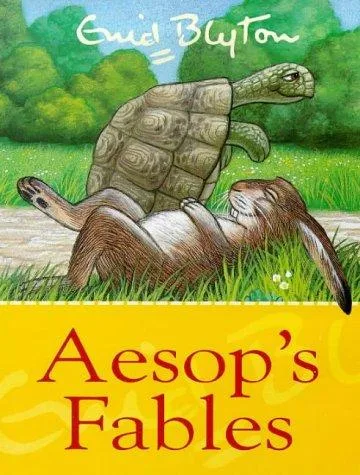
The enduring appeal of Aesop's Fables is undeniable, yet its placement within an esoteric library requires careful consideration. While the collection offers straightforward moral instruction, its symbolic depth often remains latent, requiring a reader predisposed to allegorical interpretation to uncover it. The allegorical structure, where animals represent human traits, serves as a rudimentary form of symbolic language. For instance, the fable of 'The Tortoise and the Hare' clearly illustrates the principle that steady persistence overcomes flashy but inconsistent effort. However, the limitation lies in the absence of explicit esoteric frameworks; the symbolism is rarely elaborated upon, leaving much to the reader's own projection. The 1921 edition, while preserving the classic tales, does little to enhance their mystical dimension. Ultimately, Aesop's Fables functions more as a primer on universal ethics than a direct conduit to arcane knowledge, though its archetypal characters offer a foundational language for deeper symbolic exploration.
📝 Description
73
Aesop's Fables, attributed to a 6th century BCE storyteller, uses animal characters to teach moral lessons.
Aesop's Fables is a collection of short allegorical stories, many featuring animals that act like humans. These tales aim to teach moral points or practical wisdom. The stories likely began as oral traditions before being written down. Over time, various versions and translations have appeared, with significant collections assembled in the Hellenistic period and later through Roman and European scholarship.
This collection is for readers interested in the roots of Western storytelling and moral thought. The fables offer simple allegories that can relate to modern life. Students of literature and mythology will also find value in these concise narratives. They present ethical ideas through relatable situations, making complex concepts accessible.
While not typically classified as esoteric in the modern sense, Aesop's Fables function as a foundational text for allegorical reasoning. The use of animal archetypes to represent human foibles and virtues aligns with symbolic traditions found across various cultures. These narratives served as early vehicles for transmitting ethical and philosophical concepts in a coded, accessible form, a method often employed in esoteric teachings to convey deeper truths indirectly. The enduring appeal of these stories suggests a resonance with a human need for wisdom presented through metaphor and narrative.
💡 Why Read This Book?
• Learn the principle of steady effort over haste by examining 'The Tortoise and the Hare,' a narrative demonstrating that consistent application, not just initial speed, leads to success, a concept relevant to any long-term spiritual practice. • Understand the consequences of vanity and gullibility through 'The Crow and the Pitcher,' where the crow's intelligence in solving a problem is contrasted with the vanity of other birds, offering lessons in practical wisdom. • Grasp the value of foresight and preparation by studying 'The Ant and the Grasshopper,' which contrasts the diligent ant preparing for winter with the frivolous grasshopper, a stark allegory for spiritual readiness.
⭐ Reader Reviews
Honest opinions from readers who have explored this book.
❓ Frequently Asked Questions
When were Aesop's Fables first widely disseminated in English?
The first known compilation of Aesop's Fables in English was published by William Caxton in 1484, making these stories accessible to a broader audience during the early days of printing.
What is the primary purpose of Aesop's Fables?
The primary purpose of Aesop's Fables is to impart moral lessons and practical wisdom through short, allegorical narratives, often featuring animal characters that represent human traits and behaviors.
Are the fables attributed to a single author?
While attributed to Aesop, a legendary Greek storyteller believed to have lived around the 6th century BCE, many of the fables likely originated from various oral traditions and were compiled over centuries.
What makes Aesop's Fables relevant to esoteric studies?
Their relevance lies in their use of archetypal characters and allegorical structures, which can be interpreted through symbolic lenses to explore universal moral and ethical principles foundational to many esoteric traditions.
Does the 1921 edition offer unique insights?
The 1921 edition primarily serves to preserve the classic narratives for a modern audience, offering a specific point of access to the collection rather than introducing new esoteric interpretations.
Can these fables be seen as early forms of parables?
Yes, Aesop's Fables share characteristics with parables, using simple stories to convey deeper meanings and moral instruction, a technique common in religious and philosophical teachings across cultures.
🔮 Key Themes & Symbolism
The Power of Prudence
Many fables highlight the importance of foresight and careful planning. 'The Ant and the Grasshopper' serves as a prime example, contrasting the fate of the diligent ant who prepares for scarcity with the grasshopper who enjoys the present without thought for the future. This theme underscores a fundamental esoteric principle: that spiritual or practical preparedness is essential for navigating life's inevitable challenges and ensuring long-term well-being, mirroring concepts of cosmic order and consequence.
Consequences of Hubris
Pride and arrogance are frequently depicted as leading to downfall. The fable 'The Lion and the Mouse' shows how even the mighty lion can be humbled and later aided by the seemingly insignificant mouse, challenging notions of inherent superiority. This reflects an esoteric understanding that ego-driven pride creates illusion and blinds individuals to interconnectedness, often leading to a loss of power or status when true humility is absent.
Deception and Its Price
The fables often explore the deceptive nature of appearances and the eventual exposure of trickery. In 'The Wolf in Sheep's Clothing,' the predator's disguise ultimately fails, leading to his capture. This appeals to esoteric teachings on discernment and the illusory nature of the material world, warning against being fooled by superficial facades and emphasizing the importance of recognizing true intentions.
Justice and Natural Order
A recurring theme is the establishment of a natural order where actions have predictable consequences. 'The Fox and the Grapes' illustrates the tendency to disparage what one cannot obtain, a form of self-deception. This aligns with esoteric concepts of karma and cosmic law, suggesting that the universe operates on principles of balance and consequence, and that attempts to rationalize failure or injustice are ultimately futile against this underlying order.
💬 Memorable Quotes
Direct passages from the work, attributed to the author.
“Slow and steady wins the race.”
— This concise summary from 'The Tortoise and the Hare' captures the virtue of persistent, unwavering effort over speed and natural talent, a principle applicable to spiritual discipline and personal growth.
“Beware of a wolf in sheep's clothing.”
— This warning from 'The Wolf in Sheep's Clothing' highlights the danger of false appearances and the need for discernment when encountering those who present themselves as harmless but harbor malicious intent.
“It is easy to despise what you cannot get.”
— This interpretation of the fox's reaction in 'The Fox and the Grapes' points to a common human defense mechanism where individuals devalue unattainable desires to protect their ego from disappointment.
“Little strokes fell great oaks.”
— This adage, often associated with Aesop's Fables, emphasizes that consistent, small actions, when applied diligently over time, can achieve seemingly insurmountable tasks, mirroring the power of persistent spiritual practice.
“There is a time for everything.”
— Reflected in the contrast between the Ant and the Grasshopper, this concept speaks to the wisdom of acting in accordance with natural cycles and seasons, preparing for future needs rather than indulging solely in present pleasures.
🌙 Esoteric Significance
Tradition
Aesop's Fables, while not originating from a single defined esoteric lineage like Hermeticism or Kabbalah, serves as a foundational text for Western allegorical and moral philosophy. Its archetypal characters and narratives prefigure symbolic language used in later esoteric traditions, offering a common ground for understanding universal ethical principles that underpin many mystical paths. The fables function as a secularized form of parable, accessible to all, yet rich with symbolic potential for those trained in interpretation.
Symbolism
The animals in Aesop's Fables are potent symbols: the Fox often represents cunning and deception, while the Crow may symbolize vanity or intelligence depending on the context. The Ant embodies diligence and foresight, contrasting with the Grasshopper's carefree irresponsibility. The Lion can represent raw power or natural law, while the Mouse signifies the unexpected strength found in the humble or overlooked. These archetypes provide a symbolic vocabulary for understanding human nature and its place within a larger moral order.
Modern Relevance
Contemporary thinkers and practitioners in fields like Jungian psychology draw heavily on the archetypal figures found in Aesop's Fables to illustrate universal psychological patterns. Mindfulness and ethics-based programs often utilize these stories to teach core moral concepts in an accessible manner. Furthermore, in the study of comparative mythology and folklore, Aesop's Fables remain a crucial reference point for understanding the cross-cultural transmission of moral narratives and symbolic representation.
👥 Who Should Read This Book
• Students of comparative literature and mythology seeking to understand the roots of Western allegorical storytelling and its enduring archetypes. • Individuals interested in ethical philosophy and moral reasoning who appreciate concise, narrative-driven lessons applicable to everyday life. • Aspiring practitioners of esoteric studies looking for foundational symbolic language and archetypal characters that resonate across various mystical traditions.
📜 Historical Context
The fables attributed to Aesop emerged from oral traditions in Archaic Greece, likely taking shape around the 6th century BCE. While Aesop himself is a semi-legendary figure, the earliest written compilations began to appear during the Hellenistic period. These narratives gained immense popularity throughout the Roman Empire and were later preserved and disseminated by medieval scholars. The tradition of collecting and translating Aesop's Fables continued through the Renaissance, with figures like Erasmus incorporating them into educational texts. By the time of William Caxton's English edition in 1484, the fables were already a well-established part of Western literary and moral education. This enduring presence meant that by 1921, when this specific edition was published, the fables were deeply embedded in global consciousness, often seen as simple children's stories, yet retaining their allegorical power for more mature readers.
📔 Journal Prompts
The Crow's ingenuity in 'The Crow and the Pitcher'—reflect on a moment where you applied cleverness to overcome a practical obstacle.
The stark contrast between the Ant and the Grasshopper—consider your personal balance between present enjoyment and future preparation.
The Lion's vulnerability to the Mouse—explore the idea that perceived power dynamics can be misleading.
The Hare's overconfidence—analyze how self-assurance can sometimes hinder progress towards a goal.
The Fox's rationalization in 'The Fox and the Grapes'—examine instances where you've dismissed something unattainable.
🗂️ Glossary
Allegory
A story, poem, or picture that can be interpreted to reveal a hidden meaning, typically a moral or political one. Aesop's Fables are prime examples of narrative allegory.
Fable
A short story, typically with animals as characters, conveying a moral. Aesop is traditionally credited with popularizing this literary form.
Archetype
A very typical example of a certain person or thing; a recurring symbol or motif in literature and art that represents universal patterns of human nature.
Moral
A lesson, especially one concerning what is right or prudent, that can be derived from a story or experience. This is the explicit or implicit takeaway message of a fable.
Anthropomorphism
The attribution of human characteristics or behavior to a god, animal, or object. Common in fables where animals speak and act like humans.
Discernment
The ability to judge well, particularly in distinguishing truth from falsehood or good from bad. A key skill illustrated in several fables concerning deception.
Prudence
The quality of being cautious and showing good judgment, especially regarding practical matters. A virtue often rewarded in Aesop's narratives.
🔮 Readers Also Liked
Browse all →









More by Aesop
All books →
More Free Occult Philosophy Books
View all →