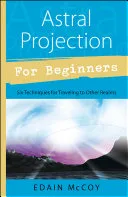
Astral Projection for Beginners
 73
73

Astral Projection for Beginners
Edain McCoy’s "Astral Projection for Beginners" approaches its subject matter with a commendable directness. The strength lies in its structured presentation of six distinct methods, making the complex concept of astral projection feel manageable for newcomers. McCoy avoids overly arcane language, focusing on actionable steps. One passage that particularly stands out is the explanation of the "wake-back-to-bed" technique, which grounds the ethereal pursuit in a relatable sleep cycle. However, the limitation of the book is its brevity; while comprehensive for beginners, more advanced practitioners might find the exploration of astral realms and their inhabitants somewhat superficial. The work offers a solid foundation, but the depth of the astral plane itself remains largely uncharted territory within its pages. It serves as a capable primer for the curious.
📝 Description
73
Edain McCoy's 2012 book offers six methods for out-of-body experiences.
Astral Projection for Beginners is a manual for those new to separating consciousness from the physical body. Edain McCoy presents six techniques, aiming for clarity and practical application. The book guides readers from initial steps of consciousness detachment to navigating the astral plane.
This text is aimed at newcomers to astral projection. It requires no prior background, making it suitable for anyone curious about out-of-body experiences or metaphysical ideas. Readers interested in personal development, spiritual growth, or enhanced self-awareness through altered states will find it useful.
The core idea is deliberately separating the astral body from the physical form to travel the non-physical astral plane. McCoy details specific methods, like visualization and the wake-back-to-bed technique, to achieve this separation. The book also mentions different astral worlds, including the faerie realm, and the possibilities for healing and connecting with spirit guides in these spaces.
Published in 2012, Astral Projection for Beginners taps into a long-standing human interest in altered states of consciousness and non-physical realities. While not directly linked to historical movements like Theosophy, McCoy's work addresses a fascination with dreams and spiritual exploration present across many traditions. The book focuses on practical methods for achieving out-of-body states, connecting with a contemporary interest in esoteric subjects often found in online communities.
💡 Why Read This Book?
• You will learn six distinct, easy-to-follow techniques for initiating astral projection, moving beyond theoretical discussion to practical application as detailed in the book's step-by-step instructions. • You can gain insight into interacting with spiritual guides and sending healing energy, understanding these as achievable functions within the astral realm as described by McCoy. • You will explore the concept of different astral worlds, such as the faerie realm, providing a framework for understanding diverse non-physical realities mentioned in the text.
⭐ Reader Reviews
Honest opinions from readers who have explored this book.
❓ Frequently Asked Questions
What are the primary techniques for astral projection taught in Edain McCoy's book?
The book presents six distinct methods for astral projection, including visualization techniques and the 'wake-back-to-bed' approach, designed to help beginners achieve conscious separation from the physical body.
Can beginners safely explore the astral realm with this book?
Yes, the book is written for beginners and focuses on safe, step-by-step instructions. It aims to demystify the process of astral projection, making it accessible and less intimidating for newcomers.
What can one expect to experience or achieve through astral projection according to this guide?
Readers can learn to visit different astral worlds, communicate with spirit guides, send healing energy to others, and potentially revisit past eras or connect with departed loved ones.
When was 'Astral Projection for Beginners' by Edain McCoy first published?
The first edition of 'Astral Projection for Beginners' by Edain McCoy was published on October 8, 2012.
Does the book discuss encountering spirits or entities on the astral plane?
Yes, the book touches upon the possibility of encountering various entities and exploring different astral worlds, including specific mentions of the faerie realm.
Is Edain McCoy a recognized authority on astral projection?
Edain McCoy is known for her work in the field of witchcraft and esoteric subjects, including astral projection, with this book serving as an accessible introduction to the topic.
🔮 Key Themes & Symbolism
Conscious Separation Techniques
The core of McCoy's work lies in providing actionable methods for achieving out-of-body experiences. The book details specific exercises designed to facilitate the separation of the consciousness or 'astral body' from the physical form. This includes practices like focused visualization and leveraging sleep cycles, such as the 'wake-back-to-bed' method, to ease the transition into an astral state. The emphasis is on gradual, controlled progress for the novice practitioner.
Exploration of Astral Realms
Beyond the act of projection, the book addresses the destinations one might encounter. It posits the existence of various astral worlds, not merely a singular plane. Specific mention is made of the 'faerie realm,' suggesting a layered cosmology within the non-physical. This opens the door to understanding the astral as a diverse landscape with its own unique characteristics and potential inhabitants.
Spiritual and Personal Development
The practical application of astral projection extends to personal growth and spiritual connection. McCoy suggests that working through the astral plane can lead to improved health and self-healing. Furthermore, the book highlights the potential for receiving guidance from spirit guides, framing astral projection as a tool for enhanced spiritual awareness and communication with higher or unseen forces.
Interaction with Non-Physical Entities
A significant aspect explored is the potential for interaction with beings beyond the physical. This includes communication with departed loved ones, a common aspiration for those exploring spiritualism, and receiving direction from spirit guides. The book acknowledges the existence of various forms of consciousness on the astral plane, encouraging exploration and cautious interaction.
💬 Memorable Quotes
Direct passages from the work, attributed to the author.
“Visit a realm in which time and space have no meaning—the astral realm.”
— This foundational statement sets the stage for the book's premise, highlighting the non-linear and boundless nature of the astral plane as distinct from our physical reality.
“Travel to different times and eras, visit with departed loved ones, and explore different astral worlds, such as the faerie realm.”
— This interpretation of the book's blurb outlines the diverse possibilities available to the astral projector, ranging from temporal exploration to encounters with specific non-physical dimensions.
“On the astral plane, it's also possible to heal yourself and achieve improved health, send healing energy to others, receive direction from your spirit guides.”
— This highlights the therapeutic and communicative potential of astral projection, presenting it not just as exploration but as a practice for well-being and spiritual connection.
“Written for beginners, this friendly guide presents step-by-step instructions for six easy and effective astral projection techniques.”
— This emphasizes the book's core value proposition: accessibility and practicality for individuals new to the concept of astral projection, offering concrete methods.
“The wake-back-to-bed technique is a reliable method for beginners.”
— This specific technique, rooted in sleep cycles, is presented as a key, accessible tool within the book for initiating out-of-body experiences without requiring advanced psychic abilities.
🌙 Esoteric Significance
Tradition
McCoy's work aligns with the modern Western esoteric tradition, particularly drawing from concepts found within Neo-Paganism and New Age spirituality, which often synthesize elements from various occult traditions. It departs from stricter, more ritualistic systems by focusing on direct experiential methods accessible to the individual without requiring deep immersion in specific magical or religious frameworks. The emphasis on personal journey and subjective experience is characteristic of contemporary esoteric practice.
Symbolism
While the book focuses heavily on technique, the concept of the 'astral realm' itself functions as a primary symbol. It represents a non-physical dimension accessible through altered states, often depicted as a landscape mirroring or transcending physical reality. The mention of the 'faerie realm' invokes ancient folkloric symbolism of parallel worlds inhabited by nature spirits or elemental beings, suggesting a connection to older, nature-based spiritualities.
Modern Relevance
This book remains relevant today for individuals seeking practical entry points into consciousness exploration beyond the physical. It speaks to a contemporary audience interested in lucid dreaming, meditation, and energy work, often found within modern witchcraft, shamanic practices, and various forms of mindfulness. Its straightforward approach serves as a foundational text for those exploring these interconnected fields without requiring adherence to rigid dogma.
👥 Who Should Read This Book
• Aspiring astral projectors seeking straightforward, step-by-step instructions for initiating out-of-body experiences, particularly those who feel intimidated by more complex theoretical works. • Individuals interested in exploring the nature of consciousness and reality beyond the physical, who want practical methods to investigate concepts like spiritual guides and non-physical dimensions. • Practitioners of meditation or lucid dreaming looking to expand their altered-state experiences and learn specific techniques for conscious separation and exploration of the astral plane.
📜 Historical Context
Edain McCoy's "Astral Projection for Beginners," first published in October 2012, arrived during a resurgence of interest in paranormal and consciousness studies, largely facilitated by the internet. While the 21st century saw a proliferation of self-help and esoteric guides, McCoy's work taps into a lineage of out-of-body experience exploration that gained significant traction in the mid-20th century with figures like Robert Monroe. Unlike the more academic or philosophical approaches seen in earlier esoteric movements, such as Theosophy founded by Helena Blavatsky in the late 19th century, McCoy’s text prioritizes practical, beginner-friendly techniques. Its publication predates the widespread AI-driven content generation, positioning it as a more traditionally authored guide. The reception was generally positive among its target audience, appreciated for its directness rather than engaging with contemporary skeptical counter-arguments or academic critiques prevalent in other fields.
📔 Journal Prompts
Reflect on the distinct characteristics of the astral realm as described by McCoy, particularly its lack of physical constraints.
Analyze the effectiveness of the 'wake-back-to-bed' technique for your personal sleep patterns and potential for astral projection.
Consider the potential benefits of receiving direction from spirit guides during an astral projection experience.
Explore your preconceived notions about the faerie realm and how they might align or contrast with the book's suggestions.
Describe a personal goal for astral projection, whether it's self-healing or exploring different astral worlds.
🗂️ Glossary
Astral Projection
The practice of consciously separating one's consciousness (often referred to as the astral body) from the physical body to explore non-physical dimensions, known as the astral plane.
Astral Realm
A non-physical dimension or plane of existence believed to be accessible through altered states of consciousness, characterized by different laws of physics and perception compared to the physical world.
Out-of-Body Experience (OBE)
A subjective experience where an individual feels their consciousness has temporarily left their physical body, often perceiving themselves from a vantage point outside their physical form.
Spirit Guides
Entities or higher consciousnesses believed to offer guidance, support, and wisdom to individuals on their spiritual path, often encountered through meditation or altered states like astral projection.
Faerie Realm
A specific type of astral world or dimension mentioned in the book, drawing from folklore and mythology, often associated with nature spirits, elemental beings, and realms beyond ordinary human perception.
Wake-Back-to-Bed Technique
A specific method for inducing astral projection that involves waking up after several hours of sleep, staying briefly awake, and then returning to sleep with the intention of entering an OBE.
Healing Energy
A concept within esoteric traditions referring to subtle energy that can be directed intentionally to promote physical, emotional, or spiritual well-being in oneself or others.